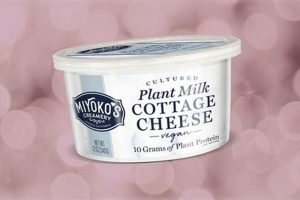
A plant-based alternative to traditional dairy ricotta, this product utilizes soy as its primary ingredient. The process typically involves pressing and crumbling tofu to achieve a texture and consistency similar to that of its dairy counterpart. This preparation allows for use in a variety of culinary applications, mimicking the creamy, slightly grainy nature of the original cheese.
This food innovation addresses the growing demand for dairy-free and vegan options. Its benefits extend to individuals with lactose intolerance, dairy allergies, or those adhering to a vegan lifestyle. Furthermore, its production often requires fewer resources compared to dairy farming, contributing to a more sustainable food system. The concept has gained traction in recent years as awareness of ethical and environmental concerns related to animal agriculture increases.
The availability and versatility of this item make it a compelling subject for examination. Subsequent sections will delve into its nutritional profile, culinary uses, and potential impacts on both individual health and the broader food industry.
Culinary Application Strategies
Optimizing the use of this plant-based ingredient requires understanding its unique characteristics and potential applications in diverse recipes.
Tip 1: Moisture Control: Prior to use, pressing the product removes excess moisture, resulting in a firmer texture and preventing soggy dishes. This is particularly crucial when incorporating it into baked goods or fillings.
Tip 2: Flavor Enhancement: The inherent flavor is mild, necessitating conscious seasoning. Consider using nutritional yeast, lemon juice, garlic powder, and herbs to achieve a savory profile comparable to dairy ricotta.
Tip 3: Texture Modification: For a smoother consistency, blend it with a small amount of plant-based milk or olive oil. This is beneficial for dips, spreads, or sauces where a creamy texture is desired.
Tip 4: Baking Applications: When substituting for dairy ricotta in baked dishes such as lasagna or stuffed shells, ensure adequate binding agents are present. Ground flaxseed or chia seeds can help improve structural integrity.
Tip 5: Ingredient Combination: Its versatility allows seamless integration with various vegetables, grains, and pasta. Experiment with combinations to create balanced and flavorful meals.
Tip 6: Storage Considerations: Store unused portions in an airtight container in the refrigerator and consume within a reasonable timeframe to maintain freshness and prevent spoilage.
Effective application of these strategies maximizes the potential of this ingredient, allowing for the creation of delicious and satisfying plant-based meals.
The following sections will explore advanced culinary techniques and specific recipe adaptations, building upon the foundation established here.
1. Plant-based alternative

The designation “plant-based alternative” is intrinsic to the definition of “vegan ricotta cheese tofu.” It signifies a deliberate departure from the conventional production method of ricotta cheese, which relies on animal-derived milk. The shift towards plant-based ingredients, primarily soy, is not merely a substitution; it represents a fundamental change in the ethical and environmental implications of food production. The availability of this substitute enables individuals adhering to vegan or vegetarian diets, or those with lactose intolerance, to enjoy dishes traditionally containing dairy ricotta.
The impact of this plant-based transformation extends beyond dietary restrictions. The production of dairy products is associated with significant environmental concerns, including greenhouse gas emissions and land usage. By opting for a plant-based version, consumers contribute to a reduced environmental footprint. Examples of this impact are evident in the increasing popularity of soy-based alternatives in supermarkets and restaurants, demonstrating a growing consumer awareness and demand for sustainable food choices. This heightened demand, in turn, encourages food manufacturers to invest in and innovate plant-based alternatives.
In conclusion, the concept of “plant-based alternative” is not simply a descriptive term for “vegan ricotta cheese tofu”; it is the foundational principle upon which its existence and significance rest. Understanding this connection is essential for appreciating the ethical, environmental, and dietary benefits of this food product. The continuous development and refinement of plant-based alternatives are crucial for fostering a more sustainable and inclusive food system.
2. Soybean Origin

The direct link between soybean origin and the existence of the vegan ricotta cheese tofu product is undeniable: soybeans serve as the primary raw material. The protein and other components extracted from soybeans are processed and transformed to mimic the texture and properties of traditional dairy ricotta. Without soybeans, or a comparable plant-based protein source capable of undergoing similar processing, the creation of a viable vegan ricotta alternative would be significantly hampered. For example, the consistent texture characteristic is achieved by coagulating the soy protein.
The specific type of soybean used, the methods employed for its cultivation (organic versus conventional), and the processing techniques applied to the beans directly influence the final quality and characteristics of the product. For instance, manufacturers might opt for non-GMO soybeans to appeal to consumers concerned about genetic modification. The extraction process, which separates soy protein from the beans, is equally critical. Improper processing can lead to off-flavors or undesirable textures, impacting consumer acceptance. This highlights the importance of selecting high-quality soybeans and implementing precise processing controls.
In summary, the origin of soybeans is not merely a trivial detail; it constitutes the foundation upon which this food product is built. The selection, cultivation, and processing of soybeans have significant implications for the product’s quality, characteristics, and ultimately, its success in the marketplace. Understanding this connection is critical for both consumers seeking informed choices and manufacturers aiming to optimize their production processes.
3. Texture mimicry
Texture mimicry is a critical element in the creation of “vegan ricotta cheese tofu,” as it directly influences the consumer’s perception and acceptance of the product as a viable alternative to traditional dairy ricotta. The successful replication of the characteristic grainy, yet moist, texture is paramount for applications where ricotta is traditionally used.
- Coagulation and Curdling Simulation
The process of creating “vegan ricotta cheese tofu” involves techniques that simulate the coagulation and curdling processes inherent in dairy ricotta production. Soy milk, the base ingredient, undergoes treatment to induce protein aggregation, resulting in curds similar to those found in dairy ricotta. The control of temperature and pH during this process is essential for achieving the desired texture. Mismanagement can lead to an undesirable, either excessively smooth or overly firm, product.
- Particle Size Management
The distinct texture is characterized by small, irregular particles. Achieving this requires careful manipulation of the soy curds. Techniques such as gentle pressing and crumbling are employed to avoid creating a homogenous mass. The goal is to maintain discrete particles that contribute to the overall grainy mouthfeel. This aspect distinguishes it from smoother tofu variants. The absence of correct particle size can lead to the absence of consumers attraction.
- Moisture Content Regulation
A defining characteristic is its relatively high moisture content, which contributes to its creamy mouthfeel. However, excessive moisture can lead to a watery texture, while insufficient moisture results in a dry and crumbly product. Precise control of moisture levels is achieved through pressing techniques, ensuring that the final product retains the desired balance between moistness and structural integrity. Moisture must be extracted from the product.
- Stabilization Techniques
Maintaining the desired texture throughout the product’s shelf life requires the use of stabilizers. These ingredients help to prevent syneresis (water separation) and maintain the structural integrity of the curds. Commonly used stabilizers include gums and starches. However, excessive use of stabilizers can negatively impact the product’s flavor and texture, resulting in a gummy or artificial mouthfeel. Therefore, a careful balance is required.
These distinct textural attributes are pivotal in determining whether the plant-based version is favorably received by consumers as a functional substitute for the dairy-based version. Achieving an effective replication of texture is therefore central to its overall success and market penetration, allowing it to effectively mimic the texture of dairy ricotta. It stands as a key differentiator from other tofu-based products.
4. Flavor versatility

The capacity to absorb and complement a wide spectrum of flavors constitutes a key attribute of vegan ricotta cheese tofu. This inherent adaptability enables its integration into a multitude of culinary applications, spanning from savory to sweet preparations, and positions it as a valuable ingredient in both traditional and innovative recipes. The relative neutrality of its base flavor profile allows it to serve as a blank canvas, readily accepting and enhancing the characteristics of accompanying ingredients.
- Neutral Flavor Foundation
Vegan ricotta cheese tofu, derived from soybeans, possesses a mild, somewhat bland flavor profile. This characteristic, while seemingly a limitation, is in fact its strength. It avoids competing with other ingredients and instead serves as a foundation upon which a variety of flavors can be built. For example, it can be readily seasoned with herbs and spices for savory dishes, or blended with sweeteners and flavor extracts for dessert applications. The degree of neutrality facilitates diverse flavoring options.
- Savory Adaptability
In savory applications, the ingredient readily absorbs flavors from herbs such as basil, oregano, and thyme, as well as spices like garlic, onion powder, and red pepper flakes. Its texture allows it to evenly distribute these seasonings, creating a cohesive and flavorful component in dishes like lasagna, stuffed shells, and vegetable dips. One practical instance includes combining it with sauted spinach and garlic for a filling in vegan cannelloni, where it effectively carries the flavors of the other ingredients.
- Sweet Enhancement
On the sweeter side, this ingredient can be combined with sweeteners such as maple syrup, agave nectar, or stevia, along with flavor extracts like vanilla, almond, or lemon. It can then be used as a filling for pastries, a topping for desserts, or a base for vegan cheesecakes. The neutral base prevents the soybean flavor from overpowering the sweetness, allowing the intended flavors to dominate. A notable example is using it to create a dairy-free cheesecake, where it provides the necessary creaminess without imparting unwanted flavors.
- Global Cuisine Integration
Its flavor adaptability extends beyond traditional Italian or Western dishes. It can be incorporated into various global cuisines by adjusting the seasoning profiles. For instance, adding Indian spices like turmeric, cumin, and coriander transforms it into a savory filling for samosas or a component of vegan curries. Similarly, incorporating Asian flavors like ginger, soy sauce, and sesame oil allows for its use in stir-fries or as a filling for dumplings. This cross-cultural versatility further expands its potential applications.
In summary, the flavor versatility is a direct consequence of its neutral base and textural properties. This characteristic positions vegan ricotta cheese tofu not merely as a substitute for dairy ricotta, but as a versatile culinary ingredient capable of contributing to a wide range of dishes across diverse cuisines. Its ability to seamlessly integrate with various flavor profiles enhances its appeal and utility in the kitchen, making it a valuable asset for both home cooks and professional chefs.
5. Nutritional profile
The nutritional profile of “vegan ricotta cheese tofu” is a defining characteristic that significantly contributes to its appeal, particularly among health-conscious consumers. It distinguishes itself from traditional dairy ricotta by offering a distinct macronutrient composition, often characterized by lower saturated fat content and the absence of cholesterol. This difference stems directly from the soybean-based origin, impacting its suitability for individuals with specific dietary requirements or preferences.
Detailed analysis reveals that “vegan ricotta cheese tofu” typically provides a substantial source of plant-based protein, essential for muscle development and satiety. Furthermore, it offers varying amounts of fiber, contingent on the specific processing methods employed. The presence of micronutrients, such as iron and calcium (often through fortification), further enhances its nutritional value. The impact on calorie count and macronutrient ratios is evident in recipes where it substitutes dairy ricotta, often leading to a reduction in overall fat content and an increase in protein.
Understanding the nutritional profile is critical for making informed dietary choices. The unique attributes of “vegan ricotta cheese tofu,” including its lower saturated fat content and plant-based protein source, position it as a potentially beneficial alternative for individuals seeking to manage cholesterol levels or increase their protein intake. By carefully evaluating the ingredient list and nutritional information panel, consumers can effectively incorporate this ingredient into a balanced and health-promoting diet. In summary, its composition directly addresses concerns related to heart health and dietary diversity.
6. Culinary applications

The integration of vegan ricotta cheese tofu into diverse culinary contexts underscores its adaptability and relevance as a plant-based ingredient. Its versatility spans a broad spectrum of dishes, from traditional Italian fare to contemporary vegan innovations. The following details outline specific applications and their implications.
- Lasagna and Baked Pasta Dishes
As a direct substitute for dairy ricotta, the vegan version provides a similar texture and creamy consistency in lasagna and other baked pasta dishes. Its ability to bind ingredients and create a cohesive filling is crucial for maintaining structural integrity and palatability. The substitution allows for the creation of vegan-friendly versions of classic dishes without compromising the traditional eating experience.
- Stuffed Shells and Manicotti
In stuffed pasta applications, it serves as a base for flavorful fillings, often combined with herbs, spices, and vegetables. Its mild flavor profile allows it to readily absorb and complement these seasonings, resulting in a well-balanced and satisfying dish. The texture provides a pleasant contrast to the pasta shell, enhancing the overall sensory experience.
- Vegan Dips and Spreads
When blended or processed, vegan ricotta cheese tofu transforms into a creamy and versatile base for dips and spreads. The addition of ingredients like garlic, lemon juice, and herbs creates savory appetizers and snacks. Its texture mimics that of dairy-based dips, making it a suitable option for individuals seeking plant-based alternatives for entertaining or personal consumption.
- Dessert Fillings and Toppings
In sweet applications, the vegan ricotta cheese tofu functions as a filling for pastries, pies, and cakes. Sweeteners like maple syrup or agave nectar, along with flavor extracts, enhance its palatability. Its creamy texture provides a rich and satisfying element to desserts, offering a dairy-free alternative for individuals with dietary restrictions or preferences. It serves as a functional and ethical substitute in various dessert recipes.
The successful implementation of vegan ricotta cheese tofu in these culinary applications highlights its potential as a versatile and adaptable ingredient. Its ability to mimic the texture and functionality of dairy ricotta, while offering a plant-based alternative, positions it as a valuable addition to both home kitchens and professional culinary settings. Further experimentation and innovation will likely expand its applications and solidify its role in the evolving landscape of plant-based cuisine.
Frequently Asked Questions
This section addresses common inquiries regarding vegan ricotta cheese tofu, providing clear and concise answers to facilitate informed decision-making.
Question 1: What is the primary ingredient in vegan ricotta cheese tofu?
The primary ingredient is typically soybean-based tofu, processed to mimic the texture and consistency of traditional dairy ricotta.
Question 2: Does vegan ricotta cheese tofu contain cholesterol?
No, vegan ricotta cheese tofu does not contain cholesterol, as it is derived from plant-based sources.
Question 3: How does the taste of vegan ricotta cheese tofu compare to dairy ricotta?
Vegan ricotta cheese tofu generally has a milder flavor than dairy ricotta. Seasoning and flavoring are often necessary to achieve a comparable taste profile.
Question 4: Is vegan ricotta cheese tofu suitable for individuals with soy allergies?
No, individuals with soy allergies should avoid vegan ricotta cheese tofu due to its soybean-based composition.
Question 5: Can vegan ricotta cheese tofu be used in baking applications?
Yes, vegan ricotta cheese tofu can be used in baking applications, such as lasagna and stuffed shells, as a direct substitute for dairy ricotta.
Question 6: Where can vegan ricotta cheese tofu be purchased?
Vegan ricotta cheese tofu is typically available in grocery stores with a dedicated vegan or plant-based section, as well as in specialty health food stores.
This FAQ provides essential information regarding the composition, characteristics, and applications of vegan ricotta cheese tofu. It is important to consult specific product labels for detailed ingredient lists and nutritional information.
The subsequent section will explore potential future trends and developments related to plant-based alternatives in the dairy industry.
Concluding Insights
This exploration has examined “vegan ricotta cheese tofu” from its fundamental composition and texture to its diverse culinary applications and nutritional profile. The analysis reveals its significance as a plant-based alternative, driven by the growing demand for dairy-free options and sustainable food choices. Its versatility and adaptable flavor profile enable integration into a wide range of recipes, effectively mimicking the role of traditional dairy ricotta in both savory and sweet dishes.
The rise of “vegan ricotta cheese tofu” represents a broader trend toward plant-based innovation within the food industry. Ongoing advancements in food technology and ingredient sourcing will likely further refine its texture, flavor, and nutritional value, solidifying its position as a viable and increasingly compelling alternative. Consumers are encouraged to critically evaluate product labels, consider dietary needs, and explore the culinary possibilities presented by this and other innovative plant-based offerings.