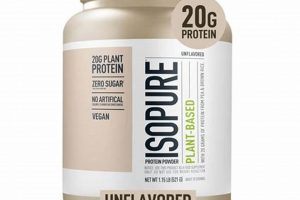
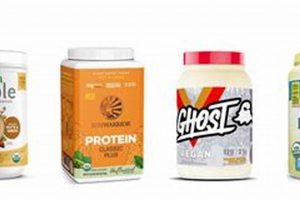
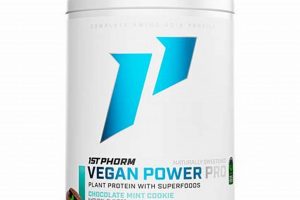
Plant-based nutritional supplements designed to align with both vegan and ketogenic dietary requirements are a relatively recent development in the health and fitness market. These products aim to provide a complete protein source while maintaining a macronutrient profile low in carbohydrates and high in fats, crucial for achieving and sustaining ketosis. An example would be a powder derived from pea, rice, or hemp protein, supplemented with healthy fats from sources like MCT oil, and free of added sugars or high-carbohydrate fillers.
The significance of these formulations lies in their ability to cater to individuals seeking the combined benefits of veganism and ketogenic diets. Such diets can be challenging to maintain due to limitations on conventional protein sources and the necessity of strict macronutrient ratios. These supplements offer a convenient and efficient way to meet protein needs, support muscle recovery, and enhance satiety, thereby aiding in weight management and overall metabolic health. Historically, individuals adhering to both dietary regimens had limited options, often relying on whole-food combinations that required significant planning and preparation.
Further analysis will explore the specific ingredients commonly found in these products, their nutritional profiles, potential health advantages, and practical considerations for incorporation into a balanced dietary plan. Additionally, it will address the varying types available on the market and factors to consider when selecting a suitable option.
Guidance on Utilizing Vegan Keto Protein Powder
Proper utilization requires careful consideration to maximize benefits and ensure alignment with dietary goals. These guidelines offer practical advice for integrating it effectively into a vegan ketogenic lifestyle.
Tip 1: Ingredient Scrutiny: Thoroughly examine the ingredient list for hidden carbohydrates or non-vegan additives. Prioritize products with transparent sourcing and minimal processing.
Tip 2: Macronutrient Balancing: Calculate daily macronutrient needs based on individual ketogenic requirements. Adjust the serving size to maintain the desired ratio of fats, protein, and carbohydrates.
Tip 3: Timing Considerations: Consume post-workout to aid muscle recovery or as a meal replacement to manage caloric intake. Distribute intake throughout the day rather than consuming it all at once.
Tip 4: Hydration Management: Increase water intake to support protein digestion and prevent potential dehydration. Protein supplementation may increase fluid requirements, especially during ketosis.
Tip 5: Allergen Awareness: Verify the absence of common allergens such as soy, gluten, or nuts, depending on individual sensitivities. Look for certified allergen-free options.
Tip 6: Flavor Versatility: Experiment with different flavor variations to improve palatability and prevent dietary monotony. Options may include unflavored varieties for blending into smoothies or recipes.
Tip 7: Monitoring Ketone Levels: Regularly assess ketone levels to ensure that supplementation does not impede ketosis. Adjust intake as needed based on individual responses.
Effective incorporation hinges on meticulous label reading, precise macronutrient management, and attentive monitoring of physiological responses. Adhering to these recommendations can optimize the nutritional support of a vegan ketogenic diet.
The subsequent sections will address potential misconceptions and common inquiries regarding this supplement category, providing a more nuanced understanding.
1. Source

The source of ingredients is a foundational consideration when evaluating vegan ketogenic protein supplements. Origin dictates the amino acid profile, fat composition, and potential presence of allergens, impacting both nutritional value and dietary compatibility.
- Protein Origin and Completeness
Plant-based protein sources vary in their amino acid profiles. Some sources, like soy, are considered complete proteins, containing all nine essential amino acids in sufficient quantities. Others, such as rice protein, may be incomplete and require combination with other sources to ensure a full complement of amino acids. The choice of protein origin directly influences the supplement’s ability to support muscle protein synthesis and overall health.
- Fat Source and Quality
The type of fat incorporated plays a critical role in meeting ketogenic macronutrient targets. Medium-chain triglycerides (MCTs), often derived from coconut oil, are frequently added to enhance fat content and provide a readily available energy source. The quality of the fat, including its fatty acid profile and processing methods, affects its impact on health metrics such as cholesterol levels and inflammation.
- Carbohydrate Content and Origin
The origin of any residual carbohydrates is crucial in maintaining ketosis. Sources like tapioca starch or low-glycemic sweeteners may be included to improve texture or flavor, but their quantity and impact on blood glucose levels must be carefully considered. The origin of these carbohydrates influences the supplement’s suitability for strict ketogenic diets.
- Potential Allergen Contamination
The source materials dictate the risk of potential allergen contamination. Supplements derived from soy, nuts, or gluten-containing grains may pose a risk to individuals with allergies or sensitivities. The sourcing and processing methods can influence the likelihood of cross-contamination, requiring careful evaluation of product labeling and certifications.
The selection of ingredients based on their origin is therefore paramount in determining the overall suitability of a vegan ketogenic protein supplement. Thoughtful consideration of protein completeness, fat quality, carbohydrate content, and allergen potential ensures that the product aligns with both vegan and ketogenic dietary requirements, supporting optimal health and performance.
2. Macronutrients

Macronutrient composition constitutes a critical attribute of protein powders intended for vegan ketogenic diets. These diets necessitate strict adherence to high-fat, moderate-protein, and very-low-carbohydrate ratios to induce and sustain ketosis, a metabolic state where the body primarily utilizes fat for energy. Protein powders formulated for this dietary approach must, therefore, be meticulously designed to conform to these macronutrient constraints. For instance, a product deriving its protein from pea isolate and incorporating medium-chain triglycerides (MCTs) would exemplify an appropriate macronutrient profile. Deviation from this balance, such as excessive carbohydrate content, could impede ketosis, diminishing the product’s utility.
The primary effect of macronutrient ratios within these powders stems from their direct influence on blood glucose and insulin levels. Elevated carbohydrate intake, even from plant-based sources, provokes insulin secretion, counteracting ketogenesis. Consequently, manufacturers often supplement their protein sources with healthy fats, such as coconut oil or avocado oil, to maintain the high-fat requirement. Furthermore, the protein content itself must be carefully calibrated. Excessive protein can undergo gluconeogenesis, converting into glucose within the body, thereby disrupting ketosis. This necessitates a precise balance, typically favoring a higher fat-to-protein ratio relative to standard protein supplements.
In summation, meticulous control over macronutrient ratios represents a fundamental design criterion for vegan ketogenic protein powders. The efficacy of such supplements hinges on their ability to facilitate and maintain ketosis, achieved through precise manipulation of fat, protein, and carbohydrate content. Improper macronutrient balancing negates the intended metabolic benefits, rendering the product unsuitable for ketogenic dietary applications.
3. Digestibility

Digestibility represents a significant factor in the effectiveness and tolerability of protein supplements, particularly within the context of vegan ketogenic diets. The ability of the digestive system to efficiently break down and absorb the protein and other macronutrients present in these powders directly impacts their bioavailability and the potential for adverse gastrointestinal effects.
- Enzyme Activity and Protein Breakdown
Plant-based proteins often contain inherent enzyme inhibitors or complex structures that can hinder their digestion. The presence and activity of digestive enzymes, both endogenous and those added to the supplement, play a critical role in breaking down these proteins into smaller peptides and amino acids for absorption. Insufficient enzyme activity can lead to incomplete protein digestion, reduced amino acid bioavailability, and potential gastrointestinal discomfort.
- Fiber Content and Gut Microbiome
The fiber content of vegan protein sources can influence digestibility and gut health. While fiber is generally beneficial, excessive amounts, particularly insoluble fiber, can exacerbate digestive issues in some individuals. The composition of the gut microbiome also plays a role in protein digestion. Some gut bacteria can aid in breaking down complex plant proteins, while imbalances in the microbiome may contribute to digestive problems.
- Anti-Nutrient Factors
Many plant-based protein sources contain anti-nutrient factors, such as phytic acid and tannins, which can interfere with the absorption of minerals and potentially reduce protein digestibility. Processing techniques, such as soaking, sprouting, or fermentation, can help reduce the levels of these anti-nutrients and improve nutrient bioavailability. Supplement formulations that incorporate such pre-processing methods may enhance digestibility.
- Impact of Fat Content on Digestion
The high fat content characteristic of ketogenic diets can influence digestive processes. While fats generally slow down gastric emptying, the type and amount of fat can affect digestibility. Medium-chain triglycerides (MCTs), commonly used in ketogenic supplements, are typically easier to digest and absorb compared to long-chain triglycerides. The interaction between the protein source and the fat source can influence overall digestibility and tolerability.
The digestibility of protein supplements directly affects their utilization and impact on overall health. Vegan ketogenic protein powders must be formulated with consideration for enzyme activity, fiber content, anti-nutrient factors, and the interaction between protein and fat sources to optimize nutrient absorption and minimize gastrointestinal distress. Addressing these factors is essential for maximizing the benefits of protein supplementation within the context of a vegan ketogenic dietary approach.
4. Flavor
The flavor profile significantly impacts the long-term adherence to any dietary regimen, including the vegan ketogenic approach, where the restriction of common carbohydrate-rich ingredients presents unique formulation challenges. Palatability directly influences the consistent consumption of protein powders designed for this specific niche. An unappetizing taste can lead to reduced compliance, negating the intended benefits of protein supplementation and potentially undermining the entire dietary strategy. For instance, a protein powder with an overpowering artificial sweetener aftertaste, or a distinctly earthy flavor from certain plant-based sources, may deter consistent use, despite its appropriate macronutrient composition.
Achieving acceptable flavor in vegan ketogenic protein powders necessitates careful consideration of several factors. The inherent flavors of the base protein sources, such as pea, rice, or hemp, often require masking or enhancement. Common flavoring agents, like sugars or high-carbohydrate fruits, are unsuitable due to their impact on ketosis. Therefore, manufacturers must rely on alternative solutions, such as natural flavor extracts, low-carbohydrate sweeteners like stevia or monk fruit, and spices, to create palatable products. Real-world examples demonstrate the application of these techniques, where vanilla extract or cocoa powder is used to mask the underlying flavor of pea protein, or where cinnamon or nutmeg provides a warming, satisfying taste without adding significant carbohydrates.
The practical significance of flavor lies in its role as a determinant of sustained dietary adherence. A well-formulated vegan ketogenic protein powder, with an agreeable taste and texture, can facilitate consistent protein intake and support the long-term maintenance of ketosis. Conversely, a product with an unpalatable flavor can hinder compliance, limiting the potential benefits of both veganism and the ketogenic diet. Therefore, flavor considerations are paramount in the formulation and selection of such supplements, directly influencing their effectiveness in supporting desired health and fitness outcomes.
5. Additives
The composition of protein supplements extends beyond the primary protein source and encompasses a range of additives. The selection of these additives is particularly critical in formulations designed for vegan ketogenic diets, where specific dietary restrictions and metabolic considerations necessitate careful scrutiny to ensure compliance and overall health.
- Sweeteners
Sweeteners are frequently incorporated to enhance palatability, yet many conventional options are unsuitable for ketogenic diets due to their carbohydrate content and impact on blood glucose levels. Acceptable alternatives include stevia, monk fruit extract, erythritol, and other non-nutritive sweeteners. However, even these alternatives can have varying effects on individuals, with some reporting digestive discomfort or metabolic responses. Consequently, the choice and quantity of sweeteners must be carefully evaluated to maintain ketosis and minimize adverse effects.
- Thickeners and Stabilizers
Thickeners and stabilizers are often added to improve texture and prevent separation in protein powders. Common examples include xanthan gum, guar gum, and cellulose gum. While generally considered safe, some individuals may experience digestive issues such as bloating or gas with certain gums. Additionally, the sourcing of these additives should be verified to ensure they align with vegan principles, as some stabilizers can be derived from animal sources.
- Flavorings
Flavorings contribute significantly to the overall acceptability of protein powders, but the composition of these flavorings is crucial in the context of vegan ketogenic diets. Natural flavor extracts, derived from plant sources, are generally preferred over artificial flavorings. However, even natural flavorings can contain hidden carbohydrates or non-vegan ingredients, necessitating careful examination of product labels. The use of whole food powders, such as cocoa powder or vanilla bean powder, can provide flavor while minimizing the risk of unwanted additives.
- Preservatives
Preservatives are added to extend the shelf life of protein powders and prevent spoilage. While necessary, certain preservatives may be undesirable due to potential health concerns. Natural preservatives, such as vitamin E (tocopherols) or rosemary extract, are often preferred over synthetic options like sodium benzoate or potassium sorbate. The concentration of preservatives should be carefully controlled to minimize potential adverse effects while maintaining product stability.
The careful selection and monitoring of additives is paramount in the formulation of vegan ketogenic protein powders. The type, quantity, and sourcing of these components directly impact the product’s suitability for ketogenic diets, its palatability, and its potential for adverse effects. A thorough understanding of additive properties and their interactions with individual physiology is essential for optimizing the benefits of these supplements while minimizing potential risks.
Frequently Asked Questions
This section addresses common inquiries regarding vegan keto protein powder, providing clarity on its application, benefits, and potential considerations.
Question 1: What constitutes “vegan keto protein powder” and how does it differ from standard protein supplements?
This refers to a protein supplement specifically formulated to align with both vegan and ketogenic dietary requirements. Unlike standard protein supplements, it excludes animal-derived ingredients and maintains a macronutrient profile characterized by high fat, moderate protein, and very low carbohydrate content to facilitate ketosis.
Question 2: Can consumption impede ketosis, and if so, how is this mitigated?
Impedance is possible if the macronutrient ratios are not strictly adhered to. Products with excessive carbohydrate content, even from plant-based sources, can disrupt ketosis. Mitigation involves careful label reading, precise serving size control, and monitoring of ketone levels to ensure the supplement aligns with individual ketogenic needs.
Question 3: What are the primary protein sources utilized in these products, and what are their respective benefits and drawbacks?
Common sources include pea protein, brown rice protein, soy protein, and hemp protein. Pea protein is generally well-digested and offers a good amino acid profile. Brown rice protein may be less complete in its amino acid composition. Soy protein is a complete protein but may be a concern for individuals with soy allergies. Hemp protein provides additional fiber and omega-3 fatty acids but can have a distinct flavor.
Question 4: How should the powder be integrated into a vegan ketogenic diet to maximize its benefits?
Integration requires careful macronutrient tracking and timing. The supplement can be consumed post-workout to support muscle recovery or as a meal replacement to manage caloric intake. Distribution of intake throughout the day, rather than a single large serving, may optimize protein absorption and utilization.
Question 5: Are there potential side effects associated with consumption, and how can they be minimized?
Potential side effects may include digestive discomfort, bloating, or allergic reactions, depending on individual sensitivities and product formulation. Minimization involves careful ingredient scrutiny, starting with small serving sizes, and ensuring adequate hydration. Individuals with known allergies should select certified allergen-free options.
Question 6: What criteria should be considered when selecting a suitable option from the market?
Selection criteria include macronutrient ratios, ingredient sourcing, protein completeness, the presence of artificial additives, digestibility, and flavor profile. Preference should be given to products with transparent labeling, minimal processing, and third-party certifications to ensure quality and compliance with dietary requirements.
In summary, successful utilization necessitates a comprehensive understanding of its formulation, potential impacts on ketosis, and individual physiological responses.
The subsequent sections will discuss additional considerations.
Conclusion
The preceding analysis has elucidated the multifaceted aspects of vegan keto protein powder, emphasizing its unique formulation requirements and dietary implications. It requires rigorous scrutiny of ingredient sources, macronutrient ratios, digestibility factors, flavorings, and additives. The interplay of these elements dictates the supplement’s suitability for both vegan and ketogenic lifestyles, directly impacting its ability to support metabolic health and dietary compliance.
Continued advancements in food technology and nutritional science hold the potential to further refine such products, enhancing their bioavailability, palatability, and overall efficacy. Individuals considering the incorporation of vegan keto protein powder into their dietary regimen are encouraged to engage in thorough research and seek guidance from qualified healthcare professionals to ensure optimal outcomes.