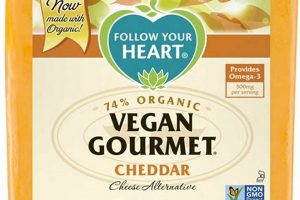
Plant-based cheese alternatives, such as those produced by Follow Your Heart, offer a dairy-free option for consumers. These products are typically crafted from ingredients like nuts, seeds, or vegetable oils, combined with starches and other additives to replicate the texture and flavor profile of traditional dairy cheese. For instance, a common application is as a topping on pizzas or as an ingredient in plant-based dips and sauces.
The increasing popularity of dairy-free cheese stems from various factors, including dietary restrictions, ethical considerations regarding animal welfare, and environmental concerns associated with dairy farming. These alternatives provide a viable option for individuals seeking to reduce or eliminate their consumption of animal products without sacrificing familiar culinary experiences. Historically, the development of plant-based cheeses has progressed significantly, with early versions often lacking the meltability and flavor complexity of their dairy counterparts. Current formulations, however, demonstrate notable improvements in these areas.
Subsequent sections will explore the specific ingredients used in these alternatives, their nutritional profiles in comparison to traditional cheeses, and a review of consumer perceptions and market trends driving the growth of the dairy-free cheese sector.
Optimizing Usage of Plant-Based Cheese Alternatives
Effective utilization of plant-based cheese alternatives, such as those produced by Follow Your Heart, requires an understanding of their unique properties. The following tips provide guidance for achieving optimal culinary results.
Tip 1: Temperature Sensitivity: Plant-based cheeses often exhibit different melting characteristics than traditional dairy cheese. Lower cooking temperatures may be necessary to prevent burning or excessive browning. Monitor closely during cooking.
Tip 2: Moisture Content: Some varieties of plant-based cheese contain higher moisture levels. Consider blotting excess moisture prior to use, particularly in applications such as pizza toppings, to avoid a soggy final product.
Tip 3: Flavor Pairing: The flavor profile of plant-based cheese can differ significantly from dairy cheese. Experiment with herbs, spices, and other ingredients to complement or enhance the taste. For example, nutritional yeast can add a cheesy flavor.
Tip 4: Binding Agent Awareness: Understand the binding agents used in the product. Starches, gums, and other additives affect texture and melting. Adjust recipes accordingly to compensate for these properties.
Tip 5: Storage Practices: Proper storage is crucial for maintaining freshness and preventing spoilage. Follow the manufacturer’s instructions regarding refrigeration and shelf life. Consume promptly after opening.
Tip 6: Application Specificity: Different types of plant-based cheese are better suited for particular applications. Shredded varieties work well for melting, while cream cheese alternatives excel in spreads and dips. Choose the appropriate type for the intended use.
Tip 7: Consider fat contents: The fat content of plant-based cheeses can vary considerably. This impacts meltability, flavor, and overall mouthfeel. Check the nutrition label to match fat content to your desired cooking outcome.
Applying these techniques enhances the functionality of dairy-free cheese, resulting in improved flavor, texture, and overall culinary performance.
The subsequent sections will address common challenges and potential solutions when incorporating plant-based cheese into various recipes.
1. Ingredients

The ingredient composition of plant-based cheese alternatives, specifically those produced by Follow Your Heart, directly dictates the product’s texture, flavor, nutritional profile, and overall suitability as a dairy-free option. Understanding these components is crucial for informed consumer choices.
- Base Ingredients
The foundation of many plant-based cheeses involves nuts (cashews, almonds), seeds (sunflower, pumpkin), or coconut oil. These provide fat content and contribute to the cheese’s structure. For example, cashew-based cheeses often mimic cream cheese textures, while coconut oil bases may result in a firmer, more cheddar-like consistency. The choice of base ingredient significantly impacts the final product’s taste and functionality.
- Starches and Thickeners
Modified food starches, tapioca starch, and various gums (xanthan, carrageenan) are commonly used to achieve the desired texture and meltability. These ingredients help to bind the base ingredients and create a cheese-like consistency. The specific type and proportion of starch and thickener will influence how the cheese melts, spreads, and holds its shape. Excessive use may result in a gummy texture, while insufficient amounts may cause the cheese to separate.
- Flavorings and Additives
Nutritional yeast is a common ingredient to impart a cheesy flavor. Other additives, such as lactic acid, citric acid, and natural flavorings, are used to enhance the taste and mimic the tangy notes found in dairy cheese. Salt is essential for balancing the flavors and preserving the product. The specific blend of flavorings determines the overall taste profile, from mild and creamy to sharp and cheddar-like.
- Preservatives
To extend shelf life and maintain product quality, some plant-based cheeses may contain preservatives like potassium sorbate or sodium benzoate. These additives inhibit the growth of mold and bacteria, preventing spoilage. Consumers concerned about artificial additives should check the ingredient list and consider options with natural preservatives.
The interplay of these ingredients determines the quality and characteristics of these dairy-free cheeses. For instance, a high proportion of coconut oil can lead to a greasier melt, while a carefully balanced blend of nuts and starches can result in a more desirable texture. Careful consideration of ingredients is key to both manufacturers and consumers looking for optimal results.
2. Meltability

The capacity to melt effectively is a crucial characteristic of cheese, influencing its culinary applications and consumer acceptance. For plant-based alternatives, such as those offered by Follow Your Heart, achieving desirable melting properties presents a significant challenge due to the absence of dairy proteins and the unique behavior of plant-derived ingredients.
- Fat Composition and its Influence
The type and saturation level of fats significantly affect meltability. Plant-based cheeses often utilize coconut oil, which is high in saturated fat and melts at a relatively low temperature. However, the resulting melt can be greasy and lack the elasticity of dairy cheese. Unsaturated fats from nuts or seeds may contribute to a smoother, less greasy melt, but require careful balancing with other ingredients.
- Hydrocolloids and Starch Interaction
Hydrocolloids (such as xanthan gum, carrageenan) and modified food starches play a critical role in creating a cheese-like texture and promoting meltability. These ingredients bind water and create a viscous network that simulates the properties of melted dairy cheese. The specific type and concentration of hydrocolloids and starches influence the melt’s viscosity, stretch, and overall appearance. Excessive use can lead to a gummy texture, while insufficient amounts result in poor melting characteristics.
- Emulsification and Stability
Proper emulsification of fats and water is essential for preventing separation during melting. Emulsifiers, such as lecithin, help to stabilize the mixture and maintain a homogenous consistency. Without effective emulsification, the fats may separate, resulting in a greasy or oily appearance. The stability of the emulsion also affects the cheese’s ability to maintain its melted form over time.
- Impact of pH Level
The pH level of plant-based cheese influences the behavior of proteins and other ingredients during melting. Adjusting the pH can improve the texture and meltability of the cheese. Acidic conditions may promote protein coagulation and create a firmer texture, while alkaline conditions can lead to a softer, more spreadable consistency. Maintaining an optimal pH balance is crucial for achieving desirable melting characteristics.
These factors underscore the complexities involved in replicating the melting properties of dairy cheese using plant-based ingredients. Continuous innovation in ingredient selection and processing techniques are essential for improving the meltability and overall performance of plant-based cheese alternatives. Further development will enable these products to become more versatile and appealing to a wider range of consumers seeking dairy-free options.
3. Taste profile

The taste profile of a vegan cheese alternative is a critical determinant of consumer satisfaction and market viability. When evaluating the taste characteristics of alternatives, such as those produced by Follow Your Heart, it’s essential to understand the constituent flavors and their sources.
- Base Ingredient Influence
The base ingredient, whether it be cashews, almonds, coconut oil, or a blend thereof, contributes significantly to the overall taste. Cashew-based alternatives often present a mild, slightly sweet flavor that is easily adaptable. Coconut oil bases provide a distinct tropical note that may require careful balancing with other ingredients. Almonds impart a subtly nutty flavor that can enhance savory applications. The choice of base ingredient fundamentally shapes the cheese’s taste foundation.
- Fermentation and Culturing Processes
Fermentation processes, often employing cultures similar to those used in dairy cheese production, contribute to complex flavor development. Lactic acid fermentation, for example, introduces tangy, sour notes that mimic the sharpness found in traditional cheeses. The type of culture used and the duration of fermentation influence the intensity and character of the resulting flavor profile. Some alternatives may forgo fermentation, relying instead on other flavoring agents to achieve a cheese-like taste.
- Flavor Additives and Enhancers
Flavor additives play a critical role in replicating the taste of dairy cheese. Nutritional yeast, a common ingredient, imparts a savory, umami-rich flavor that is often described as cheesy. Other additives, such as lactic acid, citric acid, and natural flavor extracts, are used to enhance the tanginess, sharpness, and overall complexity of the taste. The specific blend of flavor additives determines the final flavor profile and its resemblance to dairy cheese.
- Mouthfeel and Texture Impact
While not directly a flavor component, the mouthfeel and texture significantly influence taste perception. A smooth, creamy texture enhances the perceived richness and flavor, while a grainy or rubbery texture can detract from the overall experience. Ingredients such as starches and gums are used to achieve the desired texture, and their impact on mouthfeel contributes to the overall taste profile. The interplay of texture and flavor is crucial for creating a satisfying and convincing dairy-free alternative.
These elements, working in concert, define the taste profile of vegan cheese alternatives. The specific combination of base ingredients, fermentation techniques, flavor additives, and texture modifiers determines the final product’s taste, and therefore its acceptance by consumers seeking a dairy-free cheese substitute. Careful consideration of these factors is essential for manufacturers aiming to create appealing and flavorful vegan cheese alternatives. The flavor profile establishes a pivotal link between these substitutes and the culinary experiences traditionally associated with conventional cheese products.
4. Nutritional value

The nutritional value of plant-based cheese alternatives, such as those produced by Follow Your Heart, is a critical factor influencing consumer choices. A direct comparison with traditional dairy cheese reveals significant differences in macronutrient composition, micronutrient content, and the presence of specific compounds. The selection of ingredients directly affects the nutritional profile of the final product. For instance, a cashew-based cheese will differ substantially from a coconut oil-based one in terms of fat content, protein levels, and micronutrient availability.
The practical significance lies in understanding the potential health benefits and drawbacks of substituting dairy cheese with plant-based alternatives. Plant-based options are inherently lactose-free and often lower in saturated fat and cholesterol, which can be advantageous for individuals with lactose intolerance or those seeking to reduce their intake of saturated fat. However, these alternatives may also be lower in protein and certain micronutrients, such as calcium and vitamin B12, which are naturally present in dairy cheese. Manufacturers may fortify their products to address these deficiencies, but the bioavailability of added nutrients can vary. Real-life examples demonstrate that some plant-based cheeses provide a good source of vitamin E, an antioxidant, while others may contain high levels of sodium to enhance flavor.
In summary, the nutritional value of plant-based cheese alternatives is a complex issue influenced by ingredient selection, processing methods, and fortification strategies. Consumers should carefully examine nutrition labels and ingredient lists to make informed choices that align with their individual dietary needs and health goals. Challenges remain in replicating the complete nutritional profile of dairy cheese, and ongoing research is necessary to optimize the nutritional composition of plant-based alternatives. The broader theme underscores the importance of considering both the functional and nutritional aspects when evaluating food substitutes.
5. Market Availability

The market availability of plant-based cheese alternatives, including those under the Follow Your Heart brand, directly impacts consumer accessibility and, consequently, market growth. Increased distribution channels and retail presence contribute to greater consumer awareness and purchase opportunities. Conversely, limited availability restricts market penetration and hinders widespread adoption. This cause-and-effect relationship underscores the importance of strategic distribution networks for plant-based cheese manufacturers. For instance, wider availability in mainstream grocery chains, rather than only specialty health food stores, exposes the product to a larger consumer base. Follow Your Hearts products, stocked in national chains like Kroger and Whole Foods, demonstrate a conscious effort to enhance market reach. This accessibility directly translates to increased sales volume and brand visibility.
The practical significance of understanding market availability extends to evaluating product success and consumer acceptance. High demand coupled with limited supply can create artificial scarcity, potentially boosting perceived value but also frustrating consumers. Conversely, widespread availability without adequate demand may lead to product stagnation and shelf waste. Manufacturers must therefore carefully balance production volume with distribution capacity. Furthermore, targeted marketing efforts are crucial for driving demand in regions where product availability is high. Demonstrations, in-store promotions, and online campaigns can effectively educate consumers about the benefits and uses of plant-based cheese alternatives, thus converting availability into actual sales. An example is Follow Your Hearts online recipe database, which serves to illustrate product application and encourages consumer experimentation.
In conclusion, market availability is a fundamental component of success for plant-based cheese brands like Follow Your Heart. Expanding distribution channels, managing supply and demand, and implementing effective marketing strategies are essential for maximizing market penetration. Challenges remain in achieving parity with traditional dairy cheese in terms of availability, but ongoing expansion and increasing consumer interest suggest continued growth in the plant-based cheese sector. The broader theme emphasizes the crucial role of strategic distribution in the success of alternative food products.
Frequently Asked Questions About Plant-Based Cheese Alternatives (Follow Your Heart)
The following questions address common inquiries regarding dairy-free cheese options, focusing on aspects relevant to product understanding and usage.
Question 1: What are the primary ingredients in Follow Your Heart’s vegan cheese alternatives?
These alternatives are typically formulated using a combination of plant-based fats (such as coconut oil or modified palm kernel oil), modified food starches (tapioca or potato), and nut-based components (cashews or almonds). Additional ingredients include vegetable glycerin, carrageenan, and various flavorings.
Question 2: Do these alternatives melt in a manner comparable to traditional dairy cheese?
Meltability can vary significantly based on the specific product formulation. Certain varieties exhibit acceptable melting characteristics suitable for pizza or grilled sandwiches. However, the resulting texture and elasticity may differ from that of dairy-based cheese, potentially resulting in a greasier or less cohesive melt.
Question 3: Are Follow Your Heart’s vegan cheeses nutritionally equivalent to dairy cheese?
Nutritional profiles diverge substantially. Plant-based alternatives are generally lower in protein and calcium compared to dairy cheese. They may also contain higher levels of saturated fat, depending on the specific formulation. Consumers should carefully review nutrition labels to assess the suitability of these alternatives for their dietary needs.
Question 4: How should these products be stored to maintain optimal quality?
Refrigeration is essential for preserving freshness and preventing spoilage. Once opened, the product should be consumed within a reasonable timeframe, typically indicated on the packaging. Exposure to air and elevated temperatures can accelerate degradation and alter the product’s texture and flavor.
Question 5: Are these cheese alternatives suitable for individuals with nut allergies?
Several formulations contain nuts (such as cashews or almonds). Individuals with nut allergies should meticulously examine the ingredient list to identify potential allergens and avoid products that pose a risk. Allergen labeling practices are subject to regulatory standards and should be carefully reviewed.
Question 6: Can Follow Your Heart’s vegan cheeses be used in baked dishes?
These alternatives can be incorporated into baked dishes, but modifications to traditional recipes may be necessary. The melting properties and moisture content can affect the final texture and consistency of baked goods. Experimentation and recipe adjustments may be required to achieve optimal results.
The information provided aims to clarify common queries and promote informed decision-making regarding plant-based cheese alternatives.
The next section will address consumer perceptions and market trends related to dairy-free cheese options.
Conclusion
The preceding exploration of plant-based cheese alternatives, specifically those offered under the “vegan cheese follow your heart” brand, reveals a complex landscape of ingredients, functionality, nutritional considerations, and market dynamics. Key findings underscore the significant differences in composition and behavior compared to traditional dairy cheese. Consumers must carefully evaluate ingredient lists, melting properties, taste profiles, and nutritional information to make informed decisions aligning with their dietary needs and culinary preferences.
The dairy-free cheese sector continues to evolve, driven by increasing consumer demand and ongoing innovation in food technology. Ongoing assessment of new product formulations and expanding distribution networks will be essential to determine the long-term viability and widespread acceptance of plant-based cheese alternatives. The future trajectory of “vegan cheese follow your heart” and similar products rests on the ability to address existing challenges and meet the expectations of a discerning consumer base seeking both taste and nutritional value.