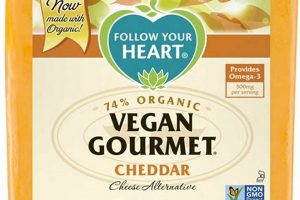
The creation of plant-based dairy alternatives has seen significant growth, with readily accessible culinary procedures designed to replicate the flavor and texture of traditional dairy products without animal-derived ingredients. These procedures generally involve blending nuts, seeds, or vegetables with nutritional yeast, lemon juice, and other seasonings to achieve a cheese-like consistency and taste. As an example, cashew-based preparations often mimic the creamy texture of soft cheeses.
The increasing popularity of creating dairy-free cheese substitutes stems from a desire to accommodate dietary restrictions such as lactose intolerance, adhere to vegan ethical principles, or pursue perceived health advantages associated with plant-based diets. Historically, crafting such substitutes demanded specialized knowledge and ingredients; however, simplified methodologies have broadened accessibility, allowing individuals with varying culinary skills to produce acceptable alternatives at home.
This article will explore the fundamental principles underlying the creation of palatable, dairy-free alternatives, detailing common ingredients, techniques, and potential variations for those seeking to create their own cheese substitutes.
Essential Guidance for Dairy-Free Cheese Preparation
Achieving optimal results in plant-based cheese creation requires careful consideration of ingredient selection, processing techniques, and flavor enhancement strategies. The following recommendations are designed to maximize the quality and palatability of homemade dairy-free alternatives.
Tip 1: Employ High-Quality Base Ingredients: The foundation of successful plant-based cheese lies in the selection of premium nuts, seeds, or vegetables. For example, using raw cashews soaked overnight yields a smoother, creamier texture than using unsoaked or lower-grade nuts.
Tip 2: Master the Art of Flavor Balancing: Achieving a nuanced flavor profile necessitates a careful balance of acid, salt, and umami. Nutritional yeast provides a cheesy, savory depth, while lemon juice or apple cider vinegar contributes essential tang. Salt enhances the overall flavor and acts as a preservative.
Tip 3: Achieve Desired Texture Through Blending and Processing: The method of processing ingredients significantly impacts the final texture. High-powered blenders are often required to achieve a smooth, cheese-like consistency. Agitation and temperature control during any heating process are also critical.
Tip 4: Consider the Role of Thickening Agents: Ingredients like tapioca starch, agar-agar, or carrageenan can be incorporated to improve firmness and structure. These thickening agents require careful hydration and temperature control to activate their gelling properties effectively.
Tip 5: Explore Fermentation Techniques for Enhanced Flavor Complexity: Introducing fermentation, through the use of probiotics or rejuvelac, can result in more complex, tangy flavors reminiscent of aged dairy cheese. This process requires a controlled environment and careful monitoring to prevent undesirable bacterial growth.
Tip 6: Adapt Ingredients to Mimic Specific Cheese Varieties: Varying the base ingredients and flavorings allows for the creation of plant-based alternatives resembling different types of traditional cheese. For instance, the addition of smoked paprika and chili flakes can create a vegan pepper jack style cheese.
Tip 7: Evaluate and Adjust: Continuous evaluation and adjustment are essential. Taste the preparation at each stage and modify seasonings, thickness, and acidity as needed to achieve the desired outcome.
By adhering to these recommendations, one can elevate the quality and enjoyment of plant-based cheese preparations, replicating the familiar experience of dairy cheese while adhering to dietary preferences or restrictions.
The subsequent sections will provide specific recipes and detailed instructions for creating a variety of dairy-free cheese alternatives.
1. Nut Selection

Nut selection represents a foundational element in the formulation of plant-based cheese alternatives. The choice of nut varietals significantly impacts the resultant texture, flavor profile, and overall structural integrity of the final product. Understanding the specific properties of different nuts is crucial for achieving the desired characteristics in the end result.
- Cashews: Creaminess and Smoothness
Cashews, due to their high-fat content and relatively neutral flavor, are frequently employed as a base for creamy, soft vegan cheeses. Soaking cashews prior to blending softens them, facilitating a smoother, more homogenous texture. Their subtle flavor readily accepts added seasonings, enabling the creation of a diverse range of cheese flavors.
- Almonds: Firmness and Structure
Almonds possess a lower fat content and a coarser texture compared to cashews. When used in vegan cheese recipes, almonds contribute to a firmer, more structured end product. The resulting cheese exhibits a less creamy and more solid consistency, suitable for grating or slicing applications. Blanched almonds are often preferred to minimize bitterness.
- Macadamia Nuts: Richness and Density
Macadamia nuts, characterized by their high-fat content and buttery flavor, impart a rich and dense texture to vegan cheese. Their inclusion results in a luxurious mouthfeel, closely mimicking the characteristics of certain dairy-based cheeses. Due to their higher cost, macadamia nuts are often used in combination with other nuts to enhance flavor and texture without significantly increasing production expenses.
- Blending Combinations: Tailoring Texture and Flavor
Combining different nut types allows for precise control over the final products characteristics. A blend of cashews and almonds, for example, can create a balance between creaminess and structure. Experimentation with various nut combinations enables the fine-tuning of texture and flavor to replicate specific cheese varieties or to develop unique, original plant-based alternatives.
In summary, careful consideration of nut selection provides a means to exert considerable influence over the final qualities of plant-based cheese. By understanding the unique contributions of different nut types, culinary professionals and home cooks alike can tailor their recipes to achieve desired textural and flavor outcomes, ultimately enhancing the overall quality and appeal of the final product.
2. Blending Technique

Blending technique constitutes a critical process parameter in the creation of satisfactory plant-based cheese alternatives. The effectiveness of blending directly influences the texture, consistency, and overall palatability of the resultant product. Suboptimal blending can yield a grainy or separated product, while proper execution facilitates a smooth, homogenous, cheese-like texture.
- High-Speed Blending Necessity
Achieving a smooth, dairy-like consistency from ingredients such as soaked nuts or seeds necessitates the use of a high-speed blender. Standard blenders often lack the power required to fully break down these ingredients, resulting in a granular texture. High-speed blenders, conversely, are capable of creating a silky-smooth base essential for replicating the mouthfeel of traditional cheese.
- The Role of Soaking
Prior to blending, soaking nuts (e.g., cashews, almonds) is often required. Soaking softens the nuts, reducing the burden on the blending apparatus and facilitating a smoother, more uniform emulsion. Inadequate soaking prolongs blending time and increases the likelihood of overheating the blender, potentially impacting the final texture and flavor due to ingredient degradation.
- Temperature Considerations
During prolonged blending sessions, the friction generated can significantly increase the temperature of the mixture. Excessive heat can negatively impact the texture and flavor of the cheese alternative, potentially leading to separation or a cooked taste. Blending in short bursts, allowing the mixture to cool intermittently, helps to mitigate this issue.
- Liquid Ratios and Incorporation
Maintaining the correct liquid-to-solid ratio is crucial for achieving the desired consistency. Adding liquid gradually during the blending process allows for greater control over the final texture. Insufficient liquid can result in a thick, pasty mixture, while excessive liquid can lead to a thin, watery product. Adjustments to liquid ratios may be necessary depending on the specific ingredients and the desired cheese type.
In summary, the blending technique is inextricably linked to the successful execution of any plant-based cheese formulation. Employing a high-speed blender, implementing proper soaking protocols, managing temperature fluctuations, and carefully controlling liquid ratios are all essential for producing a smooth, palatable, and texturally appropriate dairy-free cheese alternative. Deviations from these best practices can significantly compromise the quality of the final product.
3. Flavor Enhancement

Flavor enhancement represents a crucial facet in the creation of palatable plant-based cheese alternatives. Given the absence of dairy-derived flavor compounds, achieving a convincing and enjoyable taste profile necessitates strategic utilization of alternative flavor sources.
- Nutritional Yeast: The Foundation of Cheesy Flavor
Nutritional yeast, an inactivated yeast strain, imparts a savory, umami-rich flavor frequently described as “cheesy.” It provides a foundational flavor element in many plant-based cheese recipes. The quantity of nutritional yeast directly correlates with the intensity of the cheesy flavor. Excessive amounts, however, can result in a slightly bitter aftertaste. In processed vegan cheeses, nutritional yeast is often combined with other flavor enhancers to create a more complex and nuanced taste profile.
- Acidic Components: Tang and Complexity
Acidity plays a critical role in replicating the tang and complexity associated with traditional dairy cheeses. Lemon juice, apple cider vinegar, or lactic acid are frequently incorporated to introduce this element. Lactic acid, in particular, mimics the flavor produced by bacterial fermentation in dairy cheese production. The type and quantity of acid used significantly influence the overall flavor profile, requiring careful calibration to avoid excessive tartness or a lack of desired complexity. Cultured vegan cheeses rely on fermentation processes to naturally produce these acids.
- Umami Sources: Depth and Savory Notes
Umami, the fifth basic taste, provides depth and savory notes crucial for creating a well-rounded flavor profile. Ingredients such as miso paste, tomato paste, or mushroom powder contribute to the umami character of plant-based cheese. Miso paste, a fermented soybean product, offers a complex, salty, and savory flavor that can effectively mimic the depth of aged cheeses. Careful consideration of sodium content is necessary when utilizing these ingredients, as excessive salt can negatively impact the overall flavor balance.
- Herbs and Spices: Customization and Variation
Herbs and spices allow for customization and variation, enabling the creation of plant-based cheese alternatives resembling specific dairy-based varieties. Garlic powder, onion powder, smoked paprika, or dried herbs can be incorporated to mimic the flavor profiles of cheeses such as cheddar, gouda, or feta. The use of herbs and spices also provides an opportunity to develop unique and original flavor combinations, expanding the range of possibilities beyond direct imitations of traditional cheeses.
In conclusion, effective flavor enhancement is paramount in achieving a satisfying plant-based cheese experience. The strategic use of nutritional yeast, acidic components, umami sources, and herbs/spices enables the creation of diverse and flavorful alternatives that cater to a wide range of palates, while simultaneously adhering to dietary restrictions or ethical considerations. The application of these techniques transforms simple nut or seed bases into compelling substitutes for traditional dairy cheese.
4. Setting Agent

Setting agents play a pivotal role in transforming a simple vegan cheese recipe from a blended mixture of ingredients into a cohesive, sliceable, or spreadable product. These agents cause the liquid components to bind, creating a semi-solid or solid structure analogous to traditional dairy cheese. The absence or incorrect application of a suitable setting agent often results in a final product lacking the desired texture and functional properties. For instance, recipes aiming to replicate firm cheeses such as cheddar or mozzarella invariably require a setting agent to achieve their characteristic solid form, differentiating them from softer, spreadable alternatives.
Commonly employed setting agents in plant-based cheese-making include agar-agar, tapioca starch, carrageenan, and modified food starches. Agar-agar, derived from seaweed, forms a firm, brittle gel upon cooling, suitable for cheeses that require a solid structure but may lack the creamy mouthfeel of some dairy cheeses. Tapioca starch, when heated, thickens and creates a stretchy texture often utilized in vegan mozzarella alternatives. Carrageenan, another seaweed extract, produces a softer, more elastic gel. The specific choice of setting agent depends on the desired final texture and the characteristics of the other ingredients. For example, a recipe utilizing high-fat nuts may require less setting agent than one based on lower-fat alternatives.
The effective use of setting agents demands precise measurement and proper preparation. Overuse can lead to a rubbery or excessively firm texture, while insufficient quantities result in a product that fails to solidify. Furthermore, the temperature and timing of the setting process are critical to achieving optimal results. In summary, the correct selection and application of a setting agent are indispensable for successfully executing a simple vegan cheese recipe and obtaining a product that meets the intended textural and functional criteria.
5. Acidity Balance
Acidity balance represents a critical determinant in the flavor profile and overall success of a plant-based cheese preparation. In the absence of lactic acid bacteria and the natural fermentation processes that characterize traditional dairy cheese production, alternative means of imparting a similar tang and complexity are required. Insufficient acidity results in a bland, uninteresting product, while excessive acidity produces an unpalatable, sour taste. The challenge lies in achieving an optimal equilibrium that mimics the nuanced flavor of dairy-based cheeses. Common agents employed to modulate acidity include lemon juice, apple cider vinegar, and lactic acid powder. For instance, a cashew-based recipe lacking adequate acidity may exhibit a flat, one-dimensional flavor. Conversely, overzealous addition of lemon juice can overwhelm the other flavor components, resulting in an unbalanced final product. The practical significance of understanding acidity balance extends to the ability to create diverse plant-based cheese alternatives that appeal to a broad range of palates.
The specific acidulant and its concentration must be carefully tailored to the base ingredients. Nuts, seeds, and vegetables each possess inherent flavor characteristics that interact differently with acidic additives. A recipe utilizing cashews, known for their mild flavor, may require a more assertive acidic element than one based on almonds, which possess a more pronounced inherent taste. Moreover, the presence of other flavor enhancers, such as nutritional yeast or miso paste, necessitates adjustments to the acidity level to ensure harmonious integration of flavors. In cultured vegan cheese recipes, fermentation is used to produce the target acidity levels.
In summary, achieving proper acidity balance is essential for crafting palatable and convincing plant-based cheese substitutes. A nuanced understanding of the interactions between acidulants and base ingredients, coupled with careful flavor adjustments, enables the creation of a wide array of dairy-free cheeses that effectively replicate the complex flavors of their dairy-based counterparts. The careful application of these principles differentiates a mediocre result from a compelling and flavorful vegan product.
6. Storage Method

The storage method employed directly impacts the preservation, texture, and safety of homemade vegan cheese. Simple recipes, often lacking the preservatives found in commercially produced alternatives, exhibit a heightened vulnerability to spoilage. Improper storage can lead to bacterial growth, texture degradation, and flavor alterations, rendering the product unpalatable or even unsafe for consumption. For instance, a cashew-based cheese left at room temperature for an extended period will likely exhibit rapid bacterial proliferation, accompanied by a sour odor and a slimy texture. Conversely, appropriate storage practices extend the shelf life and maintain the desired qualities of the vegan cheese, allowing for optimal enjoyment. Refrigeration is typically essential, while freezing may be suitable for certain varieties.
The specific storage requirements vary based on the ingredients and formulation of the vegan cheese recipe. Softer, more moisture-rich cheeses, such as those based on tofu or silken tofu, require particularly stringent refrigeration to minimize the risk of bacterial contamination. Harder cheeses, often incorporating a higher proportion of nuts and a lower water content, may exhibit a longer shelf life under refrigeration. Vacuum sealing or airtight containers are frequently employed to minimize exposure to oxygen and prevent the absorption of odors from the surrounding environment. Furthermore, certain vegan cheeses, particularly those incorporating fermented ingredients, may benefit from specific storage conditions that promote continued maturation of flavor, akin to the aging processes employed in traditional dairy cheese production. Precise documentation of production and packaging dates is highly recommended.
Effective storage methods constitute an integral component of any simple vegan cheese recipe, influencing not only the longevity and safety of the product but also its textural and flavor characteristics. Adherence to appropriate storage protocols is critical for maximizing the quality and enjoyment of homemade vegan cheese. Disregard for these principles can negate the effort invested in recipe execution, resulting in a compromised final product. The selection of the optimal storage approach should be informed by a thorough understanding of the recipe’s ingredients and desired properties, ensuring that the vegan cheese remains safe, palatable, and texturally appealing throughout its intended shelf life.
Frequently Asked Questions
The subsequent section addresses recurring queries pertaining to plant-based cheese alternatives, providing factual responses to common concerns.
Question 1: What is the primary determinant of the “cheesy” flavor in dairy-free cheese preparations?
Nutritional yeast is the primary contributor to the “cheesy” flavor profile in many dairy-free cheese recipes. This inactivated yeast strain possesses umami and savory notes reminiscent of aged cheese.
Question 2: Is specialized equipment required for creating plant-based cheese at home?
While certain recipes may benefit from specialized equipment such as high-speed blenders, many basic preparations can be achieved with standard kitchen appliances. A food processor or conventional blender can suffice for simpler recipes.
Question 3: What accounts for the varied textures observed across different vegan cheese products?
Texture variations are primarily attributable to the ingredients employed and the techniques applied. Nut selection, processing methods (e.g., blending time, heating), and the incorporation of setting agents all significantly influence the final texture.
Question 4: Are homemade dairy-free cheese substitutes nutritionally comparable to traditional dairy cheeses?
Nutritional profiles diverge significantly. Dairy-free alternatives often contain less saturated fat and cholesterol but may lack certain vitamins and minerals naturally present in dairy cheese. Fortification can address specific nutritional deficiencies.
Question 5: How can the shelf life of homemade plant-based cheese be maximized?
Refrigeration is paramount. Adherence to strict hygiene practices during preparation minimizes bacterial contamination. Vacuum sealing or airtight containers reduce oxidation and maintain moisture levels, extending the usable lifespan of the cheese.
Question 6: Can plant-based cheese be utilized in cooked applications, such as pizza or gratins?
Certain formulations are suitable for melting and browning under heat, while others are best suited for cold applications. Recipes incorporating tapioca starch or modified food starches often exhibit superior melting properties.
In conclusion, while plant-based cheese alternatives offer a viable option for those seeking to avoid dairy, a thorough understanding of ingredients, techniques, and storage considerations is essential for achieving satisfactory results.
The subsequent sections will provide specific recipes and detailed instructions for creating a variety of dairy-free cheese alternatives.
Conclusion
The preceding analysis has explored key facets of plant-based cheese creation, focusing on elements essential to the execution of a simple vegan cheese recipe. It elucidated the critical roles of ingredient selection, processing methodologies, flavor modulation, and preservation techniques in the production of a palatable and texturally acceptable dairy-free product. Mastery of these fundamentals permits the creation of diverse cheese alternatives, tailored to specific dietary needs or ethical considerations.
Ongoing refinement in both ingredient technology and culinary processes continues to enhance the viability and appeal of plant-based cheese. Further investigation and experimentation are encouraged to promote innovation and expand the accessibility of these increasingly important dietary options. The potential impact on both individual health and environmental sustainability warrants continued focus in this area.