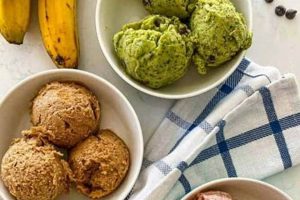
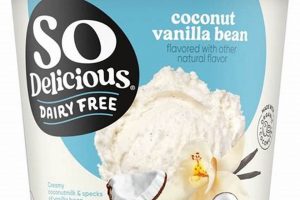
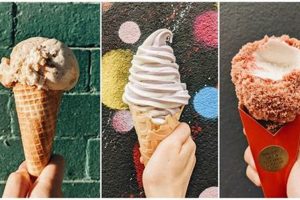
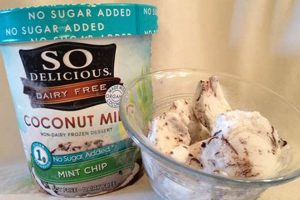
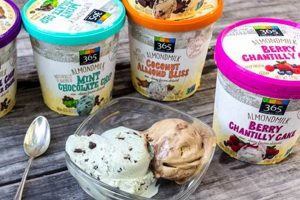
A non-dairy frozen dessert flavored with a combination of salt and caramelized sugar represents an alternative to traditional dairy-based ice cream. The product typically substitutes cow’s milk with plant-based options like coconut milk, almond milk, soy milk, or oat milk. Ingredients are combined to replicate the creamy texture and sweet-and-salty flavor profile of its conventional counterpart.
The appeal stems from both dietary considerations and taste preference. Individuals adhering to vegan diets, those with lactose intolerance, or those seeking lower-fat options find it a suitable indulgence. Furthermore, consumer interest in sustainable and ethical food choices has contributed to its rising popularity. Historical context involves the increasing availability and refinement of plant-based alternatives, allowing for comparable taste and texture to traditional ice cream.
The subsequent sections will delve into the specific ingredients commonly used, the production methods employed, and the nutritional profile of this increasingly popular dessert option. Furthermore, consideration will be given to market trends, consumer perceptions, and the challenges and innovations within this niche food sector.
Tips for Selecting Vegan Salted Caramel Frozen Dessert
The following guidelines are designed to assist consumers in making informed choices when selecting a non-dairy frozen dessert with a salted caramel flavor profile.
Tip 1: Ingredient List Scrutiny: Examine the ingredient list for potential allergens or unwanted additives. Common plant-based milk alternatives include coconut, almond, soy, and oat. Be aware of potential cross-contamination risks for individuals with severe allergies. Prioritize products with minimal artificial flavors and preservatives.
Tip 2: Sugar Content Awareness: Caramel inherently involves sugar. Compare the sugar content per serving across different brands. Opt for products that utilize natural sweeteners in moderation, such as dates or maple syrup, rather than excessive amounts of refined sugar.
Tip 3: Fat Source Evaluation: Assess the type and source of fat used. Coconut milk, while providing creaminess, is high in saturated fat. Consider alternatives incorporating cashew or avocado, which offer healthier fat profiles. Evaluate the ratio of saturated to unsaturated fats.
Tip 4: Salt Source Consideration: Investigate the type of salt used. Sea salt or Himalayan pink salt offer trace minerals compared to processed table salt. The quality of the salt can impact the overall flavor profile.
Tip 5: Third-Party Certifications: Look for certifications such as “Certified Vegan” or “Non-GMO Project Verified.” These certifications provide assurance that the product meets specific standards regarding ingredient sourcing and processing.
Tip 6: Brand Reputation and Reviews: Research the brand’s reputation for quality and ethical sourcing practices. Consult online reviews from other consumers to gain insights into product taste, texture, and overall satisfaction.
Tip 7: Texture Consistency: Upon opening, observe the texture. Excessive ice crystals indicate improper storage or freeze-thaw cycles, potentially affecting the quality. The product should exhibit a smooth and creamy consistency.
By carefully considering these factors, consumers can make more informed decisions when selecting a non-dairy frozen dessert with a salted caramel flavor, aligning with their individual dietary needs and preferences.
The final section will present a comprehensive comparison of several leading brands of this product, highlighting their unique attributes and distinguishing factors.
1. Plant-Based Foundation
The plant-based foundation serves as the cornerstone of any non-dairy frozen dessert, fundamentally defining its texture, flavor profile, and nutritional composition. Its selection is critical for achieving a product that effectively mimics the sensory experience of traditional dairy-based ice cream while adhering to vegan dietary principles.
- Source Material Diversity
The source material encompasses a wide range of plant-derived ingredients, each imparting unique characteristics. Coconut milk, for instance, contributes a rich, creamy texture due to its high fat content. Oat milk provides a smoother mouthfeel and a subtle sweetness. Almond milk offers a lighter texture and a nutty flavor. Soy milk, historically a common choice, delivers a neutral flavor profile and contributes to a stable emulsion. The choice of source material directly influences the final product’s sensory attributes and appeal to different consumer preferences.
- Textural Impact and Emulsification
Plant-based milks often require the addition of stabilizers and emulsifiers to replicate the texture of dairy-based ice cream. Ingredients such as guar gum, xanthan gum, and carrageenan are commonly employed to improve viscosity, prevent ice crystal formation, and maintain a smooth consistency during freezing and thawing. The effectiveness of these additives is contingent on the specific plant-based milk used and the overall formulation of the product. Inadequate emulsification can result in a grainy or icy texture, detracting from the overall eating experience.
- Flavor Compatibility and Enhancement
The inherent flavor of the plant-based milk must complement the salted caramel flavoring. Strong flavors, such as those present in some coconut milk varieties, may require adjustments to the caramel recipe to achieve a balanced flavor profile. Neutral-tasting bases, like soy milk or some oat milk formulations, offer greater flexibility in flavor development. Additives such as vanilla extract or natural flavorings can be used to enhance the overall taste and mask any undesirable notes from the plant-based milk.
- Nutritional Profile Alterations
The plant-based foundation significantly alters the nutritional profile compared to traditional dairy ice cream. Plant-based alternatives are generally lower in saturated fat and cholesterol. However, they may also be lower in protein and certain micronutrients, such as calcium and vitamin B12. Manufacturers often fortify these products to address nutritional deficiencies. The sugar content and the presence of added sugars remain key considerations for consumers seeking healthier options.
The multifaceted influence of the plant-based foundation underscores its importance in the development of acceptable non-dairy frozen desserts. The selection of the appropriate base material, coupled with careful formulation and processing, is crucial for achieving a product that meets both consumer expectations for taste and texture and the ethical and dietary requirements of veganism. Different types of ingredients will require tailored recipes and methods to produce the best result.
2. Caramelization Process

The caramelization process is integral to the creation of the characteristic flavor profile in salted caramel-flavored vegan ice cream. It directly influences the color, aroma, and complexity of the final product, dictating its overall consumer appeal.
- Sugar Selection and Maillard Reaction Involvement
While caramelization primarily involves the thermal decomposition of sugars, the Maillard reactiona non-enzymatic browning reaction between reducing sugars and amino acidscan also contribute to the flavor complexity, particularly if protein sources are present. Different sugars (e.g., sucrose, glucose, fructose) caramelize at varying temperatures and rates, influencing the resulting flavor compounds. For instance, fructose caramelizes more readily than glucose, potentially leading to a more intense flavor development. The type of sugar chosen, and its interaction with other ingredients, directly impacts the nuanced flavor profile of the caramel.
- Temperature Control and Reaction Kinetics
The temperature at which caramelization occurs is a critical factor in determining the final flavor. Lower temperatures result in milder, buttery notes, while higher temperatures yield more intense, complex, and potentially bitter flavors. Precise temperature control is essential to prevent burning, which can produce undesirable off-flavors. The reaction kinetics of caramelization involve a series of complex chemical transformations, including dehydration, isomerization, and polymerization. Understanding these kinetics allows for the optimization of the caramelization process to achieve the desired flavor profile.
- Vegan Ingredient Compatibility
Traditional caramel recipes often incorporate dairy ingredients like butter and cream, which contribute to the texture and flavor. In vegan alternatives, these ingredients are replaced with plant-based fats and emulsifiers. The interaction of these substitutes with the caramelizing sugar influences the final texture and flavor. Coconut oil, for example, can impart a distinct flavor, while soy lecithin acts as an emulsifier to prevent separation. Adjustments to the caramelization process may be necessary to accommodate these ingredient substitutions and achieve a comparable sensory experience.
- Salt Integration and Flavor Amplification
The addition of salt during or after the caramelization process enhances the perception of sweetness and introduces a savory counterpoint, contributing to the distinctive salted caramel flavor. The timing and type of salt used impact the final flavor intensity. Coarse sea salt, for instance, provides a burst of saltiness, while finely ground salt disperses more evenly. The salt interacts with the volatile flavor compounds produced during caramelization, amplifying certain notes and suppressing others, resulting in a more complex and balanced flavor profile.
The caramelization process, when skillfully executed, unlocks a diverse range of flavors critical to vegan salted caramel ice cream. Through strategic sugar selection, precise temperature management, careful ingredient integration, and salt addition, producers can craft a product that closely mirrors the taste and sensory characteristics of traditional salted caramel ice cream while adhering to vegan principles. Understanding the chemical reactions and interactions involved is fundamental to achieving optimal flavor development in this context.
3. Salt Enhancement

The incorporation of salt is a defining characteristic of salted caramel-flavored vegan ice cream, transcending a mere seasoning role. It serves as a crucial flavor enhancer, contributing to the complexity and overall palatability of the dessert. The strategic application of salt significantly impacts the perception of sweetness, creating a balanced and nuanced sensory experience.
- Sweetness Modulation
Salt, when added to sweet foods, suppresses the perception of sweetness through an ionic interaction with sweetness receptors on the tongue. This reduction in perceived sweetness allows other flavors, particularly the caramel notes, to become more prominent. The result is a more balanced flavor profile where the sweetness does not overwhelm the other components. The precise quantity of salt is critical; excessive salt can create an unpleasant taste, while insufficient salt fails to achieve the desired flavor enhancement.
- Flavor Amplification
Salt enhances the volatile aromatic compounds present in caramel, increasing their perceived intensity. This effect is attributed to salt’s ability to increase the release of these compounds from the food matrix, making them more accessible to olfactory receptors. The caramel flavor, therefore, becomes more pronounced and complex, contributing to a richer and more satisfying sensory experience. This phenomenon is observed across various food applications, highlighting salt’s potent flavor-enhancing capabilities.
- Texture Modification
While the primary role of salt is flavor enhancement, it can also indirectly influence the texture of the ice cream. Salt affects the freezing point of the mixture, potentially impacting the size and formation of ice crystals. A controlled amount of salt can contribute to a smoother, creamier texture by preventing the formation of large ice crystals. However, excessive salt can disrupt the freezing process, leading to a grainy or icy texture, thereby underscoring the need for precise calibration.
- Contrast Creation
The addition of salt creates a contrasting flavor element that enhances the overall sensory experience. The interplay between the sweet caramel and the salty notes provides a more dynamic and engaging taste sensation. This contrast is particularly appealing in desserts, where it prevents the flavor from becoming monotonous. The intensity of the salt flavor should be carefully balanced with the sweetness of the caramel to achieve optimal sensory contrast and prevent one flavor from overpowering the other.
The strategic incorporation of salt is not merely an afterthought in salted caramel vegan ice cream production. It is an integral element of flavor design, requiring careful consideration to achieve the desired sensory outcome. The interplay between salt and other ingredients dictates the product’s overall success, highlighting the importance of precision and understanding in its application. Attention to detail is crucial to harness the benefits without compromising the product’s quality and palatability.
4. Texture Optimization

Texture optimization is a critical aspect in the development of vegan ice cream, particularly in the salted caramel variant. Replicating the smooth, creamy mouthfeel of traditional dairy ice cream using plant-based ingredients presents significant challenges. The successful attainment of a desirable texture is a key determinant of consumer acceptance and overall product satisfaction.
- Ice Crystal Formation Control
The formation of large ice crystals is a primary cause of undesirable grainy texture in frozen desserts. In vegan formulations, the absence of dairy proteins, which naturally inhibit ice crystal growth, necessitates the use of alternative stabilizers and processing techniques. Emulsifiers such as soy lecithin, sunflower lecithin, or combinations of plant-based gums are employed to create a stable emulsion, preventing water molecules from coalescing and forming large ice crystals. Rapid freezing and controlled storage temperatures further minimize ice crystal formation, contributing to a smoother texture. Proper handling during distribution and storage is crucial for maintaining optimal texture throughout the product’s shelf life.
- Plant-Based Fat Emulsification and Stabilization
The type and proportion of plant-based fats significantly impact the texture of vegan ice cream. Coconut oil, shea butter, and cocoa butter are commonly used to provide richness and creaminess. However, these fats can solidify at low temperatures, leading to a hard or waxy texture. Emulsification techniques, such as high-pressure homogenization, are employed to disperse the fats uniformly throughout the mixture, preventing them from separating and solidifying in large clumps. Stabilizers, including guar gum, locust bean gum, and cellulose gum, are added to increase viscosity and maintain the emulsion stability during freezing and thawing. These additives work synergistically to create a smooth, consistent texture that mimics the properties of dairy fat.
- Solid Content Management
The total solids content of the ice cream mix influences its texture and freezing behavior. A higher solids content generally results in a firmer, more stable texture. Vegan ice cream formulations often require the addition of extra solids, such as plant-based proteins (e.g., soy protein isolate, pea protein) or carbohydrates (e.g., tapioca starch, maltodextrin), to compensate for the lower solids content of plant-based milks compared to cow’s milk. These solids contribute to the viscosity of the mix and reduce the amount of free water available for ice crystal formation. Careful balancing of the solid content is essential to prevent excessive hardness or a gritty texture.
- Overrun and Air Incorporation
Overrun refers to the percentage increase in volume due to the incorporation of air during the churning process. Air incorporation is critical for achieving a light, airy texture in ice cream. In vegan formulations, achieving adequate overrun can be challenging due to the absence of dairy proteins, which contribute to air cell stability. Specialized churning equipment and techniques are often employed to create small, stable air cells within the mix. The addition of plant-based proteins or emulsifiers can further enhance air incorporation and prevent air cell collapse during freezing and storage. Proper overrun control is essential for preventing a dense, heavy texture and achieving a desirable mouthfeel.
The achievement of optimized texture in salted caramel vegan ice cream necessitates a multifaceted approach, encompassing careful ingredient selection, precise processing techniques, and controlled storage conditions. By addressing the challenges associated with ice crystal formation, fat emulsification, solid content management, and air incorporation, manufacturers can create vegan ice cream that rivals the sensory qualities of its dairy-based counterpart. The ongoing development of novel plant-based ingredients and processing technologies continues to drive advancements in texture optimization, expanding the possibilities for creating high-quality vegan frozen desserts.
5. Flavor Balancing

In salted caramel vegan ice cream, flavor balancing represents the critical equilibrium between sweetness, saltiness, and the inherent characteristics of the plant-based foundation. The absence of dairy fat necessitates meticulous calibration of these elements to achieve a palatable and commercially viable product. The caramel component, typically derived from caramelized sugars, contributes sweetness, which must be counteracted by the judicious use of salt. The plant-based milk substitute, such as coconut, oat, or almond milk, introduces its own distinct flavor profile that influences the overall balance. Imprecise flavor balancing results in a product that is either excessively sweet, overly salty, or dominated by the flavor of the plant-based milk, leading to consumer dissatisfaction. A successful product requires a harmonious integration of these flavors, creating a complex and satisfying sensory experience. For example, using too much coconut milk without adjusting the salt level can result in an overly sweet and one-dimensional flavor profile.
Practical application of flavor balancing principles involves careful consideration of ingredient ratios and the order in which they are introduced during the manufacturing process. The salt concentration, often utilizing sea salt to provide a more nuanced flavor, must be precisely measured and uniformly distributed. The caramelization process itself significantly impacts the final flavor; controlling the temperature and duration of caramelization ensures that the sweetness does not become overly intense or acquire burnt notes. Furthermore, the addition of vanilla extract or other flavor enhancers can subtly adjust the overall balance, masking any undesirable flavors from the plant-based milk or enhancing the caramel notes. Sensory evaluation, involving taste panels, is crucial for fine-tuning the flavor profile and ensuring consumer acceptance. One practical example is the use of a slightly higher salt concentration when using a sweeter oat milk base, compared to a less sweet almond milk base.
Achieving optimal flavor balancing in salted caramel vegan ice cream presents ongoing challenges. The inherent variability of plant-based ingredients, due to factors such as seasonal changes and sourcing differences, necessitates continuous monitoring and adjustment of the formulation. Moreover, consumer preferences for sweetness and saltiness vary considerably, requiring manufacturers to cater to diverse tastes. Despite these challenges, a thorough understanding of flavor balancing principles, coupled with rigorous sensory evaluation, enables the production of high-quality vegan ice cream that replicates the desirable characteristics of its dairy-based counterpart, while adhering to ethical and dietary constraints.
Frequently Asked Questions
The following questions and answers address common inquiries and misconceptions regarding non-dairy frozen desserts featuring a salted caramel flavor profile.
Question 1: What ingredients typically replace dairy in this product?
Plant-based alternatives such as coconut milk, oat milk, almond milk, soy milk, or cashew milk are commonly used. Stabilizers like guar gum or xanthan gum may also be added to mimic the texture of dairy-based ice cream.
Question 2: Is the caramel component always vegan-friendly?
Traditional caramel recipes often include dairy butter or cream. Vegan versions substitute these with plant-based alternatives such as coconut oil or vegan butter. It is crucial to verify the ingredient list to ensure the caramel is free from animal-derived products.
Question 3: Does it possess a similar nutritional profile to dairy-based ice cream?
The nutritional profile differs. Generally, it tends to be lower in saturated fat and cholesterol but may also be lower in protein and certain vitamins. Sugar content can vary widely; therefore, careful label reading is essential.
Question 4: How is the salted flavor achieved in a vegan context?
High-quality sea salt is typically used to enhance the sweetness of the caramel. The salt’s presence balances the flavor profile and prevents it from becoming excessively sweet. The type and quantity of salt used directly impact the final taste.
Question 5: What contributes to the texture of vegan alternatives?
Achieving a smooth, creamy texture without dairy requires the use of specific emulsifiers and stabilizers. Processing techniques such as high-pressure homogenization also play a critical role in preventing ice crystal formation and maintaining texture during freezing and thawing.
Question 6: What are some common allergens to be aware of?
Common allergens present include tree nuts (almonds, cashews, coconuts), soy, and gluten (if oat milk is not certified gluten-free). Individuals with allergies must carefully review the ingredient list before consumption.
Key takeaways include the importance of careful ingredient scrutiny for dietary adherence, awareness of potential allergens, and the understanding that nutritional profiles differ significantly from traditional dairy products.
The following section will provide a comparative analysis of commercially available brands, highlighting their unique characteristics and ingredient compositions.
Vegan Ice Cream Salted Caramel
This examination has elucidated the multifaceted nature of vegan ice cream salted caramel, underscoring its reliance on plant-based foundations, precise caramelization techniques, strategic salt enhancement, and careful textural optimization. The meticulous flavor balancing required to achieve a palatable product, free from animal-derived ingredients, represents a significant achievement in food science and culinary innovation. The selection of ingredients, from plant-based milk alternatives to specialized emulsifiers, directly influences the final product’s sensory qualities and nutritional profile. It is imperative that consumers maintain vigilance in scrutinizing ingredient lists to ensure alignment with dietary needs and preferences.
The future trajectory of vegan ice cream salted caramel hinges on continued advancements in plant-based ingredient technology and a deeper understanding of consumer preferences. Further research into alternative stabilizers and flavor enhancers will be crucial to replicating the texture and taste of traditional dairy ice cream while maintaining ethical and environmental sustainability. This product category represents a tangible intersection of culinary artistry, scientific innovation, and ethical consumerism. Its continued success depends on a commitment to transparency, quality, and responsible sourcing.