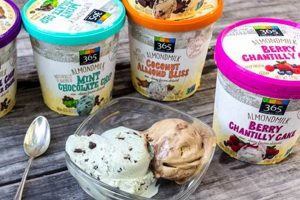
Frozen desserts, crafted without animal products and without the need for specialized ice cream making equipment, offer an accessible treat. These recipes often rely on a base of coconut cream, blended fruits, or nut butters to achieve a creamy texture upon freezing. The absence of churning means the mixture is simply frozen, allowing for a straightforward preparation process.
The rising popularity of plant-based diets has fueled interest in these dairy-free alternatives. They cater to individuals with lactose intolerance, those following a vegan lifestyle, and consumers seeking healthier dessert options. Historically, homemade ice cream required considerable effort and equipment, but these simplified techniques have democratized the process, allowing anyone to create frozen desserts at home.
The following sections will delve into specific ingredient options, explore techniques for achieving optimal texture, and provide considerations for flavor pairings in the creation of these frozen desserts. Subsequent discussion will focus on storage recommendations and potential variations on core recipes.
Essential Guidance
Achieving optimal results with these frozen, plant-based desserts requires attention to specific techniques and ingredient considerations. The following tips are designed to enhance the final product.
Tip 1: Ingredient Selection: Employ full-fat coconut cream for the richest texture. Lower-fat varieties may yield an icier result. Refrigerate the coconut cream overnight and only scoop out the thick cream from the top, leaving the watery liquid behind.
Tip 2: Sweetener Adjustment: The sweetness level significantly impacts the final product’s texture. Too little sweetener results in a harder, icier dessert; adjust to taste, ensuring the mixture is slightly sweeter than desired before freezing.
Tip 3: Fruit Preparation: When using fruits, particularly those with high water content, consider pre-cooking or reducing them on the stovetop. This minimizes ice crystal formation and concentrates the flavor.
Tip 4: Blending Technique: A high-powered blender is recommended to achieve a uniformly smooth and creamy base. Blend until completely smooth, ensuring no lumps or chunks remain.
Tip 5: Alcohol Addition (Optional): A small amount of alcohol, such as vodka or rum, can inhibit ice crystal formation, resulting in a smoother texture. Use sparingly (1-2 tablespoons per batch) as excessive alcohol will prevent freezing.
Tip 6: Freezing Protocol: Transfer the blended mixture to a freezer-safe container, preferably one that is shallow and wide, to promote even freezing. Cover tightly to prevent freezer burn.
Tip 7: Patience is Key: Allow sufficient freezing time, typically 6-8 hours or overnight. Avoid the temptation to repeatedly check on the dessert, as fluctuations in temperature can disrupt the freezing process.
Tip 8: Softening Before Serving: Before serving, allow the frozen dessert to soften slightly at room temperature for 10-15 minutes. This facilitates easier scooping and enhances the overall eating experience.
By adhering to these guidelines, a superior homemade frozen dessert can be consistently achieved, offering a delightful and accessible treat.
The final section will provide instructions for long-term storage and creative serving suggestions.
1. Base

The “base” is the foundational element of any frozen, plant-based dessert made without churning. It dictates the overall creaminess, richness, and ultimately, the texture of the final product. Selecting the appropriate base is therefore paramount to achieving a desirable outcome. Common options include coconut cream, cashew cream, avocado, and ripe bananas. Each of these bases contributes unique characteristics. For example, coconut cream, with its high fat content, closely mimics the mouthfeel of dairy-based ice cream. Cashew cream, made from blended cashews, offers a neutral flavor profile, allowing other ingredients to shine.
The choice of base directly impacts the freezing process and the development of ice crystals. Bases with higher water content, such as blended fruit, tend to produce icier desserts. Conversely, bases with higher fat content, like coconut cream, create smoother, less icy textures. Preparation of the base is also crucial. For cashew cream, soaking the cashews beforehand softens them, allowing for a smoother blend. For coconut cream, using the thick, solidified cream from the top of a refrigerated can ensures a richer base and minimizes excess liquid. Successful vegan frozen dessert making relies on understanding these nuanced properties.
In summary, the base is not merely an ingredient, but the structural cornerstone of these desserts. Its selection and preparation directly correlate with the quality and texture of the final product. Challenges often arise from inappropriate base selection, such as using low-fat coconut milk instead of full-fat coconut cream. Overcoming these challenges requires careful consideration of the base’s composition and its interaction with other ingredients. The choice of base fundamentally dictates the overall success of making these frozen desserts.
2. Sweetness

Sweetness serves a dual purpose in frozen desserts made without churning: it contributes to both the perceived flavor profile and the final texture. Insufficient sweetness results in a harder, icier product due to the increased formation of ice crystals. Sugar molecules disrupt the water’s ability to form large, rigid crystal structures. Therefore, the presence of adequate sweetness not only enhances the taste but also ensures a smoother, more palatable consistency. For example, a recipe using unsweetened frozen fruit without the addition of a sweetener will yield a solid, difficult-to-scoop block. Conversely, the same fruit combined with an appropriate amount of sweetener, such as agave nectar or maple syrup, will create a softer, scoopable dessert.
The type of sweetener used also influences the final outcome. Liquid sweeteners, like maple syrup or agave, dissolve more readily and distribute evenly throughout the mixture, minimizing the risk of grainy textures. Granulated sweeteners, such as cane sugar, must be fully dissolved before freezing to prevent crystallization and grittiness. The freezing point depression is another critical factor; adding sugar lowers the freezing point of the mixture, which delays the formation of large ice crystals, resulting in a smoother dessert. Many recipes for this type of dessert use a combination of natural and processed vegan sweeteners to reach ideal consistency.
In summary, sweetness is more than just a flavor component; it is a crucial determinant of texture in frozen desserts created without churning. Careful consideration of the type and quantity of sweetener is necessary to achieve a balanced flavor and a smooth, creamy consistency. Overcoming the common challenge of icy desserts requires precise control over the sweetness level, ensuring a pleasurable eating experience. This understanding of sweetness and how it interacts with ingredients is essential for those seeking to make this type of frozen dessert.
3. Texture

Texture is a paramount attribute of frozen desserts, and achieving a desirable texture without the aid of churning presents unique challenges in the context of plant-based recipes. A smooth, creamy consistency is generally desired, contrasting with an icy or grainy outcome. Understanding the factors that influence texture is crucial for successful creation of these desserts.
- Fat Content and Selection of Base Ingredients
The fat content of the chosen base ingredient directly impacts the final texture. High-fat options, such as coconut cream or cashew cream, contribute to a richer, smoother consistency, mimicking the properties of dairy-based ice cream. Lower-fat alternatives may result in an icier texture. The selection of base ingredients must consider the balance between flavor and fat content to achieve the desired textural outcome.
- Water Content Management
Excessive water content is a primary cause of icy texture. Ingredients with high water content, such as fruits, should be used judiciously or pre-cooked to reduce moisture. The addition of stabilizers, such as guar gum or tapioca starch, can help bind water and prevent ice crystal formation, improving the overall texture.
- Sweetener Type and Concentration
Sweeteners not only contribute to flavor but also influence texture. Sugars lower the freezing point of the mixture, which can inhibit the formation of large ice crystals. Liquid sweeteners, such as agave or maple syrup, are often preferred as they dissolve easily and distribute evenly. The concentration of sweetener must be carefully balanced; too little can result in a hard, icy dessert, while too much can create a syrupy texture.
- Freezing Rate and Temperature
The rate at which the mixture freezes affects the size of ice crystals. Rapid freezing generally results in smaller ice crystals and a smoother texture. Maintaining a consistent and sufficiently low freezer temperature is essential. Avoiding temperature fluctuations during the freezing process minimizes the risk of ice crystal growth and maintains the desired texture.
These aspects of texture are tightly intertwined, as manipulation of one parameter can lead to changes in others. An experienced maker of plant-based frozen desserts will skillfully balance these elements to yield a smooth and creamy result. Consideration of these characteristics leads to a greater understanding of the relationship between ingredients, technique, and outcome. A focus on texture is an important step to making this frozen dessert.
4. Flavor

Flavor in plant-based frozen desserts created without churning is a multifaceted attribute, influenced by the selection and combination of ingredients. The absence of dairy necessitates creative approaches to achieve rich and satisfying flavor profiles. The base ingredients, such as coconut cream or cashew cream, contribute inherent flavors that must be considered when developing a recipe. For example, the subtle coconut flavor of coconut cream can complement tropical fruit combinations, while the more neutral flavor of cashew cream allows for greater versatility in flavor pairings.
Flavor complexity can be achieved through the strategic use of extracts, spices, and fruit purees. Vanilla extract enhances the sweetness and depth of many recipes, while spices such as cinnamon or cardamom add warmth and complexity. Fruit purees, when used judiciously, contribute natural sweetness and vibrant flavors. For instance, a mango puree combined with coconut cream creates a tropical flavor profile, whereas a blend of cocoa powder and almond extract yields a chocolate-flavored dessert. It is important to note that the intensity of flavors may diminish during the freezing process, necessitating adjustments to ensure a pronounced flavor in the final product. For example, the addition of a pinch of salt can enhance the perception of sweetness and balance the overall flavor profile.
The development of flavors in plant-based frozen desserts created without churning requires a nuanced understanding of ingredient interactions and flavor balance. Careful consideration of the base flavor, the addition of complementary ingredients, and adjustments for the effects of freezing are essential for creating appealing and delicious desserts. The versatility of plant-based ingredients allows for endless flavor combinations, limited only by imagination and culinary skill. Overcoming the challenge of creating rich and satisfying flavor profiles without dairy is a key aspect of plant-based frozen dessert making.
5. Freezing

Freezing is the critical phase in the creation of plant-based frozen desserts made without churning, transforming a liquid or semi-liquid mixture into a solid, palatable treat. The process and speed of freezing significantly influence the final texture and overall quality of the product.
- Ice Crystal Formation
Ice crystal formation is the most important consideration during the freezing process. Larger ice crystals result in a grainy, undesirable texture, while smaller ice crystals contribute to a smoother, creamier mouthfeel. The rate of freezing directly affects ice crystal size; rapid freezing promotes the formation of smaller crystals, whereas slow freezing encourages larger crystals. Proper techniques are necessary to minimize ice crystal size and enhance the dessert’s texture.
- Freezer Temperature
Maintaining a consistent and sufficiently low freezer temperature is essential. Ideally, the freezer should be set to 0F (-18C) or lower. Fluctuations in temperature can disrupt the freezing process, causing ice crystals to melt and refreeze, leading to the formation of larger, more noticeable crystals. Therefore, avoiding frequent opening of the freezer during the initial freezing period is advisable.
- Container Selection
The type of container used for freezing can impact the rate of freezing and the prevention of freezer burn. Shallow, wide containers promote faster freezing due to increased surface area. Airtight containers are necessary to prevent freezer burn, which occurs when moisture evaporates from the surface of the dessert, leading to a dry, icy texture. Wrapping the dessert tightly with plastic wrap before placing it in an airtight container provides an extra layer of protection.
- Stabilizers and Additives
Certain stabilizers and additives can influence the freezing process and improve the final texture. Ingredients such as guar gum, xanthan gum, or tapioca starch can help bind water and prevent ice crystal formation, resulting in a smoother dessert. Small amounts of alcohol, such as vodka, can also inhibit ice crystal formation due to its lower freezing point. These additives must be used judiciously to avoid altering the flavor or creating an undesirable texture.
In conclusion, freezing is a critical process that determines the ultimate quality of these frozen desserts. By carefully controlling the rate of freezing, maintaining a consistent freezer temperature, selecting appropriate containers, and considering the use of stabilizers, a plant-based dessert with a smooth, creamy texture can be consistently achieved. Proper freezing techniques are essential for transforming a simple mixture of ingredients into a frozen confection.
6. Storage
The appropriate storage of plant-based, no-churn frozen desserts directly impacts their texture, flavor, and overall quality. Improper storage leads to freezer burn, ice crystal formation, and the absorption of unwanted odors, rendering the dessert unappetizing. The absence of stabilizers commonly found in commercial ice cream necessitates even more careful attention to storage protocols. For example, a batch of coconut-based frozen dessert left uncovered in a freezer alongside strong-smelling foods will quickly develop an off-flavor, while one stored in an airtight container will maintain its intended taste.
The type of container used for storage is a critical factor. Airtight containers minimize exposure to air, preventing freezer burn and reducing the absorption of odors. Plastic containers designed for freezer use are preferable to glass, as they are less prone to cracking due to temperature fluctuations. Furthermore, pressing a layer of plastic wrap directly onto the surface of the dessert before sealing the container can provide an additional barrier against ice crystal formation. The location of the dessert within the freezer is also relevant; storing it towards the back, where temperature fluctuations are minimal, helps maintain a consistent texture.
In summary, proper storage techniques are vital for preserving the quality of plant-based, no-churn frozen desserts. Airtight containers, protective layers of plastic wrap, and strategic freezer placement are all essential components of effective storage. Failing to adhere to these guidelines results in a degraded product, highlighting the practical significance of understanding and implementing appropriate storage practices. Consistent attention to these storage aspects will ensure that the final product remains a palatable and enjoyable treat.
Frequently Asked Questions
The following addresses common inquiries regarding plant-based frozen desserts created without churning, providing clarity on formulation, storage, and consumption.
Question 1: What distinguishes plant-based frozen desserts made without churning from traditional ice cream?
Traditional ice cream relies on dairy milk and cream for its base and requires churning to incorporate air and prevent ice crystal formation. Plant-based alternatives utilize plant-derived ingredients, such as coconut cream or cashew cream, and omit the churning process, relying instead on specific freezing techniques and ingredient ratios to achieve a desirable texture.
Question 2: How can a smooth texture be achieved without the churning process?
A smooth texture is primarily achieved through the careful selection of ingredients and precise control over the freezing process. High-fat plant-based creams, coupled with rapid freezing and the addition of stabilizers like guar gum, help minimize ice crystal formation, resulting in a smoother consistency.
Question 3: What are the most common challenges encountered when creating plant-based frozen desserts created without churning?
Common challenges include achieving a creamy texture, preventing excessive iciness, and balancing flavors effectively. These challenges often stem from improper ingredient ratios, inadequate freezing techniques, or a failure to account for the unique properties of plant-based ingredients.
Question 4: How does storage impact the quality of these frozen desserts?
Improper storage can lead to freezer burn, ice crystal formation, and the absorption of unwanted odors. Storing the dessert in an airtight container, pressing plastic wrap directly onto the surface, and maintaining a consistent freezer temperature are crucial for preserving its quality.
Question 5: What sweeteners are most suitable for plant-based frozen desserts created without churning?
Liquid sweeteners, such as agave nectar or maple syrup, are generally preferred as they dissolve easily and distribute evenly, minimizing the risk of grainy textures. The type and quantity of sweetener must be carefully balanced to achieve both the desired flavor and texture.
Question 6: Can the addition of alcohol improve the texture of plant-based frozen desserts made without churning?
A small amount of alcohol, such as vodka or rum, can inhibit ice crystal formation, resulting in a smoother texture. However, alcohol should be used sparingly (typically no more than 1-2 tablespoons per batch), as excessive amounts can prevent the mixture from freezing properly.
Plant-based frozen desserts created without churning can offer a delightful alternative to dairy-based options. Understanding the basic properties can create an environment for successful creation.
Next steps involve specific recipes and step-by-step instructions.
Conclusion
This exploration of vegan no churn ice cream has elucidated the critical elements for successful creation: base selection, sweetener management, texture optimization, flavor balancing, effective freezing, and proper storage. Each facet contributes significantly to the final product, and a thorough understanding of their interdependencies is essential for achieving desirable results.
The information presented serves as a foundation for informed experimentation and refined technique. As plant-based dietary choices become increasingly prevalent, the ability to produce high-quality, dairy-free frozen desserts will continue to be a valuable skill, extending beyond simple culinary pursuit to align with broader ethical and health-conscious objectives. Continued exploration and refinement of these techniques will undoubtedly lead to further innovation and enhancement in the realm of plant-based desserts.