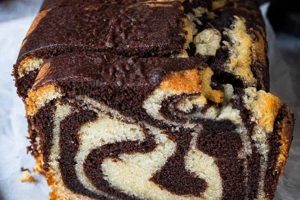
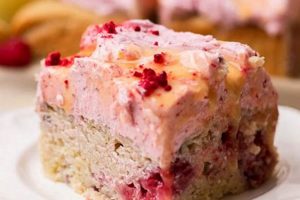
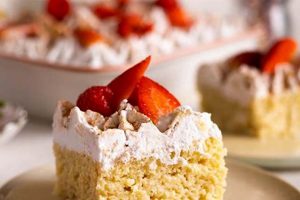
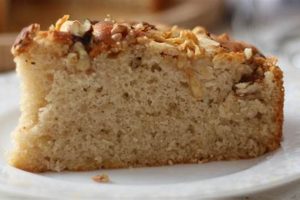
A plant-based adaptation of a classic dessert, it substitutes traditional animal-derived ingredients with alternatives to create a sweet confection suitable for individuals following a vegan lifestyle. This dessert replicates the light, airy texture and delicate flavor profile of the original, using ingredients such as plant-based milk, aquafaba, and vegan butter or oil. The result is a layered cake, often featuring berries, topped with a non-dairy whipped cream substitute.
The significance of this culinary creation lies in its ability to provide an inclusive dessert option that aligns with ethical and dietary choices. It demonstrates how traditional recipes can be adapted to cater to evolving consumer preferences and dietary restrictions without compromising on taste or texture. The historical context involves the increasing demand for plant-based alternatives and the development of innovative vegan ingredients that enable the successful replication of classic recipes.
Further exploration of this specific dessert involves delving into the various ingredient substitutions employed, examining the techniques required to achieve the desired texture and flavor, and assessing the nutritional differences between the traditional and vegan versions. The following sections will provide a detailed analysis of these aspects.
Crafting Superior Vegan Chantilly Cake
Achieving optimal results in the production of plant-based Chantilly cake necessitates careful attention to ingredient selection and preparation techniques. The following recommendations offer guidance to enhance the quality of the final product.
Tip 1: Ingredient Substitution Accuracy: Precise measurement of plant-based milk and vegan butter is crucial for achieving the desired consistency. Slight variations in these ingredients can significantly impact the cake’s texture and overall structure. Prioritize accurate measurements using digital scales for consistent results.
Tip 2: Aquafaba Whipping Technique: When using aquafaba as a vegan egg white substitute, ensure it is chilled thoroughly before whipping. Gradual addition of sugar is critical to stabilize the foam and achieve the desired volume. Over-whipping should be avoided, as it can lead to a dry and crumbly texture.
Tip 3: Vegan Butter Temperature Control: Vegan butter should be softened but not melted before creaming with sugar. Proper temperature control allows for optimal aeration, resulting in a lighter and more tender cake crumb. Avoid using excessively warm butter, as it will compromise the cake’s structure.
Tip 4: Careful Selection of Flavor Extracts: Use high-quality vanilla extract to enhance the flavor profile. Imitation vanilla extract can impart an artificial taste and should be avoided. Consider complementing vanilla with other natural flavorings, such as citrus zest or almond extract, to create a more complex flavor.
Tip 5: Gentle Folding Technique: When incorporating dry ingredients into wet ingredients, employ a gentle folding technique to prevent overmixing. Overmixing can develop gluten, resulting in a tough and dense cake. Use a rubber spatula to carefully fold the ingredients until just combined.
Tip 6: Controlled Baking Temperature: Maintain a consistent oven temperature throughout the baking process. Fluctuations in temperature can lead to uneven baking and a sunken cake. Utilize an oven thermometer to ensure accurate temperature control.
Tip 7: Proper Cooling Procedure: Allow the cake layers to cool completely in the pans before frosting. Premature frosting can cause the frosting to melt and the cake to become soggy. Consider inverting the cakes onto a wire rack to facilitate even cooling.
By adhering to these guidelines, individuals can significantly improve the quality and consistency of their plant-based dessert, ensuring a delightful culinary experience. The application of precise techniques and careful ingredient selection are paramount to achieving a superior final product.
The following section will explore specific recipe variations and advanced techniques, further enhancing the understanding and mastery of vegan Chantilly cake creation.
1. Plant-based milk selection

The selection of plant-based milk is a critical determinant of the texture, flavor, and overall success of a vegan chantilly cake. The composition and properties of the chosen milk alternative directly influence the cake’s crumb structure, moisture content, and compatibility with other ingredients.
- Fat Content and Cake Texture
The fat content of the plant-based milk significantly impacts the cake’s texture. Higher fat content milks, such as coconut or cashew milk, tend to produce a richer, denser cake with a more tender crumb. Lower-fat options, like almond or oat milk, may result in a drier, less tender cake, necessitating adjustments to the recipe’s moisture content.
- Protein Content and Binding Properties
The protein content influences the cake’s binding properties. Soy milk, with its relatively higher protein content compared to other plant-based milks, can provide better structure and binding, mimicking some of the effects of eggs in traditional cake recipes. This is particularly relevant in vegan baking where egg substitutes are used to create a cohesive batter.
- Flavor Profile and Overall Taste
Each plant-based milk possesses a distinct flavor profile that will subtly influence the final taste of the cake. Coconut milk imparts a coconut flavor, while almond milk contributes a nutty undertone. Neutral-tasting options, such as oat milk, are often preferred when the goal is to minimize the milk’s impact on the cake’s flavor and allow other ingredients, such as vanilla or fruit, to shine.
- Acidity and Ingredient Interactions
The acidity levels can affect the leavening process and ingredient interactions. Some plant-based milks may react differently with baking powder or baking soda, potentially impacting the cake’s rise and overall texture. Adjustments to the leavening agents may be required depending on the chosen plant-based milk.
Ultimately, the choice of plant-based milk should align with the desired characteristics of the cake. Experimentation with different options is often necessary to determine the ideal milk alternative that yields the optimal texture, flavor, and structural integrity in a vegan chantilly cake. Careful consideration of the factors outlined above will contribute to a more consistent and successful outcome.
2. Aquafaba whipping stability
Aquafaba, the liquid derived from cooked legumes, particularly chickpeas, serves as a functional replacement for egg whites in various culinary applications, including the creation of vegan chantilly cake. The stability of aquafaba foam is paramount to achieving the desired light and airy texture characteristic of traditional chantilly cream, directly influencing the cake’s overall sensory appeal.
- Protein Composition and Foam Formation
Aquafaba’s protein and carbohydrate content are critical for foam formation and stabilization. The proteins denature during whipping, creating a network that traps air bubbles. Insufficient or denatured proteins result in unstable foams that collapse rapidly, leading to a dense, non-airy chantilly topping. The concentration and type of proteins present in aquafaba significantly influence its whipping performance and foam longevity. Using aquafaba from different legume sources can affect foam stability.
- Sugar’s Role in Stabilization
The addition of sugar is essential for stabilizing aquafaba foam. Sugar increases the viscosity of the liquid phase, slowing down drainage and delaying foam collapse. It also interacts with the proteins, enhancing their ability to form a stable network. The type and quantity of sugar used influence the texture and stability of the foam. Powdered sugar, due to its cornstarch content, can further enhance stability compared to granulated sugar.
- Over-whipping and Foam Breakdown
While whipping is necessary to incorporate air and create foam, over-whipping can destabilize the structure. Excessive mechanical agitation can rupture the protein network, causing the foam to separate and collapse. This results in a grainy, watery texture that compromises the chantilly cream’s desirable qualities. Monitoring the foam’s consistency during whipping is crucial to prevent over-whipping and maintain its stability.
- Influence of Additives on Stability
Various additives can be incorporated to enhance aquafaba foam stability. Cream of tartar, an acidic salt, can help denature the proteins and promote foam formation. Stabilizers like xanthan gum can increase viscosity and reduce drainage, extending the foam’s lifespan. However, excessive use of additives can alter the texture and flavor profile, potentially detracting from the overall quality of the vegan chantilly cream.
The interplay of these factors directly impacts the quality of vegan chantilly topping, affecting the mouthfeel, appearance, and structural integrity of the dessert. Optimizing aquafaba whipping stability through controlled protein selection, precise sugar incorporation, careful whipping technique, and judicious use of additives is paramount to achieving a successful vegan chantilly cake.
3. Vegan butter creaming technique
The creaming technique, typically involving the incorporation of softened butter and sugar, serves as a foundational step in cake preparation. In the context of vegan chantilly cake, the use of vegan butter necessitates a modified approach to achieve similar results in terms of texture and structure.
- Aeration and Volume Enhancement
The primary objective of the creaming technique is to introduce air into the mixture, creating pockets that contribute to the cake’s light and airy texture. Vegan butter, due to its distinct composition compared to dairy butter, requires careful attention to temperature and mixing duration to achieve optimal aeration. Inadequate creaming results in a dense and compact cake, while over-creaming can lead to structural instability.
- Emulsification and Batter Stability
Effective creaming promotes the emulsification of fats and sugars, forming a stable batter that can properly incorporate other ingredients. Vegan butter, often characterized by a higher water content and different fat profile, may present challenges in achieving a stable emulsion. The addition of a binding agent, such as applesauce or flaxseed meal, can aid in emulsification and enhance batter stability in plant-based cake recipes.
- Influence on Cake Crumb and Texture
The creaming technique significantly impacts the cake’s crumb structure and overall texture. Properly creamed vegan butter contributes to a fine, tender crumb, while under-creaming yields a coarser, denser crumb. The choice of vegan butter, along with its temperature and the duration of the creaming process, plays a crucial role in determining the final texture of the vegan chantilly cake.
- Impact on Flavor Development
The creaming process can influence the development of flavor compounds within the cake batter. The interaction between vegan butter and sugar during creaming can enhance the perception of sweetness and contribute to the overall flavor profile. The selection of vegan butter with a specific flavor profile can further enhance the cake’s sensory characteristics.
The successful application of the creaming technique with vegan butter is essential for achieving the desired texture, structure, and flavor in vegan chantilly cake. By carefully controlling temperature, mixing duration, and incorporating appropriate binding agents, bakers can create a plant-based dessert that rivals the quality and appeal of traditional versions.
4. Vanilla extract quality

Vanilla extract quality is a determinant factor in the sensory profile of a vegan chantilly cake. The extract’s inherent flavor complexity and aromatic properties directly influence the overall gustatory experience, complementing or detracting from the other ingredients.
- Source and Bean Variety
The origin and variety of vanilla beans significantly impact the extract’s flavor profile. Madagascar vanilla beans impart a classic, creamy sweetness, while Tahitian vanilla offers a floral, fruity aroma. The choice of extract should align with the desired flavor nuances of the vegan chantilly cake, complementing other ingredients like plant-based milk or fruit fillings. An inferior extract from lower-quality beans may lack depth and complexity, resulting in a bland final product.
- Extraction Method and Alcohol Content
The method of vanilla extraction influences the concentration and preservation of flavor compounds. Cold extraction processes, for example, tend to retain a wider range of volatile aromatics compared to heat-accelerated methods. The alcohol content serves as a solvent for the vanilla compounds and contributes to the extract’s shelf life. A high-quality extract typically contains a sufficient alcohol percentage to ensure optimal flavor extraction and preservation. Insufficient alcohol can lead to a weaker, less stable extract.
- Concentration and Intensity of Flavor
Vanilla extracts vary in concentration, indicated by the fold designation (e.g., single-fold, double-fold). A higher-fold extract contains a greater concentration of vanilla solids per unit volume, resulting in a more intense flavor. In a vegan chantilly cake, a potent vanilla extract can effectively mask any off-flavors from plant-based ingredients and enhance the overall sweetness. Conversely, a weak extract may be overwhelmed by other flavors, rendering its contribution negligible.
- Presence of Additives and Artificial Flavors
The presence of additives or artificial flavors can compromise the quality of vanilla extract. Authentic vanilla extract should contain only vanilla bean extractives, alcohol, and water. Artificial flavors, such as vanillin, lack the complexity of natural vanilla and can impart a synthetic taste. Additives like corn syrup can mask the true flavor of vanilla and diminish the extract’s overall quality. The use of a pure, unadulterated vanilla extract is essential for achieving a superior-tasting vegan chantilly cake.
The careful selection of vanilla extract, considering its origin, extraction method, concentration, and purity, is crucial for elevating the flavor profile of a vegan chantilly cake. A high-quality extract not only enhances the sweetness and aroma but also masks any potential off-flavors from plant-based ingredients, resulting in a more refined and enjoyable dessert.
5. Controlled baking temperature

Maintaining a controlled baking temperature is critical to the successful production of vegan chantilly cake. Fluctuations or inaccuracies in oven temperature can significantly impact the cake’s texture, rise, and overall structural integrity, ultimately affecting the final product’s quality and aesthetic appeal.
- Impact on Gluten Development and Structure
While vegan cakes may not contain gluten derived from wheat flour, other binding agents and starches are used to provide structure. Inadequate baking temperatures can hinder the proper gelatinization of starches, resulting in a weak structure that may collapse. Conversely, excessive temperatures can cause the cake to set too quickly, leading to a dense and uneven texture. Controlled heat ensures the appropriate activation of these binding agents, leading to a stable and well-risen cake. An example of this is the difference in texture between a cake baked at a consistent 350F and one baked where the temperature fluctuates between 325F and 375F. The latter is more likely to have a sunken center or uneven dome.
- Moisture Retention and Crumb Texture
Precise temperature control influences moisture retention within the cake. Baking at excessively high temperatures causes rapid evaporation, resulting in a dry, crumbly texture. Conversely, insufficient temperatures can lead to a gummy or soggy cake due to incomplete moisture removal. Controlled heat ensures that moisture is gradually released, resulting in a moist, tender crumb. A cake baked too hot can have a hard crust and dry interior, whereas one baked at too low a temperature might be undercooked in the center and overly moist.
- Effect on Leavening Agent Activation
Chemical leavening agents, such as baking powder and baking soda, require specific temperature ranges for optimal activation. Incorrect baking temperatures can impede their effectiveness, resulting in a cake that lacks proper rise and lightness. Controlled heat provides the necessary environment for these agents to release carbon dioxide, creating air pockets that contribute to the cake’s desired texture. For example, baking soda requires an acidic ingredient and sufficient heat to produce carbon dioxide effectively. If the oven temperature is too low, the reaction may be incomplete, resulting in a dense cake.
- Browning and Caramelization Control
Temperature control is also vital for managing the browning and caramelization of the cake’s exterior. Excessive temperatures can lead to over-browning, resulting in a burnt flavor and undesirable appearance. Insufficient heat may prevent proper caramelization, leading to a pale and unappetizing crust. Controlled baking ensures even browning, contributing to a visually appealing cake with a balanced flavor profile. For instance, a cake baked at a consistently monitored temperature will exhibit a uniform golden-brown color, indicating proper caramelization without burning.
In summary, the careful regulation of baking temperature is indispensable for achieving a high-quality vegan chantilly cake. Precise temperature control influences gluten development, moisture retention, leavening agent activation, and browning, collectively determining the cake’s texture, rise, flavor, and appearance. Deviations from the recommended temperature can compromise these factors, resulting in a less desirable final product. Consequently, utilizing an accurate oven thermometer and closely monitoring baking conditions are essential for consistent and successful outcomes.
Frequently Asked Questions about Vegan Chantilly Cake
The following section addresses common inquiries regarding plant-based chantilly cake, providing clear and concise answers to enhance understanding and inform preparation.
Question 1: What are the primary ingredient substitutions employed in vegan chantilly cake?
Vegan chantilly cake typically substitutes dairy milk with plant-based alternatives such as almond, soy, or coconut milk. Butter is replaced with vegan butter or a combination of oil and applesauce. Eggs are often substituted with aquafaba or flaxseed meal to provide binding and leavening properties.
Question 2: How does aquafaba contribute to the texture of vegan chantilly cake?
Aquafaba, the liquid from cooked chickpeas, can be whipped into a meringue-like consistency, providing a light and airy texture similar to egg whites. Its protein composition allows it to stabilize air bubbles, creating volume and lightness in the cake batter and frosting.
Question 3: What are the potential challenges in achieving the desired texture in vegan chantilly cake?
Challenges may include achieving sufficient lightness and rise, preventing a dense or gummy texture, and ensuring adequate moisture retention. Ingredient ratios and baking techniques require careful adjustment to compensate for the absence of animal-derived ingredients.
Question 4: How does the flavor profile of vegan chantilly cake compare to traditional chantilly cake?
The flavor profile can be comparable to traditional chantilly cake, although subtle differences may be present depending on the plant-based ingredients used. Employing high-quality vanilla extract and complementary flavorings can effectively replicate the classic taste.
Question 5: What are the storage recommendations for vegan chantilly cake?
Vegan chantilly cake should be stored in an airtight container in the refrigerator to maintain its moisture and freshness. It is recommended to consume the cake within three to four days for optimal quality. Freezing is possible, but may alter the texture of the frosting.
Question 6: Are there any notable nutritional differences between vegan and traditional chantilly cake?
Vegan chantilly cake typically contains lower levels of saturated fat and cholesterol compared to traditional chantilly cake due to the substitution of dairy products with plant-based alternatives. However, the sugar content may remain similar, and the overall nutritional profile depends on the specific ingredients used.
The key takeaways emphasize that successful plant-based chantilly creation relies on precise ingredient substitution, careful baking techniques, and appropriate storage practices.
The subsequent section will explore advanced variations and creative adaptations of vegan chantilly cake recipes.
Conclusion
This exploration has elucidated the intricacies involved in crafting a successful plant-based version of a classic dessert. Key considerations encompass ingredient substitutions, technique adaptations, and an understanding of how plant-derived elements impact the final product. From mastering aquafaba whipping stability to selecting appropriate plant-based milk alternatives, the vegan approach to the chantilly cake requires both precision and creativity.
The creation of a compelling vegan chantilly cake demands a synthesis of culinary skill and an awareness of plant-based ingredient properties. Continued experimentation and refinement of techniques are essential to elevate the quality and accessibility of this dessert. The future of plant-based desserts lies in bridging the gap between traditional flavors and ethical food choices.