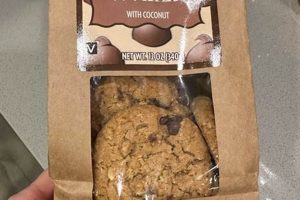
Certain commercially produced biscuits are formulated without animal-derived ingredients, despite not being explicitly marketed toward vegan consumers. These items often rely on plant-based fats, flours, and sweeteners in their standard recipe, resulting in a product suitable for those adhering to a vegan diet. An example would be a plain, crisp cookie made with vegetable oil, sugar, and wheat flour.
The unintentional alignment of these baked goods with veganism offers convenience and accessibility to individuals seeking plant-based options. Historically, strict adherence to dietary restrictions could limit choices, but the prevalence of suitable recipes expands the scope of available treats. This phenomenon demonstrates how market forces and ingredient availability can contribute to diverse dietary needs, even without specific intent.
The following sections will delve into commonly found varieties, ingredient considerations, potential labeling issues, and resources for identifying these readily available, plant-based confections.
Tips for Discovering Plant-Based Biscuits
The following guidance aims to assist consumers in identifying commercially produced biscuits that, while not explicitly labeled as vegan, are formulated without animal-derived ingredients.
Tip 1: Ingredient List Scrutiny: Examine ingredient lists carefully, paying close attention to potential animal-derived products such as milk solids, whey, eggs, honey, gelatin, and certain artificial colorings. A thorough review is essential, as ingredient lists are the primary source of information.
Tip 2: Fat Source Identification: Note the type of fat used. Vegetable oils (e.g., sunflower, canola, soy) are typically plant-based, while butter or lard are animal-derived. A biscuit utilizing vegetable oil is more likely to be suitable.
Tip 3: Allergen Information Review: Allergen declarations often highlight the presence of common animal-derived allergens like milk and eggs. A lack of these allergens is an indicator, though not a guarantee, of vegan suitability.
Tip 4: Company Communication: Contacting the manufacturer directly can provide clarity. Inquire specifically about the presence of any hidden animal-derived ingredients or potential cross-contamination during production.
Tip 5: Cross-Contamination Awareness: While a product may not contain animal-derived ingredients, it might be produced on shared equipment. Individuals with strict dietary requirements should consider this potential for cross-contamination.
Tip 6: Sugar Source Investigation: While less common, some refined sugar may be processed using bone char. Contacting the manufacturer is advisable to confirm the source of sugar, although this practice is becoming increasingly rare.
Tip 7: Third-Party Verification: Seek out third-party certifications or labels. While not always present on unintentionally vegan products, the existence of a ‘vegan’ label is a straightforward indicator of suitability.
Diligent examination of ingredient lists and cautious investigation provide the best opportunity to locate plant-based biscuit options. Consumers should remain vigilant and prioritize clear communication with manufacturers for confirmation when necessary.
The subsequent sections will address specific brand examples, common misconceptions, and resources for further exploration of this dietary niche.
1. Ingredient Analysis

Ingredient analysis constitutes a cornerstone in the identification of inadvertently plant-based biscuits. The presence or absence of animal-derived components directly determines a product’s suitability for vegan consumption. A careful evaluation of the ingredient list, therefore, is not merely a suggestion, but a necessity. The cause-and-effect relationship is clear: specific ingredients dictate whether a biscuit qualifies as such. For instance, the substitution of butter with vegetable oil in a recipe shifts a product from non-vegan to potentially vegan. Similarly, the inclusion of whey powder or dried milk solids definitively excludes a product from this category. Without diligent ingredient analysis, identifying these products is rendered impossible.
Real-life examples underscore this point. Certain varieties of ginger biscuits, due to their reliance on vegetable shortening and molasses, often align with vegan criteria. Conversely, shortbread, traditionally formulated with butter, invariably fails to meet these requirements. The practical significance lies in empowering consumers to make informed dietary choices. By mastering ingredient list interpretation, individuals can confidently select baked goods that align with their ethical and dietary principles. This understanding also facilitates the discovery of new and unexpected plant-based options within existing product lines.
In summary, ingredient analysis serves as the fundamental tool for navigating the realm of commercially produced biscuits. By diligently examining ingredient lists and understanding the implications of various components, consumers can effectively identify suitable choices. The challenge lies in deciphering ambiguous ingredient names and remaining vigilant for potentially hidden animal-derived substances. The importance of ingredient analysis reinforces the overarching theme of informed consumerism and responsible dietary decision-making.
2. Label Interpretation
The ability to accurately interpret food labels is paramount in identifying biscuits suitable for a vegan diet, particularly those not explicitly marketed as such. The absence of a certified vegan label necessitates a comprehensive evaluation of the ingredient list and allergen declarations. Misleading or ambiguous labeling can lead to unintended consumption of animal-derived ingredients. For example, a biscuit listing “natural flavors” without further specification leaves open the possibility of animal-based sources. The cause-and-effect is direct: imprecise labeling results in consumer uncertainty and potential dietary transgression.
The importance of skilled label interpretation lies in circumventing marketing strategies that may obscure the true composition of a product. Many biscuits, seemingly plant-based at first glance, contain hidden animal derivatives, such as whey powder as a binding agent or shellac as a glazing agent. Accurate understanding allows individuals to discern these covert ingredients. Consider the example of certain digestive biscuits; while primarily composed of wheat and vegetable oil, some formulations include milk solids for added texture or flavor. Without meticulous label scrutiny, this inclusion can be easily overlooked. Furthermore, awareness of potential cross-contamination statements is vital. A label indicating that a product is manufactured in a facility that also processes milk or eggs raises concerns for those with strict vegan principles.
In summary, label interpretation is an indispensable skill for those seeking plant-based alternatives within the broader market. The challenges lie in deciphering complex ingredient lists, recognizing ambiguous terminology, and remaining vigilant for potential cross-contamination warnings. Proficiency in label reading empowers informed consumer choice, facilitating the discovery of unintentionally vegan biscuits while mitigating the risk of inadvertently consuming animal products. This knowledge is a cornerstone of conscious eating and aligns with the ethical principles underpinning veganism.
3. Manufacturing Processes

The procedures employed in the creation of biscuits exert a significant influence on whether a product, despite not being explicitly marketed as vegan, aligns with plant-based dietary principles. Manufacturing processes can introduce, or conversely, exclude, animal-derived substances, thereby dictating a biscuits suitability. The cause-and-effect relationship is demonstrable: seemingly minor alterations in processing can shift a product from vegan-compatible to non-vegan. The importance of manufacturing oversight as a component of identifying such biscuits resides in mitigating the risk of unintended animal product inclusion. For example, a manufacturer switching from a vegetable oil-based lubricant on its baking equipment to an animal fat-based lubricant renders previously plant-based biscuits unsuitable for vegan consumption. Similarly, a shared production line without rigorous cleaning protocols can lead to cross-contamination with dairy or egg-containing products.
Real-world examples abound. Many large-scale bakeries produce a diverse range of biscuit types, some of which inherently contain animal products. The degree to which these lines are segregated, and the stringency of cleaning procedures between product runs, directly impact the potential for unintentional animal product introduction. The practical significance of this understanding lies in enabling informed consumer choice. Individuals adhering to vegan dietary restrictions must be aware that even if an ingredient list appears compliant, potential cross-contamination during manufacturing may compromise the products suitability. Investigation, often through direct communication with the manufacturer, becomes paramount in assessing this risk.
In summary, an understanding of manufacturing processes is crucial for accurately identifying commercially available biscuits. The challenges lie in the opacity of these processes to the end consumer. Transparency from manufacturers regarding cleaning protocols, shared equipment usage, and the source of processing aids is essential for fostering informed dietary decisions. The manufacturing process is a critical, yet often overlooked, factor in assessing the vegan compatibility of processed foods, underscoring the need for vigilance and, when possible, direct engagement with food producers to obtain comprehensive information.
4. Consumer Awareness

Consumer awareness plays a central role in the identification and adoption of commercially available biscuits that happen to align with vegan dietary principles. The degree to which consumers are informed directly influences their ability to discern plant-based options amidst a landscape of often ambiguous labeling and marketing. The cause-and-effect relationship is undeniable: heightened consumer awareness leads to greater identification and consumption of unintentionally vegan biscuits, while a lack of awareness results in missed opportunities and potential dietary non-compliance. The importance of consumer awareness as a component of this phenomenon rests on the fact that many such biscuits are not explicitly labeled or marketed as vegan. Instead, consumers must rely on their own knowledge and analytical skills to determine suitability. Examples include individuals actively researching ingredient lists, scrutinizing manufacturing processes, and engaging in direct communication with food producers to clarify uncertainties.
Further analysis reveals that the practical significance of this understanding extends beyond individual dietary choices. Increased consumer demand for such products can, in turn, incentivize manufacturers to formulate more plant-based options and to improve the transparency of their labeling practices. This creates a positive feedback loop, wherein heightened consumer awareness drives market changes that facilitate easier access to vegan-compatible products. Examples can be seen in the increasing prevalence of third-party vegan certifications and clearer allergen labeling on food packaging. Moreover, informed consumers are better equipped to advocate for ethical and sustainable food production practices, further contributing to the growing demand for plant-based alternatives.
In summary, consumer awareness is a critical factor in the identification and utilization of accidentally vegan biscuits. The challenges lie in overcoming misleading marketing tactics, deciphering complex ingredient lists, and accessing reliable information about manufacturing processes. By actively seeking knowledge and engaging with food producers, consumers can effectively navigate the market and promote a more transparent and accessible landscape for plant-based dietary choices. This underscores the broader theme of informed consumerism as a driver of ethical and sustainable food systems.
5. Market Trends

Shifts in consumer preferences and broader market dynamics directly influence the availability and visibility of commercially produced biscuits formulated without animal-derived ingredients. These trends create opportunities for both manufacturers and consumers within the plant-based food sector.
- Increased Demand for Plant-Based Options
The rise in veganism, vegetarianism, and flexitarianism has created a substantial demand for plant-based alternatives across various food categories. This heightened demand compels manufacturers to explore formulations that exclude animal products, sometimes resulting in the unintentional creation of vegan-compatible biscuits. Examples include reformulating traditional recipes to replace butter with vegetable oils, or reducing egg content in certain biscuit varieties, thus inadvertently creating plant-based options. This trend also encourages retailers to stock a wider range of plant-based products, increasing the visibility of these accidentally vegan options.
- Focus on Health and Wellness
Growing consumer awareness regarding the health implications of dietary choices drives the demand for products perceived as healthier, often aligning with plant-based formulations. Biscuits made with whole grains, lower sugar content, and plant-based fats are viewed favorably by health-conscious consumers. The move toward healthier formulations often leads to the exclusion of animal products, unintentionally creating vegan-friendly options. This trend encourages manufacturers to highlight the health benefits of their products, potentially attracting vegan consumers to previously unnoticed options.
- Ingredient Innovation and Cost Optimization
Advancements in food technology and ingredient sourcing have made plant-based alternatives more readily available and cost-effective. The use of ingredients like soy lecithin, plant-based emulsifiers, and alternative sweeteners allows manufacturers to create biscuits with similar taste and texture profiles to their conventional counterparts, but without animal products. Cost optimization strategies can also lead to the selection of plant-based ingredients over animal-derived options, unintentionally resulting in vegan-compatible biscuits. This trend promotes the development of innovative plant-based ingredients, further expanding the possibilities for accidentally vegan products.
- Enhanced Labeling and Transparency
Consumer pressure for greater transparency in food labeling has prompted manufacturers to provide more detailed information about ingredients and manufacturing processes. Clear allergen labeling, nutritional information, and ingredient lists allow consumers to make more informed choices, facilitating the identification of accidentally vegan biscuits. The rise of third-party vegan certifications also provides a readily identifiable marker for plant-based products, although many unintentionally vegan biscuits remain uncertified. This trend encourages manufacturers to adopt clearer labeling practices, further increasing the visibility of plant-based options.
These market trends collectively contribute to the growing availability and visibility of commercially produced biscuits. The convergence of consumer demand, health consciousness, ingredient innovation, and enhanced labeling practices shapes the landscape of plant-based options, providing opportunities for both consumers seeking vegan-compatible treats and manufacturers responding to evolving market dynamics.
6. Ethical Considerations

The consumption of food inherently carries ethical weight, and the realm of commercially produced biscuits provides no exception. “Accidentally vegan cookies,” while seemingly a simple matter of ingredient composition, intersect with broader ethical considerations concerning animal welfare, environmental sustainability, and fair labor practices. The cause-and-effect relationship is clear: purchasing these items, even without explicit intent to support veganism, can indirectly contribute to a system that reduces reliance on animal products. The importance of ethical considerations as a component of evaluating inadvertently vegan biscuits lies in the potential to align consumption habits with broader moral values. For instance, selecting biscuits made with sustainably sourced palm oil, even if the primary motivation is cost, indirectly supports environmentally responsible practices compared to biscuits using non-sustainable palm oil or animal fats.
Further analysis reveals that the practical significance of this understanding extends beyond individual dietary choices. The deliberate selection of accidentally vegan biscuits over non-vegan alternatives, when possible, constitutes a form of “voting with one’s wallet,” signaling to manufacturers a demand for products that minimize harm to animals. Moreover, choosing biscuits produced by companies with transparent supply chains and fair labor practices can support ethical production standards. Consider the example of biscuits using cocoa sourced from farms that do not employ child labor; this choice actively discourages unethical practices within the cocoa industry. The cumulative impact of these individual decisions can influence market trends and encourage manufacturers to adopt more ethical and sustainable practices.
In summary, evaluating inadvertently vegan biscuits through an ethical lens necessitates considering the broader implications of consumption choices. While these biscuits may not always represent a perfect ethical solution, they often offer a readily accessible option for reducing reliance on animal products and supporting more sustainable production practices. The challenges lie in accessing comprehensive information about ingredient sourcing and labor practices. However, by prioritizing ethical considerations and making informed choices, consumers can contribute to a food system that better reflects their values. This aligns with the broader theme of responsible consumption and the pursuit of a more just and sustainable world.
The following section addresses common inquiries and misconceptions surrounding commercially available biscuits that, while not specifically labeled as vegan, are formulated without animal-derived ingredients.
Question 1: Are biscuits labeled “suitable for vegetarians” automatically suitable for vegans?
No. “Suitable for vegetarians” indicates the absence of meat, but the product may still contain dairy, eggs, or honey, which are not permitted in a vegan diet.
Question 2: Is the absence of milk and eggs on an ingredient list a guarantee that a biscuit is vegan?
Not necessarily. Hidden animal derivatives, such as whey, casein, or gelatin, might be present under less obvious names. Scrutinize the entire ingredient list carefully.
Question 3: Do “accidentally vegan cookies” always have a lower environmental impact than non-vegan alternatives?
Not always. Factors such as the sourcing of ingredients (e.g., palm oil) and transportation methods impact the environmental footprint. A product’s vegan status alone does not guarantee sustainability.
Question 4: How can one be certain that sugar used in these biscuits is vegan, given the potential use of bone char in processing?
Direct contact with the manufacturer is the most reliable method for verification. While the use of bone char is declining, it remains a possibility. Look for sugar specifically labeled as “unrefined” or “vegan certified.”
Question 5: Is cross-contamination with animal products a significant concern with “accidentally vegan cookies”?
Yes. Biscuits produced on shared equipment with dairy or egg-containing products may be subject to cross-contamination. Manufacturers should provide information regarding allergen protocols.
Question 6: Can one rely solely on online resources and databases to identify suitable biscuits?
Online resources can be helpful, but ingredient formulations can change. Always verify the ingredient list on the specific product being considered, as online information may be outdated.
Careful scrutiny of ingredient lists and direct engagement with manufacturers provide the most reliable means of identifying biscuits suitable for a vegan diet. Reliance on secondary sources alone is insufficient.
The subsequent section provides further insights into specific brands and resources available for locating these inadvertently plant-based treats.
Conclusion
“accidentally vegan cookies” represent a notable intersection of market trends, manufacturing practices, and consumer awareness. The exploration of their composition, labeling, and production reveals the potential for plant-based dietary adherence within the broader food landscape. Ingredient analysis, label interpretation, and consideration of manufacturing processes are essential for accurate identification. Consumer understanding of these elements contributes to informed dietary choices.
The ongoing evolution of market dynamics and ethical considerations suggests a continued relevance of these inadvertently plant-based items. Further research into supply chain transparency and sustainable ingredient sourcing is warranted. Continued vigilance and engagement with manufacturers remain crucial for those seeking to align consumption with specific dietary and ethical principles.