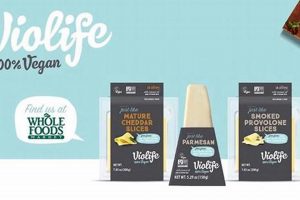
The primary inquiry centers on whether plant-based cheese alternatives are inherently free from gluten. Gluten, a protein found in wheat, barley, and rye, poses concerns for individuals with celiac disease or gluten sensitivity. Therefore, determining if a particular vegan cheese alternative contains gluten is crucial for dietary management. For example, a vegan cheese made from cashews and nutritional yeast is likely gluten-free, while one incorporating wheat-based ingredients would not be.
Understanding the composition of these products is vital for maintaining specific dietary needs. The availability of gluten-free options expands the dietary choices for those managing gluten-related conditions. Historically, limited choices existed, but the market now offers a wide array of plant-based cheeses formulated without gluten-containing ingredients, fostering greater inclusivity and dietary flexibility.
The subsequent sections will delve into specific ingredients commonly found in plant-based cheeses, highlight potential sources of gluten contamination during manufacturing, and provide guidance on how to identify verified gluten-free products, ensuring informed consumer choices.
The following guidelines offer assistance in selecting plant-based cheese alternatives that meet gluten-free dietary requirements.
Tip 1: Read Ingredient Labels Meticulously: Scrutinize the product’s ingredient list for any mention of wheat, barley, rye, or derivatives like malt, modified food starch (unless specified as gluten-free), and brewer’s yeast. Gluten-containing ingredients must be avoided.
Tip 2: Seek Certified Gluten-Free Products: Prioritize products bearing a “Certified Gluten-Free” label from a reputable third-party organization. This certification ensures the product meets specific standards for gluten content and manufacturing processes.
Tip 3: Research Brands and Manufacturers: Investigate the brand’s reputation and manufacturing practices. Contact the manufacturer directly to inquire about their gluten-free protocols, particularly regarding cross-contamination prevention.
Tip 4: Consider Cheese Alternatives with Naturally Gluten-Free Bases: Opt for plant-based cheeses crafted from naturally gluten-free ingredients such as cashews, almonds, soy, tapioca, and nutritional yeast. These bases inherently reduce the risk of gluten exposure.
Tip 5: Be Aware of Potential Cross-Contamination: Even if the ingredients are gluten-free, cross-contamination can occur during production or packaging. Select products from facilities that adhere to stringent allergen control measures.
Tip 6: Check for “May Contain Wheat” Statements: Pay attention to “may contain wheat” or similar advisory statements. These indicate a potential risk of cross-contamination in the manufacturing environment.
The information offered here supports making informed choices, prioritizing verifiable gluten-free certifications, and ensuring adherence to individual dietary needs.
The final section of this article will summarize the findings and offer concluding remarks on identifying and safely consuming gluten-free plant-based cheese alternatives.
1. Ingredient Composition

Ingredient composition is a critical determinant of whether a vegan cheese alternative is suitable for individuals adhering to a gluten-free diet. The presence or absence of gluten-containing ingredients directly dictates the product’s compatibility with this dietary restriction.
- Starch Sources
Many vegan cheeses utilize starches to achieve desired textures. While some starches, such as tapioca or potato starch, are inherently gluten-free, others, particularly modified food starch, may be derived from wheat. The source of the starch must be clearly identified on the label to ascertain its gluten status. For example, a product listing “modified food starch” without specifying its origin presents a risk, whereas one specifying “tapioca starch” is likely gluten-free.
- Thickeners and Stabilizers
Various thickeners and stabilizers are employed to enhance the consistency and stability of plant-based cheeses. Some of these, such as carrageenan or xanthan gum, are gluten-free. However, others may contain gluten. It is imperative to verify that all thickeners and stabilizers are explicitly identified as gluten-free or are derived from non-gluten sources. A case in point would be maltodextrin, which, although sometimes derived from corn, can also be wheat-based.
- Nut and Seed Flours
Certain vegan cheese alternatives utilize nut or seed flours as a base or to contribute to texture and flavor. While nut and seed flours like almond flour or sunflower seed flour are naturally gluten-free, the possibility of cross-contamination during processing must be considered. Facilities processing both gluten-containing and gluten-free ingredients pose a potential risk, underscoring the importance of sourcing products from manufacturers with stringent allergen control protocols.
- Flavorings and Additives
Flavorings and additives can occasionally be sources of hidden gluten. Some flavor enhancers or natural flavorings may contain gluten-derived ingredients or be processed in facilities that also handle gluten. It is crucial to meticulously review the ingredient list for any potentially problematic flavorings or additives and to seek clarification from the manufacturer if uncertainty exists. An example would be hydrolyzed vegetable protein, which, depending on its source, may contain gluten.
In summary, the ingredient composition of vegan cheese is fundamental to determining its gluten-free status. Careful scrutiny of all ingredients, awareness of potential gluten sources, and verification of manufacturing practices are essential steps in selecting suitable products for individuals following a gluten-free diet.
2. Cross-Contamination Risks

Cross-contamination poses a significant challenge in ensuring that plant-based cheese alternatives truly conform to a gluten-free standard. Even if a product is formulated without gluten-containing ingredients, manufacturing processes and facility conditions can introduce unintended gluten, rendering it unsuitable for individuals with celiac disease or gluten sensitivity.
- Shared Equipment
The use of shared equipment, such as blenders, mixing vats, or packaging lines, in facilities that also process gluten-containing products presents a substantial risk. Residue from wheat, barley, or rye can persist on these surfaces, contaminating subsequent batches of plant-based cheese. Thorough cleaning protocols and dedicated equipment for gluten-free production are essential to mitigate this risk.
- Airborne Contamination
Airborne gluten particles, generated from the processing of wheat flour or other gluten-containing ingredients, can settle on exposed surfaces, including food products. In facilities with inadequate ventilation or containment measures, this airborne contamination can affect plant-based cheese production, particularly during processes like grinding or milling. Proper air filtration and enclosed production areas are necessary to minimize this risk.
- Ingredient Handling
Improper handling of ingredients, such as the use of shared scoops or containers for both gluten-containing and gluten-free components, can lead to cross-contamination. Storage practices that fail to segregate gluten-free and gluten-containing ingredients also increase the risk. Strict protocols for ingredient handling, including color-coded utensils and dedicated storage areas, are crucial for maintaining product integrity.
- Supplier Practices
The risk of cross-contamination extends beyond the cheese manufacturer to their suppliers. If raw ingredients, such as nuts or seeds, are sourced from facilities that process gluten-containing products, they may already be contaminated upon arrival. Requiring suppliers to provide documentation of gluten-free practices and conducting regular audits are important steps in managing this risk.
These facets highlight the pervasive nature of cross-contamination risks in the production of plant-based cheese alternatives. The absence of gluten-containing ingredients in the formulation alone does not guarantee a gluten-free product. Implementing robust quality control measures throughout the entire supply chain, from ingredient sourcing to packaging, is imperative to ensure the safety and suitability of these products for individuals with gluten-related dietary needs.
3. Certification Verification

Certification verification plays a pivotal role in confirming whether a plant-based cheese alternative aligns with gluten-free standards. This process involves independent third-party organizations assessing the product’s compliance with established gluten-free thresholds, typically below 20 parts per million (ppm) of gluten. The presence of a certification mark from a reputable body acts as a reliable indicator for consumers seeking to avoid gluten. For instance, a vegan cheese bearing the Certified Gluten-Free logo from the Gluten-Free Certification Organization (GFCO) has undergone rigorous testing and facility audits to ensure its gluten content meets the specified requirements. Without such verification, reliance solely on ingredient lists becomes inherently less secure, due to potential cross-contamination issues.
The importance of certification extends beyond simple ingredient analysis. It encompasses a holistic evaluation of manufacturing processes, including ingredient sourcing, equipment sanitation, and storage practices. This comprehensive approach minimizes the risk of unintended gluten exposure during production. Consider a scenario where a vegan cheese utilizes inherently gluten-free ingredients but is processed on shared equipment in a facility that also handles wheat. In such a case, cross-contamination is a real possibility, and a certified product would provide assurance that appropriate measures are in place to prevent this. Several certification bodies exist, each with slightly varying standards and protocols, emphasizing the need for consumers to familiarize themselves with the credentials of the certifying organization.
In conclusion, certification verification is not merely an optional add-on but an essential component in determining the gluten-free status of plant-based cheese alternatives. It offers a level of assurance that extends beyond the declared ingredients, encompassing manufacturing controls and testing protocols. Individuals with celiac disease or gluten sensitivity should prioritize products bearing recognized gluten-free certifications to minimize the risk of adverse reactions and ensure dietary adherence. The absence of certification introduces uncertainty and shifts the onus of risk assessment onto the consumer, which is less reliable than the standardization provided by a certification body.
4. Manufacturing Practices

Manufacturing practices exert a direct influence on whether plant-based cheese alternatives meet the requirements of a gluten-free diet. The design and execution of manufacturing processes dictate the potential for gluten contamination, irrespective of the ingredients used. For instance, if a facility produces both wheat-based products and plant-based cheese alternatives on shared equipment without proper cleaning and sanitation protocols, the resulting vegan cheese is unlikely to be gluten-free, regardless of its recipe. The absence of robust control measures introduces an inherent risk that impacts the final product’s suitability for gluten-sensitive consumers.
The implementation of strict allergen control programs is crucial. This includes segregating production lines, utilizing dedicated equipment for gluten-free items, and implementing thorough cleaning and sanitation procedures between product runs. Raw material sourcing and supplier qualification also play a pivotal role. Manufacturers must vet suppliers to ensure that ingredients are free from gluten contamination before they enter the production facility. Regular testing of both raw materials and finished products is essential to verify the efficacy of these control measures. Failure to implement these safeguards significantly increases the probability of gluten contamination and compromises the gluten-free status of the final product. A practical example includes employing separate air handling systems in production zones to prevent airborne gluten particles from contaminating otherwise gluten-free vegan cheese.
In summation, manufacturing practices are not simply ancillary to the ingredient composition of plant-based cheese alternatives; they are integral to defining whether a product can be reliably classified as gluten-free. The implementation of stringent controls, encompassing sourcing, production, and testing, is essential to minimize cross-contamination risks. Ultimately, the consumer’s confidence in a product’s gluten-free status depends on the transparency and rigor of the manufacturer’s quality control processes. The absence of documented and verifiable manufacturing practices raises substantial concerns regarding the product’s safety and suitability for individuals adhering to a gluten-free diet.
5. Label Interpretation

The accurate interpretation of product labels is paramount in determining if a plant-based cheese alternative adheres to a gluten-free dietary standard. This process extends beyond a cursory glance, requiring a comprehensive understanding of ingredient nomenclature, allergen statements, and certification markings to ensure the product’s suitability for those with gluten sensitivities.
- Ingredient Lists and Hidden Gluten Sources
Ingredient lists are the primary source of information regarding a product’s composition. However, gluten may be present under less obvious designations, such as “modified food starch” (without specifying the source), “natural flavorings,” or certain types of “hydrolyzed vegetable protein.” These ambiguous terms necessitate caution and, in some instances, direct inquiry with the manufacturer. A vegan cheese listing “maltodextrin” requires scrutiny, as maltodextrin can be derived from wheat, potentially rendering the product unsuitable for those avoiding gluten.
- “Contains” and “May Contain” Statements
Allergen declarations, specifically “contains” and “may contain” statements, provide critical insights into the potential presence of gluten. A “contains wheat” statement clearly indicates the presence of gluten and precludes the product from a gluten-free diet. “May contain” statements, while less definitive, signal a risk of cross-contamination during manufacturing. These statements should be carefully considered, particularly by individuals with severe gluten sensitivities. The absence of these statements does not guarantee a product is gluten-free, emphasizing the need for comprehensive label analysis.
- Gluten-Free Certifications and Logos
The presence of a recognized gluten-free certification logo, such as that from the Gluten-Free Certification Organization (GFCO), provides a degree of assurance regarding a product’s gluten content. These certifications typically require adherence to specific manufacturing standards and regular testing to ensure gluten levels remain below a defined threshold, typically 20 parts per million. A product displaying a certification logo has undergone independent verification, reducing the reliance on the manufacturer’s self-assessment.
- Understanding “Free From” Claims
Claims such as “gluten-free” or “no gluten” must be carefully evaluated. While these claims suggest the absence of gluten, their reliability depends on the regulatory framework in place. In some jurisdictions, “gluten-free” claims are legally defined and enforced, while in others, they may be less strictly regulated. The presence of a certification logo offers greater confidence than an unsupported “free from” claim. Consumers should be aware of the varying levels of assurance associated with these types of statements.
The ability to accurately interpret product labels is essential for ensuring that plant-based cheese alternatives align with a gluten-free diet. This skill involves not only recognizing explicit gluten-containing ingredients but also understanding the nuances of allergen statements, certification markings, and “free from” claims. By carefully scrutinizing all aspects of the label, individuals can make informed choices and minimize the risk of unintended gluten exposure when consuming plant-based cheese alternatives.
Frequently Asked Questions
The following section addresses common inquiries regarding the gluten content of plant-based cheese alternatives, providing clear and concise answers to aid in informed dietary choices.
Question 1: Does the term “vegan” automatically imply that a cheese alternative is also gluten-free?
No. The terms “vegan” and “gluten-free” denote distinct dietary characteristics. “Vegan” signifies the absence of animal-derived ingredients, while “gluten-free” indicates the absence of gluten. A product can be vegan without being gluten-free, and vice versa.
Question 2: What are the most common gluten-containing ingredients to watch out for in plant-based cheese labels?
Common gluten-containing ingredients include wheat, barley, rye, malt, modified food starch (if not specified as gluten-free), brewer’s yeast, and certain hydrolyzed vegetable proteins. A thorough review of the ingredient list is crucial.
Question 3: If a plant-based cheese alternative is made from naturally gluten-free ingredients like cashews or tapioca, is it automatically safe for individuals with celiac disease?
Not necessarily. While the base ingredients may be gluten-free, cross-contamination during manufacturing poses a risk. Shared equipment or facilities that also process gluten-containing products can introduce unintended gluten into the final product.
Question 4: How reliable are “gluten-free” claims on plant-based cheese labels?
The reliability of “gluten-free” claims varies depending on the regulatory framework and the manufacturer’s adherence to quality control standards. Products bearing a third-party gluten-free certification provide a greater level of assurance than those with unsupported claims.
Question 5: What steps can be taken to minimize the risk of consuming gluten when selecting plant-based cheese alternatives?
Prioritize products with third-party gluten-free certifications, meticulously review ingredient lists, contact manufacturers to inquire about their gluten-free protocols, and be aware of “may contain” statements indicating potential cross-contamination.
Question 6: Do all gluten-free certifications hold the same level of assurance?
No. Different certification bodies may have varying standards and auditing procedures. Familiarize yourself with the certifying organization’s credentials and reputation to assess the reliability of the certification mark.
The preceding questions and answers underscore the complexities involved in identifying truly gluten-free plant-based cheese alternatives. Careful scrutiny and informed decision-making are essential for individuals with gluten sensitivities.
Concluding Remarks
The preceding analysis has thoroughly examined the question of “is vegan cheese gluten free,” revealing that the answer is not a simple affirmation. While numerous plant-based cheese alternatives exist, their inherent gluten-free status is contingent upon multiple factors, including ingredient composition, manufacturing practices, and certification verification. A product labeled “vegan” does not automatically guarantee the absence of gluten. Careful scrutiny of ingredient lists and attention to potential cross-contamination risks are paramount for individuals with celiac disease or gluten sensitivities. The presence of a recognized third-party gluten-free certification offers the most reliable assurance of a product’s suitability.
The responsibility for ensuring the safety of plant-based cheese alternatives rests both with manufacturers, who must implement rigorous quality control measures, and with consumers, who must exercise diligence in label interpretation and product selection. A continued emphasis on transparency, clear labeling practices, and adherence to established gluten-free standards will be essential in fostering greater confidence and accessibility for individuals seeking to incorporate these products into a gluten-free diet. The pursuit of reliably gluten-free options remains an ongoing endeavor, requiring vigilance and informed choices.