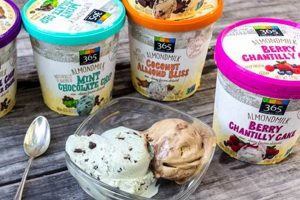
Frozen desserts catering to both calorie consciousness and plant-based diets have emerged as a significant trend. These products typically utilize alternative sweeteners and plant-derived ingredients, such as nut milks, coconut milk, or fruit purees, to create a treat that aligns with specific dietary needs and preferences. As an example, a commercially available product might use stevia and almond milk as the base, resulting in a dessert with significantly fewer calories than traditional dairy-based ice cream.
The appeal of such products stems from the desire to enjoy a sweet treat without the perceived guilt associated with high-calorie, animal-derived ingredients. The historical context involves the increasing awareness of veganism and its purported health benefits, coupled with a general interest in reducing sugar and calorie intake. The advantages include a lower impact on blood sugar levels, potentially aiding weight management, and catering to individuals with lactose intolerance or dairy allergies.
The subsequent sections will delve into the specific ingredients commonly used in these formulations, the nutritional profile and potential health implications, and a comparative analysis with conventional ice cream options. Furthermore, manufacturing processes and future trends within this rapidly evolving food sector will be examined.
Guidance on Selecting and Consuming Reduced-Calorie, Plant-Based Frozen Desserts
The following guidelines aim to provide consumers with informed strategies for incorporating reduced-calorie, plant-based frozen desserts into their dietary plans. These tips emphasize informed decision-making and mindful consumption practices.
Tip 1: Scrutinize Ingredient Lists: Thoroughly examine the ingredient list for artificial sweeteners, excessive gums, or processed ingredients. Prioritize products with recognizable and naturally derived components.
Tip 2: Evaluate Nutritional Information: Pay close attention to serving sizes and compare the calorie, sugar, and fat content per serving across different brands and flavors. Focus on products with a balanced macronutrient profile.
Tip 3: Consider the Type of Plant-Based Base: Be aware that bases such as coconut milk can be higher in saturated fat, while options like almond milk or oat milk offer a lower-fat alternative. Select a base that aligns with individual dietary needs.
Tip 4: Practice Portion Control: Even with reduced-calorie options, adhering to recommended serving sizes is crucial for managing overall calorie intake. Utilizing smaller bowls or pre-portioning can assist in controlling consumption.
Tip 5: Incorporate into a Balanced Diet: These desserts should complement, not replace, nutrient-dense whole foods. Integrate them as an occasional treat within a well-rounded dietary pattern.
Tip 6: Be Mindful of Added Sugars: Even if a product is low in calories, be cautious of added sugars in the form of syrups, fruit juice concentrates, or other sweeteners. Opt for products with lower added sugar content.
Tip 7: Read consumer reviews: Consider reading reviews to determine the product quality. Reviews often contain insight that may not be found on product labels.
Following these guidelines empowers individuals to make informed choices and enjoy reduced-calorie, plant-based frozen desserts responsibly. Consideration of these factors promotes a balanced and mindful approach to including such products in a healthy lifestyle.
The concluding sections will present a comprehensive comparison with traditional ice cream and an outlook on future advancements in this product category.
1. Ingredients
The core characteristic of reduced-calorie, plant-based frozen desserts lies in their carefully selected ingredients. The deliberate substitution of traditional dairy and high-calorie components with plant-derived alternatives is the primary factor influencing both the caloric reduction and vegan status. For example, cow’s milk is typically replaced with almond milk, coconut milk, oat milk, or cashew milk. These alternatives inherently possess different fat and sugar profiles, directly impacting the final product’s calorie density. Furthermore, the choice of sweetener, be it erythritol, stevia, or monk fruit extract, contributes significantly to lowering the overall sugar and calorie content, whereas conventional ice cream typically uses sucrose or high-fructose corn syrup.
The type and quantity of ingredients used also affect the texture and stability of the final product. Plant-based fats, such as coconut oil, are frequently incorporated to mimic the creamy mouthfeel of dairy-based ice cream. Stabilizers like guar gum or xanthan gum are often added to prevent ice crystal formation and maintain a smooth consistency during freezing and thawing. The selection of these ingredients, therefore, is a delicate balance between achieving the desired sensory attributes and adhering to the low-calorie and vegan constraints. The increasing consumer demand for “clean label” products further necessitates the use of natural and minimally processed ingredients, posing a continuing challenge for manufacturers.
In conclusion, the ingredients are not merely components but rather the defining elements of reduced-calorie, plant-based frozen desserts. Their careful selection and precise ratios directly determine the product’s caloric content, suitability for vegan diets, and overall sensory appeal. Understanding the interplay between ingredients and their impact on the final product is crucial for both consumers seeking informed choices and manufacturers aiming to innovate within this rapidly evolving market segment. Subsequent discussions will explore the nuances of individual ingredient categories, such as sweeteners and stabilizers, in greater detail.
2. Sweeteners

The selection of sweeteners is a critical determinant of the “low cal” attribute in plant-based frozen desserts. Conventional sweeteners, such as sucrose and high-fructose corn syrup, contribute significantly to the caloric content and glycemic index of traditional ice cream. To achieve a reduced-calorie profile, manufacturers of plant-based alternatives commonly employ non-nutritive sweeteners or those with a significantly lower caloric density. Examples include stevia, erythritol, monk fruit extract, and allulose. The specific choice of sweetener influences not only the calorie count but also the flavor profile and texture of the final product. For instance, erythritol, a sugar alcohol, provides a similar bulk and mouthfeel to sucrose but with a negligible caloric contribution. Stevia, on the other hand, is intensely sweet and requires careful balancing to avoid an aftertaste. The correct application of these sweeteners is essential for maintaining the palatability of these desserts while adhering to their “low cal” premise. The cause is the need to decrease calories and be vegan. The effect is the use of new vegan sweeteners and their different characteristics.
Practical considerations extend to the metabolic effects of these alternative sweeteners. Some consumers may experience gastrointestinal distress with certain sugar alcohols, such as erythritol or xylitol, particularly when consumed in large quantities. The long-term health implications of high consumption of non-nutritive sweeteners are also a subject of ongoing research. From a product development standpoint, the solubility and stability of these sweeteners in a frozen matrix are crucial factors. The freezing process can affect the perceived sweetness and texture, necessitating precise formulations to ensure a consistent and enjoyable eating experience. For example, using a combination of sweeteners can mask the aftertaste of single sweeteners or balance the low shelf-life of other sweetener.
In summary, the choice of sweeteners is a cornerstone of reduced-calorie, plant-based frozen desserts, directly influencing their caloric content, taste, and potential health effects. Challenges remain in optimizing formulations to minimize undesirable aftertastes or gastrointestinal effects while maintaining the desired sensory attributes. Further research is necessary to fully elucidate the long-term health implications of widespread consumption of non-nutritive sweeteners. Therefore this is the most important components of the keyword and the product itself.
3. Calories

The central premise of reduced-calorie, plant-based frozen desserts hinges on a substantial reduction in caloric content compared to traditional ice cream. This reduction is not merely a marketing claim but a defining characteristic achieved through specific ingredient substitutions and formulation strategies. The root cause of the lower calorie count lies in the replacement of high-calorie components, such as dairy fat and refined sugars, with plant-based alternatives and low-calorie sweeteners. The effect is a product that aligns with the dietary goals of individuals seeking weight management or a lower overall calorie intake. For example, a typical serving of conventional ice cream may contain 250-300 calories, while a comparable serving of a reduced-calorie, plant-based option might range from 100-150 calories. This difference translates into a tangible impact on overall daily calorie consumption.
The practical significance of understanding the calorie content of these desserts extends to informed dietary choices and effective weight management. Consumers who are mindful of their caloric intake can incorporate these options as occasional treats without significantly impacting their overall dietary goals. The “low cal” designation enables individuals to indulge in a sweet dessert while adhering to their caloric restrictions. Furthermore, the transparency of calorie labeling empowers consumers to make informed decisions based on their individual needs and preferences. For instance, someone with diabetes may prioritize a reduced-calorie option to minimize the impact on blood sugar levels, whereas an athlete might use it as a post-workout recovery treat. Another example is in comparing “low cal vegan ice cream” with other ice cream or frozen desserts, we can easily measure the calories, so it may change a consumer’s decision to buy.
In summary, the relationship between calories and reduced-calorie, plant-based frozen desserts is fundamental to their market positioning and consumer appeal. The reduced caloric content is a direct consequence of strategic ingredient substitutions and formulation techniques. Understanding this relationship empowers consumers to make informed dietary choices and integrate these desserts into a balanced lifestyle. Challenges remain in maintaining sensory appeal and texture while minimizing calorie content, but the ongoing innovation in this sector continues to refine the balance between indulgence and health-consciousness. This key component is important on the product.
4. Texture

Texture is a critical sensory attribute of frozen desserts, and its successful replication in reduced-calorie, plant-based formulations presents a significant challenge. The inherent properties of dairy fats, which contribute significantly to the creamy and smooth texture of traditional ice cream, are absent in plant-based alternatives. This necessitates the use of alternative ingredients and processing techniques to mimic the desired mouthfeel. For example, plant-based fats like coconut oil or cocoa butter are often incorporated, but their melting profiles differ from dairy fat, potentially resulting in a different textural experience. Furthermore, the lower solids content in many plant-based milks can lead to ice crystal formation during freezing, resulting in a grainy or icy texture. The cause is the vegan ingredients. The effect is a texture that differs from standard ice cream.
To counteract these textural challenges, manufacturers employ a range of strategies. Stabilizers, such as guar gum, xanthan gum, and carrageenan, are commonly added to bind water, prevent ice crystal growth, and improve the overall smoothness of the product. Emulsifiers, such as lecithin, help to disperse fats evenly throughout the mixture, contributing to a creamier texture. The precise combination and concentration of these additives are crucial for achieving the desired textural properties. The selection of appropriate freezing techniques, such as rapid freezing or the incorporation of air, also plays a vital role in controlling ice crystal size and overall texture. An example would be that ice cream with too much guar gum is slimy in texture. Ice cream with too little has a gritty texture.
In summary, achieving a desirable texture in reduced-calorie, plant-based frozen desserts requires a nuanced understanding of ingredient interactions and processing parameters. The absence of dairy fat necessitates the use of alternative fats, stabilizers, and emulsifiers to mimic the sensory attributes of traditional ice cream. Challenges remain in replicating the exact mouthfeel of dairy-based products, but ongoing innovation in ingredient technology and processing techniques continues to improve the textural quality of these desserts, making them increasingly appealing to consumers. The final goal is to mimic the original standard, but using vegan ingredients.
5. Flavors

The flavor profile is an integral aspect of any frozen dessert, and this is particularly crucial for reduced-calorie, plant-based options. The challenge lies in achieving palatable and appealing flavors without relying on traditional high-calorie ingredients or artificial additives. Creative flavor formulations are therefore essential for consumer acceptance and market success.
- Fruit-Based Flavors
Fruit purees and extracts provide a natural source of sweetness and flavor, contributing to a lower calorie count compared to added sugars. Examples include strawberry, mango, and raspberry flavors, which can be enhanced with natural fruit concentrates. However, careful balancing is necessary to avoid excessive water content, which can negatively impact texture.
- Nut and Seed-Based Flavors
Nut and seed butters, such as almond butter, cashew butter, or tahini, can impart rich and complex flavors while also contributing to a creamy texture. These bases offer a more substantial flavor profile compared to lighter fruit-based options. The inclusion of nuts or seeds also provides a source of healthy fats and protein.
- Chocolate and Cocoa-Based Flavors
Unsweetened cocoa powder or dark chocolate can be used to create intense chocolate flavors without significantly increasing the calorie count. Combining cocoa with alternative sweeteners and plant-based milk alternatives allows for the development of decadent chocolate variations. Adjustments to stabilizers may be required due to the cocoa’s drying effect.
- Spice and Herb-Infused Flavors
Spices like vanilla, cinnamon, and cardamom, or herbs such as mint and basil, can add depth and complexity to the flavor profile without adding significant calories. These ingredients offer a natural and aromatic alternative to artificial flavorings. Careful attention to extraction methods and concentrations is necessary to achieve the desired flavor intensity.
The successful integration of diverse flavors is paramount in the development of appealing reduced-calorie, plant-based frozen desserts. By utilizing natural ingredients and innovative flavor combinations, manufacturers can cater to a wide range of consumer preferences while maintaining the core principles of low calorie content and plant-based composition.
6. Market

The market for reduced-calorie, plant-based frozen desserts represents a dynamic intersection of evolving consumer preferences, dietary trends, and health consciousness. Its growth and characteristics are essential to understanding the positioning and potential of these products.
- Consumer Demand and Dietary Trends
The increasing adoption of vegan, vegetarian, and flexitarian diets, coupled with a growing awareness of the health implications of high sugar and fat consumption, fuels demand. This shift is reflected in market research and sales data showing consistent growth in plant-based food categories. The aging population and increasing allergies also contributes. The implication is that manufacturers must cater to an increasingly diverse consumer base with specific dietary needs.
- Competitive Landscape
The market features a mix of established ice cream brands and emerging plant-based food companies, leading to intense competition for shelf space and consumer loyalty. This competitive environment drives innovation in product formulation, flavor development, and marketing strategies. For example, traditional ice cream brands are introducing plant-based lines to remain competitive.
- Retail Distribution Channels
Distribution spans traditional grocery stores, specialty health food stores, and direct-to-consumer online channels. The availability of reduced-calorie, plant-based frozen desserts in mainstream retail outlets is crucial for market penetration and consumer accessibility. Online channels provide niche brands with opportunities to reach wider audiences, but cost may be high.
- Pricing and Affordability
Pricing strategies play a significant role in consumer adoption. Plant-based frozen desserts are often priced higher than conventional ice cream due to ingredient costs and manufacturing processes. Balancing premium positioning with affordability is essential for attracting a broad consumer base. The market price can make or break a product since it may push a consumer to buy an expensive name brand ice cream instead.
The market for reduced-calorie, plant-based frozen desserts is shaped by consumer demand, competitive dynamics, distribution strategies, and pricing considerations. Understanding these factors is critical for manufacturers seeking to capitalize on the growing interest in healthier and plant-based alternatives to traditional ice cream. These market trends may be a factor for the product development to succeed.
Frequently Asked Questions
The following section addresses common inquiries regarding reduced-calorie, plant-based frozen desserts, aiming to clarify their properties, benefits, and limitations.
Question 1: Are all plant-based ice creams automatically low in calories?
No, not all plant-based ice creams are low in calories. The caloric content depends on the specific ingredients used, particularly the type of plant-based milk and the sweetener. Some plant-based ice creams may utilize high-fat ingredients, like coconut milk, or added sugars, resulting in a higher calorie count.
Question 2: What sweeteners are typically used in these types of frozen desserts?
Common sweeteners include stevia, erythritol, monk fruit extract, and allulose. These sweeteners offer a significantly lower caloric contribution compared to sucrose or high-fructose corn syrup. The choice of sweetener can affect the flavor and texture of the final product.
Question 3: Are reduced-calorie, plant-based ice creams suitable for individuals with diabetes?
While these desserts may be lower in sugar and calories compared to traditional ice cream, individuals with diabetes should still exercise caution. Monitoring blood glucose levels after consumption is advisable. Consultation with a healthcare professional or registered dietitian is recommended to determine appropriate portion sizes and frequency of consumption.
Question 4: Do these desserts taste the same as conventional ice cream?
The taste can differ due to the substitution of dairy fat and sugars. However, advancements in ingredient technology and flavor formulation have significantly improved the palatability of plant-based alternatives. The texture may also vary, but stabilizers are used to mimic the creamy mouthfeel of traditional ice cream.
Question 5: Are there any potential side effects associated with consuming these desserts?
Some individuals may experience gastrointestinal discomfort, such as bloating or gas, from certain sugar alcohols like erythritol or xylitol, particularly when consumed in large quantities. Reading the ingredients label and consuming these desserts in moderation is recommended.
Question 6: How do I compare the nutritional information of different brands and flavors?
Carefully examine the Nutrition Facts label, paying attention to serving sizes, calorie content, sugar content, and fat content. Compare these values across different brands and flavors to make informed choices based on individual dietary needs and preferences.
The primary takeaway is that while reduced-calorie, plant-based frozen desserts offer a healthier alternative to traditional ice cream, mindful consumption and careful consideration of ingredients are crucial.
The subsequent section will provide a comprehensive comparison between traditional and reduced-calorie, plant-based ice cream options.
Concluding Remarks
This exploration has elucidated the defining characteristics of low cal vegan ice cream, emphasizing the deliberate substitution of dairy and high-calorie components with plant-derived alternatives and low-calorie sweeteners. The formulation strategies employed directly impact the caloric content, texture, flavor profile, and market positioning of these desserts. Ingredient selection, sweetener choice, and processing techniques are critical determinants of product quality and consumer appeal.
The ongoing advancements in ingredient technology and formulation expertise suggest a continued refinement of low cal vegan ice cream offerings. Further research is warranted to fully understand the long-term health implications of alternative sweeteners and to optimize the sensory properties of plant-based frozen desserts. The future success of this product category hinges on balancing innovation with consumer preferences, ensuring both nutritional value and palatable indulgence.