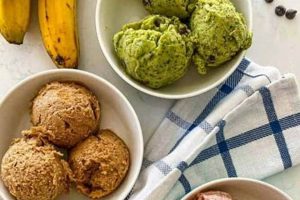
The term denotes a specific culinary procedure for creating a frozen dessert alternative that excludes all animal products, with its primary ingredient being the fruit of the banana plant. For instance, one may combine frozen banana slices in a high-powered blender until a smooth, creamy texture resembling traditional dairy-based ice cream is achieved.
The popularity of this preparation stems from its simplicity, affordability, and health advantages. It provides a naturally sweet and nutrient-rich treat suitable for individuals adhering to vegan diets, those with lactose intolerance, or those seeking lower-calorie dessert options. Its emergence reflects a broader trend towards plant-based eating and increased awareness of dietary restrictions.
The subsequent sections will delve into the optimal methods for its creation, explore various flavor combinations to enhance the base ingredient, and address common challenges encountered during the preparation process, ensuring a successful outcome.
Tips for Optimal Preparation
Achieving the desired consistency and flavor profile requires careful consideration of several key factors. The following tips provide guidance for maximizing the quality of the end product.
Tip 1: Ripeness Matters: Utilize bananas that are heavily spotted but not yet completely brown. This stage ensures optimal sweetness and a softer texture, leading to a smoother final consistency.
Tip 2: Pre-Freezing Technique: Slice bananas into approximately half-inch thick pieces before freezing. This accelerates the freezing process and facilitates easier processing in a food processor or blender.
Tip 3: Controlled Thawing (if necessary): Should the frozen banana slices prove too difficult to process, allow them to thaw for a brief period approximately 5-10 minutes. Monitor closely to prevent excessive softening.
Tip 4: Processing Equipment: A high-powered blender or food processor is crucial for achieving the desired creamy texture. Lower-powered appliances may struggle to break down the frozen fruit effectively.
Tip 5: Introduce Liquids Sparingly: Should additional liquid be required to facilitate blending, add small amounts such as plant-based milk or water gradually. Over-addition can result in a watery consistency.
Tip 6: Flavor Enhancements: Incorporate flavorings such as cocoa powder, vanilla extract, nut butter, or berries during the processing stage. Adjust quantities to achieve the desired taste profile.
Tip 7: Immediate Consumption: This preparation is best enjoyed immediately after processing. Freezing the finished product may result in a harder, less palatable texture.
Adhering to these recommendations will contribute to a superior final result, characterized by a smooth texture and balanced flavor.
The subsequent sections will explore various flavoring options to elevate the preparation, further enhancing its appeal.
1. Frozen banana ripeness

The ripeness of the banana prior to freezing directly affects the taste and texture of the subsequent dessert preparation. Bananas at a specific stage of maturity, characterized by a high concentration of sugars and a soft consistency, contribute to a sweeter and smoother final product. Underripe bananas, conversely, yield a less sweet and potentially starchier result. Therefore, selecting bananas with ample brown spots indicates optimal sugar content and suitability for achieving desired qualities in the vegan frozen dessert.
The cellular structure of the banana undergoes alteration during freezing. Ripeness determines the extent and nature of these changes. Overripe bananas may become overly soft and mushy after thawing, impacting the final texture. An ideal ripeness level allows the frozen banana to maintain sufficient structural integrity while still contributing to a creamy consistency. This balancing act makes the ripeness stage a crucial variable in the overall process. Furthermore, the enzymatic activity within ripening fruit influences flavor development. Proper ripeness ensures a complex, pleasant taste profile is transferred to the frozen product.
In summation, the ripeness of the banana prior to freezing exerts a significant influence on the taste and texture of the resulting dessert. The selection of adequately ripened fruit represents a critical step toward achieving a desirable and consistent outcome. Neglecting this element undermines the potential of the recipe to provide a satisfying and healthful alternative to conventional frozen desserts.
2. Blending technique

The blending technique employed directly determines the texture and overall palatability of the frozen banana dessert. The method significantly impacts the final product, influencing creaminess, smoothness, and the incorporation of additional ingredients.
- Pulsing vs. Continuous Blending
Pulsing involves short bursts of blending action, preventing the motor from overheating and aiding in breaking down large frozen banana pieces. Continuous blending, suitable for high-powered blenders, allows for uninterrupted processing until a smooth consistency is achieved. The choice depends on the appliance’s capabilities and the initial hardness of the frozen fruit.
- Liquid Addition Strategy
The addition of liquids, such as plant-based milk or water, should be controlled and gradual. Excessive liquid leads to a watery consistency, diminishing the desired ice cream-like texture. Introducing small amounts only when necessary aids in achieving a smoother blend without compromising the overall texture.
- Equipment Selection
High-powered blenders or food processors are optimal for processing frozen bananas. Standard blenders may struggle, resulting in a grainy or uneven texture. A sufficiently powerful appliance ensures efficient breakdown of the frozen fruit cells, leading to a creamy result.
- Temperature Management
Over-blending can increase friction, leading to melting of the frozen banana and a less firm final product. Careful monitoring of the mixture’s temperature and blending duration minimizes this risk, preserving the desired frozen state.
The success of the recipe hinges on the correct application of blending techniques. Adapting the method to the specific equipment available and carefully managing liquid additions and blending duration are crucial for realizing a smooth, creamy, and palatable frozen dessert. Failure to consider these factors compromises the texture and overall quality of the final product.
3. Flavor additions

The integration of supplementary flavorings is pivotal in transforming a base of blended frozen bananas into a diverse range of palatable frozen desserts. The strategic application of flavor additions expands the versatility of the fundamental recipe, catering to a wide array of taste preferences and dietary considerations.
- Natural Extracts and Essences
Vanilla extract, almond extract, and other natural essences introduce concentrated aromatic compounds that significantly alter the flavor profile. The use of high-quality extracts, free from artificial additives, enhances the overall taste and aromatic complexity. For instance, a few drops of peppermint extract can convert the banana base into a mint-chocolate flavored treat with the incorporation of cocoa powder. These extracts allow for subtle yet impactful flavor adjustments, widening the scope of possible creations.
- Fruits, Berries, and Purees
The incorporation of fresh or frozen fruits, berries, and fruit purees not only contributes to the flavor profile but also influences the texture and nutritional value. Adding frozen berries, such as strawberries or blueberries, introduces a tartness that complements the sweetness of the banana. Fruit purees, like mango or passion fruit, impart a smooth consistency and tropical notes. This method offers a natural source of sweetness and dietary fiber, aligning with the health-conscious objectives of the preparation.
- Spices and Seasonings
Spices and seasonings provide opportunities to introduce warmth, depth, and complexity. Cinnamon, nutmeg, and cardamom offer complementary flavors that resonate with the inherent sweetness of the banana. A dash of sea salt can enhance sweetness by suppressing bitterness, creating a more nuanced taste experience. Experimentation with spices enables the creation of unique and sophisticated flavor profiles, expanding beyond conventional dessert options.
- Nut Butters and Toppings
The incorporation of nut butters, such as peanut butter or almond butter, contributes a creamy texture and a nutty flavor that complements the banana base. Toppings like chopped nuts, chocolate shavings, or shredded coconut add textural contrast and visual appeal. These additions provide healthy fats and protein, increasing the satiety and nutritional content of the frozen dessert. The use of diverse toppings allows for personalized customization and elevates the overall sensory experience.
The intelligent utilization of flavor additions, spanning natural extracts, fruits, spices, and nut-based elements, transforms a simple frozen banana base into a sophisticated and health-conscious dessert. These additions offer both flavor diversification and opportunities to enhance the nutritional value, ensuring a versatile and appealing option for individuals seeking alternatives to traditional ice cream.
4. Texture consistency

The characteristic of texture consistency functions as a pivotal determinant of the overall success and palatability of any preparation based on blended frozen bananas, mimicking the properties of traditional ice cream. The desired attribute, a smooth and creamy mouthfeel devoid of ice crystals or grainy particles, distinguishes a well-executed instance from a substandard one. The attainment of this quality is contingent on several factors inherent in the preparation process, each exerting a demonstrable influence on the final outcome.
The initial freezing of the bananas, for example, directly affects the subsequent texture. Slower freezing rates often lead to the formation of larger ice crystals within the fruit’s cellular structure. When blended, these larger crystals are more difficult to break down completely, resulting in a grainier texture. Conversely, rapid freezing, often achieved by slicing the bananas prior to placement in the freezer, minimizes ice crystal formation, thereby facilitating a smoother blend. Furthermore, the blending equipment itself plays a crucial role. High-powered blenders or food processors are better equipped to disrupt the frozen fruit matrix and create a homogenous, creamy texture, whereas less powerful appliances may struggle to achieve the same result, leaving noticeable chunks or a coarse consistency. The judicious use of liquids, such as plant-based milk, also contributes to texture; excessive amounts result in a runny consistency, while insufficient amounts hinder proper blending, leading to a crumbly or dry mixture.
In conclusion, the texture consistency of a frozen banana-based dessert preparation is not merely a superficial attribute, but rather a critical element defining its success. Factors such as freezing rate, blending equipment, and liquid addition interact in a complex manner to determine the final textural properties. A thorough understanding of these factors, coupled with careful execution of the preparation process, is essential for consistently producing a product that meets the expectations of a desirable frozen dessert alternative.
5. Serving timeframe

The serving timeframe for a frozen dessert derived from blended frozen bananas is critically constrained by its inherent composition and lack of artificial stabilizers. Unlike commercially produced ice cream, which maintains its structural integrity for extended periods in a frozen state, this preparation is inherently unstable and susceptible to textural degradation shortly after its creation. The absence of emulsifiers and stabilizers, common in conventional ice cream, means that the mixture is prone to ice crystal formation upon refreezing, resulting in a grainy and less palatable product. Consequently, immediate consumption is not merely a suggestion, but a practical necessity dictated by the physical properties of the dessert.
The cause-and-effect relationship is direct: delaying consumption or attempting to store the preparation in the freezer leads to a perceptible decline in quality. The initial smooth and creamy texture transforms into a harder, icier consistency, significantly detracting from the sensory experience. This rapid degradation is a consequence of the water content within the bananas, which, upon refreezing, forms larger ice crystals than those present immediately after blending. Furthermore, flavor intensity may diminish over time due to the volatilization of aromatic compounds. Consider, for example, preparing this frozen dessert in advance for a party. If not served within a relatively short window (typically 30-60 minutes), the texture will likely be compromised, failing to deliver the intended gustatory satisfaction.
In summation, the serving timeframe represents an indispensable component of a successful outcome. Its ephemeral nature necessitates prompt consumption to fully appreciate the intended texture and flavor. While the ease of preparation and the natural ingredients are significant advantages, the limited serving window poses a practical challenge. Careful planning and execution are essential to align the preparation with the intended consumption, ensuring the optimal sensory experience is achieved before the inevitable textural degradation sets in. Future adaptations could explore natural methods for extending serving life, but as it stands, immediacy is paramount.
Frequently Asked Questions
The following addresses common inquiries concerning the preparation and properties of frozen desserts derived from blended frozen bananas.
Question 1: Does this preparation genuinely replicate the texture of traditional dairy-based ice cream?
The texture achieved is remarkably similar to soft-serve ice cream when prepared correctly. However, subtle differences exist. The absence of dairy fats results in a less rich and slightly less stable texture compared to conventional ice cream.
Question 2: Is it necessary to use a high-powered blender for this recipe?
While not strictly mandatory, a high-powered blender significantly improves the outcome. Less powerful blenders may struggle to fully break down the frozen banana, resulting in a grainy texture. A robust appliance ensures a smoother, creamier consistency.
Question 3: Can sweeteners be added to enhance the flavor?
Additional sweeteners are generally unnecessary if using ripe bananas, as the fruits natural sugars provide sufficient sweetness. However, if desired, minimal amounts of maple syrup, agave nectar, or other plant-based sweeteners can be incorporated. Exercise caution to avoid overpowering the banana flavor.
Question 4: How long can this dessert be stored in the freezer?
Storing this preparation in the freezer is not recommended. Refreezing leads to significant ice crystal formation, resulting in a hard and grainy texture. Immediate consumption is highly advised for optimal quality.
Question 5: Can other fruits be blended with the frozen bananas?
Yes, other frozen fruits, such as berries, mango, or pineapple, can be added to complement the banana flavor and introduce textural variations. Ensure the additional fruits are also frozen to maintain the desired consistency.
Question 6: Is this preparation suitable for individuals with banana allergies?
No. Individuals with a known allergy to bananas should avoid this preparation entirely. Consumption could trigger an allergic reaction, ranging from mild discomfort to severe anaphylaxis.
In summary, achieving a high-quality, frozen banana-based dessert requires attention to detail and adherence to recommended preparation techniques. While convenient and healthful, this preparation is best enjoyed immediately after creation.
The subsequent sections will present variations and alternative ingredient suggestions for expanding the repertoire of frozen banana-based desserts.
Conclusion
The examination of the vegan ice cream banana recipe reveals both its potential as a convenient and healthful dessert alternative and its inherent limitations. Optimal texture and flavor require careful selection of ingredients, precise execution of blending techniques, and immediate consumption to avoid textural degradation. While offering advantages for individuals adhering to specific dietary restrictions or seeking lower-calorie options, the product’s instability necessitates a departure from the storage and preservation capabilities of traditional ice cream formulations.
Future developments might explore natural stabilizers to extend the serving window or modifications to the freezing process to mitigate ice crystal formation. However, its current state underscores the trade-offs between simplicity and stability. Further research into enhancing the preparation’s longevity without compromising its core principles remains a worthwhile endeavor for expanding its accessibility and utility.