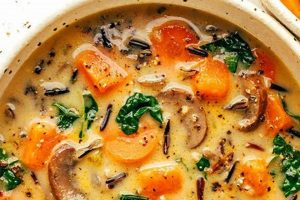
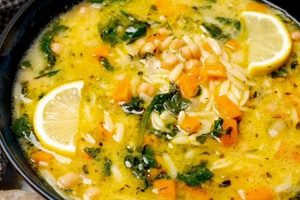
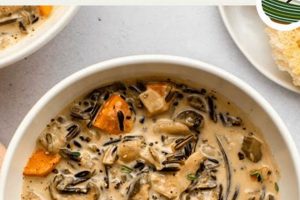
A plant-based alternative replicating the texture and flavor profile of a classic condensed soup made with poultry is available. This product aims to provide a creamy, savory base for recipes without the use of any animal-derived ingredients. For example, a vegetable pot pie recipe traditionally utilizing the chicken-based soup can be adapted by swapping in this vegan option.
The development of meat-free and dairy-free options like this caters to a growing demand from individuals adhering to vegan or vegetarian diets, those with lactose intolerance, or individuals seeking to reduce their consumption of animal products for ethical or environmental reasons. Historically, achieving the characteristic creamy texture without dairy required specialized culinary techniques. Modern food science has allowed for the creation of commercially available products that mimic the original’s consistency and savory notes.
Therefore, understanding the various ingredients and techniques employed in the creation of this alternative is key. Furthermore, exploring its nutritional profile and its versatility within various culinary applications offers a complete picture of its role as a modern pantry staple.
Tips for Using a Plant-Based Cream Soup Alternative
Maximizing the potential of a cream-style vegan replacement requires careful consideration of ingredients and preparation methods. The following suggestions offer guidance for seamless integration into recipes.
Tip 1: Hydrate Concentrates Appropriately: Concentrated forms often require reconstitution with water or vegetable broth. Adhering to package instructions is crucial for achieving the desired consistency and preventing a overly thick or pasty texture.
Tip 2: Adjust Seasoning: Plant-based variations may have a different sodium content or subtle flavor profile compared to the conventional version. Taste and adjust seasoning as needed, considering the addition of herbs, spices, or umami-rich ingredients like nutritional yeast.
Tip 3: Consider the Base Ingredients: Different formulations utilize diverse ingredients, such as cashew cream, coconut milk, or vegetable purees. Each base imparts a unique subtle flavor. Consider this when selecting a substitute to complement the other recipe components.
Tip 4: Prevent Separation: In some recipes, high heat or acidity can cause plant-based cream replacements to separate or curdle. Add the soup alternative near the end of the cooking process, and avoid boiling it vigorously.
Tip 5: Stabilize with Starch: If separation is a concern, incorporate a small amount of cornstarch or tapioca starch slurry into the sauce. This helps to maintain a smooth and emulsified texture.
Tip 6: Embrace Flavor Enhancers: To replicate the savory depth of chicken-based soup, consider incorporating ingredients like sauteed mushrooms, vegetable bouillon, or a dash of smoked paprika. These additions can elevate the overall flavor profile.
Tip 7: Experiment with Textures: Blending the cream substitute with roasted vegetables or adding pureed beans enhances both texture and nutritional value. This creates a more robust and satisfying dish.
By carefully considering these factors, one can seamlessly incorporate the plant-based alternative into a variety of recipes, achieving results that are both flavorful and visually appealing.
With these considerations in mind, the subsequent sections will explore specific recipes and applications that showcase the versatility of this pantry staple.
1. Base Ingredients

The foundation of any plant-based cream-style replacement resides within its core components. These ingredients dictate the final product’s texture, flavor, and overall suitability as a substitute in recipes traditionally relying on chicken-based cream of soup. The selection of these base elements constitutes a critical step in product development and a significant factor influencing consumer choice.
- Nut-Based Formulations
Cashews, almonds, and other nuts can be processed into creamy bases. Cashews, in particular, lend themselves well to this application due to their mild flavor and high fat content, which contributes to a smooth texture. The resulting product can closely mimic the richness of dairy cream. However, potential allergens must be considered, and nut-based options may be unsuitable for individuals with allergies.
- Coconut Milk as a Base
Coconut milk, particularly full-fat varieties, presents another avenue for achieving a creamy consistency. Its inherent sweetness and distinct flavor profile may necessitate flavor adjustments within the final formulation to more closely resemble the neutral taste of traditional chicken soup. The flavor impact should be analyzed.
- Vegetable Purees and Starches
Pureed vegetables, such as potatoes, cauliflower, or squash, combined with thickening agents like cornstarch or tapioca starch, can create a creamy texture. This approach offers a lower-fat alternative compared to nut- or coconut-based options. The overall flavor profile tends to be more neutral, potentially requiring the addition of umami-rich ingredients to replicate the savory character of chicken soup.
- Soy and Other Legumes
Soybeans, either in the form of tofu or soymilk, can be manipulated to create a creamy base. Other legumes like white beans can also be used. These bases may require careful seasoning to mask any inherent “beany” flavors. They often offer a good protein content compared to other alternatives.
The choice of base ingredient profoundly influences the overall characteristics of any vegan cream soup product. Developers tailor their selection to achieve the desired balance of flavor, texture, and nutritional properties. Understanding these base ingredients is critical for informed consumers seeking to replace chicken-based cream soup with plant-based alternatives in their cooking.
2. Texture similarity

Achieving texture similarity is a pivotal factor in the successful application of any plant-based cream-style replacement. The consumer expectation for a component in dishes originally designed around the viscosity and mouthfeel of cream of chicken soup dictates that a suitable alternative must possess comparable textural attributes. If the substitute exhibits a watery, grainy, or otherwise dissimilar texture, it can negatively impact the final dish’s perceived quality, regardless of flavor accuracy. For instance, a vegetable pot pie utilizing a vegan cream base lacking the necessary thickness and smoothness may result in a pie with a separated filling and an overall less satisfying eating experience.
The importance of replicating the smooth, creamy texture extends beyond mere aesthetics. It influences the way flavors are perceived and how well the substitute integrates with other ingredients. A properly textured replacement binds ingredients together, creating a cohesive sauce or filling, whereas a poorly textured one may result in a disjointed and unpleasant culinary outcome. Consider the example of a creamy pasta sauce. The base provides the essential lubrication and coating for the pasta strands; a watery or separated alternative fails to perform this function effectively, leading to a less desirable dish.
Therefore, texture similarity represents a significant criterion in assessing the suitability of plant-based cream-style replacements. While flavor and ingredient composition are undeniably important, the ability to convincingly mimic the texture of traditional cream of chicken soup directly affects the consumer’s acceptance and the ultimate success of dishes employing such alternatives. The challenge lies in achieving this textural fidelity using plant-derived ingredients, often requiring innovative techniques and careful selection of components.
3. Flavor Profile

The flavor profile of a cream-style vegan alternative plays a critical role in its success as a substitute. The original chicken soup flavor derives from a complex interplay of savory poultry notes, subtle vegetable undertones, and the creamy richness of the base. A suitable plant-based alternative must effectively replicate or approximate this flavor to seamlessly integrate into recipes traditionally reliant on the conventional soup. Discrepancies in flavor can lead to a final dish that deviates significantly from the intended taste, potentially rendering it unpalatable or undesirable. For example, a vegan casserole employing a substitute with a predominantly sweet flavor profile would not deliver the expected savory experience.
Achieving an appropriate flavor profile often involves a combination of strategic ingredient selection and careful seasoning. Umami-rich ingredients like nutritional yeast, dried mushrooms, or vegetable bouillon can be incorporated to mimic the savory depth of chicken. Herbs and spices, such as thyme, sage, or rosemary, may be added to further enhance the complexity of the flavor. The goal is to create a balanced and nuanced flavor that complements the other ingredients in the recipe without overpowering them. The flavor challenge also necessitates masking or mitigating any undesirable off-flavors originating from the plant-based base ingredients themselves, such as the inherent sweetness of coconut milk or the sometimes “beany” taste of legume-based options.
Ultimately, the success of a plant-based cream substitute hinges on its ability to deliver a familiar and satisfying flavor experience. Through thoughtful ingredient selection, skillful seasoning, and a commitment to replicating the key flavor characteristics of the original, manufacturers can create vegan alternatives that meet the needs of consumers seeking a meat-free option without compromising on taste. Understanding this is essential for consumers to properly adjust recipes as needed, and for manufacturers to formulate the best product.
4. Nutritional value

The nutritional value of a plant-based cream soup alternative represents a critical consideration for consumers seeking to replace traditional cream of chicken soup. While the original product may provide certain nutrients, such as protein from chicken, it can also be high in sodium and saturated fat. The nutritional profile of a vegan substitute, therefore, can present both opportunities and challenges. Ingredient selection directly impacts the ultimate nutritional composition, influencing levels of protein, fiber, vitamins, minerals, and fats, with the goal to provide a more beneficial ingredient than traditional options.
For instance, a nut-based cream alternative may be higher in monounsaturated fats, considered beneficial for heart health, and protein. However, it could also be higher in calories and total fat compared to a vegetable-based option. Conversely, a vegetable puree-based alternative might offer more fiber and fewer calories but potentially lower protein content. Fortification with vitamins and minerals becomes important in some formulations to ensure the substitute delivers a well-rounded nutritional profile comparable to or exceeding that of the traditional product. The addition of vitamin B12, often lacking in vegan diets, is one such example of nutritional enhancement to achieve added health benefit.
In conclusion, the nutritional value of a plant-based cream soup alternative is a multifaceted issue dependent on the specific ingredients and formulation. Consumers should carefully examine nutrition labels to make informed choices aligned with their dietary needs and health goals. While a vegan substitute may offer advantages in terms of saturated fat or cholesterol content, it is essential to consider the overall nutritional profile, including protein, fiber, vitamins, and minerals, to ensure it constitutes a healthy and balanced dietary choice.
5. Recipe versatility
The utility of a cream-style vegan substitute is directly proportional to its adaptability across a spectrum of recipes. The extent to which it can replace the traditional poultry-based ingredient without compromising the dish’s intended flavor, texture, and structural integrity defines its value as a culinary tool. High recipe versatility translates to a broader applicability, increasing its adoption among both home cooks and professional chefs seeking plant-based alternatives. A substitute that functions effectively in a limited number of dishes offers reduced appeal and restricted usability.
Consider the implications for common recipes. A vegan cream substitute should perform comparably in applications such as casseroles, sauces, soups, and savory pies. It must withstand varying cooking methods, including baking, simmering, and sauting, without undergoing undesirable textural changes like curdling or separation. Furthermore, it should readily incorporate with diverse flavor profiles, complementing both simple vegetable-based dishes and more complex preparations involving herbs, spices, and other seasonings. The substitute’s neutral flavor profile allows seamless adaptation to recipes that call for an “enhancement” from a chicken base.
In summary, recipe versatility represents a cornerstone of the cream-style vegan substitute’s success. Its ability to seamlessly integrate into a wide range of culinary applications, while maintaining or improving upon the qualities of the original dish, determines its ultimate usefulness and acceptance within the food industry. Further research and development focused on enhancing the adaptability of these substitutes will continue to drive their adoption and expand their role in plant-based cuisine. This provides easier access to creative cooking, and recipe options.
6. Availability

The market penetration of a cream-style vegan replacement is intrinsically linked to its accessibility for consumers. The product’s presence on store shelves, both physical and virtual, directly influences purchase decisions and overall adoption rates. Limited distribution diminishes consumer awareness and restricts opportunities for trial, hindering the establishment of the alternative as a mainstream pantry staple. A lack of ready availability can negate the benefits of superior taste, nutritional profile, or recipe versatility.
For example, if a high-quality substitute is only stocked in specialty health food stores or limited geographic regions, a significant portion of the potential consumer base remains unserved. Conversely, wider availability across major grocery chains and online retailers facilitates impulse purchases, exposes the product to a broader demographic, and fosters brand recognition. Strategic partnerships with established retailers, coupled with effective online marketing, are crucial for maximizing market reach. Regional taste preference is also important factor because some product and ingredients maybe more readily available on certain region.
Therefore, ensuring broad availability is a fundamental prerequisite for the success of any cream-style vegan product seeking to displace traditional chicken soup in the consumer market. Overcoming distribution hurdles and establishing a consistent presence across diverse retail channels requires strategic planning, investment in supply chain infrastructure, and a thorough understanding of consumer purchasing habits. The practical effect is simple, more the product available it will create more impact.
7. Cost effectiveness

The economic viability of a cream-style vegan alternative significantly influences its adoption as a substitute. Affordability directly impacts purchasing decisions, particularly for budget-conscious consumers or those seeking to transition to plant-based diets. The price point relative to traditional cream of chicken soup, and competing vegan alternatives, determines its accessibility and competitiveness in the market. Cost effectiveness requires a delicate balance between ingredient sourcing, manufacturing processes, and retail pricing strategies. Higher production costs associated with specialized plant-based ingredients or smaller production volumes can translate to a more expensive final product, potentially deterring price-sensitive consumers. Conversely, innovative sourcing strategies, efficient manufacturing techniques, and economies of scale can contribute to a more competitive price point.
Real-world examples illustrate the impact of cost effectiveness. A competitively priced substitute allows cost-conscious consumers to create vegan versions of classic dishes, such as casseroles or pot pies, without significantly increasing their grocery bills. This affordability encourages greater experimentation with plant-based cuisine and fosters broader adoption of vegan alternatives. A relatively expensive substitute, however, may be perceived as a luxury item, limiting its appeal to a niche market segment willing to pay a premium for vegan options. Manufacturers also need to account for fluctuations in raw material prices, as they can significantly impact the overall cost of production. Maintaining price stability through strategic sourcing contracts or hedging strategies is essential for ensuring long-term cost effectiveness.
In conclusion, the cost effectiveness of cream-style vegan replacements is a critical factor driving their market success. Balancing affordability with quality and nutritional value presents a significant challenge for manufacturers. Successfully navigating this challenge requires a comprehensive understanding of ingredient sourcing, manufacturing processes, and consumer price sensitivity. Lower cost increases adoption and a more sustainable, plant-based product. By optimizing cost efficiency, manufacturers can unlock the full potential of cream-style vegan alternatives and establish them as viable and accessible options for a wider range of consumers.
Frequently Asked Questions
The following section addresses common inquiries and misconceptions regarding plant-based alternatives to the traditional cream of chicken soup product.
Question 1: Is it possible for a plant-based product to accurately mimic the flavor of cream of chicken soup?
Achieving complete flavor duplication is challenging, though modern formulations employing umami-rich ingredients and strategic seasoning can approximate the savory and creamy characteristics of the conventional product.
Question 2: What are the typical base ingredients in cream of chicken soup vegan substitutes?
Common bases include cashew cream, coconut milk, vegetable purees (e.g., potatoes, cauliflower), and soy-based products. The specific ingredient influences the final flavor, texture, and nutritional profile.
Question 3: Can these substitutes be used in all recipes that call for cream of chicken soup?
Generally, yes. However, adjustments to seasoning or liquid content may be necessary to compensate for subtle differences in flavor and consistency. Careful consideration should be given to the intended role of the soup in the recipe.
Question 4: Are cream of chicken soup vegan substitutes nutritionally comparable to the original?
The nutritional profiles vary depending on the ingredients. Many alternatives offer lower saturated fat and cholesterol content, but it is important to examine the specific nutritional information for protein, fiber, and sodium levels.
Question 5: Do these substitutes require any special handling or preparation?
Some concentrated forms require reconstitution with water or broth. Certain formulations may be prone to separation at high temperatures or in acidic environments. Refer to product-specific instructions for optimal results.
Question 6: Are cream of chicken soup vegan substitutes significantly more expensive than traditional options?
The cost can vary depending on the brand, ingredients, and retail location. Some substitutes may be priced higher than the conventional product, although competition and increased production volumes are gradually driving prices down.
Ultimately, these FAQ addresses common consumer considerations when evaluating cream of chicken soup vegan substitute.
The subsequent sections delve into specific product recommendations and brands.
Cream of Chicken Soup Vegan Substitute
This exploration has demonstrated that the plant-based replacement offers a credible option for individuals seeking to avoid animal products. Achieving culinary success with the substitute requires careful consideration of base ingredients, texture similarity, flavor profiles, nutritional value, recipe versatility, product availability, and cost-effectiveness. Each factor contributes to the overall suitability of the alternative in various culinary applications.
Continued innovation in food science and ingredient sourcing will likely further enhance the quality, affordability, and accessibility of these plant-based alternatives. Consumers are encouraged to critically evaluate product labels and experiment with different brands and recipes to find a solution that best aligns with their individual needs and preferences. The future of this food product depends on development by food-techs and consumers’ willing to adapt the product into their lifestyle.