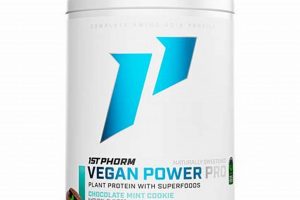
Plant-based formulations designed to support increases in body weight and muscle mass often contain a blend of ingredients. These products typically feature a combination of plant-derived protein sources, such as pea, brown rice, or soy, alongside complex carbohydrates and healthy fats. For example, a single serving might provide upwards of 50 grams of protein, a significant amount of carbohydrates from sources like oats or quinoa, and a moderate quantity of fats from ingredients such as flaxseed or sunflower oil.
Formulations of this nature address the needs of individuals following a vegan diet who seek to enhance their caloric intake and optimize their macronutrient profile for muscle growth and recovery. Historically, achieving adequate protein and calorie consumption on a plant-based diet required meticulous meal planning. These specialized supplements offer a convenient and efficient solution, streamlining the process of meeting heightened nutritional demands associated with intense physical activity or weight gain goals. Key advantages include ease of consumption, standardized nutrient content, and portability.
The subsequent discussion will delve into the specific components of these plant-based supplements, examining the role of individual protein sources, carbohydrate types, and fat profiles in supporting muscle protein synthesis and overall health. Further analysis will explore considerations for optimizing usage, potential benefits, and factors to weigh when selecting a product to align with individual dietary needs and fitness objectives.
Optimizing Usage
Achieving optimal results with specialized weight-gain formulations necessitates careful planning and a strategic approach. Adhering to the following guidelines can enhance efficacy and minimize potential adverse effects.
Tip 1: Prioritize Whole Food Sources: While supplements provide convenience, they should complement, not replace, nutrient-dense whole foods. Emphasize a diet rich in fruits, vegetables, legumes, and whole grains to ensure adequate micronutrient intake.
Tip 2: Calculate Caloric Needs: Determine daily caloric requirements based on activity level and weight gain goals. Supplement with appropriate serving sizes to bridge any dietary gaps. Use a calorie tracking app to monitor consumption.
Tip 3: Strategically Time Consumption: Consume a portion post-workout to facilitate muscle recovery and glycogen replenishment. An additional serving can be taken between meals to maintain a consistent caloric surplus.
Tip 4: Monitor Protein Intake: Ensure adequate protein consumption, typically between 1.6 to 2.2 grams per kilogram of body weight. Adjust supplement dosage accordingly to meet daily targets. Vary protein sources to ensure a complete amino acid profile.
Tip 5: Hydrate Adequately: Increased protein and calorie intake can place additional strain on the kidneys. Drink plenty of water throughout the day to support kidney function and overall hydration.
Tip 6: Assess Individual Tolerance: Begin with smaller servings to assess digestive tolerance. Gradually increase the dosage as needed to avoid gastrointestinal discomfort. Consider products with added digestive enzymes if necessary.
Tip 7: Read Labels Carefully: Scrutinize ingredient lists to identify potential allergens or undesirable additives. Opt for products with minimal artificial sweeteners, flavors, or colors. Third-party testing can provide an added layer of assurance regarding product quality and purity.
Tip 8: Adjust Macronutrient Ratios: Experiment with different ratios of protein, carbohydrates, and fats to optimize individual results. Some individuals may benefit from a higher carbohydrate intake to support energy levels, while others may require more fat for hormonal balance.
By adhering to these guidelines, individuals can maximize the benefits of these formulations while mitigating potential risks. A holistic approach to nutrition and exercise remains paramount for achieving sustainable weight gain and improved body composition.
The subsequent sections will address the potential benefits and drawbacks associated with supplementation, exploring factors to consider when selecting a suitable product.
1. Plant-based Sources

The selection of plant-based protein sources is a fundamental determinant of the nutritional value and efficacy of formulations intended to promote weight gain in individuals adhering to vegan dietary practices. The composition and digestibility of these sources directly influence the supplement’s ability to support muscle protein synthesis and overall caloric intake.
- Amino Acid Profile Completeness
Different plant proteins exhibit varying degrees of amino acid completeness. While animal-derived proteins typically provide all essential amino acids in sufficient quantities, many individual plant proteins are limiting in one or more of these crucial building blocks. For example, rice protein is often low in lysine, while pea protein may be comparatively low in methionine. Formulations often incorporate blends of multiple plant proteins, such as pea, rice, and soy, to create a more complete amino acid profile, mimicking the benefits of complete proteins. This blending strategy addresses the inherent limitations of relying on a single plant-based source.
- Digestibility and Absorption Rates
The digestibility and absorption rates of plant proteins can differ significantly from those of animal proteins. Factors such as fiber content and the presence of anti-nutritional factors can impede protein digestion. Processing techniques, such as enzymatic hydrolysis or micronization, are often employed to enhance the digestibility and bioavailability of plant proteins in these formulations. The effectiveness of these techniques plays a critical role in determining the rate at which amino acids become available for muscle protein synthesis.
- Allergenicity Considerations
Certain plant-based protein sources are associated with a higher risk of allergic reactions in susceptible individuals. Soy, for instance, is a common allergen. Manufacturers must clearly label products containing potential allergens and provide alternative formulations for those with specific dietary restrictions. The selection of less allergenic sources, such as pea protein or sunflower seed protein, can broaden the appeal and accessibility of these weight gain supplements.
- Environmental Sustainability
The environmental impact of different plant protein sources varies considerably. Soy production, for example, has been linked to deforestation and habitat loss in some regions. Choosing protein sources with a lower environmental footprint, such as pea protein or fava bean protein, can align with the ethical considerations of vegan consumers and contribute to a more sustainable food system. The sourcing and processing methods employed in the production of these ingredients are increasingly scrutinized for their impact on the planet.
In summary, the careful selection of plant-based protein sources is paramount in the design and formulation of vegan weight gain supplements. Factors such as amino acid completeness, digestibility, allergenicity, and environmental sustainability must be carefully considered to create products that are both effective and ethically sound. The ongoing research and development in this area continue to expand the range of available options and improve the nutritional profile of plant-based protein supplements.
2. Caloric Density

Caloric density, defined as the number of calories per unit weight or volume of food, is a critical parameter in the formulation and application of plant-based weight gain supplements. These supplements are specifically designed to facilitate a caloric surplus, a prerequisite for increasing body mass, particularly in individuals with elevated energy expenditure or difficulty consuming large quantities of food.
- Concentration of Nutrients
Vegan mass gainer protein formulations achieve high caloric density by concentrating macronutrients, primarily carbohydrates, proteins, and fats, into a relatively small serving size. This concentration allows individuals to consume a substantial number of calories without experiencing excessive satiety or digestive discomfort. For instance, a single serving may provide upwards of 600-800 calories derived from ingredients such as maltodextrin, oat flour, and plant-based oils.
- Impact on Satiety and Appetite
While caloric density is advantageous for achieving a surplus, its impact on satiety must be carefully considered. Highly processed ingredients, often used to increase caloric density, may not promote the same level of satiety as whole foods. This can lead to overconsumption and potential imbalances in nutrient intake. Therefore, formulations that incorporate a balance of whole-food-derived ingredients, such as ground oats or quinoa, alongside concentrated calorie sources may offer a more sustainable approach to weight gain.
- Role of Fats in Caloric Density
Dietary fats contribute significantly to the caloric density of these supplements, providing approximately nine calories per gram, compared to four calories per gram for carbohydrates and proteins. Plant-based fats, such as those derived from sunflower seeds, flaxseeds, or avocados, are often included to enhance the caloric content and provide essential fatty acids. The type and quality of fats used can impact the overall healthfulness of the formulation, with an emphasis on unsaturated fats and avoidance of trans fats being crucial.
- Formulation and Palatability
Achieving high caloric density while maintaining palatability and mixability presents a formulation challenge. The addition of thickening agents, flavorings, and sweeteners may be necessary to improve the sensory attributes of the supplement. However, excessive use of artificial additives should be avoided in favor of natural alternatives. The overall goal is to create a product that is both calorie-rich and palatable, encouraging consistent consumption and adherence to the weight gain regimen.
The interplay between caloric density, nutrient composition, satiety, and palatability is paramount in the design of effective plant-based weight gain supplements. Formulations that prioritize a balance of these factors are more likely to support sustainable weight gain and overall health. Furthermore, individual tolerance and metabolic responses to varying levels of caloric density should be carefully monitored to optimize results and minimize potential adverse effects.
3. Macronutrient ratios

Macronutrient ratios are a critical determinant of the effectiveness of weight gain supplements, particularly within the context of vegan diets. These ratios, representing the relative proportions of protein, carbohydrates, and fats, dictate the metabolic response to supplementation and influence the partitioning of nutrients towards muscle growth or fat storage. The selection of appropriate ratios is contingent upon individual factors such as activity level, metabolic rate, and specific weight gain objectives. A disproportionately high fat content, for example, may lead to undesirable fat accumulation, while insufficient protein intake may hinder muscle protein synthesis. Therefore, careful consideration of these ratios is essential for optimizing the outcomes associated with plant-based formulations.
In practice, varying macronutrient ratios cater to different physiological needs. A formulation with a higher carbohydrate-to-protein ratio might be suitable for individuals engaged in intense endurance activities, where glycogen replenishment is paramount. Conversely, a more balanced ratio, with a slightly higher protein content, may be more appropriate for individuals primarily focused on maximizing muscle hypertrophy. Real-world examples demonstrate that athletes involved in powerlifting often benefit from a protein-rich supplement to support muscle repair and growth, whereas endurance athletes may prioritize carbohydrate-rich supplements to fuel prolonged exercise. The practical significance of understanding these nuances lies in the ability to tailor supplementation strategies to individual requirements, thereby enhancing performance and optimizing body composition.
In summary, the appropriate manipulation of macronutrient ratios within vegan mass gainer protein supplements is crucial for achieving desired physiological outcomes. The challenges lie in accurately assessing individual needs and formulating products that effectively deliver the required macronutrient balance. A comprehensive understanding of these principles enables informed decision-making and facilitates the attainment of sustainable weight gain and improved body composition within the constraints of a plant-based dietary regimen. Furthermore, this understanding underscores the importance of consulting with qualified nutrition professionals to personalize supplementation strategies and mitigate potential adverse effects.
4. Digestive Enzymes
The inclusion of digestive enzymes within plant-based weight gain supplements addresses inherent challenges associated with the digestion and absorption of plant-derived macronutrients. Plant cell walls contain complex carbohydrates and fibers that can be difficult for the human digestive system to break down efficiently. This reduced efficiency may manifest as gastrointestinal discomfort, bloating, and incomplete nutrient assimilation, particularly when consuming large quantities of such supplements to achieve a caloric surplus. Supplementing with enzymes designed to target these complex plant constituents mitigates these negative effects, increasing nutrient bioavailability. For instance, enzymes such as amylase and cellulase facilitate the breakdown of complex carbohydrates and cellulose, respectively, allowing for more complete digestion and absorption of the macronutrients contained within the supplement.
A concrete example illustrating the practical significance of digestive enzymes is the improved tolerance of pea protein, a common ingredient in vegan weight gain formulas. While pea protein offers a favorable amino acid profile, some individuals experience bloating or gas due to its inherent composition. The addition of enzymes like protease can enhance the breakdown of pea protein into smaller peptides and amino acids, thereby reducing the likelihood of digestive discomfort and optimizing protein absorption. This enhancement is particularly important for individuals consuming multiple servings of the supplement daily to meet their caloric goals. Furthermore, the enhanced digestibility afforded by digestive enzymes may contribute to a more sustained release of amino acids into the bloodstream, supporting more consistent muscle protein synthesis throughout the day.
In summary, the strategic incorporation of digestive enzymes into plant-based weight gain supplements represents a practical approach to improve nutrient bioavailability and mitigate potential gastrointestinal distress. By addressing the inherent challenges associated with digesting plant-derived macronutrients, these enzymes enhance the overall effectiveness and tolerability of the supplements. This consideration is crucial for individuals relying on these products to achieve a caloric surplus and support muscle growth on a vegan diet. The ongoing development and refinement of enzyme blends tailored to specific plant-based ingredients promise to further optimize the digestive benefits of these supplements.
5. Amino acid profile

The amino acid profile of any protein source is a critical determinant of its nutritional value and its effectiveness in supporting muscle protein synthesis. This is particularly salient in the context of plant-based formulations, where the inherent amino acid composition can differ significantly from animal-derived sources. The completeness and bioavailability of amino acids within a vegan mass gainer protein are directly linked to its ability to facilitate muscle growth and recovery.
- Essential Amino Acid Composition
Essential amino acids are those that cannot be synthesized de novo by the human body and must be obtained through dietary intake. A complete protein source contains all nine essential amino acids in sufficient quantities to meet the body’s needs. Many plant proteins are limiting in one or more essential amino acids, such as lysine, methionine, or tryptophan. Formulations address this limitation by combining multiple plant protein sources to create a more complete amino acid profile. For example, combining rice protein (low in lysine) with pea protein (rich in lysine) can result in a more balanced amino acid composition resembling that of animal proteins.
- Branched-Chain Amino Acids (BCAAs)
Branched-chain amino acids, including leucine, isoleucine, and valine, play a crucial role in stimulating muscle protein synthesis. Leucine, in particular, is considered the primary trigger for this process. While some plant proteins may contain lower levels of BCAAs compared to animal proteins, supplementation or fortification can enhance the BCAA content of vegan mass gainer proteins. The leucine content is often a key focus, with manufacturers aiming to provide sufficient leucine per serving to maximize muscle protein synthesis.
- Digestibility and Bioavailability
The digestibility and bioavailability of amino acids from plant proteins can impact their effectiveness. Factors such as the presence of anti-nutritional factors or the structural complexity of plant cell walls can hinder protein digestion and absorption. Processing techniques, such as enzymatic hydrolysis, can improve the digestibility and bioavailability of amino acids from plant sources. The rate at which amino acids become available for muscle protein synthesis is a critical factor in determining the overall efficacy of the protein source.
- Amino Acid Ratios and Muscle Protein Synthesis
The ratios of different amino acids within a protein source can influence its ability to stimulate muscle protein synthesis. A balanced amino acid profile, with appropriate ratios of essential and non-essential amino acids, is crucial for optimizing muscle growth and repair. Formulations often aim to mimic the amino acid ratios found in animal proteins, which are generally considered to be highly effective for supporting muscle protein synthesis. The specific ratios of amino acids can influence the efficiency with which the body utilizes the protein for muscle building purposes.
The amino acid profile is, therefore, a pivotal aspect of plant-based weight gain supplements. A careful assessment of amino acid composition, digestibility, and bioavailability is essential for ensuring that these formulations effectively support muscle growth and recovery in individuals following a vegan diet. Ongoing research continues to explore strategies for optimizing the amino acid profile of plant proteins, further enhancing their value as a source of muscle-building nutrition.
Frequently Asked Questions
The following section addresses common inquiries regarding plant-based formulations designed to support weight gain, providing clarity on their composition, usage, and potential benefits.
Question 1: Are plant-based weight gain formulations as effective as those derived from animal sources?
Effectiveness hinges upon amino acid profile completeness and caloric density. Formulations employing a strategic blend of plant protein sources, coupled with adequate caloric provision, can yield comparable results to animal-based counterparts.
Question 2: What are the primary protein sources utilized in vegan mass gainer protein products?
Common sources include pea protein, brown rice protein, soy protein, and blends thereof. The specific selection dictates the amino acid composition and digestibility of the final product.
Question 3: How does the carbohydrate content contribute to the efficacy of these supplements?
Carbohydrates provide the necessary energy to fuel intense physical activity and contribute significantly to the overall caloric surplus required for weight gain. Complex carbohydrates, such as those derived from oats or quinoa, are generally preferred over simple sugars.
Question 4: Are there specific considerations for individuals with food allergies?
Individuals with known allergies should carefully review ingredient lists. Soy, nuts, and gluten are common allergens that may be present in certain formulations. Allergen-free alternatives are often available.
Question 5: What is the recommended dosage and timing for consumption?
Dosage recommendations vary depending on individual caloric needs and activity levels. Generally, consuming a portion post-workout and between meals is advisable to optimize muscle recovery and maintain a consistent caloric surplus.
Question 6: Are there any potential side effects associated with supplementation?
Gastrointestinal discomfort, such as bloating or gas, may occur, particularly when initiating supplementation. Starting with smaller servings and gradually increasing the dosage can mitigate these effects. Individuals with pre-existing medical conditions should consult with a healthcare professional prior to use.
Proper use of these supplements, in conjunction with a balanced diet and regular exercise, can effectively support weight gain and muscle growth within the framework of a plant-based lifestyle.
The subsequent section will provide guidance on selecting a suitable product based on individual needs and preferences.
Conclusion
The preceding analysis has elucidated the multifaceted nature of plant-based formulations designed to support weight gain. Key considerations include the selection of complete protein sources, strategic manipulation of macronutrient ratios, the incorporation of digestive aids, and an understanding of caloric density’s impact on satiety. The efficacy of such supplements is predicated on a holistic approach that integrates dietary modifications, consistent exercise, and careful attention to individual needs.
The responsible utilization of vegan mass gainer protein represents a viable strategy for individuals seeking to augment muscle mass and overall body weight while adhering to a plant-based dietary regimen. Continued research and development in this field promise to further refine these formulations, optimizing their nutritional profiles and enhancing their effectiveness in achieving desired physiological outcomes. Informed decision-making, guided by evidence-based practices and professional consultation, remains paramount for maximizing benefits and mitigating potential risks.