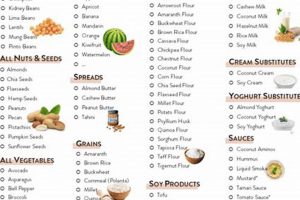
Goods in this category exclude ingredients derived from animals and components produced through animal exploitation. These items span a broad range, encompassing food, cosmetics, clothing, and household supplies, reflecting a growing consumer demand for ethical and sustainable choices. A food item, for instance, would lack meat, dairy, eggs, or honey, while a cosmetic would be formulated without beeswax, lanolin, or carmine.
The rise in demand for these offerings stems from increasing awareness of animal welfare, environmental sustainability, and potential health advantages. Selecting alternatives can contribute to reducing the environmental impact associated with animal agriculture, such as greenhouse gas emissions and deforestation. Furthermore, some individuals opt for these options due to personal health considerations or ethical beliefs.
The subsequent sections will delve into the specific considerations involved in identifying and selecting suitable items, the certifications and labeling practices associated with verifying their composition, and the diverse array of markets where these goods can be obtained.
Guidance on Identifying Suitable Offerings
Navigating the product landscape requires diligence to ensure alignment with desired criteria. The following points provide a structured approach to informed selection.
Tip 1: Scrutinize Ingredient Lists: Thoroughly examine the product’s composition. Look for common animal-derived ingredients like gelatin, casein, whey, lanolin, and carmine. Familiarize yourself with alternative names or derivatives that may not be immediately obvious.
Tip 2: Seek Certifications and Labels: Look for certifications from reputable organizations. Logos, such as those from Vegan Action or the Vegan Society, provide an independent verification of adherence to established standards.
Tip 3: Research Manufacturers: Investigate the manufacturer’s ethical stance and production practices. Check their website or contact customer service to inquire about their sourcing policies and commitment to animal welfare.
Tip 4: Consider Cross-Contamination Risks: Inquire about manufacturing processes to assess the potential for cross-contamination with animal products, especially when dealing with shared equipment or facilities. Some manufacturers may explicitly address this issue on their labeling or website.
Tip 5: Be Aware of Hidden Ingredients: Some ingredients, like “natural flavorings” or “vitamins,” may have animal origins. When in doubt, contact the manufacturer for clarification regarding the source of these components.
Tip 6: Utilize Online Resources and Databases: Several online resources and databases compile information on product composition and manufacturer policies. Consult these platforms to supplement your research and broaden your understanding of available options.
By following these guidelines, consumers can confidently identify and select items aligned with their ethical and dietary preferences. This approach minimizes the risk of inadvertently supporting practices that conflict with their values.
The subsequent sections will provide detailed information about finding retailers specializing in these offerings, both online and in brick-and-mortar stores.
1. Animal-derived absence

The concept of animal-derived absence forms the cornerstone of products marketed as conforming to ethical standards. It dictates that no ingredients, components, or processing aids originating from animals or animal by-products are permissible. This absence ensures adherence to principles prioritizing animal welfare and sustainability within the consumer goods market.
- Ingredient Composition Verification
Verification of ingredient composition necessitates meticulous scrutiny of product labels and manufacturer documentation. Common animal-derived ingredients, such as gelatin, casein, lanolin, and carmine, are strictly prohibited. The presence of these substances disqualifies a product from consideration within this category, necessitating comprehensive understanding of potential hidden or derivative animal products.
- Manufacturing Process Scrutiny
Scrutiny extends beyond ingredient lists to encompass manufacturing processes. Cross-contamination with animal products during production, even if unintentional, compromises the integrity of the offering. Manufacturers are expected to implement stringent protocols to prevent contact with animal-derived substances, maintaining process transparency for consumer confidence.
- Ethical Sourcing of Alternatives
The absence of animal products necessitates the substitution with plant-based or synthetic alternatives. Ethical sourcing of these alternatives is paramount, ensuring environmentally responsible and socially just practices. Unregulated or unsustainable sourcing undermines the intended benefits, potentially offsetting the gains achieved through the exclusion of animal products.
- Regulatory Compliance and Labeling Accuracy
Adherence to regulatory standards and accurate labeling are critical for consumer trust and informed decision-making. Misleading or ambiguous labeling practices erode confidence and impede the ability of consumers to make ethically sound choices. Regulatory bodies play a crucial role in ensuring compliance and maintaining the integrity of the market.
The multifaceted nature of animal-derived absence underscores the complexity of providing legitimate and ethically sound alternatives. Products marketed as conforming to these principles must demonstrate consistent adherence to standards encompassing ingredient sourcing, manufacturing processes, and regulatory compliance to ensure authenticity and promote genuine ethical consumption.
2. Ethical production
Ethical production, in the context of items devoid of animal products, represents a comprehensive approach extending beyond the mere absence of animal-derived components. It encompasses the entire lifecycle of a product, focusing on minimizing harm and maximizing positive impacts across social and environmental domains.
- Fair Labor Practices
Ethical production mandates adherence to fair labor standards throughout the supply chain. This includes ensuring safe working conditions, paying living wages, and respecting workers’ rights to organize and bargain collectively. Examples include sourcing raw materials from farms or factories that are certified by fair trade organizations. Ignoring fair labor practices undermines the ethical integrity of the product, regardless of its composition.
- Environmental Sustainability
Minimizing environmental impact is a critical facet of ethical production. This involves reducing carbon emissions, conserving water resources, and preventing pollution during manufacturing, transportation, and disposal. Using renewable energy sources, implementing closed-loop production systems, and employing sustainable packaging materials are examples of environmentally responsible practices. Products claiming ethical status should demonstrably reduce their environmental footprint compared to conventional alternatives.
- Transparent Supply Chains
Ethical production requires transparency across the entire supply chain, from raw material sourcing to final distribution. This allows for traceability and accountability, enabling consumers to make informed choices and holding manufacturers responsible for their actions. Transparency includes disclosing supplier information, providing details about manufacturing processes, and sharing data on environmental impacts. Opaque supply chains obscure potential ethical violations and hinder efforts to promote responsible production practices.
- Humane Treatment of Animals (Indirectly)
While animal-derived ingredients are absent, ethical production may still consider the broader impact on animal welfare. For instance, ensuring that land use practices do not encroach on animal habitats or that transportation methods minimize animal stress. Sourcing plant-based materials responsibly ensures habitats are not negatively impacted by the farming process. These considerations reinforce the commitment to minimizing harm and promoting respect for all living beings, even in the absence of direct animal involvement.
In conclusion, ethical production of offerings without animal-derived ingredients necessitates a holistic approach encompassing fair labor practices, environmental sustainability, transparent supply chains, and consideration for animal welfare (indirectly). These interconnected facets contribute to the overall ethical integrity of the product, providing consumers with options that align with their values and promote a more sustainable and equitable marketplace.
3. Plant-based sources

The utilization of plant-based sources is fundamental to the creation of items that exclude animal-derived components. These sources serve as the primary building blocks, replacing ingredients traditionally obtained from animals with alternatives derived from plants. Without reliance on plant-based sources, the formulation of goods adhering to strict criteria would be impossible. The viability of alternatives hinges on the availability and sustainable harvesting of suitable plants. Soybeans, for example, provide the basis for tofu and tempeh, serving as alternatives to meat. Almonds, oats, and soy are processed into milks, substituting for dairy. The efficacy and nutritional content of the resulting product are directly influenced by the selection and processing of the initial botanical elements.
Furthermore, plant-based sources contribute to the overall sustainability of products. Choosing sustainably farmed crops reduces the environmental impact associated with production. Examples include utilizing crops that require less water or are grown using organic farming practices. The selection of plant-based sources also has implications for land use and biodiversity. Prioritizing crops that support biodiversity and minimize habitat destruction aligns with the ethical considerations driving the demand for goods of this kind. The production of palm oil, for example, has been linked to deforestation and habitat loss, making its use in items intended for ethical consumption a point of contention and requiring careful consideration of sourcing practices.
In conclusion, plant-based sources are intrinsically linked to the existence and viability of products excluding animal-derived elements. Careful selection, sustainable sourcing, and ethical considerations surrounding land use and biodiversity are crucial to ensuring the integrity and environmental responsibility of these offerings. A thorough understanding of the connection between plant-based sources and the ethical principles driving this product category is essential for both manufacturers and consumers.
4. Cruelty-free testing

The concept of cruelty-free testing is inextricably linked to the ethos surrounding items lacking animal components. It signifies a commitment to ensuring that neither the final product nor its individual ingredients have been subjected to animal experimentation at any stage of development or manufacturing. This aspect holds significant weight for consumers prioritizing ethical considerations and animal welfare.
- Absence of Animal Experimentation
Central to cruelty-free certification is the verifiable absence of animal experimentation. This involves scrutiny of the manufacturer’s practices, as well as those of their ingredient suppliers, to confirm that no animal testing has been conducted. Evidence supporting this claim typically includes documentation, audits, and adherence to established certification standards. Organizations like Leaping Bunny provide certifications based on stringent criteria, offering consumers a reliable indicator of compliance.
- Third-Party Verification
The validity of cruelty-free claims relies heavily on independent verification. Third-party organizations conduct audits and assessments to ensure manufacturers are adhering to established protocols and accurately representing their testing practices. These organizations apply rigorous standards and maintain transparency in their certification processes, thereby increasing consumer confidence in the authenticity of the claims. Without external verification, cruelty-free assertions are susceptible to skepticism and accusations of greenwashing.
- Adherence to Regulatory Frameworks
Certain regions have implemented regulatory frameworks prohibiting or restricting animal testing for specific product categories, such as cosmetics. Compliance with these regulations is an essential component of cruelty-free designation. However, variations in regulatory requirements across different jurisdictions necessitate a nuanced understanding of the applicable standards. Manufacturers seeking to market their products globally must navigate diverse regulatory landscapes to ensure ongoing compliance.
- Development and Validation of Alternative Testing Methods
Cruelty-free testing is intrinsically linked to the advancement and implementation of alternative testing methods that do not involve animals. These methods include in vitro tests (using cells or tissues), computer modeling, and human volunteer studies. Investing in the development and validation of these alternatives is crucial to reducing reliance on animal testing and promoting ethical scientific innovation. Regulatory bodies and research institutions play a vital role in advancing the adoption of these non-animal testing methodologies.
These facets highlight the multifaceted nature of cruelty-free testing within the context of ” items lacking animal components.” Its success is predicated on transparency, independent verification, adherence to regulatory frameworks, and a commitment to developing and implementing innovative alternative testing methods. Consumers seeking these products should prioritize those with credible certifications and a demonstrated commitment to ethical practices throughout their supply chain.
5. Sustainable materials

The integration of sustainable materials is a critical determinant of the overall ethical and environmental profile of products formulated without animal derivatives. While the absence of animal products is a foundational principle, the selection of materials with minimal environmental impact completes the commitment to responsible consumption. The utilization of unsustainable materials can negate the positive impact of excluding animal components, creating a false impression of ethical superiority. For example, a synthetic leather alternative derived from petroleum-based plastics, while animal-free, contributes to fossil fuel dependency and plastic waste, undermining the intended environmental benefits. The cause-and-effect relationship is straightforward: unsustainable materials diminish the credibility and value of offerings intended to promote both animal welfare and ecological responsibility.
The importance of sustainable materials is further underscored by their contribution to resource conservation and reduced pollution. Materials like organic cotton, recycled polyester, bamboo, and cork offer environmentally preferable alternatives to conventional materials. Organic cotton, for instance, avoids the use of harmful pesticides and fertilizers associated with conventional cotton farming. Recycled polyester reduces reliance on virgin plastic production and diverts waste from landfills. These choices translate to decreased water consumption, lower greenhouse gas emissions, and reduced soil degradation. In practical application, manufacturers demonstrate their commitment to sustainability by sourcing certified organic cotton for clothing or utilizing recycled materials in packaging, directly minimizing their environmental footprint. Such practices allow the product to be promoted as a true offering, minimizing environmental impacts and demonstrating ecological consciousness.
In conclusion, the selection of sustainable materials is not merely an ancillary consideration but an integral component of realizing the ethical and environmental goals associated with products lacking animal components. The benefits derived from eliminating animal exploitation are significantly enhanced when coupled with responsible material sourcing and production practices. Challenges remain in ensuring traceability and verifying sustainability claims across complex supply chains. Nevertheless, the incorporation of sustainable materials is indispensable for achieving a genuine commitment to ethical and environmentally responsible consumption. Further advancements in material innovation and supply chain transparency will be crucial in maximizing the positive impact of future offerings.
6. Certification transparency
Certification transparency, in the context of items lacking animal ingredients, constitutes a pivotal element for consumer trust and informed purchasing decisions. It encompasses the accessibility, clarity, and verifiability of information pertaining to certification processes and standards applied to these goods. Without transparency, certifications lose credibility, potentially misleading consumers and undermining the integrity of the market.
- Accessibility of Certification Standards
Accessibility involves the public availability of certification standards. These standards should be readily accessible on certifying bodies’ websites or upon request. They must clearly outline the specific criteria for compliance, including prohibited ingredients, testing protocols, and manufacturing process requirements. For instance, a standard might detail permitted levels of cross-contamination or specify the types of audits conducted to verify adherence. Opaque or proprietary standards impede consumer understanding and limit accountability.
- Clarity of Labeling and Claims
Clarity in labeling ensures that claims regarding certification are unambiguous and easily understandable. Certifications logos and wording must clearly indicate the specific scope of the certification and the body responsible for granting it. Vague or misleading labels, such as “natural” or “eco-friendly” without a recognized certifying body, can confuse consumers and dilute the meaning of genuine certifications. The use of QR codes linking to detailed product information or certification details enhances transparency.
- Verifiability of Certification Status
Verifiability refers to the ability of consumers to independently confirm the certification status of a product. This typically involves access to a database or registry maintained by the certifying body, allowing consumers to verify the validity and scope of the certification based on the product’s barcode or certification number. Some certifying bodies also provide information about the frequency and type of audits conducted to maintain certification. Lack of verifiability casts doubt on the legitimacy of the certification and undermines consumer confidence.
- Responsiveness to Consumer Inquiries
A commitment to transparency includes responsiveness to consumer inquiries regarding certification processes and product compliance. Certifying bodies and manufacturers should provide readily available contact information and promptly address consumer questions or concerns. Transparent communication builds trust and demonstrates a genuine commitment to ethical and sustainable practices. Failure to respond to consumer inquiries erodes trust and may suggest a lack of confidence in the certification itself.
These facets underscore the crucial role of certification transparency in ensuring the integrity of the market for offerings excluding animal ingredients. Accessible standards, clear labeling, verifiable status, and responsive communication are essential for empowering consumers to make informed choices and holding manufacturers accountable for their claims. Without transparency, certifications become meaningless labels, failing to promote ethical and sustainable consumption patterns.
Frequently Asked Questions
This section addresses common inquiries and clarifies prevalent misconceptions regarding commodities manufactured without animal-derived substances.
Question 1: What constitutes a “vegan free product”?
A ” item” is defined as one that contains no ingredients or byproducts originating from animals. Furthermore, its production process must exclude animal exploitation and cruelty. This encompasses food, cosmetics, clothing, and household items.
Question 2: How can consumers verify that a product is truly “vegan free”?
Verification involves scrutinizing ingredient lists for animal-derived components, seeking certifications from reputable organizations, and contacting manufacturers for clarification on sourcing and production practices. Independent verification is crucial.
Question 3: Are “vegan free products” inherently more sustainable than conventional products?
While the absence of animal products generally reduces environmental impact, sustainability depends on various factors, including resource usage, manufacturing processes, and transportation methods. ” items” are not automatically more sustainable, necessitating a holistic assessment.
Question 4: What are some common hidden animal-derived ingredients to watch out for?
Common hidden ingredients include gelatin, casein, whey, lanolin, carmine, and shellac. “Natural flavorings” and certain vitamins may also be derived from animals. Diligence is required when reviewing ingredient lists.
Question 5: Are “vegan free products” always cruelty-free?
While many ” items” are also cruelty-free, meaning they have not been tested on animals, these are distinct concepts. Cruelty-free certification requires adherence to separate standards and verification processes. Absence of animal ingredients does not automatically imply cruelty-free status.
Question 6: Where can consumers typically find “vegan free products”?
These items are increasingly available in mainstream supermarkets, health food stores, and online retailers. Specialized stores dedicated to options may offer a wider selection. Accessibility varies depending on location and product category.
Careful consideration of the factors outlined above enables informed decision-making when selecting commodities that align with ethical and dietary preferences.
The subsequent sections will delve into specific product categories and provide detailed guidance on identifying suitable items within each category.
Conclusion
This exploration has illuminated the multifaceted nature of items excluding animal derivatives. These commodities represent a growing segment of the market, driven by ethical, environmental, and health considerations. The integrity of “vegan free products” hinges on adherence to rigorous standards encompassing ingredient sourcing, manufacturing processes, labeling accuracy, and certification transparency. Consumers must remain vigilant in scrutinizing product information and seeking independent verification to ensure alignment with their values.
The continued expansion and refinement of this product category offer opportunities for fostering a more sustainable and compassionate marketplace. Further advancements in material innovation, alternative testing methodologies, and supply chain traceability will be crucial in maximizing the positive impact of “vegan free products.” The choices made by producers and consumers alike will ultimately determine the long-term success and significance of this movement.



![Easy Vegan Gluten-Free Thanksgiving Ideas [Recipes] | Discover Delicious Vegan Food, Beauty Swaps, and Zero-Waste Tips for a Greener Life](https://thisvegangirl.com/wp-content/uploads/2026/05/th-272-300x200.jpg "Easy Vegan Gluten-Free Thanksgiving Ideas [Recipes] Discover Delicious Vegan Food, Beauty Swaps, and Zero-Waste Tips for a Greener Life")