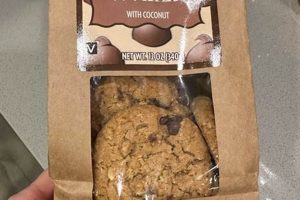
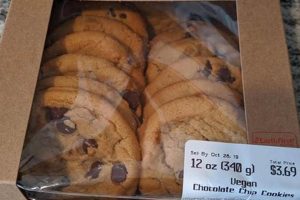
These baked goods are a delightful variation on a classic treat, modified to exclude all animal products. Common ingredients such as butter, eggs, and dairy milk are replaced with plant-based alternatives, resulting in a confection suitable for those following a vegan lifestyle. For instance, applesauce or flaxseed meal can serve as binders instead of eggs, while plant-based butter substitutes margarine derived from vegetable oils, or coconut oil replicate the fat content of dairy butter.
The significance of offering such alternatives lies in catering to diverse dietary needs and ethical considerations. Individuals adhering to a vegan diet for reasons relating to animal welfare, environmental concerns, or health benefits can enjoy a familiar indulgence without compromising their principles. Furthermore, these adapted recipes often demonstrate creative culinary techniques and broaden the scope of baking beyond traditional ingredients, potentially leading to innovative flavor profiles and textures.
The following sections will delve into the specific ingredients used in plant-based baking, provide detailed recipes and techniques for achieving optimal results, and explore various decoration ideas that enhance the visual appeal of these festive treats.
Essential Guidance for Superior Results
Achieving optimal texture, flavor, and structural integrity in plant-based baked goods requires careful attention to specific ingredients and techniques. These guidelines address common challenges encountered during preparation and offer solutions for consistently successful outcomes.
Tip 1: Hydrate Flaxseed Meal Adequately. When using flaxseed meal as an egg replacement, combine one tablespoon of flaxseed meal with three tablespoons of water and allow it to sit for at least five minutes, or preferably longer, until a gelatinous consistency develops. This ensures sufficient binding power within the dough.
Tip 2: Select Appropriate Flour. Different flours possess varying gluten content and water absorption properties. All-purpose flour is often suitable, but pastry flour can contribute to a more tender crumb. Gluten-free blends may require the addition of xanthan gum to mimic gluten’s binding characteristics. Experimentation is often necessary to determine the ideal flour or flour blend for a desired texture.
Tip 3: Use Cold Vegan Butter. Like traditional butter in non-plant-based baking, chilled plant-based butter substitutes are essential for creating flaky layers and preventing excessive spreading during baking. Ensure the butter is firm but still pliable before incorporating it into the dough.
Tip 4: Chill the Dough Thoroughly. Adequate chilling time, typically a minimum of one hour and preferably longer, allows the gluten to relax and the fats to solidify. This prevents the dough from becoming too sticky and difficult to handle, and minimizes spreading during baking.
Tip 5: Bake on a Cool Baking Sheet. Transfer chilled shapes to a cool, ungreased baking sheet. A hot baking sheet can cause the dough to spread rapidly and unevenly, compromising the shape definition.
Tip 6: Monitor Baking Time Closely. Plant-based recipes may bake slightly faster or slower than traditional recipes. Begin checking for doneness a few minutes before the recommended baking time. The edges should be lightly golden, and the bottoms should be firm but not overly browned.
Tip 7: Let Cool Completely Before Decorating. Allowing the baked goods to cool entirely on a wire rack before decorating is crucial to prevent the frosting or icing from melting and running. This also minimizes the risk of breakage when handling the delicate shapes.
Adhering to these recommendations will significantly improve the overall quality and consistency of plant-based baking, ensuring that the resulting treats are visually appealing and texturally satisfying.
The following sections will provide innovative decoration ideas and advanced techniques that further elevate the presentation and artistry of these festive creations.
1. Ingredients

The success of any instance hinges critically on the selection and proportions of its constituent elements. In a plant-based context, the omission of conventional dairy and eggs necessitates careful substitution to replicate their functional properties. The choice of flour, for example, directly impacts the final texture; a lower protein flour yields a more tender result, while whole wheat flour adds a denser quality. The type of plant-based butter influences both flavor and structure, with options ranging from coconut oil-based spreads, which can contribute a distinct flavor, to refined vegetable oil blends, which offer a more neutral profile. The absence of eggs, traditionally used for binding and leavening, demands alternatives such as flaxseed meal or applesauce, each affecting the cohesiveness and rise of the baked product.
Understanding the interplay between these elements is crucial for achieving desired characteristics. For example, an excess of liquid from a fruit puree egg substitute may result in a softer, less defined shape after baking, while an insufficient amount of binding agent can lead to a crumbly, fragile outcome. The choice of sweetener, whether granulated sugar, maple syrup, or agave nectar, also contributes to both flavor and moisture content. Therefore, precise measurements and a comprehension of each ingredient’s role are paramount. Furthermore, the quality of components impacts the overall outcome; using high-quality vanilla extract or ethically sourced chocolate chips elevates the final product.
In conclusion, the quality of elements directly dictates the success of plant-based baking. By carefully considering the impact of each substitution and understanding their interactions, optimal texture, flavor, and structure can be achieved. Mastering the selection and application of diverse components is the key to creating delectable and visually appealing plant-based baked goods that rival, or even surpass, their conventional counterparts. Ignoring the component considerations can lead to structural and flavoring issues.
2. Technique

Technique, in the context of baking, encompasses the procedural steps and specialized skills employed to transform raw ingredients into a finished product. With respect to plant-based versions of these baked goods, mastering specific techniques is essential to compensate for the absence of animal-derived ingredients, ensuring structural integrity, optimal texture, and desirable flavor profiles.
- Flour Incorporation
The method of incorporating flour significantly affects gluten development. Overmixing can lead to a tough result, while undermixing results in a crumbly texture. A gentle folding technique is often preferred to minimize gluten formation, particularly when using all-purpose flour. When working with gluten-free flour blends, a more thorough mixing may be necessary to activate the binding agents.
- Dough Chilling
Chilling dough before rolling is a crucial step. Cold dough is easier to handle, reduces spreading during baking, and enhances flavor development. Insufficient chilling results in a sticky dough that is difficult to cut into shapes and yields cookies with a flattened, less defined appearance. Ideally, dough should be chilled for at least one hour, or preferably longer, to allow the plant-based butter substitute to firm up.
- Rolling and Cutting
The thickness to which the dough is rolled impacts the baking time and texture. Rolling the dough too thin can result in brittle or burnt edges, while rolling it too thick can lead to underbaked centers. Uniform thickness ensures even baking and consistent texture across all resulting pieces. Using sharp cookie cutters is essential for clean, defined shapes.
- Baking Temperature and Time
Precise oven temperature and baking time are critical for preventing over- or under-baking. Oven thermometers should be used to ensure accuracy, as oven temperatures can fluctuate. Monitoring the cookies closely during baking is essential; they are done when the edges are lightly golden and the bottoms are firm to the touch. Overbaking results in dry, hard cookies, while underbaking produces a doughy texture.
Mastery of these techniques, coupled with a thorough understanding of plant-based ingredient substitutions, enables the consistent production of aesthetically pleasing and palatable treats. Neglecting any of these processes can lead to unfavorable outcomes. Therefore, meticulous attention to detail is paramount in plant-based baking.
3. Temperature
Temperature plays a crucial and multifaceted role in achieving desired characteristics. Precise temperature control is not merely a procedural detail, but a fundamental element that directly influences the structural integrity, texture, and overall palatability. Deviations from recommended temperature ranges, both during preparation and baking, can have significant consequences on the final product. For instance, inadequate refrigeration of plant-based butter substitutes may lead to excessive spreading during baking, resulting in flat, misshapen results. Conversely, excessively high oven temperatures can cause premature browning or burning, while underbaking can lead to a doughy, undercooked interior.
The influence of temperature extends beyond the baking process itself. The temperature of ingredients, such as plant-based butter substitutes, significantly affects the mixing process. Chilled butter substitutes, when combined with dry ingredients, create pockets of solid fat that melt during baking, producing a tender, flaky texture. Similarly, the temperature of liquids used in the recipe, such as plant-based milk or water, can impact gluten development. Cold liquids inhibit gluten formation, which is desirable for achieving a tender crumb. The dough’s temperature before rolling and cutting also matters. A properly chilled dough is firmer and easier to handle, allowing for clean, precise cuts and minimizing the risk of deformation during transfer to the baking sheet. Failure to control these temperature-related variables often manifests as undesirable qualities in the end product.
In summary, the careful manipulation of temperature at various stages of preparation and baking is paramount for achieving consistently successful outcomes. Maintaining appropriate temperatures not only influences structural integrity and texture, but also impacts the flavor development. A thorough understanding of temperature’s role, coupled with careful execution, is essential for producing high-quality plant-based baked goods that meet desired expectations. Without a proper and controlled temperature, the intended outcome is unachievable and unsuccessful.
4. Texture

Texture is a critical attribute influencing the palatability and overall enjoyment of baked goods. In plant-based versions, achieving a desirable texture often presents unique challenges due to the absence of traditional animal-derived ingredients that contribute to specific textural characteristics. Success relies on understanding these challenges and employing strategies to replicate or compensate for these contributions.
- Crumb Structure
Crumb structure refers to the internal architecture of a baked item, specifically the size and distribution of air cells within the matrix. In traditional baking, eggs contribute to the development of a tender crumb. In plant-based iterations, ingredients like applesauce or flaxseed meal, when properly hydrated, can mimic this binding effect, creating a cohesive, yet delicate, crumb. Improper substitution can lead to either a dense, compacted crumb or an overly crumbly structure lacking structural integrity.
- Crispness vs. Softness
The balance between crispness and softness dictates the overall eating experience. Gluten development, influenced by mixing time and flour type, significantly affects this balance. Overmixing encourages gluten formation, resulting in a tougher, chewier texture. Conversely, undermixing yields a softer, more delicate consistency. Plant-based butter substitutes also influence crispness; those with higher fat content tend to produce a crisper outer layer.
- Mouthfeel
Mouthfeel encompasses the tactile sensations experienced while consuming a food, including attributes like smoothness, dryness, and chewiness. Plant-based butter substitutes can sometimes result in a slightly different mouthfeel compared to dairy butter due to variations in fat composition and melting point. The addition of ingredients like nut butters can contribute to a richer, smoother mouthfeel, while others can introduce grittiness if not properly processed.
- Structural Integrity
Structural integrity refers to the ability to maintain their shape and resist crumbling or breaking. The absence of gluten in many plant-based recipes requires the use of binding agents like xanthan gum to provide structure. Proper chilling of the dough before baking also enhances structural integrity by allowing the fat to solidify, reducing spreading and preventing excessively fragile shapes. Proper storage is important to maintaining structural integrity once baking is complete.
The skillful manipulation of ingredients and techniques is essential for achieving a desired texture that complements the flavor profile and enhances the overall eating experience. Successfully navigating these textural considerations enables the production of visually appealing and satisfying treats suitable for individuals adhering to diverse dietary preferences.
5. Decoration

In the context of plant-based baked goods, decoration serves not only as an aesthetic enhancement but also as an opportunity to express creativity and personalization while adhering to ethical dietary choices. Decoration elevates treats from simple food items to visually appealing centerpieces, contributing significantly to the overall experience and enjoyment.
- Plant-Based Frosting and Icing
Frosting and icing formulations, crucial for surface embellishment, necessitate the substitution of dairy-based butter and milk with plant-derived alternatives. Coconut oil, vegetable shortening, or vegan margarine can replace butter, while plant-based milks, such as almond, soy, or oat milk, substitute dairy milk. Natural food colorings, derived from sources like beetroot, spinach, or turmeric, can be incorporated to achieve vibrant hues without artificial additives. Royal icing, typically made with egg whites, can be replicated using aquafaba, the liquid from canned chickpeas, whipped to achieve a similar consistency. This is then combined with confectioners’ sugar.
- Vegan Sprinkles and Edible Glitter
Many commercially available sprinkles and edible glitter contain shellac, an animal-derived resin. Ensuring that decorative elements are free from animal products requires careful sourcing. Vegan sprinkles, made with plant-based colorings and sugar, are readily available from specialized suppliers. Edible glitter made from plant-derived starches provides a shimmering effect without compromising vegan principles. Verification of ingredient lists is imperative to avoid unintentional consumption of animal-derived substances.
- Natural Decorative Elements
Incorporating natural elements enhances visual appeal while adhering to dietary guidelines. Fresh or dried fruits, such as berries, citrus slices, or edible flowers, provide color, texture, and natural sweetness. Nuts, seeds, and coconut flakes add textural complexity and visual interest. These elements contribute to a rustic aesthetic, emphasizing the use of wholesome ingredients. Ensuring that fresh produce is thoroughly washed and dried before application is important.
- Stenciling and Embossing
Stenciling and embossing techniques offer a way to create intricate designs without relying on complex piping skills. Vegan royal icing or a thin glaze can be applied through stencils to create detailed patterns. Embossing tools can be used to imprint designs directly onto the surface before baking or on the frosting after application. These techniques allow for a high degree of personalization and visual sophistication.
These decorative techniques demonstrate that plant-based baking does not necessitate a compromise in aesthetics or artistry. Through thoughtful selection of ingredients and creative application of techniques, treats can be transformed into visually stunning and ethically conscious creations, contributing significantly to the overall presentation and enjoyment. Careful attention to detail during decorating ensures that the finished product is not only delicious but also visually appealing and aligned with ethical considerations.
6. Storage

The proper storage of plant-based baked goods significantly impacts their shelf life, texture, and overall palatability. These treats, lacking the natural preservatives found in animal-derived fats, are often more susceptible to degradation from environmental factors such as moisture and air exposure. Improper storage can lead to dryness, staleness, or even mold growth, thereby diminishing the quality and enjoyment of the product. For instance, without adequate protection from air, plant-based butter substitutes can oxidize, leading to rancidity. Similarly, exposure to moisture can cause them to become soggy, particularly those decorated with icing.
Effective storage strategies for these baked goods revolve around creating a protective barrier against environmental elements. Airtight containers are essential to prevent moisture absorption and oxidation. Layering the baked items between sheets of parchment or wax paper within the container prevents sticking and maintains the integrity of delicate decorations. In cases where longer-term storage is required, freezing can be an effective option. Freezing helps to inhibit microbial growth and slow down enzymatic reactions that contribute to spoilage. However, it is crucial to wrap these items tightly in freezer-safe packaging to prevent freezer burn, which can cause dehydration and textural changes. Thawing should be done gradually at room temperature to minimize condensation and maintain the original texture.
In conclusion, understanding and implementing proper storage techniques is not merely an afterthought but an integral component of plant-based baking. It directly influences the longevity and quality of the treats, ensuring that their intended flavor and texture are preserved for optimal enjoyment. Challenges in storage often stem from the inherent differences in composition compared to traditional baked goods, necessitating a tailored approach. By prioritizing airtight storage, employing appropriate packaging materials, and considering freezing options when necessary, the lifespan and enjoyment of the plant-based confection can be considerably extended.
Frequently Asked Questions
The following addresses common inquiries regarding preparation, ingredients, and characteristics. These answers aim to clarify uncertainties and provide practical guidance.
Question 1: What are the primary substitutions used in plant-based versions of these baked goods?
Common substitutions include plant-based butter alternatives for dairy butter, flaxseed meal or applesauce for eggs, and plant-based milks such as almond, soy, or oat milk for dairy milk.
Question 2: How does the absence of gluten affect the final product, and what can be done to mitigate any negative effects?
The absence of gluten can result in a crumbly or less structured baked good. The addition of xanthan gum or other binding agents can help to improve texture and structural integrity.
Question 3: Is chilling the dough necessary, and what purpose does it serve?
Chilling the dough is essential. It allows the plant-based butter to firm up, preventing excessive spreading during baking and ensuring that the finished product holds its shape.
Question 4: What is the best way to prevent them from sticking to the baking sheet?
Using parchment paper or a silicone baking mat provides a non-stick surface and facilitates easy removal of the baked product.
Question 5: How can one determine when plant-based versions are fully baked?
The edges should be lightly golden, and the bottoms should be firm to the touch. A toothpick inserted into the center should come out clean or with only a few moist crumbs attached.
Question 6: What are some vegan-friendly options for decorating?
Plant-based frosting made with vegan butter alternatives and natural food colorings, vegan sprinkles, and edible glitter that does not contain shellac are all viable options.
Careful attention to ingredient substitutions, techniques, and decorating choices ensures a successful outcome. Adhering to these best practices yields satisfying results.
The subsequent section will explore recipe variations and innovative approaches to enhance the creative possibilities.
Vegan Cut Out Cookies
This exploration has elucidated the intricacies of plant-based baking, specifically regarding preparation. From ingredient substitutions to precise techniques, and from temperature regulation to decoration, each aspect contributes significantly to the outcome. The principles outlined herein serve as a foundation for achieving visually appealing and palatable treats devoid of animal products.
Mastery of these methods ensures that dietary choices do not preclude participation in culinary traditions. The knowledge presented empowers bakers to create confections that align with ethical considerations without compromising on taste or presentation. Continued refinement and experimentation promise further advancements in the realm of plant-based baking, expanding possibilities for both novice and experienced cooks.
![Best Vegan Cookies: Coconut Flour Wonders [Easy!] | Discover Delicious Vegan Food, Beauty Swaps, and Zero-Waste Tips for a Greener Life](https://thisvegangirl.com/wp-content/uploads/2026/05/th-571-300x200.jpg "Best Vegan Cookies: Coconut Flour Wonders [Easy!] Discover Delicious Vegan Food, Beauty Swaps, and Zero-Waste Tips for a Greener Life")