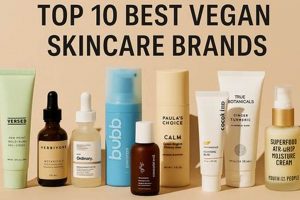
Products in this category exclude animal-derived ingredients and are developed without testing on animals. This means formulations avoid ingredients like beeswax, honey, lanolin, and carmine. Furthermore, these items undergo testing procedures that do not involve animal subjects at any stage, from ingredient sourcing to final product manufacturing.
The importance of this approach lies in its ethical considerations, environmental impact, and potential health benefits. Choosing items formulated in this way supports animal welfare, reduces the environmental footprint associated with animal agriculture, and often aligns with preferences for cleaner, plant-based formulations. Historically, demand for such products has grown in response to increasing awareness of animal rights and the potential harms associated with conventional cosmetic practices.
The subsequent sections will delve into specific ingredient considerations, labeling practices, certifications, and the evolving landscape of this expanding sector within the beauty industry.
Essential Guidance
Considerations for selecting skincare that aligns with ethical and environmental values require careful evaluation of product labels and company practices. A proactive approach ensures alignment with desired standards.
Tip 1: Ingredient List Scrutiny: Thoroughly review the ingredient list. Identify and avoid common animal-derived ingredients such as lanolin, beeswax, honey, carmine, and tallow. Utilize online resources to verify the source of unfamiliar ingredients.
Tip 2: Certification Marks Validation: Look for recognized certification marks, such as Leaping Bunny, PETA, or Vegan Society, as indicators of third-party verification of both the vegan status and absence of animal testing throughout the supply chain.
Tip 3: Company Policy Examination: Investigate the company’s official statements regarding animal testing. Some companies may claim cruelty-free status while outsourcing testing to third parties, particularly in regions where it is legally mandated.
Tip 4: Product Packaging Review: Scrutinize packaging claims. Phrases like “not tested on animals” may be misleading, implying only the final product was not tested, while individual ingredients may have been.
Tip 5: Cross-Reference with Ethical Databases: Consult online databases and directories that maintain lists of certified and compliant brands. These resources often provide detailed information about company ethics and product formulations.
Tip 6: Understand “Vegan” vs. “Cruelty-Free”: Differentiate between products labeled as “vegan” and “cruelty-free.” A vegan product is free from animal ingredients but may not be cruelty-free, and vice versa. Ideally, products should meet both criteria.
Tip 7: Research Sourcing Practices: Where possible, investigate the sourcing of plant-based ingredients. Sustainable and ethical sourcing minimizes environmental impact and supports responsible agriculture.
Adherence to these guidelines will empower individuals to make informed decisions, promoting alignment with ethical standards and supporting responsible industry practices. The subsequent sections will explore specific product recommendations and address common misconceptions.
1. Ethical Sourcing
Ethical sourcing constitutes a critical foundation for truly responsible skincare. The link between ethical sourcing and vegan and cruelty-free practices extends beyond the mere avoidance of animal-derived ingredients or animal testing. It addresses the broader impact of ingredient production on ecosystems, communities, and long-term sustainability. Unethical sourcing practices, even for plant-based ingredients, can result in deforestation, habitat destruction, and exploitation of labor, thus undermining the core values associated with conscious consumerism. For example, the unsustainable harvesting of certain plants, despite being vegan, can lead to biodiversity loss and threaten endangered species.
The importance of ethical sourcing manifests in several key areas. It supports fair trade practices, ensuring that workers involved in ingredient cultivation receive fair wages and safe working conditions. It promotes biodiversity conservation by incentivizing sustainable harvesting methods that preserve plant populations and their habitats. Furthermore, it reduces the environmental impact associated with transportation and processing, favoring locally sourced ingredients and environmentally sound production methods. Consider shea butter production, where ethical sourcing involves fair wages for women harvesters in West Africa and sustainable harvesting practices that prevent deforestation.
In summary, ethical sourcing is not merely an adjunct to vegan and cruelty-free skincare, but an integral component. It ensures that the pursuit of animal welfare and clean formulations does not come at the expense of environmental degradation or human exploitation. Challenges remain in verifying the ethical origins of ingredients, requiring greater transparency and traceability within supply chains. Ultimately, understanding the significance of ethical sourcing empowers consumers to make choices that align with a comprehensive vision of sustainability and responsible consumption within the beauty industry.
2. Ingredient Transparency

Ingredient transparency is paramount within the sector focused on skincare aligning with animal welfare and ingredient sourcing standards. The explicit detailing of ingredients, their origin, and their purpose is crucial for consumer confidence and informed decision-making.
- Full Disclosure of Ingredient Lists
Complete and accurate listing of all ingredients, using standardized nomenclature (INCI names), is fundamental. This enables consumers to identify potential allergens or problematic substances, including hidden animal-derived ingredients or those processed using animal products. Without full disclosure, verifying vegan status is impossible.
- Source Identification
Knowing the source of an ingredient, whether plant-derived, mineral-derived, or synthetic, is crucial for evaluating its ethical and environmental implications. For instance, understanding if palm oil, a common ingredient, is sustainably sourced minimizes contributions to deforestation.
- Manufacturing Process Revelation
Transparency should extend to the manufacturing process. Consumers need assurance that ingredients, even if plant-derived, haven’t been processed using animal by-products or tested on animals during any stage of production. This level of detail allows for discerning the integrity of the ‘cruelty-free’ claim.
- Clarity on Functional Purpose
Indicating the purpose of each ingredient within the formulation provides clarity and supports consumer understanding. This goes beyond simply listing the ingredient; it explains why it’s present, allowing consumers to assess its necessity and potential alternatives, especially concerning ingredients that may raise ethical or environmental concerns.
The interconnectedness of these facets highlights how ingredient transparency is not merely a regulatory requirement but an ethical imperative within the vegan and cruelty-free skincare landscape. Enhanced transparency empowers consumers to make responsible choices that genuinely reflect their values and contribute to a more sustainable and ethical beauty industry.
3. Animal Welfare

Animal welfare forms the ethical cornerstone of the movement toward skincare that aligns with vegan and cruelty-free standards. The inherent value of animal life and the imperative to minimize suffering directly inform the principles underlying such products. The subsequent discussion delineates key facets of this connection.
- Elimination of Animal Testing
The most direct manifestation of animal welfare in skincare is the elimination of animal testing. Conventional cosmetic testing often involves exposing animals to potentially harmful substances to assess safety and efficacy. Cruelty-free certification guarantees that neither the final product nor its individual ingredients have been tested on animals at any stage of development or production. The Draize test, for example, involves applying substances to the eyes or skin of animals, often rabbits, causing significant distress. Adherence to cruelty-free standards ensures that such practices are avoided.
- Avoidance of Animal-Derived Ingredients
Vegan skincare necessitates the complete exclusion of animal-derived ingredients. Many conventional skincare products contain substances like beeswax, honey, lanolin (wool grease), carmine (derived from insects), and collagen (often sourced from animal skin and bones). The production of these ingredients can involve inhumane practices, such as the destruction of bee colonies for honey harvesting or the confinement and shearing of sheep for lanolin. By avoiding these ingredients, vegan skincare directly supports animal welfare.
- Ethical Sourcing Considerations
Animal welfare concerns extend beyond the direct use of animals in testing or as sources of ingredients. Ethical sourcing addresses the broader impact of ingredient production on animal habitats and ecosystems. For instance, the unsustainable harvesting of certain plant-based ingredients can lead to deforestation, displacing animals and disrupting their natural environments. Therefore, truly ethical skincare practices consider the impact of sourcing on overall animal well-being.
- Promoting Alternative Testing Methods
Advocating for and supporting the development and implementation of alternative testing methods is crucial. This includes investing in in-vitro testing (using human cells or tissues), computer modeling, and other non-animal approaches that can provide reliable safety data without causing animal suffering. The advancement of these methods is essential for phasing out animal testing globally and furthering the cause of animal welfare within the cosmetic industry.
The interconnectedness of these facets underscores the comprehensive nature of animal welfare within the context of vegan and cruelty-free skincare. It represents a commitment to minimizing harm, promoting ethical practices, and fostering a more compassionate approach to the beauty industry. The ongoing development of alternative testing methods and the increasing consumer demand for ethical products are driving positive change, paving the way for a future where animal suffering is no longer a part of the skincare equation.
4. Certification Validity
Certification validity constitutes a critical determinant of consumer trust and product integrity within the realm of skincare that aligns with vegan and cruelty-free principles. The presence of a certification mark serves as an external validation of claims, yet its value hinges on the rigor and transparency of the certifying body.
- Accreditation and Standards
The most reputable certification programs undergo accreditation by independent organizations. This ensures the certifying body adheres to established standards for impartiality, competence, and transparency. For example, certifications backed by ISO standards provide a higher level of assurance compared to those without such oversight. The standards employed by a certification program dictate the specific criteria for vegan status and cruelty-free practices, impacting the overall stringency of the certification.
- Auditing and Verification Processes
Valid certifications incorporate robust auditing and verification processes to ensure compliance. These may include on-site inspections of manufacturing facilities, ingredient sourcing documentation reviews, and independent laboratory testing to confirm the absence of animal-derived ingredients or animal testing. A certification lacking regular audits and verification is inherently less reliable, increasing the risk of misleading claims.
- Transparency of Certification Criteria
A trustworthy certification program makes its criteria publicly accessible. This allows consumers to understand the specific requirements a product must meet to obtain certification, fostering informed decision-making. Opaque certification criteria raise concerns about the potential for greenwashing or lax standards. For example, certifications that clearly define “animal testing” to include both direct and indirect testing by suppliers offer greater assurance than those with ambiguous definitions.
- Ongoing Monitoring and Enforcement
Certification validity relies on ongoing monitoring and enforcement mechanisms. This includes regular surveillance to detect and address non-compliance, as well as clear procedures for revoking certification in cases of violations. A certification program that lacks effective enforcement mechanisms provides limited assurance of continued compliance, potentially undermining consumer trust.
These facets underscore the significance of critically evaluating certification validity. A rigorous, transparent, and independently verified certification provides a credible signal of a product’s alignment with vegan and cruelty-free principles. Conversely, certifications lacking these characteristics offer limited assurance, potentially misleading consumers and undermining the integrity of the industry.
5. Environmental Impact
The environmental impact of skincare products, irrespective of claims pertaining to vegan or cruelty-free status, is a multifaceted consideration. Conventional skincare practices often contribute significantly to environmental degradation through various avenues. These encompass resource depletion via the extraction of raw materials, energy-intensive manufacturing processes, generation of plastic packaging waste, and the potential for aquatic ecosystem disruption from product ingredients entering waterways.
The connection between environmental impact and skincare developed according to animal and sourcing standards lies in the potential to mitigate some of these adverse effects. Choosing formulations that prioritize plant-based ingredients may reduce reliance on resource-intensive animal agriculture. Emphasis on sustainable sourcing practices aims to minimize deforestation, habitat destruction, and the exploitation of natural resources associated with ingredient cultivation. Biodegradable or refillable packaging options further diminish waste generation. The avoidance of certain synthetic chemicals can reduce the potential for water contamination and the disruption of aquatic ecosystems. For example, some brands utilize plant-derived alternatives to petroleum-based ingredients, reducing reliance on fossil fuels and minimizing the introduction of microplastics into the environment. Similarly, companies adopting refillable packaging systems decrease plastic waste compared to traditional single-use containers.
In summation, while a “vegan and cruelty-free” label does not inherently guarantee minimal environmental impact, the underlying principles often align with practices that reduce ecological footprints. Challenges persist in verifying the true sustainability of ingredients and packaging materials, necessitating increased transparency and third-party certifications. Ultimately, understanding this connection empowers consumers to make informed choices that support both animal welfare and environmental preservation within the beauty industry.
6. Formulation Integrity

Formulation integrity within skincare denotes the stability, safety, and efficacy of a product’s composition over its intended shelf life. For skincare aligning with standards for animal welfare and responsible sourcing, formulation integrity assumes heightened significance. The absence of animal-derived ingredients necessitates carefully selected plant-based alternatives that replicate desired functionalities without compromising product performance. For instance, replacing animal-derived collagen with plant-based amino acids requires meticulous balancing to maintain skin elasticity benefits. Similarly, substituting beeswax with plant-based waxes demands precise ratios to achieve comparable texture and barrier function. Failure to maintain formulation integrity can lead to product instability, reduced efficacy, or potential skin irritation, undermining consumer trust and the ethical foundations of the brand.
The impact of formulation integrity extends beyond immediate product performance. Long-term stability is crucial to minimize waste and ensure that products remain safe and effective throughout their shelf life. Improper formulation can result in ingredient degradation, color changes, or microbial contamination, rendering the product unusable and potentially harmful. This directly contradicts the sustainability goals often associated with conscious consumerism. Consider the use of natural preservatives in place of synthetic options; while aligning with a preference for cleaner formulations, they must be employed judiciously to ensure adequate protection against microbial growth. Another practical consideration is the selection of packaging that protects the formulation from light and air exposure, preventing oxidation and degradation of sensitive ingredients.
In summary, formulation integrity is a non-negotiable component of skincare designed according to standards for animal welfare and responsible sourcing. It directly impacts product safety, efficacy, and stability, reinforcing consumer confidence and supporting the overall ethical claims of the brand. Challenges lie in the ongoing research and development required to identify and utilize plant-based alternatives that effectively replicate the functionalities of animal-derived ingredients while maintaining long-term product integrity. Addressing these challenges ensures that the pursuit of ethical skincare does not compromise product quality or consumer satisfaction.
Frequently Asked Questions
The following addresses common inquiries concerning the standards, practices, and benefits of skincare products manufactured according to animal welfare and ingredient sourcing standards.
Question 1: Is skincare that avoids animal products and testing inherently more effective than conventional products?
Effectiveness is contingent upon formulation, not solely the absence of animal-derived ingredients or animal testing. Plant-based ingredients can be highly efficacious, but their suitability depends on factors such as concentration, combination with other ingredients, and individual skin type compatibility. Claims of superior effectiveness require substantiation through clinical testing, regardless of ethical considerations.
Question 2: Are all plant-derived ingredients ethically and sustainably sourced?
Not necessarily. The ‘plant-based’ designation does not automatically guarantee ethical sourcing or sustainable practices. Some plant-derived ingredients are linked to deforestation, habitat destruction, or unfair labor practices. Verification of ethical sourcing necessitates scrutiny of certifications and supply chain transparency.
Question 3: What are the most common animal-derived ingredients to avoid?
Common animal-derived ingredients include beeswax, honey, lanolin, carmine, collagen (often sourced from animal skin/bones), tallow, and certain forms of hyaluronic acid (depending on source). A thorough review of the ingredient list is essential to identify and avoid these components.
Question 4: How can ‘cruelty-free’ claims be verified?
The presence of recognized certification marks, such as Leaping Bunny or PETA, provides a degree of assurance. However, it is important to research the certifying body’s standards and auditing processes. Claims lacking third-party verification require further scrutiny, as companies may interpret ‘cruelty-free’ differently.
Question 5: Is skincare aligned with such standards more expensive?
Pricing varies widely. While some brands with these products command premium prices, affordable options are also available. Cost often reflects factors such as ingredient quality, formulation complexity, and marketing strategies, rather than solely ethical considerations.
Question 6: Do regulations exist to enforce claims of vegan and cruelty-free status?
Regulatory oversight varies by jurisdiction. Some regions have specific regulations governing cosmetic labeling, including claims related to animal testing and ingredient composition. However, enforcement can be inconsistent, highlighting the importance of consumer vigilance and reliance on credible certifications.
The preceding responses clarify common ambiguities, enabling more informed purchasing decisions and promoting accountability within the beauty industry.
The following sections will delve into specific product recommendations and highlight emerging trends within the market.
Conclusion
The preceding discussion has illuminated the multifaceted nature of vegan and cruelty free skincare. It extends beyond the simple absence of animal-derived ingredients and animal testing to encompass considerations of ethical sourcing, ingredient transparency, certification validity, environmental impact, and formulation integrity. Each of these elements contributes to the overall sustainability and ethical standing of a product.
Continued scrutiny of product labels, verification of certification claims, and advocacy for greater transparency within the beauty industry remain essential. By embracing informed consumerism, individuals can contribute to a future where ethical considerations are integral to cosmetic production, fostering a more compassionate and sustainable approach to beauty.
![Best Vegan Gluten Free Bars [Fuel Up Free!] | Discover Delicious Vegan Food, Beauty Swaps, and Zero-Waste Tips for a Greener Life](https://thisvegangirl.com/wp-content/uploads/2026/05/th-420-300x200.jpg "Best Vegan Gluten Free Bars [Fuel Up Free!] Discover Delicious Vegan Food, Beauty Swaps, and Zero-Waste Tips for a Greener Life")