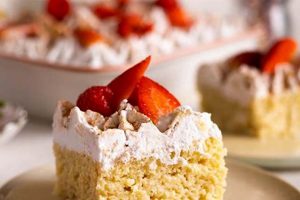
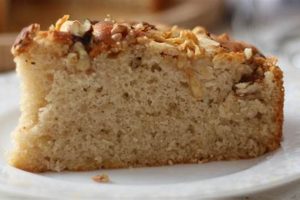
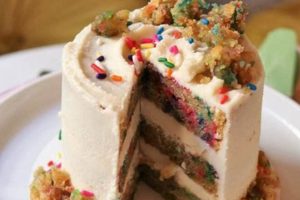
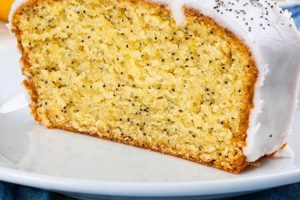
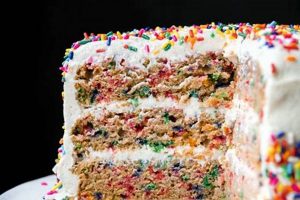
The process of transforming a commercially prepared cake mix into a plant-based dessert involves specific ingredient substitutions. This method provides a convenient and accessible approach to vegan baking, allowing individuals to create acceptable cakes without extensive from-scratch preparation.
Utilizing packaged cake mixes for vegan baking offers several advantages, including reduced preparation time and simplified ingredient acquisition. This approach expands accessibility to vegan desserts for individuals with limited baking experience or time constraints. The convenience factor promotes the adoption of plant-based diets by making vegan desserts more readily available.
The subsequent sections detail specific alterations to recipe instructions that effectively convert conventional cake mixes into vegan-friendly baked goods. Guidance on ingredient replacements, baking temperatures, and troubleshooting common issues will be provided.
Tips for Veganizing Boxed Cake Mixes
Successfully adapting a boxed cake mix for vegan consumption necessitates careful attention to ingredient substitutions and baking adjustments. These guidelines enhance the likelihood of achieving a desirable outcome.
Tip 1: Liquid Replacement: Substitute the eggs called for in the instructions with a suitable liquid binder. Options include applesauce (approximately cup per egg), mashed banana (also cup per egg), or a commercially available egg replacer prepared according to its packaging directions.
Tip 2: Fat Source Modification: Replace butter or oil with a plant-based alternative. Melted coconut oil, vegetable oil, or vegan butter substitutes can be used in equivalent amounts. Note that coconut oil imparts a slight coconut flavor.
Tip 3: Dairy Milk Substitution: Cow’s milk should be substituted with a plant-based milk alternative. Almond milk, soy milk, oat milk, or cashew milk are all viable options. Unsweetened varieties are generally preferred to maintain optimal sweetness levels.
Tip 4: Leavening Agent Enhancement: Consider adding an extra teaspoon of baking powder to the mix. The absence of eggs, which contribute to leavening, can sometimes result in a denser cake. An increased amount of baking powder helps to compensate for this.
Tip 5: Adjust Baking Time: Vegan cakes may require slightly less baking time than their conventional counterparts. Begin checking for doneness a few minutes before the recommended baking time indicated on the box. The cake is done when a toothpick inserted into the center comes out clean or with a few moist crumbs.
Tip 6: Prevent Sticking: Grease the cake pan thoroughly with vegan butter or oil and dust it with flour (or cocoa powder for chocolate cakes) to prevent sticking. Lining the bottom of the pan with parchment paper is an additional safeguard.
Tip 7: Cooling Process: Allow the baked cake to cool in the pan for 10-15 minutes before inverting it onto a wire rack to cool completely. This prevents the cake from crumbling during removal.
Adhering to these substitution and adjustment strategies increases the likelihood of producing a palatable and texturally pleasing vegan cake from a boxed mix. Prior planning ensures optimal ingredient availability for successful vegan baking.
The following section will address potential challenges and troubleshooting techniques that may arise during the vegan baking process.
1. Egg Replacement

Egg replacement is a fundamental component in converting conventional boxed cake mixes to vegan formulations. The absence of eggs necessitates the introduction of alternative ingredients that fulfill similar roles in binding, leavening, and moisture retention.
- Binding Agents
Eggs act as a binder, holding the cake’s ingredients together. In vegan baking, flaxseed meal, chia seeds, applesauce, and mashed banana can serve as binding agents. For instance, a mixture of one tablespoon of flaxseed meal and three tablespoons of water, allowed to sit for five minutes, creates a “flax egg” that mimics the adhesive properties of a chicken egg, thus preventing the cake from crumbling.
- Leavening Enhancement
Eggs contribute to the cake’s rise by trapping air and expanding during baking. Without eggs, supplementing the boxed mix with additional leavening agents like baking powder or baking soda is crucial. The specific amount varies depending on the mix and the binding agent used. Over-leavening can lead to a collapsed cake, while insufficient leavening yields a dense and heavy product.
- Moisture Regulation
Eggs introduce moisture and contribute to the overall texture of the cake. When using alternatives like applesauce or pureed pumpkin, the water content must be considered to maintain the correct hydration level. Excessive moisture can result in a gummy texture, while insufficient moisture can produce a dry and crumbly cake.
- Structural Integrity
Eggs contribute to the cake’s structural integrity by coagulating during baking, providing a firm framework. Vegan replacements, while providing binding, do not undergo the same protein coagulation process. Therefore, the gluten development in the flour becomes increasingly important. Avoiding overmixing is critical to prevent a tough cake resulting from excessive gluten formation.
The selection and application of egg replacements are paramount in achieving a palatable vegan cake from a boxed mix. Careful consideration of the binding, leavening, moisture regulation, and structural integrity imparted by eggs allows for a successful transformation to a plant-based dessert.
2. Dairy Substitution

Dairy substitution is a crucial modification when converting conventional boxed cake mixes to vegan formulations. The presence of dairy milk and sometimes butter in standard mixes requires replacement with plant-based alternatives that maintain the desired moisture, flavor, and texture.
- Plant-Based Milk Alternatives
Dairy milk contributes liquid volume and moisture to cake batter. Suitable replacements include almond milk, soy milk, oat milk, cashew milk, and coconut milk (beverage, not canned cream). The choice of milk influences the cake’s flavor profile. For instance, almond milk imparts a subtle nutty flavor, while oat milk can add a slightly sweeter taste. Unsweetened varieties are generally recommended to control the overall sweetness level of the cake.
- Vegan Butter Substitutes
Many boxed cake mixes call for butter, which contributes fat content, flavor, and tenderness. Vegan butter substitutes, typically composed of plant-based oils, can be used in equal measure to replace dairy butter. These substitutes often contain added emulsifiers and flavorings to mimic the properties of dairy butter. It is essential to select a vegan butter that melts and behaves similarly to dairy butter during baking to achieve the desired texture.
- Impact on Texture
The type of dairy substitute used directly affects the final texture of the cake. Certain plant-based milks, such as coconut milk, have a higher fat content, potentially leading to a denser and moister cake. Lower-fat alternatives, like almond milk, might result in a slightly drier cake. Adjustments to baking time or the addition of other moistening agents may be necessary to compensate for these differences.
- Addressing Allergen Considerations
Dairy substitution not only makes the cake vegan but also addresses potential allergen concerns. Many individuals have dairy allergies or intolerances, and using plant-based alternatives ensures that the cake is safe for consumption by a broader range of individuals. It is vital to clearly label the cake as vegan and specify the plant-based milk used to inform consumers with specific dietary needs.
Selecting appropriate dairy substitutes is critical for achieving a successful and palatable vegan cake from a boxed mix. The choice of plant-based milk and butter impacts the cake’s flavor, texture, and overall suitability for individuals with dietary restrictions. Careful consideration of these factors ensures a desirable outcome, demonstrating that adapting boxed cake mixes for vegan baking is feasible and rewarding.
3. Fat Modification

Fat modification is a pivotal element in adapting commercially available boxed cake mixes for vegan consumption. Standard cake mixes often incorporate animal-derived fats, necessitating strategic substitution to achieve a plant-based final product without compromising texture and taste.
- Type of Fats Suitable for Substitution
Plant-derived oils and fats such as vegetable oil (canola, sunflower, safflower), melted coconut oil, and vegan butter alternatives are viable substitutes for animal-based fats. The selection influences the cake’s textural attributes. Vegetable oil generally produces a moist crumb, while coconut oil can impart a distinctive flavor and slightly denser texture. Vegan butter alternatives, engineered to mimic dairy butter, can replicate a similar richness and mouthfeel.
- Impact on Moisture and Texture
The fat content directly influences the cake’s moisture level and overall texture. Insufficient fat results in a dry and crumbly cake, whereas excessive fat can produce a greasy or dense outcome. Precise measurements are essential to maintain the appropriate balance. In some instances, a small addition of applesauce or other moisture-retaining ingredients may be necessary to counteract any drying effects from specific fat substitutes.
- Considerations for Flavor Profile
The choice of fat substitute impacts the cake’s final flavor profile. Neutral oils like canola or safflower contribute minimal flavor, allowing other ingredients to predominate. Coconut oil introduces a noticeable coconut flavor, which may complement certain cake varieties but clash with others. Vegan butter alternatives often contain added flavorings designed to mimic dairy butter, potentially influencing the overall taste.
- Influence on Baking Time and Temperature
Different fat substitutes may influence the cake’s baking time and optimal temperature. Fats with lower melting points, such as vegetable oil, might necessitate slightly lower baking temperatures or shorter baking times to prevent over-browning or burning. Monitoring the cake’s internal temperature using a probe thermometer can ensure it reaches the appropriate level of doneness without becoming dry.
Fat modification is not merely a simple substitution; it requires careful consideration of the fat’s properties, its influence on texture and flavor, and its impact on the baking process. A thorough understanding of these factors is crucial for successfully transforming a boxed cake mix into a palatable vegan dessert, ensuring the final product aligns with the desired characteristics of a conventional cake.
4. Leavening Adjustment

The process of converting conventional boxed cake mixes into vegan formulations often necessitates adjustments to the leavening agents. Standard cake mixes rely on eggs and dairy products, both of which contribute to the cake’s rise and overall texture. The absence of these ingredients in a vegan adaptation requires careful consideration of alternative leavening strategies.
- Role of Leavening Agents
Leavening agents, such as baking powder and baking soda, are chemical compounds that produce gases within the batter during baking. These gases create air pockets, causing the cake to rise and develop a light, airy texture. In traditional cake recipes, eggs also contribute to leavening by trapping air when beaten and expanding during baking. Since eggs are omitted in vegan recipes, the leavening action must be compensated for with other methods. For instance, adding an extra teaspoon of baking powder to the mix can often replicate the leavening effect of eggs. However, the precise amount depends on the specific cake mix and egg replacement being used. Over-leavening can lead to a cake that rises rapidly and then collapses, while under-leavening results in a dense, heavy product.
- Interaction with Egg Replacers
Vegan egg replacers, such as applesauce, flaxseed meal, or commercial egg replacers, primarily function as binders, holding the ingredients together. While some egg replacers contribute a small amount of leavening, they do not fully replicate the air-trapping capabilities of eggs. Therefore, the choice of egg replacer can influence the required amount of additional leavening agent. For example, if using a heavier egg replacer like mashed banana, a slight increase in baking powder might be necessary. The effectiveness of different egg replacers and their interaction with leavening agents is a critical factor in achieving the desired cake texture.
- Impact of Acidic Ingredients
Baking soda requires an acidic ingredient to activate and produce carbon dioxide gas. Some boxed cake mixes may already contain an acidic component, while others may not. If the vegan recipe incorporates acidic ingredients such as lemon juice, vinegar, or cocoa powder, the baking soda will react accordingly. In the absence of sufficient acidic components, cream of tartar or a similar acid can be added to activate the baking soda. Understanding the interplay between acidic and alkaline ingredients is crucial for controlling the leavening process and ensuring a consistent rise.
- Adjusting for Altitude
Altitude significantly affects baking due to changes in atmospheric pressure. At higher altitudes, cakes tend to rise more quickly, and the leavening agents need to be adjusted to prevent the cake from collapsing. Reducing the amount of baking powder by approximately to teaspoon can help stabilize the cake’s structure at higher elevations. Furthermore, increasing the liquid content slightly can help prevent the cake from drying out due to faster evaporation at higher altitudes. Altitude adjustments are essential for ensuring consistent results when adapting boxed cake mixes for vegan baking in various geographic locations.
In conclusion, leavening adjustment is a critical step in producing an acceptable vegan cake from a boxed mix. A careful assessment of the egg replacer characteristics, the presence of acidic ingredients, and potential altitude considerations is necessary to ensure a properly leavened and textured final product. By understanding and managing these factors, individuals can successfully adapt conventional boxed cake mixes for vegan baking, expanding the accessibility of plant-based desserts.
5. Baking Time

Baking time is a critical variable in the successful adaptation of boxed cake mixes for vegan preparation. The substitution of animal-derived ingredients with plant-based alternatives inherently alters the batter’s composition, influencing the rate and uniformity of heat transfer during baking. Conventional baking times specified on boxed mix instructions are calibrated for batters containing eggs and dairy; consequently, strict adherence to these times can yield undesirable results in vegan cakes. For instance, overbaking may occur, leading to a dry, crumbly texture, while underbaking can produce a gummy or sunken cake. The empirical determination of optimal baking time is therefore an essential element of successfully executing a vegan cake from a box.
Practical applications of this understanding are numerous. One example is the implementation of a “touch test.” Gently pressing the center of the cake with a fingertip can indicate doneness; a slight springiness suggests adequate baking, whereas a soft or yielding texture implies the need for additional baking time. Another technique involves the use of a toothpick or cake tester. Insertion of the tester into the center of the cake, followed by visual inspection, reveals whether the interior is fully baked; a clean tester or one with only a few moist crumbs signifies completion. Furthermore, visual cues, such as the cake pulling away slightly from the sides of the pan and a uniformly golden-brown crust, offer valuable indications of doneness. Utilizing these practical assessment methods allows for more accurate baking time adjustments, mitigating the potential for adverse outcomes.
In conclusion, baking time constitutes a key determinant of quality when converting boxed cake mixes to vegan formulations. Careful monitoring and judicious adjustment of baking time, informed by both visual and tactile cues, are essential for achieving a palatable and texturally pleasing vegan cake. The challenges associated with adapting conventional baking times can be overcome through the implementation of practical assessment methods, ultimately contributing to the successful execution of plant-based dessert preparation.
6. Pan Preparation
Proper pan preparation is a foundational step in successfully adapting boxed cake mixes for vegan baking. Adequate pan preparation mitigates sticking, ensuring clean release and preserving the structural integrity of the finished cake. Given the altered chemical composition of vegan cake batters compared to their conventional counterparts, this stage becomes even more critical.
- Greasing and Flouring: Traditional Methods
Traditional methods involve coating the interior surface of the cake pan with a thin layer of shortening, butter (or a vegan alternative), or oil, followed by dusting with flour. The fat creates a barrier, preventing the cake from adhering to the pan, while the flour provides a slightly textured surface for easy release. For chocolate cakes, cocoa powder may be substituted for flour to avoid a white residue on the finished product. The effectiveness of this method depends on the thoroughness of the application.
- Parchment Paper Liners: Enhancing Release
Parchment paper liners offer an additional layer of protection against sticking. A circle of parchment paper, cut to fit the bottom of the pan, is placed after greasing. This method is particularly useful for cakes that are prone to sticking or have delicate textures. Some bakers also line the sides of the pan with parchment strips for complete coverage. The use of parchment paper simplifies the release process and reduces the risk of tearing or crumbling.
- Vegan Baking Sprays: Convenience and Efficiency
Commercially available vegan baking sprays provide a convenient alternative to traditional greasing and flouring. These sprays typically contain a blend of vegetable oils and emulsifiers designed to create a non-stick surface. They offer even coverage and minimize the risk of over-greasing. However, it is important to select a spray specifically labeled as vegan, as some products may contain animal-derived ingredients.
- Material of the Pan: Impact on Baking and Release
The material of the cake pan itself influences both baking performance and ease of release. Light-colored metal pans reflect heat, promoting even baking and preventing excessive browning. Dark-colored pans absorb more heat, potentially leading to darker crusts and increased sticking. Non-stick pans, while convenient, may lose their effectiveness over time with repeated use. Glass pans retain heat well and allow for visual monitoring of browning, but require careful greasing to prevent sticking. The choice of pan material should be considered in conjunction with the selected preparation method.
In summary, careful pan preparation is essential for successfully executing a vegan cake from a boxed mix. By employing effective greasing and lining techniques, bakers can ensure the cake releases cleanly, preserving its aesthetic appeal and structural integrity. Considering the material of the baking pan and adapting the preparation method accordingly further enhances the likelihood of a desirable outcome, underscoring the importance of this often-overlooked step in vegan baking.
7. Cooling Method

The cooling method constitutes a critical phase in the process of preparing a vegan cake from a boxed mix, directly impacting the cake’s final texture, structural stability, and ease of handling. Deviation from recommended cooling protocols can lead to a compromised final product, underscoring the necessity of understanding and adhering to best practices.
- Initial Pan Cooling: Preventing Structural Collapse
The initial cooling period, typically lasting 10 to 15 minutes, occurs while the cake remains within the baking pan. This phase allows the cake’s internal structure to stabilize as it gradually cools. Removing the cake prematurely can result in structural collapse or cracking, particularly given the often-delicate nature of vegan cakes, which may lack the binding properties of eggs found in conventional recipes. This controlled cooling period facilitates a more resilient structure, minimizing the risk of damage during subsequent handling.
- Wire Rack Cooling: Facilitating Air Circulation
Transferring the cake to a wire rack after the initial pan cooling promotes uniform air circulation around the cake’s surface. This prevents condensation from accumulating on the bottom, which can lead to a soggy or sticky texture. The elevated position of the wire rack allows air to flow freely, ensuring even cooling and preventing moisture buildup. This is especially important for vegan cakes, where moisture content may differ from conventional recipes.
- Cooling Time: Achieving Optimal Texture
The total cooling time, typically ranging from one to two hours, is crucial for achieving the optimal texture. During this period, the cake’s internal temperature gradually decreases, allowing the starches to retrogradate and the structure to firm up. Cutting into a cake that is not fully cooled can result in a gummy or unstable texture. Patience during the cooling process is therefore essential for maximizing the cake’s palatability and structural integrity. The ambient temperature and humidity may influence the required cooling time.
- Covering and Storage: Maintaining Freshness
Once fully cooled, the cake should be covered to prevent it from drying out. An airtight container or plastic wrap provides an effective barrier against moisture loss. Proper storage maintains the cake’s freshness and extends its shelf life. Vegan cakes, like their conventional counterparts, are susceptible to staling if exposed to air for extended periods. Covering the cake immediately after cooling preserves its texture and flavor, ensuring a more enjoyable eating experience. Depending on ingredients can affect how to keep the texture of cake and it also depends on storage as well.
In conclusion, the cooling method is an indispensable component in the process of preparing a vegan cake from a boxed mix. The controlled cooling within the pan, followed by air circulation on a wire rack, and proper storage practices all contribute to the cake’s final texture, structural integrity, and freshness. Adherence to these cooling protocols maximizes the likelihood of achieving a desirable outcome, demonstrating that careful attention to detail is crucial for successful vegan baking. If you fail to do all step the cake won’t be good as expected.
Frequently Asked Questions
This section addresses common inquiries regarding the adaptation of boxed cake mixes for vegan consumption. The information provided aims to clarify potential challenges and offer practical guidance.
Question 1: Can all boxed cake mixes be successfully veganized?
While many boxed cake mixes are amenable to vegan adaptation, the success rate varies depending on the specific ingredients and proportions. Mixes with a higher proportion of eggs or dairy may require more significant modifications and potentially yield less satisfactory results. Careful ingredient analysis is advised prior to attempting a vegan conversion.
Question 2: What are the most reliable egg substitutes for vegan cake mixes?
Several egg substitutes are effective in vegan cake mixes. Applesauce, flaxseed meal mixed with water (flax egg), and commercially available egg replacers are commonly employed. The choice of substitute may influence the final texture and flavor profile; experimentation may be necessary to determine the optimal choice for a given mix.
Question 3: Does the type of plant-based milk significantly affect the cake’s texture?
Yes, the type of plant-based milk can influence the cake’s texture. Higher-fat options, such as coconut milk, may yield a moister and denser cake, while lower-fat options, like almond milk, may result in a slightly drier texture. Adjustments to the liquid quantity or baking time may be necessary to compensate for these differences.
Question 4: How can a dry vegan cake be avoided?
To prevent a dry vegan cake, ensure adequate moisture by using appropriate liquid measurements and consider adding ingredients like applesauce or mashed banana. Avoid over-baking and monitor the cake closely during the baking process. Ensuring accurate oven temperature is also critical.
Question 5: What is the best way to prevent a vegan cake from sticking to the pan?
Thorough greasing and flouring of the cake pan are essential. Alternatively, lining the pan with parchment paper provides an added layer of protection against sticking. Vegan baking sprays can also be employed, ensuring they are specifically formulated for baking purposes.
Question 6: Can vegan cakes be stored in the same manner as conventional cakes?
Vegan cakes can generally be stored in a similar manner to conventional cakes. Covering the cake tightly with plastic wrap or storing it in an airtight container helps to maintain moisture and prevent staling. Refrigeration may extend the shelf life, particularly for cakes containing perishable ingredients.
Successfully adapting boxed cake mixes for vegan consumption requires careful attention to ingredient substitutions, baking adjustments, and storage practices. While challenges may arise, the knowledge and application of appropriate techniques can yield satisfactory results.
The following section will provide recipe examples and further considerations for specific boxed cake mix varieties.
Conclusion
The exploration of “how to make a vegan cake from a box” has detailed the necessary modifications to transform conventional cake mixes into plant-based desserts. Ingredient substitution, including egg and dairy replacements, alongside adjustments to leavening and baking time, constitute the core principles of this adaptation. Proper pan preparation and cooling techniques further contribute to the success of the endeavor.
Mastering these techniques expands accessibility to vegan baking, offering a convenient alternative to from-scratch recipes. Further experimentation and refinement will undoubtedly enhance the quality and variety of vegan cakes derived from commercially available mixes. Continued diligence in ingredient selection and adherence to established baking principles will ensure optimal results in the pursuit of plant-based confectionery.