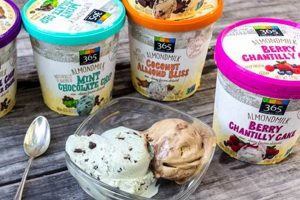
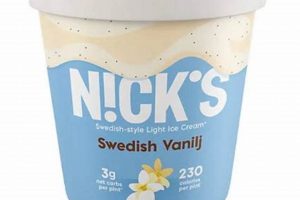
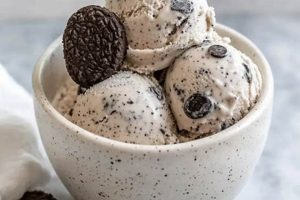
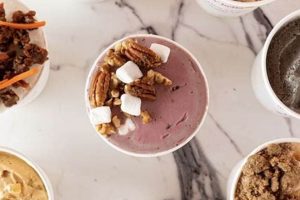
Plant-based frozen desserts that omit added refined sugars offer a dairy-free and lower-sugar alternative to traditional ice cream. These products frequently utilize ingredients such as coconut milk, almond milk, or oat milk as a base, and are sweetened with sugar substitutes like stevia, erythritol, or monk fruit. Common examples include varieties made with a base of cashew cream and flavored with natural extracts and sugar-free chocolate.
The appeal of such products lies in their ability to cater to specific dietary needs and preferences. Individuals with diabetes, those following a vegan lifestyle, or those seeking to reduce their sugar intake can enjoy a frozen treat without compromising their health goals. Historically, the development of these desserts has been driven by increased awareness of the negative health impacts of excessive sugar consumption and the growing demand for plant-based options.
The subsequent sections will explore the specific ingredients and production processes involved in creating these desserts, the nutritional profiles of various brands, and the potential health implications of consuming them regularly. Furthermore, comparisons to conventional ice cream and other dairy-free alternatives will be presented, along with an overview of the market landscape and consumer trends.
Selecting a suitable plant-based frozen dessert without added sugars requires careful consideration of several factors. The following tips provide guidance for informed purchasing and consumption.
Tip 1: Ingredient List Scrutiny: Thoroughly examine the ingredient list. Prioritize products using natural sweeteners like stevia, erythritol, or monk fruit. Be cautious of less common sugar alcohols or artificial sweeteners.
Tip 2: Base Ingredient Assessment: Evaluate the base ingredients. Coconut milk offers a creamy texture but higher saturated fat content. Oat milk provides a lighter texture and a source of fiber. Almond milk typically has a lower calorie count.
Tip 3: Nutritional Information Review: Pay close attention to the nutritional information panel. Compare the total fat, saturated fat, carbohydrate, and fiber content per serving. Be mindful of serving sizes, as they can be smaller than expected.
Tip 4: Flavor Profile Considerations: Opt for flavors that rely on natural extracts and spices rather than artificial flavorings. Consider options incorporating fruit purees or cocoa powder for natural sweetness and richness.
Tip 5: Brand Reputation and Reviews: Research the brand and read consumer reviews. Look for brands known for their commitment to quality ingredients and transparent manufacturing processes.
Tip 6: Storage Practices: Adhere to recommended storage instructions to maintain the product’s quality and texture. Avoid repeated thawing and refreezing, which can compromise the dessert’s consistency.
Tip 7: Moderation is Key: Even with reduced sugar content, these desserts should be consumed in moderation as part of a balanced diet. Excess consumption of any processed food, even those marketed as “healthy,” can have unintended consequences.
Adhering to these guidelines will facilitate the selection of plant-based, sugar-free frozen desserts that align with individual dietary needs and preferences, while minimizing potential negative health impacts.
The subsequent sections will provide further insights into the health implications of different sweeteners and base ingredients, as well as explore recipe options for those interested in creating homemade versions.
1. Sweetener Alternatives

The development and market viability of plant-based frozen desserts without added refined sugars depend heavily on the successful implementation of alternative sweeteners. These substances must replicate the sensory properties of sucrose while mitigating its associated health concerns. The following details various facets of this crucial ingredient category.
- Stevia’s Impact on Flavor Profile
Stevia, a natural sweetener derived from the Stevia rebaudiana plant, offers a zero-calorie alternative to sucrose. However, its characteristic licorice-like aftertaste can present a challenge in formulating frozen desserts. Manufacturers often employ techniques such as blending stevia with other sweeteners or using masked stevia extracts to minimize the undesirable aftertaste. The effectiveness of these techniques directly influences consumer acceptance of the final product.
- Erythritol’s Role in Texture and Bulk
Erythritol, a sugar alcohol, provides bulk and contributes to the overall texture of the frozen dessert. Unlike sucrose, erythritol is poorly metabolized by the body, resulting in a negligible impact on blood glucose levels. Its cooling sensation can enhance the perceived sweetness and contribute to a refreshing mouthfeel. However, excessive consumption of erythritol can lead to digestive discomfort in some individuals, necessitating careful consideration of dosage in product formulations.
- Monk Fruit Extract’s Sweetening Potency
Monk fruit extract, derived from the Siraitia grosvenorii fruit, is significantly sweeter than sucrose. Its potency requires careful calibration to avoid an overpowering sweetness that can mask other flavor nuances. Monk fruit is often combined with other sweeteners, such as erythritol or allulose, to achieve a balanced sweetness profile and improve the overall sensory experience.
- Allulose’s Functional Properties
Allulose, a rare sugar, exhibits functional properties similar to sucrose, including the ability to depress the freezing point and contribute to a smoother texture. While it provides a degree of sweetness, allulose is not fully metabolized by the body, resulting in a lower caloric value compared to sucrose. Its inclusion in plant-based frozen desserts can improve texture and palatability while minimizing the overall sugar content.
The strategic selection and utilization of sweetener alternatives represent a critical factor in the success of plant-based frozen desserts devoid of added refined sugars. The specific choice depends on the desired sweetness profile, textural characteristics, and overall health considerations. Ongoing research and development efforts continue to explore novel sweetener options and optimize their application in this growing product category.
2. Plant-based Base
The foundation of any frozen dessert resides in its base, and in the context of plant-based, no-sugar-added options, this element assumes even greater significance. The base material dictates the texture, mouthfeel, and a substantial portion of the overall flavor profile. Its selection directly impacts the product’s suitability for various dietary restrictions and preferences. For instance, coconut milk delivers a rich, creamy texture favored by many, but its high saturated fat content might preclude it for individuals monitoring fat intake. Conversely, almond milk offers a lower-calorie alternative but can yield a less decadent result, requiring careful formulation to compensate for the reduced fat. Oat milk presents a balanced middle ground, potentially offering a desirable texture with a moderate calorie and fat profile.
The base also significantly influences the effectiveness of sugar alternatives. Stevia, erythritol, or monk fruit react differently in various plant-based mediums. A sweetener that complements the inherent characteristics of coconut milk might not perform optimally in an almond milk base. Manufacturers must therefore meticulously experiment to achieve the right flavor balance and avoid undesirable aftertastes or textural inconsistencies. Furthermore, the base determines the stability of the ice cream during freezing and thawing cycles. Certain plant-based milks are more prone to ice crystal formation, necessitating the addition of stabilizers such as gums or starches. The choice of stabilizer, in turn, can affect the product’s nutritional profile and consumer acceptability. Examples in the market showcase the diversity of approaches. So Delicious! uses coconut milk extensively, while Oatly focuses on oat milk, and other brands leverage blends of nut milks to achieve unique textures and flavors.
In summary, the selection of a plant-based base is paramount in the production of frozen desserts without added sugars. It is not merely a substitute for dairy but a critical element that shapes the entire product. Understanding the inherent properties of each base material, its interaction with sweeteners and stabilizers, and its impact on the final nutritional profile is essential for both manufacturers aiming to create successful products and consumers seeking to make informed dietary choices. The ongoing innovation in plant-based milks and the optimization of their applications in frozen desserts promise further advancements in this category, addressing existing challenges related to texture, flavor, and nutritional balance.
3. Texture stabilization
In the formulation of plant-based frozen desserts lacking added refined sugars, texture stabilization assumes a critical role, distinct from its function in conventional dairy-based products. The absence of dairy proteins and the altered freezing point resulting from sugar substitutes necessitate precise management of ice crystal formation and structural integrity to achieve a palatable product.
- Hydrocolloid Selection and Functionality
Hydrocolloids, such as guar gum, locust bean gum, and carboxymethyl cellulose, are frequently employed to control viscosity and prevent ice crystal growth. The choice of hydrocolloid directly impacts the texture and mouthfeel. Guar gum, for example, contributes to a creamy texture but can impart a slightly stringy mouthfeel at higher concentrations. Locust bean gum exhibits synergistic effects with guar gum, enhancing its stabilizing properties while minimizing undesirable textural attributes. The selection and concentration of hydrocolloids require careful optimization to achieve the desired texture without compromising the overall sensory experience.
- Impact of Plant-Based Base on Stability
The type of plant-based base, whether coconut milk, almond milk, or oat milk, influences the stability of the frozen dessert. Coconut milk, due to its higher fat content, generally provides a more stable emulsion compared to almond milk, which requires greater stabilization efforts. Oat milk, with its inherent fiber content, can contribute to a smoother texture but may also necessitate adjustments to the hydrocolloid blend to prevent excessive viscosity. The interaction between the plant-based base and the stabilizer system is a critical determinant of product quality.
- Influence of Sweetener Alternatives on Freezing Point
The use of sugar substitutes, such as erythritol or allulose, alters the freezing point of the mixture, affecting ice crystal formation. Erythritol, for instance, has a lower freezing point depression compared to sucrose, potentially leading to larger ice crystals if not properly managed. Allulose, while exhibiting some freezing point depression, may require the addition of other stabilizers to achieve optimal texture. The interplay between sweetener alternatives and the stabilization system necessitates a comprehensive understanding of their respective effects on freezing behavior.
- Processing Techniques and Their Effect on Texture
Processing techniques, such as homogenization and rapid freezing, contribute significantly to texture stabilization. Homogenization reduces the size of fat globules, creating a more stable emulsion and preventing phase separation. Rapid freezing minimizes ice crystal size, resulting in a smoother texture. The optimization of these processing parameters is essential for achieving a high-quality, plant-based frozen dessert without added refined sugars.
The complex interplay between hydrocolloids, plant-based bases, sweetener alternatives, and processing techniques dictates the final texture of plant-based frozen desserts lacking added refined sugars. Effective texture stabilization is paramount for achieving a product that meets consumer expectations and delivers a satisfying sensory experience. Ongoing research focuses on developing novel stabilization systems and optimizing processing methods to further enhance the quality and appeal of these desserts.
4. Nutritional Profile

The nutritional profile of plant-based frozen desserts without added refined sugars represents a primary consideration for consumers. The absence of traditional ingredients, namely dairy and sucrose, necessitates a careful examination of the remaining macronutrient and micronutrient composition. Variations in base ingredients, such as coconut milk, almond milk, or oat milk, directly influence the fat, protein, and carbohydrate content. Furthermore, the type and quantity of sugar substitutes employed significantly affect the overall caloric value and potential glycemic impact. The presence of added fibers, vitamins, or minerals can further enhance or detract from the overall nutritional value. For example, a product utilizing coconut milk as a base may exhibit a higher saturated fat content compared to one utilizing almond milk, potentially impacting cardiovascular health considerations. Similarly, the choice of sweetener, such as erythritol or stevia, will influence the product’s suitability for individuals managing blood glucose levels. A comprehensive understanding of these compositional nuances is therefore crucial for informed consumption.
Practical application of this understanding requires a meticulous review of the product’s nutritional information panel. Consumers should prioritize the evaluation of total calories, saturated fat content, carbohydrate composition (including added sugars, if any), protein content, and fiber content. The presence of vitamins or minerals, while potentially beneficial, should not overshadow the fundamental macronutrient profile. Real-life examples illustrate the importance of this approach. Comparing two seemingly similar products, one might find that one utilizes a higher concentration of saturated fat from coconut milk while the other compensates with added fibers from oats. The choice between these two products depends on the individual’s specific dietary goals and health considerations. Furthermore, awareness of serving sizes is paramount, as nutritional information is typically presented per serving, and exceeding the recommended serving can significantly alter the overall intake of calories and macronutrients.
In conclusion, the nutritional profile forms a critical component of plant-based frozen desserts without added refined sugars. Understanding the interplay between base ingredients, sugar substitutes, and added nutrients is essential for making informed dietary choices. While these products may offer a healthier alternative to traditional ice cream, a careful assessment of their nutritional composition remains paramount for aligning consumption with individual health goals. Ongoing research and development in this field continue to explore methods for optimizing the nutritional profile of these desserts, addressing existing challenges related to fat content, protein bioavailability, and the potential impact of alternative sweeteners on gut health.
5. Flavor Integrity

Achieving robust and authentic flavor profiles in plant-based frozen desserts without added refined sugars presents a substantial challenge. The absence of dairy fat, which typically carries and enhances flavor compounds, necessitates alternative strategies for flavor delivery and preservation. The substitution of sucrose with alternative sweeteners introduces further complexity, as these substitutes possess distinct sensory characteristics that can interfere with or mask desired flavors. The inherent flavors of plant-based bases, such as coconut, almond, or oat, also contribute to the overall flavor landscape, requiring careful consideration when formulating flavor combinations. A failure to adequately address these factors can result in a final product that lacks the depth, richness, and authenticity of traditional ice cream, potentially impacting consumer acceptance.
The maintenance of flavor integrity in these products relies on several key principles. First, the selection of high-quality, natural flavor extracts and concentrates is crucial. Artificial flavorings often lack the complexity and nuance of natural counterparts, resulting in a less satisfying sensory experience. Second, the careful balancing of sweetness levels is essential. Over-sweetening can mask subtle flavor notes, while under-sweetening can leave the product tasting bland and unappealing. Third, the use of flavor enhancers, such as salt or acids, can help to amplify and balance flavors. Finally, proper processing and storage techniques are necessary to prevent flavor degradation and maintain product freshness. Consider, for example, a plant-based chocolate frozen dessert. If low-quality cocoa powder is used, the resulting product will likely lack the rich, intense chocolate flavor expected by consumers. Similarly, if the sweetener used imparts a metallic aftertaste, it can detract from the overall chocolate experience. Therefore, a multi-faceted approach is required to ensure that the flavor profile remains true to its intended character.
Maintaining flavor integrity in plant-based, sugar-free frozen desserts is not merely a cosmetic concern; it is a fundamental factor influencing consumer satisfaction and market success. The ability to deliver a delicious and authentic flavor experience is essential for overcoming the perception that these products are inherently inferior to traditional ice cream. Continuous innovation in flavor technology and formulation techniques is crucial for pushing the boundaries of what is possible in this growing segment of the frozen dessert market. The interplay between base ingredients, sweeteners, and flavoring agents must be carefully orchestrated to deliver a product that not only meets dietary requirements but also satisfies the desire for a flavorful and enjoyable frozen treat.
Frequently Asked Questions
The following questions address common concerns and misconceptions surrounding plant-based frozen desserts formulated without added refined sugars. The information provided aims to offer clarity and promote informed consumer choices.
Question 1: Are plant-based frozen desserts without added refined sugars truly sugar-free?
Not necessarily. While these products exclude added refined sugars like sucrose or high-fructose corn syrup, they may contain naturally occurring sugars from ingredients like fruit purees or nut milk. The term “no sugar added” indicates the absence of additional refined sugars during processing but does not guarantee a complete lack of sugars.
Question 2: Do these desserts contain artificial sweeteners?
It depends on the specific product. Many brands utilize natural sugar substitutes such as stevia, erythritol, or monk fruit. However, some formulations may include artificial sweeteners like aspartame or sucralose. A thorough review of the ingredient list is recommended to ascertain the presence and type of sweetener used.
Question 3: Are these frozen desserts lower in calories than traditional ice cream?
The caloric content varies widely depending on the ingredients and formulation. Some plant-based options may be lower in calories due to the absence of dairy fat and refined sugars. However, others may contain comparable or even higher calorie counts depending on the fat content of the base (e.g., coconut milk) and the inclusion of other high-calorie ingredients.
Question 4: Do these products provide the same creamy texture as traditional ice cream?
Achieving a similar creamy texture presents a significant challenge. The absence of dairy fat necessitates the use of stabilizers and emulsifiers to prevent ice crystal formation and maintain a smooth consistency. While significant advancements have been made, the texture may differ slightly from traditional ice cream.
Question 5: Are these desserts suitable for individuals with diabetes?
These products may be a more suitable option for individuals with diabetes compared to traditional ice cream due to the absence of added refined sugars. However, it is crucial to consider the overall carbohydrate content and glycemic index of the product, as well as the individual’s specific dietary needs and blood glucose management plan. Consultation with a healthcare professional is advisable.
Question 6: Do these plant-based alternatives offer any nutritional benefits beyond being lower in sugar?
Potential nutritional benefits depend on the ingredients used. Some products may be a good source of fiber, vitamins, or minerals depending on the plant-based base and any added nutrients. However, others may be relatively low in essential nutrients and high in saturated fat. Careful evaluation of the nutritional information panel is essential.
In summary, plant-based frozen desserts without added refined sugars can offer a healthier alternative to traditional ice cream, but it is crucial to approach them with informed awareness. Paying close attention to the ingredient list, nutritional information, and individual dietary needs is paramount.
The subsequent section will provide a comparative analysis of different brands and formulations, highlighting their respective strengths and weaknesses.
Conclusion
The preceding discussion has explored various facets of plant-based frozen desserts devoid of added refined sugars, examining ingredient selection, processing techniques, nutritional profiles, and flavor considerations. The analysis has revealed the complexities involved in formulating such products, highlighting the challenges of replicating the sensory attributes of traditional ice cream while adhering to specific dietary constraints. The effectiveness of these desserts in meeting consumer expectations hinges on a delicate balance of formulation strategies and a thorough understanding of ingredient interactions.
The future of plant-based frozen desserts without added refined sugars depends on continued innovation and consumer education. The exploration and optimization of novel ingredients, coupled with transparent labeling practices, will be crucial for building trust and fostering widespread adoption. Further research is warranted to assess the long-term health implications of consuming these products and to address any remaining limitations in terms of texture, flavor, and nutritional completeness. The continued evolution of this category promises to offer more compelling and healthful options for individuals seeking alternatives to traditional frozen desserts.