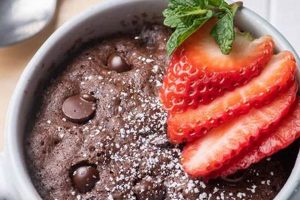
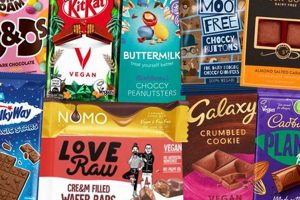
Confections crafted without animal-derived ingredients and specifically formulated to exclude gluten-containing components represent a growing sector within the dessert market. These items typically substitute dairy milk with plant-based alternatives like almond, coconut, or oat milk and avoid wheat, barley, or rye-based ingredients, opting for replacements such as rice flour or tapioca starch. For instance, a dark chocolate bar using cocoa butter, cocoa solids, cane sugar, and sunflower lecithin, produced in a dedicated gluten-free facility, exemplifies this type of product.
The increasing demand for these specialized treats stems from various factors, including a rise in plant-based diets, the growing prevalence of celiac disease and gluten sensitivity, and a general interest in healthier food options. These options allow individuals with dietary restrictions to enjoy familiar indulgences without compromising their health or ethical values. Historically, finding acceptable alternatives for those with these limitations was challenging, but advancements in food technology and ingredient sourcing have led to a wider availability and improved quality.
This article will delve into the ingredients commonly used in such products, explore the manufacturing processes involved, examine the nutritional profiles, and provide guidance on selecting high-quality options. Furthermore, it will address potential challenges and misconceptions surrounding this specific category of confectionery.
Guidance on Selecting Appropriate Products
Considerations for purchasing confectionery suitable for both vegan and gluten-free diets require careful attention to ingredient lists and manufacturing practices. The following guidelines offer practical advice for informed decision-making.
Tip 1: Scrutinize the Ingredient List: Thoroughly examine the ingredient list for potential allergens and non-vegan components. Common non-vegan ingredients to avoid include dairy milk, whey, casein, honey, and confectioners glaze. Gluten-containing ingredients include wheat, barley, rye, and malt.
Tip 2: Verify Certifications: Look for certifications from reputable organizations such as Vegan Action, Certified Vegan, or Gluten-Free Certification Organization (GFCO). These certifications provide assurance that the product has undergone independent testing and meets specific criteria.
Tip 3: Investigate Cross-Contamination Risks: Research the manufacturer’s production practices to ascertain if measures are in place to prevent cross-contamination with gluten or dairy. Dedicated facilities or rigorous cleaning protocols are essential.
Tip 4: Assess Cocoa Content and Quality: Evaluate the cocoa percentage, as higher percentages generally indicate a more intense flavor profile and potentially lower sugar content. Opt for products that specify the origin of the cocoa beans, as this can influence the overall quality and flavor.
Tip 5: Be Mindful of Added Sugars: Pay attention to the type and quantity of added sugars. Prefer products that utilize natural sweeteners like coconut sugar or maple syrup in moderation. High fructose corn syrup and excessive amounts of refined sugar should be avoided.
Tip 6: Consider the Fat Source: Evaluate the type of fat used, favoring options like cocoa butter, coconut oil, or nut butters over partially hydrogenated oils or palm oil with questionable sourcing. The fat source significantly impacts the product’s texture and nutritional profile.
Tip 7: Check for Additives and Preservatives: Minimize consumption of products containing artificial colors, flavors, and preservatives. Natural alternatives, such as vanilla extract or fruit extracts, are preferable.
Selecting confectionery that adheres to both vegan and gluten-free standards requires diligence in scrutinizing product labels and understanding manufacturing processes. Prioritizing certified, high-quality ingredients and minimizing additives will contribute to a more informed and healthful choice.
The subsequent sections will explore the various brands and products currently available in the market, providing further insights into the diverse range of options.
1. Ingredient Substitutions

Ingredient substitutions are the cornerstone of creating confectionery acceptable for both vegan and gluten-free diets. The absence of animal products and gluten necessitates the use of alternative ingredients to replicate the texture, flavor, and structural properties of conventional counterparts. For example, dairy milk, a common ingredient in standard confectionery, is replaced with plant-based milks derived from sources such as almonds, coconuts, rice, or oats. Wheat flour, a gluten-containing staple, is often substituted with rice flour, tapioca starch, or a blend of gluten-free flours to provide the necessary structure. The selection of appropriate substitutes directly affects the final product’s characteristics and palatability.
The effectiveness of these substitutions is crucial for consumer acceptance. Consider the difference between using refined coconut oil versus cocoa butter in formulation; the former impacts melting point differently, leading to a less desirable mouthfeel in the confectionery. Similarly, utilizing overly processed gluten-free flours can result in a gritty or dry texture. The careful selection of ingredients is not merely about removing restricted items but also about intelligently replacing them to maintain or improve quality. Furthermore, the sourcing and processing of substitute ingredients must be considered. For instance, ensuring that almond milk is sustainably produced and ethically sourced is a vital aspect of responsible confectionery production.
In summation, the success of confectionery that is both vegan and gluten-free hinges significantly on the judicious and effective application of ingredient substitutions. The substitutions must not only satisfy the constraints of the dietary restrictions but also deliver a product that is both palatable and nutritionally acceptable. Challenges remain in matching the precise qualities of traditional ingredients, but ongoing innovation in food technology and ingredient sourcing continues to expand the possibilities and improve the quality of available options. A deep understanding of ingredient properties and their interactions is essential for manufacturers aiming to produce high-quality confectionery meeting these dual dietary requirements.
2. Certification Verification

Certification verification is a critical process in the realm of confectionery production and consumer confidence. In the context of items marketed as both vegan and gluten-free, these certifications serve as independent validation of product claims, addressing concerns regarding ingredients and manufacturing practices.
- Third-Party Audits and Standards
Independent organizations conduct audits of manufacturing facilities to assess adherence to defined standards. These audits verify that products meet the criteria established for vegan and gluten-free labeling. The Vegan Action certification, for example, requires a complete absence of animal-derived ingredients. The Gluten-Free Certification Organization (GFCO) stipulates that products contain no more than 10 ppm of gluten. These external validations offer a degree of assurance that individual manufacturers’ claims are truthful and accurate.
- Transparency in Ingredient Sourcing
Certification processes often necessitate transparency in ingredient sourcing and supply chain management. This includes tracing ingredients back to their origin to ensure compliance with vegan and gluten-free requirements. For vegan confectionery, this might involve verifying that sugar refining processes do not utilize bone char. For gluten-free confectionery, it includes documentation demonstrating the absence of cross-contamination at each stage of production. This enhanced transparency empowers consumers to make informed choices based on verified data.
- Legal and Ethical Considerations
The proliferation of misleading labeling practices highlights the ethical and legal importance of certification verification. Without independent verification, consumers are vulnerable to deceptive marketing. Certification provides a legal basis for holding manufacturers accountable for false claims. Organizations found to be misrepresenting their products can face legal action and reputational damage. Thus, certification verification contributes to fair market practices and consumer protection.
- Building Consumer Trust
Certification verification is essential to instill consumer confidence in products marketed as vegan and gluten free chocolate. As consumer demand for these specialized confectionery items grows, the importance of trust increases as well. Confectionery manufacturers can signal their credibility and signal a commitment to dietary choices by seeking and highlighting the certifications of their goods. Certification seals become symbols of a certain set of values.
In summary, certification verification constitutes a vital mechanism for ensuring the integrity of confectionery marketed as both vegan and gluten-free. The combination of third-party audits, transparency in ingredient sourcing, legal accountability, and consumer trust contributes to a more reliable marketplace. These are all important when choosing your vegan and gluten free chocolate.
3. Cross-Contamination Prevention

The production of confectionery that is both vegan and gluten-free necessitates rigorous cross-contamination prevention measures to ensure product integrity and consumer safety. The presence of even trace amounts of animal products or gluten can render the product unsuitable for individuals with dietary restrictions or allergies, leading to adverse health consequences or ethical violations. Effective prevention strategies address potential contamination points throughout the manufacturing process, from ingredient sourcing to packaging.
Cause-and-effect relationships are central to understanding cross-contamination risks. For instance, shared equipment used to process both dairy-containing and vegan items without thorough cleaning can result in dairy residue transferring to the vegan product. Similarly, gluten-containing ingredients stored or processed in proximity to gluten-free ingredients can lead to cross-contamination via airborne particles or direct contact. The severity of these effects ranges from mild discomfort for some individuals with sensitivities to severe allergic reactions for others. Consequently, the implementation of robust cleaning and segregation protocols is paramount. Real-life examples of product recalls due to undeclared allergens underscore the practical significance of cross-contamination prevention. In 2022, a manufacturer recalled a line of vegan cookies after discovering they contained undeclared milk due to inadequate cleaning procedures. Such incidents highlight the potential for devastating consequences when prevention measures are lacking.
Ultimately, cross-contamination prevention is an indispensable component of producing credible vegan and gluten-free chocolate. Adherence to strict protocols, including dedicated equipment, thorough cleaning procedures, and regular testing, is essential to safeguard consumer health and uphold the integrity of product labeling. The challenges associated with preventing cross-contamination are multifaceted, requiring ongoing vigilance and investment in robust quality control systems. This commitment not only protects consumers but also contributes to the overall credibility and sustainability of the vegan and gluten-free confectionery industry.
4. Cocoa Bean Sourcing

The origin and ethical procurement of cocoa beans constitute a critical aspect of producing confectionery aligned with both vegan and gluten-free principles. Responsible sourcing practices directly impact the sustainability, quality, and ethical dimensions of these specialized treats.
- Ethical Labor Practices
Many cocoa-producing regions face challenges related to child labor, forced labor, and unfair wages. Ensuring that cocoa beans are sourced from farms that adhere to fair labor practices is a significant ethical concern, aligning with the values often associated with veganism. For example, sourcing beans certified by Fairtrade or UTZ (now part of the Rainforest Alliance) can provide some assurance that workers are treated fairly. Confectionery manufacturers committed to ethical sourcing often partner with organizations that monitor labor conditions and implement programs to support farmers and their communities. The implications of neglecting ethical labor practices include perpetuating social injustice and undermining the credibility of the product.
- Environmental Sustainability
Cocoa cultivation can contribute to deforestation, habitat destruction, and biodiversity loss if not managed sustainably. Sourcing beans from farms that practice agroforestry, promote biodiversity conservation, and avoid the use of harmful pesticides is essential for minimizing environmental impact. Some manufacturers prioritize beans from certified organic farms, which adhere to strict environmental standards. The environmental consequences of unsustainable cocoa farming include reduced carbon sequestration, loss of species diversity, and soil degradation.
- Bean Quality and Flavor Profile
The geographic origin, variety, and processing methods of cocoa beans significantly influence their flavor profile. Sourcing beans from specific regions known for producing high-quality cocoa can enhance the taste and aroma of the confectionery. For instance, beans from Ecuador or Madagascar are often prized for their distinctive flavor notes. Confectionery manufacturers may select beans from different origins to create unique flavor blends. The neglect of bean quality can result in a bland or unappealing product, even if other ingredients are of high quality.
- Traceability and Transparency
Establishing traceability systems that allow manufacturers to track beans from the farm to the finished product enhances transparency and accountability. Traceability enables consumers to verify the origin of the beans and assess the social and environmental impact of their purchase. Some manufacturers provide detailed information about their sourcing practices on their websites or product packaging. The absence of traceability can make it difficult to verify claims of ethical or sustainable sourcing.
The integration of responsible cocoa bean sourcing practices is integral to producing conscientious confectionery that resonates with ethically and environmentally aware consumers. These practices extend beyond mere ingredient selection, embodying a commitment to social responsibility and environmental stewardship. The growing consumer awareness of sourcing issues has placed increasing pressure on manufacturers to prioritize ethical and sustainable practices. Without careful consideration of sourcing, the creation of vegan and gluten-free confectionery may inadvertently perpetuate harmful social or environmental practices.
5. Sweetener Alternatives

The selection of sweeteners in confectionery formulated for vegan and gluten-free diets presents a complex consideration. Traditional sweeteners may be unsuitable due to animal-derived processing aids or potential gluten contamination in certain powdered forms. The incorporation of appropriate alternatives is essential to maintain both the desired sweetness and dietary compliance.
- Refined Sugar Considerations
Standard refined cane sugar often undergoes processing that involves bone char, an animal-derived product used for decolorization. While the sugar itself does not contain bone char, the process renders it unsuitable for strict vegan diets. Beet sugar is typically vegan, as it does not require bone char filtration. However, sourcing and transparency regarding processing methods are critical to ensure vegan compliance. The choice between cane and beet sugar depends on verifying the production process and aligning with strict vegan standards. Using unrefined sugar is a better option.
- Liquid Sweeteners
Maple syrup, agave nectar, and brown rice syrup are common liquid sweetener alternatives. Maple syrup offers a distinct flavor profile and is generally considered vegan, provided no animal-derived defoaming agents are used during production. Agave nectar has a higher fructose content and a neutral flavor, but its sustainability and potential impact on blood sugar levels warrant consideration. Brown rice syrup, derived from fermented rice, is gluten-free and vegan, but its higher glycemic index may not be suitable for all consumers. The selection of a liquid sweetener depends on desired flavor characteristics, nutritional profile, and sourcing practices.
- Fruit-Derived Sweeteners
Date syrup and concentrated fruit juices offer natural sweetness and additional nutritional benefits. Date syrup, made from dates, provides fiber and minerals alongside sweetness. Concentrated fruit juices, such as apple or grape juice, can add a distinct flavor. However, the high fructose content of these sweeteners requires moderation. Furthermore, the processing of fruit-derived sweeteners must be carefully monitored to prevent contamination or the use of non-vegan additives. These sweeteners present a natural, albeit concentrated, source of sweetness for vegan and gluten-free formulations.
- Sugar Alcohols and Novel Sweeteners
Erythritol, xylitol, and stevia are low-calorie or calorie-free sweetener options. Erythritol, a sugar alcohol, is generally well-tolerated but can cause digestive issues in some individuals. Xylitol, another sugar alcohol, is toxic to dogs and requires caution in households with pets. Stevia, derived from the stevia plant, has a distinct aftertaste that may not be desirable in all confectionery applications. Monk fruit is another option. The use of these sweeteners can reduce the overall sugar content of the product but necessitates careful consideration of potential side effects and flavor profiles.
The successful integration of sweetener alternatives in vegan and gluten-free chocolate requires balancing sweetness, flavor, nutritional content, and ethical considerations. The suitability of each option depends on the desired product characteristics and the dietary needs of the target consumer. Rigorous sourcing practices and clear labeling are essential to ensure transparency and build consumer trust. There are other options for sweeteners, these are the basic sweeteners you will find in most vegan and gluten free chocolate.
6. Fat Source Evaluation

Fat source evaluation is a crucial determinant of the quality, healthfulness, and overall acceptability of confectionery products formulated to be both vegan and gluten-free. The selection of appropriate fats profoundly influences the texture, mouthfeel, melting point, and stability of the final product. Moreover, the type of fat directly impacts the nutritional profile, affecting factors such as saturated fat content, omega-3 to omega-6 ratios, and the presence of trans fats. In the absence of dairy butter, commonly used in conventional confectionery, vegan formulations rely on plant-derived fats, necessitating careful scrutiny of their characteristics and sourcing.
Cause-and-effect relationships are evident in the selection of fat sources. For instance, using hydrogenated vegetable oils, while providing desirable texture, introduces trans fats, known for their detrimental health effects. Conversely, cocoa butter, the traditional fat source in chocolate, imparts a characteristic snap and melting behavior but is also high in saturated fat. Coconut oil, another plant-based option, offers a unique flavor and medium-chain triglycerides but also contributes significantly to saturated fat content. Real-world examples illustrate the practical significance of these choices; a vegan chocolate bar using sustainably sourced cocoa butter and a moderate amount of coconut oil, combined with careful formulation to minimize saturated fat content, is perceived as a more healthful and premium option than one using hydrogenated oils, even if both are vegan and gluten-free. The evaluation extends to processing methods. Cold-pressed oils, for instance, retain more nutrients and flavor compounds compared to those extracted using high heat or chemical solvents. The implications for product quality and consumer perception are substantial.
In summary, fat source evaluation is not merely a technical consideration but a pivotal aspect of crafting conscientious confectionery that aligns with both dietary restrictions and health-conscious consumer preferences. The selection of appropriate fats, combined with responsible sourcing and processing practices, is essential for creating vegan and gluten-free chocolate that is both delectable and nutritionally sound. The challenges lie in balancing desirable textural properties, flavor profiles, and nutritional considerations while adhering to ethical and sustainable principles. By prioritizing careful fat source evaluation, manufacturers can elevate the quality and credibility of their offerings within this specialized market segment.
Frequently Asked Questions
The following addresses common inquiries regarding the production, composition, and consumption of confectionery formulated to be both vegan and gluten-free.
Question 1: What ingredients are typically used to replace dairy milk in this type of confectionery?
Plant-based milk alternatives such as almond milk, coconut milk, oat milk, and rice milk are commonly used in lieu of dairy milk. The selection of the specific alternative depends on desired flavor profile and textural characteristics.
Question 2: How is gluten avoided in these specialized products?
Gluten-containing ingredients such as wheat flour, barley malt, and rye are excluded. Alternatives such as rice flour, tapioca starch, cornstarch, and potato starch are employed to provide structure and viscosity.
Question 3: Are there specific certifications that ensure a product is both vegan and gluten-free?
Certifications from organizations such as Vegan Action, Certified Vegan, and the Gluten-Free Certification Organization (GFCO) provide independent verification of product claims. Products bearing these certifications have undergone testing to ensure compliance with defined standards.
Question 4: Is “vegan and gluten free chocolate” nutritionally equivalent to conventional confectionery?
The nutritional profile of such products varies depending on the specific ingredients used. Attention should be paid to sugar content, fat composition, and the presence of added nutrients. Comparing nutrition labels is crucial for making informed choices.
Question 5: How can cross-contamination with gluten or dairy be prevented during manufacturing?
Manufacturers must implement rigorous cleaning protocols, utilize dedicated equipment, and conduct regular testing to prevent cross-contamination. Sourcing ingredients from suppliers with similar quality control standards is also essential.
Question 6: Are there any potential allergens to be aware of in this type of product?
While these items exclude gluten and dairy, other allergens such as tree nuts (almonds, coconut), soy, and sesame may be present. Thoroughly reviewing the ingredient list is critical for individuals with allergies.
Careful attention to ingredients, certifications, and manufacturing practices enables consumers to make informed decisions when selecting confectionery that aligns with both vegan and gluten-free dietary requirements. However, it is always a good idea to do research on your vegan and gluten free chocolate.
The subsequent sections will address specific brands and product lines available in the market, providing further insights into the range of options.
Conclusion
This exploration has elucidated the complexities inherent in producing confectionery that meets both vegan and gluten-free standards. Key considerations include ingredient substitutions, certification verification, cross-contamination prevention, cocoa bean sourcing, sweetener alternatives, and fat source evaluation. The successful creation of acceptable products necessitates careful attention to each of these factors.
The growing demand for “vegan and gluten free chocolate” reflects broader societal shifts towards dietary inclusivity and ethical consumption. Continued innovation in food technology and increased transparency in manufacturing practices will be essential to ensure the availability of high-quality, trustworthy options for consumers with specific dietary needs. The ongoing evolution of this specialized market segment promises to deliver further advancements in both product quality and accessibility.