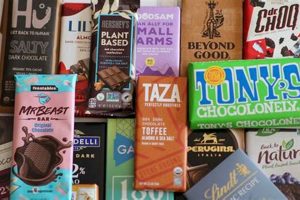
The central question revolves around the compatibility of chocolate consumption with veganism. Veganism is defined by the avoidance of all animal products and by-products. The suitability of chocolate for a vegan diet depends on its ingredients. For instance, dark chocolate with a high percentage of cocoa solids, devoid of milk solids or dairy derivatives, aligns with vegan principles. Conversely, milk chocolate, containing milk powder or other milk-derived ingredients, is unsuitable.
Understanding the ingredient composition of chocolate is critical for individuals adhering to a vegan lifestyle. The potential for hidden animal-derived ingredients necessitates careful scrutiny of product labels. Moreover, awareness of ethical sourcing practices within the chocolate industry, relating to labor and environmental sustainability, can further inform consumer choices, irrespective of dietary preference. The availability of vegan-certified chocolate products has increased, providing clearer options for those seeking assurance.
The following sections will delve into specific ingredients to watch for, explore the range of vegan chocolate options available, and address common misconceptions surrounding chocolate and veganism. This information aims to provide a thorough understanding of how chocolate can, or cannot, be integrated into a vegan diet.
This section provides guidance on how to integrate chocolate into a vegan lifestyle. It emphasizes informed decision-making and product awareness.
Tip 1: Scrutinize Ingredient Lists: Thoroughly examine chocolate packaging for non-vegan ingredients. Common culprits include milk solids, whey, casein, and butterfat. Opt for products explicitly labeled as “vegan.”
Tip 2: Favor Dark Chocolate: Dark chocolate, especially varieties containing 70% or more cocoa solids, is more likely to be vegan. However, always verify the absence of dairy ingredients, as some formulations may include them.
Tip 3: Be Aware of “May Contain” Statements: Products with “may contain milk” statements indicate potential cross-contamination during manufacturing. Individuals with severe dairy allergies should exercise caution.
Tip 4: Seek Out Vegan Certifications: Look for certifications from reputable vegan organizations. These labels provide an added layer of assurance regarding the product’s compliance with vegan standards.
Tip 5: Explore Alternative Sweeteners: Some chocolate contains honey, which is not vegan. Verify the type of sweetener used. Suitable alternatives include cane sugar, beet sugar, maple syrup, and agave nectar.
Tip 6: Research Brands: Investigate brands known for producing vegan chocolate. Many companies now offer dedicated vegan lines or clearly label their vegan-friendly products.
Tip 7: Consider Homemade Options: Creating chocolate treats at home provides complete control over ingredients. Recipes using cocoa powder, vegan butter alternatives, and plant-based milk substitutes are readily available.
Adhering to these guidelines ensures informed consumption aligning with vegan dietary restrictions, allowing for the enjoyment of chocolate while maintaining ethical consistency. Knowledge of ingredients and careful product selection are paramount.
The article will now conclude with a summary of the core arguments, solidifying understanding of chocolate and its place within a vegan lifestyle.
1. Ingredient awareness

Ingredient awareness constitutes a foundational element in determining if chocolate aligns with vegan dietary principles. The act of consuming chocolate hinges upon a thorough understanding of its compositional components. Failure to recognize the presence of non-vegan ingredients invalidates the premise that a vegan can eat chocolate. A direct cause-and-effect relationship exists: the presence of animal-derived ingredients prohibits consumption; their absence permits it. For example, a chocolate bar listing “whey protein” renders it unsuitable, whereas one composed solely of cocoa mass, sugar, and cocoa butter may be permissible, pending other ingredient checks.
The significance of ingredient awareness extends beyond simply identifying prohibited substances. It necessitates understanding derivatives and potential sources of hidden animal products. For instance, certain emulsifiers or flavorings, while not explicitly labeled as dairy, may originate from animal sources. Furthermore, ingredient awareness encourages consumers to consider processing methods and potential cross-contamination. A seemingly vegan chocolate bar produced in a facility that also handles dairy products might present an ethical or health concern for some individuals. Certification labels offered by vegan organizations provide external validation, mitigating some of the reliance on individual assessment; however, fundamental knowledge of ingredient composition remains paramount.
In summary, ingredient awareness forms the bedrock of informed decision-making regarding chocolate consumption within a vegan diet. It is not merely a superficial act but a critical evaluation process, empowering individuals to align dietary choices with ethical principles. The challenge lies in the complexity of food manufacturing and the potential for obscured ingredients. Ongoing education and a commitment to transparency from chocolate producers are essential for fostering a genuinely informed consumer base.
2. Dairy Absence
The relationship between dairy absence and the question of vegan chocolate consumption is deterministic. If chocolate contains dairy, it is not vegan. The presence of any dairy-derived ingredientmilk solids, whey, casein, butterfat, or lactosecategorically disqualifies a chocolate product from being considered suitable for a vegan diet. The absence of these ingredients is, therefore, a necessary but not sufficient condition for a chocolate to be considered vegan. For instance, a dark chocolate bar containing cocoa mass, sugar, cocoa butter, and soy lecithin conforms to the criterion of dairy absence, thus increasing the likelihood it can be consumed by vegans. Conversely, a milk chocolate bar, by definition, contains dairy and is unsuitable. The practical significance rests on the ethical principle of veganism, which strictly prohibits animal product consumption.
Dairy absence extends beyond the obvious. Trace amounts of dairy resulting from cross-contamination during manufacturing are also relevant. The “may contain milk” label indicates this potential, which necessitates individual assessment based on tolerance and stringency of dietary adherence. Consider the example of a small-batch artisan chocolate maker. Despite using exclusively vegan ingredients in a specific dark chocolate bar, shared equipment previously used for milk chocolate production may result in minute dairy presence. While technically “dairy-free,” this product might not be considered vegan by all. This highlights the nuances beyond merely reading ingredient lists. Furthermore, the practical application emphasizes the need for robust cleaning protocols in manufacturing facilities committed to vegan chocolate production, reducing the risk of cross-contamination.
In summation, dairy absence constitutes a non-negotiable prerequisite for chocolate to be considered vegan. Its importance is not merely a matter of ingredient lists but extends to manufacturing processes and potential cross-contamination. Understanding this relationship enables informed consumer choices, allowing for the selection of chocolate that aligns with vegan ethical principles and dietary requirements. The challenge lies in the potential for hidden dairy and the need for transparency in the chocolate industry. However, an informed approach ensures both adherence to veganism and potential enjoyment of chocolate.
3. Vegan Certification
Vegan certification serves as a verification system, confirming that a chocolate product aligns with established vegan standards. The cause-and-effect relationship is straightforward: successful certification results from adhering to defined criteria; adherence assures consumers the product is devoid of animal-derived ingredients. The importance of certification as a component of chocolate consumption within a vegan lifestyle is substantial. It mitigates reliance on consumer-led ingredient analysis, providing an external validation that alleviates ambiguity. For instance, the Vegan Society trademark, displayed on a chocolate bar, indicates independent assessment and verification against their stringent standards. This assurance is critical, particularly given the potential for hidden animal products or cross-contamination in manufacturing processes.
Practical significance extends to informed purchasing decisions. Consumers seeking to ensure chocolate adheres to vegan principles can prioritize certified products, reducing the risk of inadvertent consumption of non-vegan ingredients. Several organizations offer vegan certification programs, each employing specific criteria. These certifications address various aspects, including ingredient sourcing, manufacturing processes, and packaging materials. Consider the example of a small-batch chocolatier claiming vegan status; without independent certification, verifying this claim relies solely on trust. In contrast, a certified product undergoes rigorous scrutiny, providing an added layer of assurance. Furthermore, the proliferation of certified vegan chocolate options has broadened consumer choice, creating a competitive market and increasing availability.
In summary, vegan certification represents a key facilitator in aligning chocolate consumption with vegan dietary principles. It offers external validation, reducing consumer burden and fostering trust. While not the sole determinant, certification provides a valuable tool for informed decision-making, promoting greater transparency within the chocolate industry. Challenges remain regarding the diversity of certification programs and the potential for varying standards; however, the overall effect is increased consumer confidence and enhanced availability of vegan-friendly chocolate options.
4. Cocoa percentage

The cocoa percentage in chocolate serves as a primary indicator of its potential suitability within a vegan dietary framework. It is a numerical representation of the proportion of cocoa solids, derived directly from the cacao bean, present in the final product. Higher percentages generally correlate with lower proportions of other ingredients, some of which may be non-vegan.
- Relationship to Milk Solids
A higher cocoa percentage inherently reduces the space available for milk solids or other dairy-derived ingredients. Milk chocolate, by definition, requires a significant proportion of milk, thus limiting the cocoa percentage achievable. Dark chocolate, conversely, often boasts percentages exceeding 70%, significantly diminishing the likelihood of added dairy. However, this is not a guarantee; ingredient lists remain paramount.
- Implications for Sugar Content
While not directly related to veganism, the cocoa percentage often inversely correlates with sugar content. Higher percentages necessitate less sugar to balance bitterness. This consideration is relevant for individuals monitoring sugar intake alongside vegan dietary restrictions. The increased bitterness of a high-percentage chocolate, however, may require a period of adjustment for some palates.
- Flavor Profile and Formulation
The cocoa percentage significantly influences the flavor profile. Higher percentages result in a more intense, bitter, and complex flavor profile derived from the cacao bean. This characteristic affects the overall formulation of the chocolate, impacting the need for added flavors or ingredients. Vegan chocolate manufacturers often leverage high cocoa percentages to create rich and satisfying products without relying on dairy for texture or flavor.
- Ingredient List Scrutiny
A higher cocoa percentage does not automatically guarantee vegan compliance. Even in chocolates exceeding 70% cocoa, manufacturers may incorporate dairy-derived ingredients or use processing aids that render the product non-vegan. Careful examination of the ingredient list remains essential, regardless of the percentage indicated. Emphasis should be placed on identifying any form of milk or animal product, even in trace amounts.
In summation, the cocoa percentage provides a valuable initial assessment of chocolate’s potential suitability for a vegan diet, offering insight into ingredient proportions and flavor profiles. A higher percentage increases the likelihood of vegan compliance due to reduced space for dairy ingredients, but does not replace the necessity of scrutinizing ingredient lists and seeking vegan certifications. This metric, considered in conjunction with other factors, enables more informed consumer choices.
5. Ethical Sourcing
Ethical sourcing within the chocolate industry intersects directly with the question of whether a vegan consumes chocolate. Beyond the absence of animal products, a commitment to veganism often extends to encompassing broader ethical considerations, including fair labor practices and sustainable environmental stewardship within the supply chain.
- Labor Practices and Fair Trade
Cocoa production is frequently associated with exploitative labor practices, including child labor and forced labor, particularly in West Africa. Ethical sourcing seeks to eliminate these practices by ensuring fair wages, safe working conditions, and the absence of child labor. A vegan who consumes chocolate sourced from plantations employing such practices arguably contradicts the ethical foundation of veganism, which prioritizes the reduction of harm to all sentient beings, including humans. Fair Trade certification provides one mechanism for ensuring ethical labor practices are upheld.
- Environmental Sustainability
Cocoa farming can contribute to deforestation, biodiversity loss, and soil degradation, especially when employing unsustainable agricultural practices. Ethical sourcing prioritizes environmentally sustainable methods, such as agroforestry, which integrates trees into cocoa farms, promoting biodiversity and carbon sequestration. A vegan concerned about environmental impact would favor chocolate sourced from farms employing sustainable practices, recognizing the interconnectedness between human actions and ecological well-being. Organic certification often overlaps with sustainable farming practices.
- Transparency and Traceability
Traceability within the cocoa supply chain enables consumers to ascertain the origins of their chocolate and verify adherence to ethical and sustainable standards. Ethical sourcing emphasizes transparency, allowing for greater accountability and consumer awareness. For instance, direct trade models, where chocolate companies purchase cocoa directly from farmers, foster transparency and empower farmers to negotiate fair prices. This transparency aligns with the broader vegan ethic of informed consumption and accountability.
- Farmer Empowerment and Community Development
Ethical sourcing initiatives frequently incorporate programs aimed at empowering cocoa farmers and supporting community development in cocoa-growing regions. These initiatives may include providing access to education, healthcare, and infrastructure improvements. By supporting chocolate companies committed to farmer empowerment, vegans can contribute to the well-being of cocoa-producing communities, aligning their purchasing decisions with a holistic ethical framework. Premiums paid through fair trade or direct trade arrangements often fund these community development initiatives.
The ethical sourcing of chocolate is intrinsically linked to the values underpinning veganism. While the absence of animal products is a necessary condition, it is not the sole determinant of ethical consumption. Labor practices, environmental sustainability, transparency, and farmer empowerment all contribute to a more holistic ethical assessment of chocolate. A vegan’s choice to consume ethically sourced chocolate reflects a commitment to minimizing harm and promoting justice throughout the entire supply chain, aligning dietary choices with broader ethical principles.
6. Alternative sweeteners

The selection of sweeteners in chocolate formulations significantly impacts its suitability for a vegan diet. Certain traditional sweeteners are incompatible with vegan principles, necessitating the use of alternatives.
- Refined Cane Sugar
Refined cane sugar is frequently processed using bone char, a product derived from animal bones, for decolorization. This process, while not incorporating bone char as an ingredient, renders the sugar non-vegan for some individuals. Alternative processing methods exist, and beet sugar is generally vegan. Verification of cane sugar processing is essential for strict vegans.
- Maple Syrup
Maple syrup, derived from the sap of maple trees, serves as a viable vegan sweetener. Its distinctive flavor profile imparts a unique characteristic to chocolate formulations. Practical applications include its use in dark chocolate bars, vegan truffles, and homemade vegan chocolate desserts. It offers a less processed alternative to refined sugars.
- Agave Nectar
Agave nectar, extracted from the agave plant, presents another vegan-compatible sweetener option. It possesses a high fructose content and a relatively neutral flavor, making it versatile for various chocolate applications. Concerns regarding its environmental impact and potential health effects necessitate moderation in consumption. Its use often results in a smoother texture compared to other sweeteners.
- Coconut Sugar
Coconut sugar, derived from the sap of coconut palm flowers, offers a vegan-friendly alternative with a lower glycemic index than refined cane sugar. Its caramel-like flavor adds complexity to chocolate products. Sustainable sourcing practices are crucial, as unsustainable coconut sugar production can negatively impact biodiversity and local ecosystems. It can be used as a one-to-one replacement for cane sugar in many recipes.
The incorporation of alternative sweeteners in chocolate production expands the range of options available to vegan consumers. Careful consideration of sourcing practices, processing methods, and potential health implications is essential for making informed choices that align with both dietary restrictions and ethical considerations. The development of vegan chocolate relies heavily on the ingenuity and availability of such alternatives.
7. Homemade options

The creation of chocolate confections within a domestic environment provides a high degree of control over ingredient selection, enabling adherence to vegan dietary principles where commercially available options may be unsuitable or lack sufficient transparency.
- Ingredient Control and Customization
Homemade chocolate production allows for complete oversight of all ingredients. This enables the exclusion of dairy products, refined sugars processed with bone char, and other non-vegan components commonly found in mass-produced chocolate. Customization extends to sweetener selection, allowing for the use of maple syrup, agave nectar, or coconut sugar. Furthermore, ingredient provenance can be meticulously managed, favoring ethically sourced cocoa and organic components.
- Addressing Cross-Contamination Concerns
Commercial chocolate manufacturing facilities may process both vegan and non-vegan products on shared equipment, posing a risk of cross-contamination. Homemade production eliminates this risk by employing dedicated utensils and equipment, ensuring complete separation from animal products. This is particularly pertinent for individuals with severe dairy allergies or strict adherence to vegan ethics.
- Cost-Effectiveness and Waste Reduction
Depending on ingredient choices, homemade chocolate can be more cost-effective than purchasing specialized vegan chocolate products. Bulk purchasing of key ingredients, such as cocoa powder and vegan butter alternatives, can reduce per-serving costs. Additionally, homemade production minimizes packaging waste associated with commercially produced items, aligning with sustainable practices often associated with veganism.
- Educational Opportunity and Skill Development
Engaging in homemade chocolate production provides a valuable educational opportunity to learn about the ingredients and processes involved in chocolate making. This fosters a deeper understanding of food production and empowers individuals to make more informed dietary choices. The process also cultivates culinary skills and creativity, enabling the development of unique vegan chocolate recipes tailored to individual preferences.
The cultivation of homemade chocolate options affords vegans a reliable avenue for enjoying chocolate while upholding dietary principles and ethical considerations. The capacity to control ingredients, mitigate cross-contamination, and potentially reduce costs, coupled with the educational benefits, positions homemade chocolate as a compelling alternative to reliance on commercially manufactured products.
Frequently Asked Questions
This section addresses common inquiries regarding the compatibility of chocolate consumption with vegan dietary principles. The aim is to clarify prevalent misconceptions and provide definitive answers based on ingredient composition and ethical considerations.
Question 1: Is all dark chocolate vegan?
No, not all dark chocolate is vegan. While dark chocolate generally contains a higher percentage of cocoa solids and lacks milk solids by default, some formulations may include dairy-derived ingredients, such as milk fat or whey. Scrutinizing the ingredient list is imperative.
Question 2: What ingredients render chocolate non-vegan?
Ingredients of animal origin render chocolate non-vegan. This includes, but is not limited to, milk solids, whey, casein, butterfat, honey, and confectioner’s glaze. The presence of any of these necessitates avoidance.
Question 3: Does “may contain milk” labeling preclude vegan consumption?
The “may contain milk” label indicates potential cross-contamination during manufacturing. Its acceptability depends on individual stringency and allergy considerations. Individuals with severe dairy allergies should exercise caution. Others may consider the risk acceptable, provided no animal products are listed as ingredients.
Question 4: Are there certifications guaranteeing chocolate is vegan?
Yes, several organizations offer vegan certifications. These certifications provide independent verification that a product meets defined vegan standards. Examples include the Vegan Society trademark and certifications from Vegan Action. Prioritizing certified products offers greater assurance.
Question 5: How does ethical sourcing relate to vegan chocolate?
Ethical sourcing addresses labor practices and environmental sustainability within cocoa production. While not directly impacting vegan status, ethical sourcing aligns with the broader vegan ethic of minimizing harm. Consumers may opt to support companies committed to fair trade and sustainable farming practices.
Question 6: Is white chocolate vegan?
Traditional white chocolate, composed primarily of cocoa butter, sugar, and milk solids, is not vegan. However, vegan white chocolate alternatives exist, utilizing plant-based milk substitutes and vegan-certified ingredients.
In summary, the compatibility of chocolate with a vegan diet depends primarily on ingredient composition. Careful label scrutiny, awareness of potential cross-contamination, and prioritization of vegan certifications are essential. Ethical sourcing represents a complementary consideration, aligning with broader vegan values.
This concludes the FAQ section. The next article component will be about Chocolate recipe.
Conclusion
This exploration definitively establishes that “does vegan eat chocolate” is not a question with a universal affirmative answer. The permissibility of chocolate consumption within a vegan framework hinges upon meticulous adherence to specific criteria. The absence of animal-derived ingredients constitutes an absolute prerequisite. Further, factors such as ethical sourcing practices and the potential for cross-contamination necessitate careful consideration, aligning with the broader ethical tenets often associated with veganism.
The informed consumer, empowered by knowledge of ingredient composition, certification standards, and ethical implications, holds the key to reconciling chocolate enjoyment with a vegan lifestyle. Continued vigilance and advocacy for transparent labeling practices within the chocolate industry remain crucial for fostering a truly ethical and accessible market for vegan consumers. The future of chocolate within veganism lies in the hands of both conscientious consumers and responsible producers.