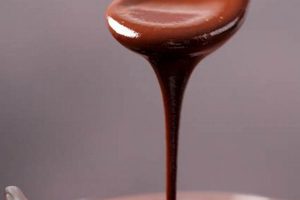
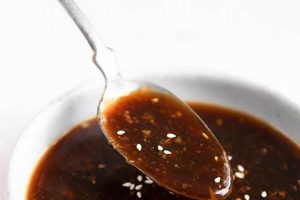
The process of creating a dairy-free, animal product-free confection mirroring traditional caramel involves substituting typical ingredients with plant-based alternatives. Common approaches utilize coconut milk, dates, or nut butter bases to achieve the characteristic sweet, creamy texture and flavor profile. The resulting sauce can be deployed in various culinary applications, similar to its conventional counterpart. For instance, it serves as a topping for desserts, an ingredient in baked goods, or a flavor enhancer in beverages.
Developing this confectionery alternative provides individuals adhering to vegan dietary principles or those with lactose intolerance the ability to enjoy caramel-flavored treats. Moreover, depending on the base ingredients selected, a dairy-free caramel sauce may offer potential nutritional benefits compared to the traditional version. This adaptability has increased its popularity, prompting exploration of different ingredient combinations and methodologies for optimal taste and consistency.
This document will outline fundamental techniques for achieving a successful plant-based caramel sauce. The following sections will detail specific ingredients, equipment, and procedures to guide the user through the creation process, ensuring a delicious and satisfying result.
Tips for Dairy-Free Confection Perfection
Achieving optimal results in plant-based caramel production requires attention to detail and mindful ingredient selection. The following tips aim to refine the creation process, resulting in a sauce that mirrors the texture and flavor of traditional caramel without the use of animal products.
Tip 1: Ingredient Quality Matters: The selection of high-quality ingredients significantly impacts the final product. Opt for full-fat coconut milk, Medjool dates for their natural sweetness, or smooth nut butter to ensure a rich and creamy texture.
Tip 2: Temperature Control is Crucial: Precise temperature regulation is vital during the cooking process. Overheating may lead to a burnt or grainy texture, while insufficient heat can result in a thin and watery consistency. Employ a candy thermometer for accuracy.
Tip 3: Stirring Promotes Smoothness: Consistent stirring prevents the formation of lumps and promotes even cooking. This is particularly important when using ingredients prone to clumping, such as cornstarch or thickening agents.
Tip 4: Salt Enhances Flavor: A pinch of sea salt enhances the sweetness and complexity of the caramel. Experiment with different types of salt to find the balance that suits individual preferences.
Tip 5: Patience is Rewarded: Allowing the sauce to cool completely allows it to thicken properly. Resist the urge to rush the process, as the final texture will improve significantly upon cooling.
Tip 6: Storage Influences Shelf Life: Proper storage in an airtight container, refrigerated, extends the sauce’s shelf life. Be mindful of potential spoilage and consume within a reasonable timeframe.
Tip 7: Customization is Encouraged: The recipe serves as a base for experimentation. Incorporate extracts like vanilla or almond, spices such as cinnamon, or a dash of liquor to tailor the flavor profile.
These considerations contribute to a more controlled and ultimately successful confection creation. By focusing on ingredient quality, careful temperature control, and meticulous stirring, a plant-based caramel sauce rivaling its traditional counterpart can be achieved.
The subsequent sections will further address specific preparation methods and potential troubleshooting scenarios, enhancing the reader’s understanding of the process.
1. Ingredient Selection

Ingredient selection forms the foundational element in the endeavor to create a palatable dairy-free confection. The success of the endeavor hinges on the proper choice and combination of components that mimic the taste and texture characteristics of traditional caramel, while adhering to vegan dietary principles.
- Base Liquid Considerations
The selection of the base liquid, typically coconut milk, oat milk, or a similar plant-based alternative, dictates the richness and creaminess of the finished product. Full-fat coconut milk yields a thicker, more decadent confection, while lower-fat alternatives require careful adjustment of other ingredients to compensate for the reduced fat content. Failure to account for these differences impacts the final texture.
- Sweetener Source Impact
The chosen sweetener, whether granulated sugar, coconut sugar, maple syrup, or dates, significantly influences the flavor profile and overall sweetness. Each sweetener possesses distinct nuances, influencing the final taste. For instance, the use of Medjool dates imparts a caramel-like flavor and natural sweetness, demanding a different approach compared to using refined white sugar, which requires precise caramelization to achieve the desired flavor depth.
- Fat Replacement Strategies
Traditional caramel relies on butterfat for its characteristic mouthfeel and emulsification properties. Vegan formulations require alternative fats, such as coconut oil or nut butter, to replicate this richness and prevent separation. The specific selection impacts not only the flavor, but also the structural stability and shelf-life of the resulting sauce. For instance, the presence of unsaturated fats can influence oxidation processes and affect the longevity of the final confection.
- Flavor Enhancement and Balancing
The strategic addition of flavor enhancers, such as vanilla extract, sea salt, or even a touch of apple cider vinegar, contributes to the complexity and balance of the confection. Salt serves to enhance the sweetness, while a small amount of acid can counteract excessive sweetness and provide a more balanced overall flavor profile. The thoughtful selection and careful adjustment of these elements elevate the culinary experience, creating a dairy-free product that mirrors the depth and richness of traditional caramel.
In summary, judicious selection of ingredients constitutes the cornerstone of successful dairy-free confection production. Understanding the individual characteristics of each component, and how they interact within the formulation, allows for precise control over the final product’s taste, texture, and stability. Careful consideration of these aspects elevates the final product, creating a delicious and satisfying alternative to traditional caramel.
2. Heating Technique

The application of heat represents a critical control point in the creation of plant-based confection, significantly influencing the texture, flavor, and overall success of the endeavor. Precise management of heat ensures proper caramelization and prevents undesirable outcomes.
- Even Heat Distribution
Uniform heat distribution prevents scorching and promotes consistent caramelization of sugars, whether derived from conventional sources or dates. Uneven heating results in localized burning, introducing bitter off-flavors that compromise the entire batch. Equipment selection, such as heavy-bottomed saucepans, and the use of induction cooktops contribute to consistent heat application. The alternative is a confection with undesirable flavors.
- Temperature Monitoring
Accurate temperature monitoring is essential for achieving the desired stage of caramelization. Utilizing a candy thermometer provides a reliable method for tracking internal temperature, allowing for precise control over the Maillard reaction. Failure to monitor temperature results in under-caramelization, yielding a pale, bland confection, or over-caramelization, producing a bitter, burnt taste. Different base sugars have different Maillard reaction ranges, monitoring becomes indispensable for a favorable outcome.
- Rate of Heating
The rate at which heat is applied affects the final texture and flavor complexity. Slow, gentle heating allows for controlled caramelization, enhancing the development of desirable flavor compounds. Rapid heating, on the other hand, risks burning the sugars before they fully caramelize, resulting in a less complex and potentially bitter flavor. Moreover, slow heating aids in the proper hydration of ingredients, contributing to a smooth final texture and preventing graininess.
- Stage-Specific Adjustments
Heating technique necessitates adjustments based on the stage of confection creation. Initial stages may require higher heat to dissolve sugars, while later stages demand reduced heat to prevent burning and promote controlled caramelization. Knowing when to adjust the intensity of heat during the different phases of confection making is indispensable for favorable outcome. The gradual reduction in heat is necessary when the mixture reaches the soft-ball stage.
In conclusion, the method of heating exerts a profound impact on the properties of plant-based confection. Through diligent attention to heat distribution, accurate temperature monitoring, and strategic rate adjustments, a favorable outcome is guaranteed. It is crucial to know the different characteristics in different types of sugar. The success hinges on applying the correct heating protocol.
3. Stirring consistency

The consistency of stirring during the production of plant-based confection directly impacts the resulting texture and stability of the final product. Inadequate or inconsistent stirring can lead to separation of ingredients, uneven heat distribution, and the formation of undesirable lumps or graininess. Conversely, proper stirring promotes emulsification, maintains a uniform temperature, and contributes to a smooth, homogenous texture. This aspect is paramount in replicating the qualities of traditional caramel using plant-derived components. For instance, when creating a sauce with coconut milk, consistent stirring is essential to prevent the coconut fat from separating from the water content, resulting in an oily and unappetizing final product.
The act of stirring not only influences the physical properties but also affects the chemical processes occurring during the cooking stage. By ensuring even heat distribution, stirring facilitates uniform caramelization of sugars, leading to a consistent color and flavor profile throughout the batch. If portions of the mixture are allowed to sit undisturbed, they may overheat and burn, imparting a bitter taste to the entire confection. The frequency and intensity of stirring must be carefully calibrated to accommodate the specific ingredients and heating methods employed. For example, when using a higher heat setting, more frequent stirring is necessary to prevent scorching. When employing a slow-cooking method, less frequent but equally thorough stirring is sufficient to maintain consistency.
Ultimately, the skill in maintaining an optimal stirring consistency is central to the successful creation of plant-based caramel. By diligently addressing this aspect, one can avoid common pitfalls and achieve a product with a smooth, creamy texture and a rich, balanced flavor. Mastering this technique, in conjunction with precise ingredient selection and temperature control, is essential for consistently producing high-quality dairy-free confections that rival traditional recipes.
4. Sugar Caramelization

Sugar caramelization represents a critical chemical process underpinning the flavor and color development of both traditional and plant-based confections. In the context of creating dairy-free caramel alternatives, controlled sugar caramelization is necessary to emulate the characteristic taste and appearance of its traditional counterpart. The Maillard reaction, a non-enzymatic browning reaction between reducing sugars and amino acids (often present in even refined sugars), plays a pivotal role. During heating, sugar molecules undergo a series of complex transformations, yielding hundreds of different flavor compounds. These compounds contribute to the complex and nuanced taste profile expected in a high-quality product. For instance, if the base is coconut sugar, the inherent molasses-like flavors of the sugar will be amplified during caramelization, contributing a unique profile that differentiates it from using refined white sugar. Failure to achieve adequate caramelization results in a confection lacking depth and complexity, whereas excessive caramelization leads to burnt, bitter flavors.
Achieving effective caramelization in plant-based scenarios necessitates careful consideration of sugar type and heating method. Different sugars caramelize at different temperatures, and the presence of other ingredients can affect the process. For example, if utilizing dates as a sweetener, the naturally occurring sugars within the dates will caramelize, but the process requires a longer cooking time and lower temperature to prevent scorching. Further, the Maillard reaction continues when the hot sauce is cooling down which can be another reason to avoid the heating to prevent a burnt flavor profile. In addition, the moisture content of the sugar source also plays a crucial role; higher moisture content may require an extended cooking time to achieve the desired level of caramelization. The equipment also contributes; using heavy-bottomed saucepans promotes even heat distribution, minimizing localized burning. A candy thermometer proves invaluable in monitoring the temperature and achieving the desired level of caramelization. A visual inspection of the sauce colour also provides the valuable information on the doneness of the sauce.
In conclusion, understanding and effectively controlling sugar caramelization is paramount in the preparation of a successful dairy-free confection. This involves careful selection of sugar type, precise temperature control, and appropriate heating techniques. Challenges may arise from variations in ingredient composition and equipment, but a thorough understanding of the caramelization process and proactive adjustments to the recipe and technique will ensure a desirable outcome, closely mimicking the flavor and color of traditional caramel while adhering to plant-based dietary principles.
5. Cooling process
The cooling process is an integral, often overlooked, component of plant-based confection creation. It significantly influences the final texture, viscosity, and overall stability. Inadequate cooling can result in a runny or grainy product, undermining the efforts expended during earlier stages of production. For example, a sauce formulated with coconut milk may exhibit excessive separation if cooled improperly, rendering it unappealing despite the careful selection of ingredients and meticulous heat control. The change in temperature affects the arrangement of molecules in the emulsion, a delicate balance that can be easily disrupted. The process is also linked to food safety. The rate of cooling can impact bacterial growth if a sauce is left at room temperature for a long time.
The methodology employed for cooling directly impacts the final characteristics of the confection. Rapid cooling, such as placing the sauce in an ice bath, can prevent the formation of large sugar crystals, resulting in a smoother texture. However, excessively rapid cooling may also lead to cracking or separation in some formulations. Gradual cooling, conversely, allows the sauce to thicken uniformly, promoting stability and preventing unwanted crystallization. The optimal cooling method varies depending on the specific ingredients and desired outcome. To stabilize the confection, some choose to add starch before the cooling begins. For example, a confection made with dates may benefit from gradual cooling to allow the natural sugars to fully integrate and prevent a gritty texture. Furthermore, the container used during cooling plays a role; a shallow, wide container facilitates faster and more even cooling compared to a deep, narrow one.
In conclusion, the cooling phase represents a critical control point in plant-based confection production, comparable to ingredient selection and heating technique. Meticulous attention to the rate and method of cooling ensures the realization of a smooth, stable, and texturally pleasing product. Understanding the interplay between cooling and ingredient properties is essential for consistently achieving high-quality results. The proper cooling process not only affects the confection’s texture and stability but also serves as a food safety practice.
Frequently Asked Questions
The following section addresses common inquiries regarding the creation of a plant-based alternative, providing clarity on specific aspects of the process.
Question 1: What is the ideal storage method?
For optimal preservation, the product should be stored in an airtight container within a refrigerated environment. This practice minimizes the risk of spoilage and maintains the desired consistency.
Question 2: Can alternative sweeteners be substituted?
The utilization of alternative sweeteners is feasible, but adjustments to the recipe may be necessary to account for variations in sweetness and moisture content. Each sweetener will affect the flavor profile. Calibrate accordingly.
Question 3: Why is the confection grainy in texture?
Graininess typically arises from undissolved sugar crystals. Ensuring complete dissolution during the heating process and implementing a proper cooling technique are essential preventative measures.
Question 4: How to avoid the burnt flavor?
The burnt flavor is commonly caused by the overheating. Using a thermometer to monitor the heating level can prevent from burning the sauce.
Question 5: How can the sauce be thinned if it becomes too thick?
The addition of a small amount of plant-based milk or water, heated gently and stirred continuously, effectively thins the sauce to the desired consistency.
Question 6: What are the signs of spoilage?
Indicators of spoilage include a sour odor, visible mold growth, or a significant change in color or texture. Discard any product exhibiting these characteristics.
Adherence to these guidelines enhances the likelihood of a successful outcome. Understanding potential challenges and implementing preventative measures allows for consistent production of a quality confection.
The next section expands upon potential variations and modifications, offering insights into customizing the recipe to individual preferences.
In Summary
The preceding discourse has illuminated the multifaceted process inherent in crafting a dairy-free alternative. Key elements, including ingredient selection, heating protocols, stirring techniques, sugar caramelization, and the cooling phase, directly influence the ultimate quality and characteristics of the confection. Precise control over each stage is essential for achieving a satisfactory outcome that mirrors the qualities of traditional caramel while adhering to vegan principles.
Mastery of these techniques enables consistent production of a sought-after product, expanding culinary possibilities for those adhering to plant-based diets or seeking dairy-free alternatives. Continued refinement and exploration of ingredient combinations will undoubtedly further enhance the accessibility and appeal of this confectionery creation.