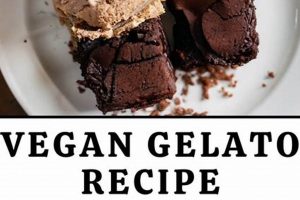
The creation of frozen desserts excluding animal-derived ingredients, specifically dairy, but achieving a similar creamy texture and flavor profile to traditional Italian ice cream, is the focus of the present discussion. This involves substituting cow’s milk, cream, and sometimes eggs, with plant-based alternatives like nut milks (almond, cashew), coconut milk, oat milk, or soy milk. Stabilizers and emulsifiers, such as guar gum or lecithin, are often employed to mimic the smooth consistency of dairy-based counterparts. Flavorings range from fruits and chocolate to nuts and spices, mirroring the broad spectrum available in conventional offerings.
The increased demand for non-dairy frozen treats stems from several factors. Individuals with lactose intolerance or dairy allergies seek alternatives that allow them to enjoy frozen desserts without adverse reactions. Ethical considerations regarding animal welfare also play a significant role, as does the desire to reduce the environmental impact associated with dairy farming. Historically, plant-based alternatives have been perceived as inferior in texture and taste. However, advancements in food technology and ingredient sourcing have led to substantial improvements, resulting in products that closely replicate the sensory experience of traditional desserts.
The subsequent sections will delve into the specific ingredients, techniques, and considerations involved in successfully producing such plant-based frozen confections. Aspects covered will include ingredient selection, balancing sweetness and fat content, the role of stabilizers, and methods for achieving optimal texture and flavor.
Essential Guidance for Dairy-Free Frozen Dessert Creation
Achieving optimal results in creating frozen desserts without dairy requires careful attention to specific techniques and ingredient choices. The following tips offer practical guidance for producing a superior product.
Tip 1: Select High-Quality Plant-Based Milk: The base liquid significantly impacts the final texture and flavor. Full-fat coconut milk provides richness, while cashew or oat milk offers a smoother, more neutral profile. Avoid thinner varieties, as they may result in an icy consistency.
Tip 2: Incorporate Stabilizers Strategically: Guar gum, locust bean gum, or tapioca starch can prevent ice crystal formation and enhance the creaminess. Use them sparingly, following the recommended dosage, as excessive amounts can lead to a gummy texture.
Tip 3: Balance Sweetness and Fat Content: Plant-based milks often have lower fat content than dairy. Compensate by adding ingredients like coconut oil, nut butter, or avocado to achieve a richer mouthfeel. Adjust sweetener levels to complement the base flavor; agave or maple syrup can add subtle nuances.
Tip 4: Employ the Proper Freezing Technique: Churning the mixture in an ice cream maker is crucial for incorporating air and preventing large ice crystals. Pre-chilling the machine’s bowl thoroughly is essential for optimal results. After churning, harden the product in the freezer for several hours to achieve the desired firmness.
Tip 5: Consider Flavor Pairings Carefully: The absence of dairy can allow other flavors to shine through. Experiment with complementary ingredients such as vanilla extract, citrus zest, or spices. High-quality chocolate or fruit purees can also enhance the overall flavor profile.
Tip 6: Avoid Overmixing: Overmixing can result in a dense and heavy final product. Churn the mixture until it reaches a soft-serve consistency, then transfer it to a container for hardening in the freezer.
Tip 7: Adjust for Acidity: Ingredients such as citrus fruits or certain fruit purees can affect the freezing process. Adding a small amount of baking soda (carefully and in minuscule quantities) can help neutralize acidity and prevent curdling or graininess.
Adhering to these principles will enhance the quality and palatability of non-dairy frozen confections. The resulting product should exhibit a smooth, creamy texture and a balanced flavor profile, comparable to its traditional counterpart.
The following section will address potential challenges and troubleshooting techniques associated with the aforementioned process.
1. Ingredient Substitution

Ingredient substitution is a foundational principle in developing frozen desserts lacking animal-derived products. The central challenge resides in replicating the unique properties of dairy components, primarily milk fat and proteins, which contribute to the characteristic creaminess, texture, and stability of traditional formulations. Successful ingredient substitution necessitates a thorough understanding of the functional roles of these dairy constituents and the selection of plant-based alternatives that can effectively mimic those properties. For instance, full-fat coconut milk is often employed to emulate the richness of cream, while cashew or oat milk serves as a neutral-flavored base comparable to cow’s milk. Without meticulous ingredient substitution, the resulting product invariably suffers from inferior texture, exhibiting either an icy or grainy consistency, and lacking the desired smooth mouthfeel.
Beyond simply replacing dairy, ingredient substitution also requires careful consideration of the overall balance of solids, fats, and liquids within the formulation. Dairy-free milks typically have a lower fat content compared to cow’s milk, necessitating the incorporation of plant-based fats, such as coconut oil, avocado, or nut butters, to achieve a similar richness. Similarly, the protein structure in dairy contributes to emulsification and stability, roles that must be fulfilled by plant-based alternatives, such as soy protein isolate or specific starch blends. The accurate calibration of these substituted components is crucial to ensure proper emulsification, prevent phase separation, and maintain the desired texture throughout the freezing and storage process. For example, a product relying solely on almond milk without added fats or stabilizers will likely develop ice crystals and exhibit poor structural integrity.
Effective ingredient substitution requires meticulous formulation and testing to optimize the resulting dessert. Plant-based milks can exhibit distinct flavor profiles that can affect the final flavor outcome; flavors need to be adjusted. This approach ensures that the absence of animal products does not compromise the sensory appeal of the final product. In conclusion, ingredient substitution is not merely a replacement exercise but a complex process that demands a comprehensive knowledge of food science principles and careful selection of plant-based alternatives to replicate the functionalities of dairy components.
2. Emulsification Techniques

Emulsification techniques are critical in formulating frozen confections without dairy, as they contribute significantly to texture and stability. The absence of milk fat necessitates alternative methods to create a smooth, creamy consistency akin to traditional offerings.
- Role of Emulsifiers
Emulsifiers facilitate the dispersion of fat globules in a water-based medium, preventing separation and creating a stable emulsion. In standard ice cream, milk proteins act as natural emulsifiers. For plant-based versions, ingredients such as lecithin (from soy or sunflower), mono- and diglycerides of fatty acids (derived from vegetable oils), or specific protein isolates are employed to achieve a similar effect. The correct selection and concentration of emulsifiers are crucial to prevent a grainy or icy texture.
- Mechanical Emulsification
Mechanical forces, such as high-speed mixing or homogenization, aid in reducing the size of fat droplets and increasing their surface area, thereby enhancing the effectiveness of emulsifiers. In large-scale manufacturing, high-pressure homogenizers are utilized. At a smaller scale, blenders or immersion blenders can approximate this effect, though with less precision. Effective mechanical emulsification complements the chemical action of emulsifiers to produce a finer, more stable emulsion.
- Impact on Overrun
Overrun, the amount of air incorporated into a frozen dessert during churning, affects its lightness and texture. Proper emulsification is essential for maintaining overrun in plant-based versions. A stable emulsion allows for the incorporation and retention of air bubbles, resulting in a less dense, more palatable final product. Without adequate emulsification, air bubbles tend to collapse, leading to a heavy, icy texture.
- Influence on Shelf Life
Emulsification techniques also influence the shelf life of frozen desserts. A stable emulsion resists phase separation and ice crystal growth during storage. These processes can lead to textural degradation and a loss of visual appeal. Employing appropriate emulsification strategies can extend shelf life and maintain the quality of the product over time. The effectiveness of these techniques must be balanced against potential effects on flavor and cost.
The interplay of emulsifiers, mechanical techniques, and careful ingredient selection contributes to the successful creation of frozen confections without dairy. These emulsification techniques are critical for producing a smooth, creamy texture and prolonged shelf life, ultimately making vegan gelato more palatable and appealing to consumers.
3. Freezing Process

The freezing process represents a critical control point in the creation of frozen desserts without dairy. Precise manipulation of temperature and agitation during this phase directly impacts the final texture, stability, and palatability. Deviations from optimal freezing parameters can result in undesirable attributes such as ice crystal formation, coarse texture, and reduced shelf life. Careful attention to the freezing process is therefore essential to achieving a high-quality, commercially viable plant-based product.
- Rate of Cooling
The rate at which the mixture is cooled significantly influences ice crystal size. Rapid freezing promotes the formation of numerous small ice crystals, resulting in a smooth texture. Slow freezing, conversely, leads to fewer, larger crystals, yielding a grainy or icy mouthfeel. Industrial ice cream makers employ rapid freezing techniques to achieve optimal texture. In domestic settings, pre-chilling the ice cream maker bowl and using a machine with a powerful compressor can improve the rate of cooling, improving texture. Improper cooling leads to undesirable ice crystallization, resulting in a compromise in overall product quality.
- Agitation and Air Incorporation
Agitation during freezing is crucial for incorporating air into the mixture, creating “overrun,” which contributes to a lighter, less dense texture. The simultaneous freezing and agitation prevent the formation of large ice crystals by disrupting their growth. Insufficient agitation results in a dense, icy product. Excessive agitation, however, can lead to the destabilization of the emulsion and a loss of air, producing a heavy, compacted texture. The precise level of agitation must be carefully calibrated to achieve the desired overrun and texture.
- Freezing Temperature
The freezing temperature must be sufficiently low to ensure complete freezing of the water content. Insufficiently low temperatures will result in a soft, partially frozen product with poor stability. Overly low temperatures, while promoting rapid freezing, can also increase the risk of ice crystal formation and negatively impact the sensory attributes. Maintaining an optimal freezing temperature, typically between -12C and -18C (10F and 0F), is essential for achieving the desired texture and stability.
- Hardening Phase
Following the initial freezing and agitation, a hardening phase is often employed to further reduce the temperature and solidify the product. This stage is crucial for achieving the desired firmness and improving shelf life. Rapid hardening minimizes ice crystal growth during storage. The use of blast freezers or liquid nitrogen can accelerate the hardening process. Proper hardening ensures a stable, structurally sound product that can withstand temperature fluctuations during distribution and storage.
The interplay between cooling rate, agitation, freezing temperature, and the hardening phase collectively determines the quality of a plant-based frozen dessert. Optimizing these parameters is crucial for achieving a smooth, creamy texture, desirable overrun, and adequate stability, thereby enabling the production of a product that effectively mimics the sensory attributes of traditional dairy-based counterparts. Mastering these considerations within the freezing process empowers production of a superior product, aligning with consumer expectations for both texture and taste. The freezing process in a vegan gelato recipe is critical because plant-based mixtures behave differently than dairy.
4. Flavor Optimization

Flavor optimization constitutes a critical aspect of developing plant-based frozen desserts, particularly in the context of vegan gelato. The absence of dairy necessitates a strategic approach to flavor formulation to achieve sensory parity with traditional products, where milk fat and proteins contribute significantly to the overall taste profile. Flavor optimization, therefore, involves careful selection, balancing, and enhancement of ingredients to create a palatable and appealing final product.
- Base Flavor Selection and Compatibility
The choice of plant-based milk forms the foundation of flavor development. Coconut milk imparts a distinct tropical note, while cashew and oat milks offer a more neutral canvas. The selected base must be compatible with intended flavor additions. Strong flavors may mask subtle nuances of the base. For example, using full-fat coconut milk might overpower delicate fruit flavors, requiring adjustments in formulation to achieve balance. The relationship between base and additional flavors will make or break the final product.
- Sweetener Selection and Impact
The type of sweetener significantly influences the overall flavor profile. Refined sugars provide pure sweetness, while alternative sweeteners like agave, maple syrup, or date syrup contribute unique flavor notes. Sweeteners also impact texture and freezing point. Agave, for instance, contains fructose, which lowers the freezing point and affects scoopability. Consideration of these factors is essential to prevent undesirable textural outcomes and off-flavors. Careful consideration of various sweetener types is critical for optimal outcomes.
- Flavor Enhancers and Intensifiers
Plant-based desserts may require flavor enhancers to achieve the desired intensity and complexity. Vanilla extract, salt, and acids (such as lemon juice) can accentuate existing flavors and create a more rounded sensory experience. Extracts, zest, and emulsions are commonly used as intensifiers. These compounds must be used judiciously to avoid overpowering the primary flavors. Too much extract can create undesirable bitterness or chemical tastes. Proper extraction and combination are key.
- Balancing and Complementary Flavors
Achieving a harmonious flavor profile requires balancing contrasting elements. The use of complementary flavors can enhance the overall complexity and appeal. For instance, pairing chocolate with sea salt or citrus with spices can create a more nuanced and engaging taste experience. Similarly, balancing sweetness with acidity or bitterness prevents a monotonous flavor profile and adds depth. Proper ratios of sweet and acidic components are critical.
Flavor optimization in plant-based frozen desserts represents a multifaceted challenge. Success depends on strategic ingredient selection, careful balancing of flavor elements, and a thorough understanding of the sensory interactions between components. A well-optimized flavor profile is paramount to creating a vegan gelato that appeals to a broad range of consumers and competes effectively with traditional dairy-based products. Careful recipe testing with small batch production will ensure maximum final product results.
5. Texture Control
Achieving the desired textural attributes in frozen desserts that exclude animal products presents significant technical challenges. Texture control is paramount in replicating the sensory experience of traditional dairy-based products, influencing consumer acceptance and overall product quality. The subsequent discussion elucidates critical factors affecting texture and strategies for optimizing textural properties in plant-based frozen formulations.
- Ice Crystal Formation and Inhibition
Ice crystal formation is a primary determinant of texture in frozen desserts. Large ice crystals result in a coarse, icy mouthfeel, while small ice crystals contribute to a smooth, creamy texture. In plant-based formulations, the absence of milk proteins, which naturally inhibit ice crystal growth, necessitates the use of alternative strategies. Stabilizers, such as guar gum, locust bean gum, and cellulose gum, are commonly employed to control ice crystal size by increasing viscosity and reducing water mobility. The selection and concentration of stabilizers directly influence the textural properties of the final product. Improper selection results in undesirable graininess or excessive gumminess.
- Fat Content and Emulsification
Fat content significantly impacts the perceived creaminess and richness of frozen desserts. In dairy-based products, milk fat globules contribute to a smooth, lubricious mouthfeel. In plant-based versions, alternative fat sources, such as coconut oil, avocado, or nut butters, are used to mimic this effect. However, these fats exhibit different melting profiles and emulsification properties compared to milk fat, requiring careful manipulation to achieve a similar sensory experience. Emulsifiers, such as lecithin or mono- and diglycerides, are used to stabilize the fat-water emulsion and prevent phase separation, ensuring a uniform texture. Improper emulsification may result in a greasy or separated texture.
- Solid Content and Water Activity
The concentration of total solids, including sugars, proteins, and stabilizers, affects the freezing point and water activity of the mixture, influencing texture. A higher solid content lowers the freezing point, resulting in a softer product. Conversely, a lower solid content increases the freezing point, leading to a harder, icier texture. The type of sugar used also impacts texture. Fructose, for example, has a greater freezing point depression effect than sucrose. Controlling water activity through the addition of humectants, such as glycerol or sorbitol, can further improve texture by reducing ice crystal formation. Improper balancing of solids results in either an overly soft or overly hard consistency.
- Air Incorporation and Overrun
The amount of air incorporated into a frozen dessert, known as overrun, significantly affects its density and texture. Overrun is typically expressed as a percentage increase in volume due to air incorporation. Higher overrun results in a lighter, less dense texture, while lower overrun yields a denser, heavier product. The type of plant-based milk and the presence of emulsifiers influence the ability to incorporate and retain air. Insufficient overrun results in a dense, icy texture. Excessive overrun, on the other hand, leads to a foamy, unstable product. Precise control of overrun is essential to achieving the desired texture.
The factors influencing texture are interconnected and require careful balancing to achieve optimal results in plant-based frozen formulations. A comprehensive understanding of ingredient properties, processing parameters, and their impact on texture is essential for creating a product that meets consumer expectations. This balance assures that the final product successfully simulates dairy versions.
Frequently Asked Questions
The following addresses common inquiries regarding the formulation and production of plant-based frozen desserts, specifically focusing on challenges and considerations unique to such recipes.
Question 1: Does the absence of dairy inherently compromise the texture?
Not necessarily. Achieving a creamy texture without dairy necessitates substituting plant-based ingredients for milk fats and proteins. Employing stabilizers and emulsifiers, coupled with proper freezing techniques, can effectively replicate the textural properties of traditional frozen desserts.
Question 2: What plant-based milk is optimal?
The choice of plant-based milk depends on the desired flavor profile and texture. Coconut milk provides richness, while cashew or oat milk offers a neutral base. Thinner milks, such as some almond varieties, may result in an icy consistency. Experimentation is often required to determine the optimal milk for a specific recipe.
Question 3: Are specialized ingredients required?
While a standard recipe can be adapted with readily available plant-based milks, certain ingredients, such as stabilizers (guar gum, locust bean gum), emulsifiers (lecithin), and specific plant-based fats (coconut oil, cocoa butter), may be necessary to achieve a superior texture and prevent ice crystal formation.
Question 4: How does freezing differ from traditional gelato?
The freezing process requires careful attention to prevent ice crystal formation. Rapid cooling and constant agitation during freezing are crucial. Pre-chilling the ice cream maker bowl and employing a machine with a powerful compressor are recommended for optimal results. The hardening phase also is significant for final structure.
Question 5: Is the flavor profile significantly different?
The flavor profile can differ due to the absence of dairy fat, which carries flavors. Strategic use of extracts, spices, and other flavor enhancers may be necessary to achieve the desired intensity and complexity. Balancing sweetness and acidity is also crucial.
Question 6: What are common troubleshooting issues?
Common issues include icy texture (due to slow freezing or insufficient stabilizers), grainy texture (due to phase separation), and lack of creaminess (due to insufficient fat content). Adjusting ingredient ratios and freezing parameters can often resolve these issues.
In summary, formulating a high-quality vegan gelato recipe requires careful attention to ingredient selection, formulation techniques, and freezing parameters. The strategic use of plant-based alternatives, stabilizers, and emulsifiers is essential for replicating the texture and flavor of traditional dairy-based products.
The following section will provide specific recipe recommendations and variations.
Conclusion
The preceding exploration underscores the complexities inherent in formulating a “vegan gelato recipe”. Successful execution requires a comprehensive understanding of ingredient functionalities, emulsification principles, and freezing dynamics. The absence of traditional dairy necessitates strategic substitutions and meticulous control over textural and flavor attributes. Key elements, including plant-based milk selection, stabilizer application, and freezing rate modulation, significantly impact the final product’s quality. Furthermore, ingredient ratios and flavor balancing must be carefully calibrated to achieve a sensory experience comparable to conventional formulations.
Achieving consistent results demands rigorous experimentation and adaptation to account for variations in ingredient composition and equipment capabilities. The ongoing refinement of plant-based alternatives and advancements in food technology promise to further enhance the potential for replicating traditional gelato’s characteristics within a vegan framework. Continued research and development efforts are crucial to overcoming existing limitations and expanding the range of viable formulations.