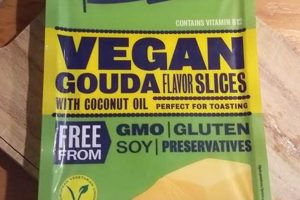
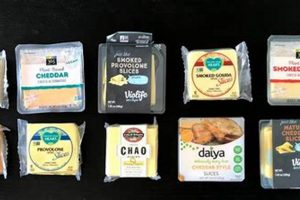
The procurement of plant-based cheese alternatives has become increasingly accessible due to rising consumer demand and advancements in food technology. These products, formulated without animal-derived ingredients, offer a dairy-free option suitable for individuals adhering to vegan diets or those with lactose intolerance. Examples range from cashew-based spreads to coconut oil-based slices, each designed to replicate the texture and flavor of conventional dairy cheese.
The significance of readily available non-dairy cheese options lies in their contribution to dietary diversity and ethical consumption. The production of plant-based alternatives generally requires fewer resources compared to traditional dairy farming, potentially leading to a smaller environmental footprint. Historically, vegan cheese options were limited to specialized health food stores; however, distribution has expanded significantly, reflecting a broader acceptance and integration into mainstream diets.
The following sections will detail the various retail outlets and online platforms that provide access to this expanding category of food products, covering options from large supermarket chains to specialized vegan boutiques. Furthermore, a discussion of regional variations and factors influencing product availability will be presented.
This section provides practical guidance on locating and selecting plant-based cheese products. The strategies outlined are designed to assist consumers in efficiently navigating the market for these alternatives.
Tip 1: Initiate the search at well-established supermarket chains. Most major grocery retailers now stock a selection of vegan cheese, often located within the dairy or specialty food sections.
Tip 2: Explore specialty health food stores. These establishments frequently carry a wider variety of niche and artisanal vegan cheese options not typically found in larger supermarkets.
Tip 3: Utilize online retailers specializing in vegan or plant-based products. These platforms offer an extensive range and often ship nationally or internationally.
Tip 4: Consult online directories and websites dedicated to vegan resources. These platforms often maintain lists of stores and restaurants that carry plant-based cheese options, searchable by location.
Tip 5: Consider farmers markets and local artisan food producers. Some vendors may offer unique, handcrafted vegan cheeses made with locally sourced ingredients.
Tip 6: Review product labels meticulously. Confirm that the product is certified vegan and aligns with specific dietary needs or preferences, such as gluten-free or soy-free.
Tip 7: Inquire directly with local restaurants and pizzerias. Many establishments are now willing to accommodate vegan customers and may offer plant-based cheese as a topping option.
By implementing these strategies, individuals can effectively identify and access the expanding range of plant-based cheese alternatives currently available. The informed consumer is better equipped to make choices that align with their dietary requirements and ethical considerations.
The concluding section of this article will summarize the key points discussed and offer further insights into the future of plant-based cheese production and consumption.
1. Supermarket Chains

Supermarket chains represent a primary point of access for consumers seeking plant-based cheese alternatives. Their widespread presence and established supply chains make them a significant distributor in the vegan cheese market.
- Product Availability and Variety
Supermarket chains typically offer a curated selection of vegan cheeses, ranging from common brands to store-specific private label options. The availability is influenced by regional demand and shelf space allocation. While the variety might not match specialized stores, it provides a readily accessible entry point for consumers new to plant-based alternatives.
- Price Points and Accessibility
Supermarket chains often leverage economies of scale to offer vegan cheese at competitive price points compared to smaller retailers. This increased affordability enhances accessibility for a broader consumer base, contributing to the mainstream adoption of plant-based diets.
- Placement and Marketing Strategies
The placement of vegan cheese within supermarket aisles (e.g., dairy section, specialty foods) influences consumer visibility and purchasing decisions. Strategic marketing initiatives, such as in-store promotions and online advertising, further contribute to product awareness and sales volume.
- Impact on Market Growth
The willingness of supermarket chains to stock vegan cheese significantly impacts the growth and acceptance of the plant-based food industry. Increased demand from these retailers encourages manufacturers to innovate and expand their product lines, further benefiting consumers.
The role of supermarket chains is integral to the widespread availability of plant-based cheese. Their capacity to stock, market, and distribute these alternatives has a significant influence on consumer access and the overall market landscape.
2. Specialty Food Stores

Specialty food stores represent a significant avenue for individuals seeking plant-based cheese alternatives. These retailers often curate a selection that exceeds the offerings of larger supermarket chains, catering to niche dietary requirements and discerning palates.
- Expanded Product Variety and Niche Brands
Specialty food stores typically stock a wider array of vegan cheese types, including artisanal varieties, imported options, and brands not commonly found in mainstream supermarkets. This expanded selection allows consumers to explore diverse flavors and textures within the plant-based cheese category. For example, a specialty store might carry a fermented cashew cheese aged in-house, alongside a variety of imported nut-based spreads and hard cheeses.
- Expert Knowledge and Customer Service
Staff within specialty food stores often possess specialized knowledge regarding vegan products and dietary restrictions. They can provide guidance on ingredient sourcing, flavor profiles, and optimal usage of various plant-based cheese alternatives. This personalized assistance can be invaluable for consumers unfamiliar with vegan cheeses or those seeking specific product recommendations.
- Focus on Quality and Ethical Sourcing
Many specialty food stores prioritize the sourcing of high-quality ingredients and ethical production practices. They may carry vegan cheeses made with organic nuts, fair-trade ingredients, or produced by small-scale, sustainable businesses. This emphasis on quality and ethics appeals to consumers who prioritize environmental and social responsibility.
- Community Engagement and Product Discovery
Specialty food stores often serve as community hubs for individuals interested in plant-based diets and sustainable living. They may host tasting events, cooking demonstrations, or workshops focused on vegan cheese and other related products. These activities provide opportunities for consumers to discover new products, connect with like-minded individuals, and deepen their knowledge of plant-based cuisine.
The multifaceted role of specialty food stores extends beyond mere retail; they act as curators, educators, and community builders within the vegan food landscape. Their contribution to the accessibility of plant-based cheese alternatives is significant, particularly for consumers seeking unique products, expert guidance, and ethically sourced options. These establishments facilitate the discovery of diverse and high-quality vegan cheeses, thereby enriching the overall experience of plant-based dining.
3. Online Retailers

Online retailers represent a pivotal distribution channel for plant-based cheese alternatives, offering consumers unparalleled access to a diverse range of products irrespective of geographical limitations. This accessibility is a defining characteristic in the context of “where can you get vegan cheese,” particularly for consumers in regions with limited brick-and-mortar options.
- Extensive Product Selection and Global Reach
Online platforms frequently aggregate vegan cheese offerings from numerous manufacturers, creating a virtual marketplace with a significantly broader selection than most physical stores. This includes artisanal, imported, and specialty cheeses often unavailable locally. The ability to ship products nationally and internationally extends the reach of these platforms, serving consumers in remote areas or those seeking specific brands.
- Comparative Shopping and Consumer Reviews
Online retailers facilitate comparative shopping through side-by-side product listings, detailed ingredient information, and customer reviews. Consumers can readily compare prices, nutritional profiles, and user experiences to make informed purchasing decisions. The availability of user-generated content, such as ratings and reviews, contributes to transparency and empowers consumers to select products that align with their preferences.
- Subscription Services and Automated Delivery
Certain online retailers offer subscription services for vegan cheese, enabling consumers to receive regular deliveries of their preferred products. This automated delivery model provides convenience and ensures a consistent supply of plant-based cheese alternatives. Subscription services can be particularly beneficial for individuals with specific dietary needs or preferences who rely on a consistent source of these products.
- Direct-to-Consumer Sales and Manufacturer Accessibility
Online platforms enable direct-to-consumer sales, allowing manufacturers to bypass traditional retail channels and connect directly with consumers. This model can result in lower prices, increased product availability, and opportunities for manufacturers to gather direct feedback from their customer base. The accessibility of manufacturers through online channels can also facilitate inquiries about product ingredients, production methods, and ethical sourcing practices.
The role of online retailers in the plant-based cheese market extends beyond mere product distribution. These platforms empower consumers with access to a vast selection, facilitate informed purchasing decisions through comparative shopping and reviews, and offer convenient delivery options. The direct-to-consumer model further enhances accessibility and strengthens the connection between manufacturers and consumers. Consequently, online retailers represent a crucial component in the ongoing expansion and accessibility of plant-based cheese alternatives.
4. Vegan Restaurants

Vegan restaurants serve as a significant point of access for experiencing and procuring plant-based cheese alternatives. These establishments, by their very nature, necessitate a reliable supply chain for vegan ingredients, including cheese. Consequently, they function as both a consumption point and a potential information resource for consumers seeking to identify viable retail sources for these products. The presence of vegan cheese on a restaurant menu indicates that such alternatives are commercially available and deemed palatable for a dining experience, thereby endorsing their viability.
The effect of vegan restaurants on the accessibility of plant-based cheese extends beyond direct consumption. Many such restaurants actively promote the brands they utilize, listing suppliers in their menus or on their websites. This indirect advertising increases consumer awareness and directs potential customers to retailers stocking these specific brands. Furthermore, vegan restaurants often conduct product testing and experimentation, evaluating the performance of different cheese alternatives in various culinary applications. This process informs their purchasing decisions and, by extension, influences the selection of products available to their clientele, impacting overall market trends.
Therefore, the relationship between vegan restaurants and the procurement of plant-based cheese is multifaceted. They act as consumers, advertisers, and evaluators, collectively contributing to the visibility and availability of these alternatives. Understanding this connection is crucial for consumers seeking reliable information on sources for vegan cheese, and for manufacturers aiming to expand their market reach through strategic partnerships with establishments catering to plant-based diets.
5. Farmers' Markets
Farmers’ markets represent a localized and often overlooked avenue for sourcing plant-based cheese alternatives. These markets, characterized by direct interaction between producers and consumers, offer unique opportunities for accessing artisanal vegan cheeses not typically found in larger retail chains. The presence of vendors specializing in plant-based foods at farmers’ markets directly expands consumer access to alternatives. This is particularly relevant in areas where specialty food stores or well-stocked supermarkets are limited. For example, a small-scale producer using locally sourced nuts to create vegan cheeses might exclusively vend at regional farmers’ markets, thereby making the market the only point of access for their product.
The significance of farmers’ markets extends beyond mere product availability. These markets facilitate direct communication between consumers and producers, fostering a deeper understanding of ingredient sourcing, production methods, and the overall philosophy behind the product. This direct engagement can build trust and encourage consumers to support local, sustainable businesses. Moreover, farmers’ markets often serve as testing grounds for new vegan cheese varieties. Producers may introduce experimental flavors or formulations to gather feedback directly from consumers, enabling them to refine their products based on real-time market responses. This dynamic interaction benefits both producers and consumers, leading to more tailored and innovative plant-based cheese options. Consider, for instance, a vendor experimenting with different fermentation techniques for their cashew cheese, receiving instant feedback from market attendees, ultimately improving the final product based on consumer preferences.
However, the reliability of farmers’ markets as a consistent source for plant-based cheese depends on seasonal availability, the presence of dedicated vegan vendors, and market location. Certain markets may only operate during specific times of the year or may not consistently host vendors specializing in vegan cheese alternatives. Despite these limitations, farmers’ markets play a crucial role in promoting local, sustainable food systems and providing consumers with access to unique and often superior-quality plant-based cheese options. Understanding this niche market is essential for consumers seeking diverse and ethically sourced alternatives within the broader landscape of plant-based food procurement.
Frequently Asked Questions Regarding Vegan Cheese Procurement
This section addresses common inquiries concerning the acquisition of plant-based cheese alternatives, providing concise and informative responses to frequently encountered questions.
Question 1: Are all plant-based cheeses entirely free from animal-derived ingredients?
The composition of plant-based cheeses varies significantly. Careful examination of product labeling is essential to confirm the absence of dairy or other animal-derived components. Certifications from recognized vegan organizations offer an additional level of assurance.
Question 2: Does the flavor profile of vegan cheese accurately replicate that of traditional dairy cheese?
Plant-based cheese alternatives exhibit a diverse range of flavor profiles. While some closely mimic the taste and texture of dairy cheese, others offer distinct and unique sensory experiences. Consumer preferences regarding flavor similarity are subjective.
Question 3: Is the nutritional content of plant-based cheese comparable to that of dairy cheese?
Nutritional profiles differ substantially between plant-based and dairy cheeses. Plant-based options may exhibit lower saturated fat content and cholesterol, while potentially lacking certain vitamins and minerals found in dairy. Consulting nutritional information is advised for informed dietary choices.
Question 4: What factors influence the price point of plant-based cheese alternatives?
The price of plant-based cheese is influenced by factors such as ingredient sourcing, manufacturing processes, production scale, and distribution channels. Specialized ingredients or small-batch production can contribute to higher prices compared to mass-produced options.
Question 5: How does the shelf life of plant-based cheese compare to that of traditional dairy cheese?
The shelf life of plant-based cheese is variable and dependent on the specific ingredients and preservation techniques employed. Refrigeration is generally required, and adherence to expiration dates is crucial to maintain product quality and safety.
Question 6: Are there regional variations in the availability of plant-based cheese?
Product availability varies significantly based on geographic location. Urban areas with a higher concentration of vegan or vegetarian consumers typically offer a wider selection compared to rural regions. Online retailers provide a potential solution for accessing products unavailable locally.
In summary, the acquisition of plant-based cheese alternatives necessitates careful consideration of ingredients, flavor profiles, nutritional content, price, shelf life, and regional availability. Informed consumers can make choices that align with their individual dietary needs and preferences.
The following section will present a concluding overview of the key themes discussed throughout this article.
Concluding Remarks on Plant-Based Cheese Accessibility
The preceding analysis has explored the multifaceted landscape of plant-based cheese acquisition. Various channels, including supermarket chains, specialty food stores, online retailers, vegan restaurants, and farmers’ markets, contribute to the distribution and availability of these alternatives. Each source offers distinct advantages regarding product variety, price points, consumer information, and accessibility. Strategic utilization of these resources enables consumers to navigate the market effectively.
The continued expansion and evolution of the plant-based cheese sector are contingent upon ongoing innovation, consumer demand, and the responsiveness of distribution networks. Active engagement with retailers, exploration of new product offerings, and support for ethical and sustainable sourcing practices will contribute to the broader integration of plant-based alternatives into mainstream dietary patterns. The responsibility rests with both consumers and producers to foster a transparent and accessible market that caters to diverse dietary needs and ethical considerations.