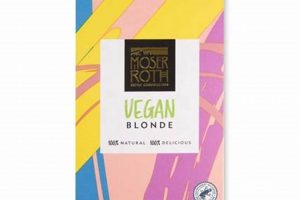
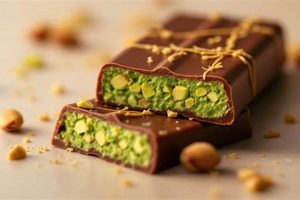
A plant-based confectionery product designed to mimic the taste and texture of traditional white chocolate. This product is formulated without any animal-derived ingredients, such as dairy milk, and is designed to be easily melted for various culinary applications. Common uses include coating desserts, creating decorative toppings, or incorporating into baked goods. For example, it can be used to enrobe strawberries, create intricate designs on cakes, or add a creamy element to vegan brownies.
This product addresses the growing demand for plant-based alternatives in the food industry, offering a solution for individuals following vegan diets or those with dairy sensitivities. Its development has allowed for the creation of traditionally dairy-rich desserts and confections in a manner that is both ethical and accessible. Historically, vegan white chocolate alternatives were limited, but advancements in food science and ingredient sourcing have led to improved quality and wider availability of these meltable plant-based options.
The following article will delve into the composition of these melts, examining the key ingredients utilized to achieve their distinctive flavor and texture. Furthermore, it will provide a comprehensive guide to effective melting techniques, detailing methods for achieving a smooth, consistent texture without scorching or seizing. Finally, it will explore the numerous culinary applications, offering recipes and suggestions for incorporating this versatile ingredient into a wide range of dishes.
Tips for Working with Vegan White Chocolate Melts
Achieving optimal results with vegan white chocolate melts requires attention to specific techniques due to their unique composition compared to traditional dairy-based white chocolate.
Tip 1: Select Quality Ingredients: Not all vegan white chocolate melts are created equal. Prioritize brands that utilize high-quality cocoa butter and natural sweeteners to ensure a smooth melt and desirable flavor profile. Lower-quality options may contain cheaper fats that can result in a grainy or waxy texture.
Tip 2: Employ a Double Boiler or Bain-Marie: Direct heat can easily scorch the delicate cocoa butter in vegan white chocolate melts. Using a double boiler or bain-marie provides gentle, indirect heat, preventing burning and ensuring a smooth, even melt. Monitor the water level in the lower pot to prevent it from boiling dry.
Tip 3: Avoid Overheating: Vegan white chocolate melts are more susceptible to seizing than traditional white chocolate. Heat them slowly and gradually, stirring frequently. Remove from the heat source as soon as the majority of the melts have liquefied; residual heat will melt the remaining pieces. The ideal temperature is generally between 105-115F (40-46C).
Tip 4: Prevent Water Contamination: Even a small amount of water can cause vegan white chocolate melts to seize and become unusable. Ensure that all utensils and bowls are completely dry before use. Avoid steaming the melts excessively, as condensation can drip into the mixture.
Tip 5: Add Fat for Smoothness: If the vegan white chocolate melts are too thick or clumpy, adding a small amount of refined coconut oil or cocoa butter can help to thin the mixture and create a smoother consistency. Add the fat in small increments, stirring well after each addition, until the desired texture is achieved.
Tip 6: Tempering for a Glossy Finish (Optional): For a professional, glossy finish, the melts can be tempered. This involves carefully controlling the temperature of the melted product through specific heating and cooling stages. While not always necessary for basic applications, tempering enhances the snap and appearance, particularly for molded chocolates.
Tip 7: Use a Silicone Spatula: A silicone spatula is ideal for stirring, as it is non-reactive and heat-resistant. Its flexibility allows for thorough scraping of the bowl sides, ensuring even melting and preventing scorching.
By following these guidelines, success is more probable in achieving perfectly melted vegan white chocolate, maximizing its potential in diverse culinary creations.
With a firm understanding of these practices, the subsequent sections will investigate various recipe applications, illustrating how to skillfully incorporate these melts into a spectrum of vegan desserts.
1. Ingredients
The selection and proportion of ingredients are paramount to the properties of vegan white chocolate melts. Unlike traditional white chocolate, which relies on dairy milk solids, vegan versions necessitate plant-based alternatives to replicate the creamy texture and characteristic flavor. Cocoa butter remains a crucial component, providing the base fat content and contributing to the smooth mouthfeel. However, the absence of milk necessitates the incorporation of other ingredients, such as plant-based milk powders (rice, oat, or soy), coconut cream, or nut butters (cashew or almond), to achieve the desired consistency and richness. The type and quality of these substitutes directly impact the final product’s meltability, texture, and flavor. For instance, a product using a high proportion of rice milk powder may result in a slightly grainy texture, while one incorporating cashew butter may impart a subtle nutty flavor profile.
Sweeteners also play a significant role. Refined sugar is common, but alternatives such as maple syrup, agave nectar, or stevia are often employed to cater to different dietary preferences or to impart unique flavor nuances. The choice of sweetener can influence the melt’s sweetness level and its overall texture. Some sweeteners, like maple syrup, may introduce additional moisture, potentially affecting the melting behavior and requiring adjustments to other ingredients. Emulsifiers, such as sunflower lecithin, are often included to ensure a homogenous mixture and prevent separation of fats and solids during melting. Their presence is critical for achieving a smooth, consistent texture and preventing the formation of undesirable bloom on the surface of the finished product.
In summary, the interplay between cocoa butter, plant-based milk substitutes, sweeteners, and emulsifiers determines the overall quality and characteristics of vegan white chocolate melts. A carefully balanced formulation is essential for achieving a product that closely mimics the taste, texture, and melting properties of traditional white chocolate, while remaining entirely plant-based. Understanding the impact of each ingredient allows for informed selection and utilization of these melts in a wide range of culinary applications, addressing the dietary needs of vegan consumers without compromising on taste or functionality.
2. Melting Point

The melting point is a critical physical property directly influencing the workability and final characteristics of vegan white chocolate melts. The composition of these melts, differing significantly from traditional dairy-based white chocolate, impacts their behavior when subjected to heat, requiring careful consideration in culinary applications.
- Influence of Cocoa Butter Content
Cocoa butter is the primary fat component, and its polymorphic crystalline structure dictates the melting behavior. Higher cocoa butter content typically leads to a more stable and predictable melt, closely resembling that of conventional white chocolate. Variations in the source and processing of cocoa butter can, however, affect the specific melting range.
- Impact of Plant-Based Fat Substitutes
Vegan white chocolate melts often incorporate plant-based fats such as coconut oil, shea butter, or palm oil to replicate the texture and mouthfeel of dairy-based products. These fats have different melting points than cocoa butter, potentially widening or lowering the overall melting range and affecting the product’s stability at room temperature. Formulations using a blend of fats require precise temperature control during melting to prevent separation or graininess.
- Effect of Sweeteners on Melting Characteristics
The type and quantity of sweetener used in vegan white chocolate melts can also influence the melting point. Some sweeteners, like honey or maple syrup, contain water, which can alter the viscosity and behavior of the melt when heated. Powdered sweeteners, such as powdered sugar or erythritol, may require higher temperatures to fully dissolve and integrate into the melt, impacting the overall texture and consistency.
- Role of Emulsifiers in Maintaining Stability
Emulsifiers, such as lecithin, are crucial for stabilizing the fat and water phases in vegan white chocolate melts, preventing separation during melting and cooling. Proper emulsification ensures a smooth, homogenous texture and prevents bloom formation (the appearance of white streaks on the surface) as the product solidifies. The effectiveness of the emulsifier is dependent on temperature and mixing, requiring careful attention during the melting process.
Understanding these interconnected facets of the melting point in relation to ingredient composition is essential for successfully utilizing vegan white chocolate melts. Careful temperature control, appropriate melting techniques, and awareness of the specific ingredients will ensure optimal results in a wide range of culinary applications, from confectionery to baking.
3. Texture

Texture is a defining characteristic of culinary experiences, significantly influencing the perception and enjoyment of food. In the context of vegan white chocolate melts, achieving a desirable texture is a key challenge due to the absence of traditional dairy components, requiring careful manipulation of plant-based ingredients and processing techniques.
- Impact of Fat Composition
The type and ratio of fats, primarily cocoa butter and plant-based substitutes like coconut oil or shea butter, profoundly affect the texture. A higher proportion of cocoa butter tends to yield a smoother, snappier texture upon solidification, similar to conventional white chocolate. However, excessive use of some plant-based fats can result in a softer, greasier texture, lacking the desired firmness. Careful balancing of these fats is critical to achieving a pleasant mouthfeel.
- Influence of Plant-Based Milk Alternatives
The selection of plant-based milk alternatives, such as rice, oat, or cashew milk powders, influences the smoothness and creaminess of the melted and solidified product. Rice milk powder, for example, may contribute a slightly grainy texture if not finely milled or properly hydrated. Cashew or other nut-based alternatives often provide a smoother, richer texture due to their inherent fat content. The particle size and processing methods of these alternatives are crucial factors in achieving the desired textural outcome.
- Role of Emulsifiers and Stabilizers
Emulsifiers, such as lecithin, are vital for creating a homogenous mixture and preventing fat separation, thus contributing to a consistent texture. Stabilizers, like gums or starches, can further enhance the texture by preventing crystallization and improving the product’s overall structure. The appropriate selection and concentration of these additives are essential for preventing undesirable outcomes such as grittiness or excessive gumminess.
- Effect of Tempering on Crystal Formation
Tempering, a process of controlled heating and cooling, influences the crystallization of cocoa butter, resulting in a smooth, glossy finish and a firm, snappy texture. Properly tempered vegan white chocolate melts exhibit a stable crystalline structure that resists bloom (the formation of white streaks on the surface). Without proper tempering, the texture may be softer, less stable, and prone to surface defects.
The multifaceted nature of texture in vegan white chocolate melts necessitates a thorough understanding of ingredient interactions and processing techniques. By carefully manipulating the fat composition, selecting appropriate plant-based milk alternatives, utilizing emulsifiers and stabilizers effectively, and employing proper tempering methods, it is possible to achieve a texture that closely replicates the desirable characteristics of traditional white chocolate while adhering to vegan dietary guidelines. This, in turn, expands the range of culinary applications and enhances the overall sensory experience for consumers.
4. Flavor Profile

The flavor profile of vegan white chocolate melts is a composite attribute derived from its specific ingredient composition and processing. In the absence of dairy, achieving the characteristic sweet, creamy, and vanilla-like notes of traditional white chocolate presents a significant challenge. The selection of plant-based milk substitutes, cocoa butter source, sweetener type, and the inclusion of flavorings collectively determine the ultimate sensory experience. Variations in these elements lead to a diverse range of flavor profiles, some closely mimicking conventional white chocolate while others exhibit distinct, alternative characteristics. For instance, the use of coconut milk powder often imparts a noticeable coconut undertone, while cashew butter may introduce a subtle nutty flavor. The type of sweetener employedwhether refined sugar, agave nectar, or steviaalso contributes distinct nuances to the overall taste. This variability underscores the importance of carefully considering the flavor profile when selecting vegan white chocolate melts for specific culinary applications, as it directly impacts the final taste and aroma of the finished product.
Real-life examples illustrate the practical significance of understanding the flavor profile. Consider a vegan baker aiming to create a classic white chocolate ganache. If the chosen melts possess a strong coconut flavor, the resulting ganache may not complement the intended dessert, particularly if it is meant to accompany delicate fruit flavors. Conversely, a melt with a neutral, vanilla-forward profile would be more suitable. Similarly, in the production of vegan white chocolate bark, a melt with a subtle caramel note, derived from a particular sweetener, could enhance the overall flavor complexity and appeal. Manufacturers of vegan white chocolate melts are increasingly focused on refining flavor profiles to cater to a broader range of culinary applications, emphasizing the importance of precise ingredient selection and processing techniques to achieve desired sensory outcomes. They also provide details for flavor so that consumers can be aware when they buy the products.
In summary, the flavor profile constitutes a critical component of vegan white chocolate melts, significantly affecting their suitability for diverse culinary uses. Ingredient choices, processing methods, and the interplay between these factors result in a wide spectrum of flavor characteristics. Recognizing the impact of these elements allows chefs and home cooks to select the most appropriate melts for their specific needs, thereby optimizing the taste and aroma of their creations. Despite the challenges inherent in replicating the complex flavor of traditional white chocolate, ongoing advancements in vegan ingredient technology continue to expand the possibilities for creating plant-based alternatives that deliver satisfying and nuanced sensory experiences.
5. Applications

The versatility of vegan white chocolate melts extends across a diverse spectrum of culinary applications, driven by their plant-based composition and meltability. These melts serve as a functional substitute for conventional white chocolate, enabling the creation of vegan versions of traditionally dairy-rich desserts and confectionery items.
- Confectionery Coatings and Decorations
Vegan white chocolate melts are frequently employed to coat fruits, nuts, and other confectionery items, providing a smooth, glossy finish. Their ability to be molded into decorative shapes allows for intricate garnishes on cakes and pastries. For example, dipping strawberries or pretzels in melted vegan white chocolate and then decorating with sprinkles or nuts creates visually appealing and palatable treats. The melts’ consistent texture and stable setting properties are crucial for achieving professional-looking results in confectionery applications.
- Ganaches and Sauces
Vegan white chocolate melts can be incorporated into ganaches and sauces, lending a creamy sweetness to various desserts. These melts readily combine with plant-based creams or milks to form smooth, decadent sauces for drizzling over cakes, ice cream, or fruit. A vegan white chocolate ganache, for instance, can be used as a filling for cakes or as a topping for brownies, providing a rich and luxurious element. The melting characteristics of the melts are essential for achieving a homogenous and stable emulsion in ganache and sauce preparations.
- Baking Incorporations
Chopped or melted, these melts can be directly incorporated into baked goods such as cookies, muffins, and cakes, adding pockets of sweetness and moisture. The inclusion of melts in cookie dough, for example, results in gooey pools of flavor, enhancing the overall texture and taste profile. The melting point and heat stability of the melts influence their behavior during baking, impacting the distribution and textural contribution to the finished product.
- Vegan Bark and Dessert Bars
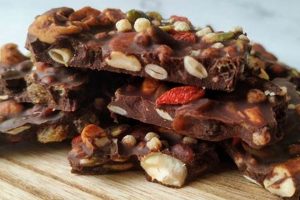
Vegan white chocolate melts serve as a base for creating vegan bark and dessert bars, where they are combined with dried fruits, nuts, seeds, and other inclusions. The melts provide a cohesive matrix that binds the diverse components together, creating a visually appealing and texturally complex treat. For example, vegan white chocolate bark can be made with cranberries, pistachios, and a sprinkle of sea salt, offering a balanced combination of sweet, salty, and crunchy elements. The setting properties of the melts are essential for achieving a firm and stable structure in bark and dessert bar applications.
In summary, vegan white chocolate melts exhibit a broad spectrum of applications, providing a versatile ingredient for creating plant-based alternatives to traditional desserts and confectionery. Their utility extends from coatings and decorations to ganaches, baked goods, and dessert bars. By understanding their melting characteristics, flavor profile, and setting properties, culinary professionals and home bakers can effectively utilize vegan white chocolate melts to craft delicious and visually appealing treats that cater to vegan dietary preferences.
6. Storage
Proper storage significantly affects the quality and shelf life of vegan white chocolate melts. The primary cause of degradation stems from the instability of cocoa butter and other plant-based fats used in their composition. Fluctuations in temperature and exposure to humidity can induce fat bloom, characterized by a white or grayish film on the surface, altering the texture and appearance of the product. Real-world examples include melts stored near heat sources exhibiting a softened consistency and compromised flavor, while those exposed to fluctuating humidity levels develop bloom, rendering them less appealing and potentially affecting their melting behavior. The significance of appropriate storage lies in maintaining the product’s intended texture, flavor profile, and usability for various culinary applications. Effective storage safeguards against rancidity, crystallization, and absorption of odors, all of which negatively impact the overall quality and sensory experience.
Practical application of storage best practices involves maintaining a consistent, cool, and dry environment. Ideally, vegan white chocolate melts should be stored in an airtight container, away from direct sunlight and strong odors, at a temperature between 60F and 70F (15C and 21C). Refrigeration is generally discouraged unless the ambient temperature exceeds recommended levels, as condensation can form upon removal from the refrigerator, potentially leading to bloom or textural changes. If refrigeration is necessary, wrapping the melts tightly in airtight packaging prior to chilling and allowing them to return to room temperature gradually before opening can mitigate condensation. Proper rotation of stock, using older melts before newer ones, is also crucial in preventing degradation over time. Manufacturers typically provide expiration dates based on recommended storage conditions, and adhering to these guidelines maximizes the product’s longevity and ensures optimal performance.
In conclusion, storage represents a critical component in preserving the integrity and functionality of vegan white chocolate melts. The challenges associated with fat instability and environmental factors necessitate careful attention to storage conditions. By implementing appropriate storage practices, such as maintaining a consistent temperature, protecting against humidity, and adhering to manufacturer recommendations, it is possible to mitigate degradation, extend shelf life, and ensure that the melts retain their desired texture, flavor, and melting properties. This understanding directly contributes to successful and consistent results in culinary applications, minimizing waste and maximizing the value of the product.
Frequently Asked Questions
This section addresses common inquiries regarding the characteristics, usage, and storage of vegan white chocolate melts. The information provided aims to clarify misconceptions and offer practical guidance for optimal utilization.
Question 1: What distinguishes vegan white chocolate melts from traditional white chocolate?
The primary distinction lies in the composition. Traditional white chocolate contains dairy milk solids, whereas vegan white chocolate melts utilize plant-based alternatives such as rice milk powder, oat milk powder, or coconut cream to replicate the creamy texture. This difference necessitates adjustments in formulation and processing to achieve comparable melting characteristics and flavor profiles.
Question 2: Do all vegan white chocolate melts possess the same flavor?
No, the flavor varies depending on the ingredients and manufacturing process. Products using coconut milk powder may exhibit a coconut undertone, while those with cashew butter may have a subtle nutty flavor. Sweeteners such as agave or maple syrup also impart distinct flavor nuances. Therefore, it is crucial to review the ingredient list and product descriptions to select a melt that aligns with the intended culinary application.
Question 3: Why did my vegan white chocolate melts seize during melting?
Seizing, the thickening and clumping of the melt, is often caused by water contamination. Even a small amount of moisture can disrupt the fat structure and lead to seizing. Overheating can also contribute to this issue. Employing a double boiler, avoiding direct heat, and ensuring all utensils are completely dry can minimize the risk of seizing.
Question 4: How should vegan white chocolate melts be stored to prevent bloom?
Fat bloom, the white or grayish film on the surface, results from cocoa butter crystals migrating to the surface due to temperature fluctuations. Proper storage involves keeping the melts in an airtight container, away from direct sunlight and strong odors, at a consistent temperature between 60F and 70F (15C and 21C). Refrigeration is generally not recommended unless absolutely necessary, and if employed, the melts should be tightly wrapped to prevent condensation.
Question 5: Are vegan white chocolate melts suitable for tempering?
Yes, tempering is possible, although it can be more challenging than tempering traditional white chocolate due to the different fat composition. Careful temperature control and adherence to established tempering techniques are essential for achieving a smooth, glossy finish and a stable crystalline structure. Success requires monitoring the melting point.
Question 6: Can vegan white chocolate melts be used in the same recipes as traditional white chocolate?
Generally, yes, but adjustments may be necessary. Due to variations in fat content and melting behavior, slight modifications to recipes might be required to achieve optimal results. For example, reducing the amount of liquid in a ganache recipe or adding a small amount of vegetable shortening to improve the smoothness of the melt can be beneficial. Experimentation and careful observation are key to adapting recipes successfully.
Understanding the unique properties of these melts is crucial for successful culinary applications, and proper handling/storage.
The following section will provide recipes using vegan white chocolate melts.
Conclusion
This examination has elucidated the multifaceted nature of vegan white chocolate melts, dissecting their composition, melting behavior, textural nuances, flavor profiles, diverse applications, and optimal storage practices. The absence of dairy necessitates careful selection and manipulation of plant-based ingredients to achieve a satisfactory substitute for traditional white chocolate. Factors such as cocoa butter content, plant-based milk alternatives, sweeteners, and emulsifiers significantly influence the final product’s characteristics. Proper understanding of these elements is paramount for successful culinary applications.
The ongoing advancements in plant-based ingredient technology and formulation techniques hold the potential to further refine the quality and versatility of vegan white chocolate melts. Continued research and development in this area are critical to meeting the growing demand for accessible and high-quality vegan alternatives in the confectionery and baking industries. Through informed selection and conscientious application, these melts can contribute meaningfully to the expansion of plant-based culinary offerings.