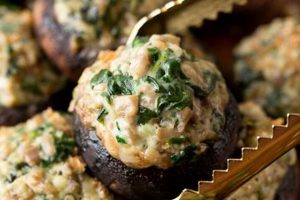
Culinary preparations involving the filling of mushroom caps with plant-based ingredients are versatile appetizers or side dishes. These dishes typically feature large mushroom varieties, such as cremini or portobello, where the stems are removed, and a filling composed of grains, vegetables, herbs, and plant-based cheeses is added. For instance, a common variation includes portobello caps filled with a mixture of quinoa, spinach, garlic, and a cashew-based cheese alternative, baked until tender.
The creation of these plant-based dishes offers several advantages. They provide a nutritious and flavorful option for individuals adhering to vegan diets, offering a satisfying alternative to meat-based dishes. Historically, stuffed mushrooms have been a popular appetizer, with variations existing across numerous cultures. The vegan adaptation allows for the enjoyment of this classic dish while aligning with ethical and dietary principles.
The following article will explore various plant-based filling options, preparation techniques, and baking instructions to facilitate the creation of satisfying and flavorful mushroom-based appetizers. Furthermore, it will address common challenges and solutions encountered during the cooking process.
Preparation Guidelines
The subsequent guidelines provide essential information for achieving optimal results when preparing filled mushroom caps with plant-based ingredients.
Tip 1: Mushroom Selection: Select mushroom caps of uniform size and structural integrity. Portobello or large cremini mushrooms are suitable choices due to their ample cavity for filling and robust texture. Inspect for blemishes or signs of degradation prior to use.
Tip 2: Filling Consistency: Ensure the plant-based filling is adequately bound. The inclusion of a binding agent, such as flaxseed meal mixed with water or a vegan cheese alternative, will prevent the filling from crumbling during baking and maintain structural integrity.
Tip 3: Pre-Baking Preparation: Pre-baking the mushroom caps for a short duration can mitigate excess moisture release during the final baking process. A brief 10-minute bake at 350F (175C) is generally sufficient to accomplish this.
Tip 4: Seasoning Application: Season the mushroom caps both before and after filling. A light coating of olive oil, salt, and pepper prior to filling enhances the mushroom’s inherent flavor. Adjust seasoning in the filling according to taste preferences.
Tip 5: Baking Temperature and Time: Employ a moderate oven temperature, typically 375F (190C), to ensure even cooking of both the mushrooms and the filling. Baking time will vary depending on the density of the filling, but generally ranges from 20 to 30 minutes, or until the mushrooms are tender.
Tip 6: Texture Enhancement: Incorporate textural elements into the filling. Toasted breadcrumbs, chopped nuts, or finely diced vegetables provide a contrasting texture that enhances the overall sensory experience.
Tip 7: Flavor Pairing: Carefully consider flavor pairings when selecting filling ingredients. Earthy mushrooms complement savory flavors such as garlic, herbs, and plant-based cheeses. Acidic elements, such as lemon juice or balsamic vinegar, can provide balance and brightness.
Adhering to these preparation guidelines will contribute to the creation of appetizers or side dishes that are both visually appealing and palatable. Proper execution ensures the optimal integration of flavors and textures.
The subsequent sections will delve into specific filling recipes and advanced techniques for creating distinctive and elevated filled mushroom appetizers.
1. Ingredient Optimization

Ingredient optimization, in the context of plant-based filled mushroom compositions, is the meticulous selection of components to maximize nutritional density and palatability. The selection process directly impacts both the health benefits and the flavor profile of the final dish. For example, using nutrient-rich fillings such as quinoa, lentils, or wild rice instead of solely relying on breadcrumbs substantially increases the fiber and protein content. Similarly, incorporating a diverse array of vegetables, like finely chopped spinach, kale, or bell peppers, enhances vitamin and mineral intake.
The optimization process extends to flavor enhancement through strategic ingredient choices. Employing high-quality herbs like thyme, rosemary, or sage complements the earthy flavor of the mushrooms while contributing antioxidants. The selection of plant-based cheeses also plays a crucial role. Cashew-based cheeses, for instance, provide a creamy texture and a subtle nutty flavor, while nutritional yeast offers a savory, umami-rich element. Furthermore, the use of premium olive oil or balsamic vinegar can elevate the overall taste experience, adding depth and complexity to the plant-based filling.
Effective ingredient optimization necessitates a comprehensive understanding of both nutritional profiles and flavor interactions. The conscious selection of ingredients allows for the creation of mushroom dishes that are not only aligned with dietary preferences but also offer substantial health benefits and a refined culinary experience. A carefully planned approach to ingredient selection is therefore indispensable for achieving optimal outcomes in plant-based cuisine.
2. Flavor Complementarity

Flavor complementarity, the principle of combining ingredients with inherently compatible or contrasting yet harmonious tastes, is a cornerstone of successful plant-based filled mushroom compositions. The judicious application of this principle elevates a simple dish into a nuanced culinary experience.
- Earthy and Umami Pairing
Mushrooms inherently possess an earthy flavor profile. Complementing this with umami-rich ingredients such as sun-dried tomatoes, roasted vegetables, or nutritional yeast deepens the savory complexity of the filled mushroom. The umami notes amplify the mushroom’s natural flavor, creating a more satisfying and robust taste.
- Herbaceous and Aromatic Infusion
Fresh or dried herbs introduce aromatic dimensions that enhance the overall sensory experience. Thyme, rosemary, sage, or parsley, when incorporated into the filling, provide layers of subtle flavors that cut through the richness of the other ingredients. Careful selection based on the specific dish is essential; for example, thyme and rosemary often pair well with hearty grains and root vegetables, while parsley offers a fresh, vibrant counterpoint to richer fillings.
- Acidic Brightness and Balance
Introducing a touch of acidity, such as lemon juice, balsamic vinegar, or a splash of dry white wine, provides a counterbalance to the earthiness and richness of the other components. This acidic element brightens the flavors, preventing the dish from becoming overly heavy and offering a refreshing counterpoint that stimulates the palate.
- Textural Contrast and Flavor Release
Flavor complementarity extends beyond taste to encompass textural elements. Incorporating toasted nuts, seeds, or breadcrumbs not only introduces textural contrast but also releases additional flavor compounds when chewed. The combination of smooth, soft fillings with crunchy elements creates a more engaging and complete sensory experience.
By thoughtfully considering these facets of flavor complementarity, one can transform plant-based filled mushrooms into sophisticated culinary offerings. The strategic combination of ingredients not only enhances the individual flavors but also creates a synergistic effect, resulting in a dish that is greater than the sum of its parts.
3. Textural Contrast

The integration of textural contrast in the preparation of plant-based filled mushroom dishes significantly influences the overall sensory experience. Varying textures prevent monotony and enhance the palatability of the dish, contributing to a more engaging and satisfying culinary outcome.
- Mushroom Cap Firmness
The inherent firmness of the mushroom cap provides a foundational texture. Selecting mushroom varieties with varying levels of firmness, such as the dense portobello or the more delicate cremini, introduces an initial textural element. Proper cooking, avoiding over-softening, preserves this inherent texture.
- Filling Crunchiness
The addition of crunchy components to the filling creates a counterpoint to the softer mushroom cap. Toasted breadcrumbs, chopped nuts (such as walnuts or pecans), or crispy fried onions provide this textural contrast. The degree of crunchiness can be adjusted to suit preference, ranging from a subtle hint of texture to a more pronounced crispness.
- Creamy Emulsion within Filling
The incorporation of a creamy element within the filling introduces a smooth, velvety texture. Plant-based cheese alternatives, pured vegetables, or a bchamel sauce prepared with plant-based milk contribute to this sensation. The contrast between the creamy filling and the firmer mushroom cap and crunchy components enhances the dish’s complexity.
- Vegetable Varied Textures
Including vegetables with diverse textures within the filling further enriches the textural profile. Finely diced vegetables that soften during cooking (e.g., onions, peppers) provide a different sensation compared to vegetables that retain some crispness (e.g., water chestnuts, celery). Strategic vegetable selection contributes to a more nuanced and engaging textural experience.
In summation, the deliberate manipulation of textural contrast is paramount in elevating plant-based filled mushroom creations. By carefully considering the interplay between the mushroom cap’s firmness, the filling’s crunchiness and creaminess, and the varied textures of included vegetables, a multi-sensory experience that enhances both the appreciation and enjoyment of the dish is achieved. This careful attention to texture, alongside flavor considerations, distinguishes an exceptional dish from a merely adequate one.
4. Thermal Management

Thermal management, encompassing precise temperature control and heat distribution, is critical in the preparation of filled mushroom compositions, particularly those adhering to plant-based guidelines. The application of appropriate thermal principles ensures optimal texture, flavor development, and overall culinary success.
- Pre-Baking Considerations
The practice of pre-baking mushroom caps addresses the inherent moisture content within the fungi. Excess moisture during the primary baking phase can result in a soggy texture and hinder the Maillard reaction, which contributes to browning and flavor enhancement. Pre-baking at a moderate temperature (e.g., 350F/175C) for a limited duration (e.g., 10-15 minutes) allows for partial moisture removal without compromising the mushroom’s structural integrity.
- Baking Temperature Regulation
Maintaining a consistent baking temperature is essential for uniform cooking of both the mushroom caps and the plant-based filling. An oven temperature within the range of 350-375F (175-190C) promotes even heat distribution, ensuring that the filling is thoroughly cooked without causing excessive browning or burning of the mushroom exterior. Deviations from this temperature range can lead to uneven cooking and compromised texture.
- Fillings and Heat Transfer
The thermal properties of the plant-based filling directly influence the baking time required. Denser fillings, such as those containing grains or legumes, necessitate longer baking durations to ensure that the internal temperature reaches a safe and palatable level. Conversely, fillings with a higher moisture content may require adjustments to baking time or temperature to prevent excessive sogginess. Strategic filling composition is paramount to facilitating efficient heat transfer.
- Post-Baking Thermal Equilibrium
Following the baking process, a brief period of resting allows for thermal equilibrium to be established throughout the dish. This resting phase facilitates the redistribution of moisture and heat, resulting in a more cohesive and flavorful final product. Furthermore, it allows the filling to set slightly, preventing it from spilling out upon serving.
Effective thermal management, encompassing pre-baking moisture control, regulated baking temperature, considerations for filling composition, and post-baking equilibrium, is a prerequisite for achieving superior quality in plant-based filled mushroom preparations. Adherence to these principles ensures that the dishes are not only aesthetically appealing but also possess optimal texture and flavor characteristics.
5. Visual Presentation

The aesthetic appeal of culinary preparations significantly influences the initial perception and overall dining experience. In the context of plant-based filled mushroom recipes, visual presentation extends beyond mere decoration, serving as a critical component in conveying quality, flavor expectations, and culinary intention.
- Color Palette Considerations
The selection and arrangement of ingredients with distinct color profiles contribute to the visual dynamism of the dish. Employing a spectrum of colors, such as the deep brown of roasted mushrooms, the vibrant green of fresh herbs, and the contrasting hues of included vegetables (e.g., red bell peppers, yellow corn), creates a visually stimulating composition. The absence of diverse colors can result in a dish that appears monotonous, potentially diminishing its perceived desirability. In the context of plant-based cuisine, where visual cues often substitute for familiar meat-based appearances, a vibrant color palette is particularly important.
- Symmetrical and Asymmetrical Arrangement
The arrangement of the filled mushrooms on a serving platter can impact the perceived elegance and sophistication of the dish. A symmetrical arrangement, characterized by balanced placement and uniform spacing, conveys a sense of order and precision. Conversely, an asymmetrical arrangement, while less formal, can create a dynamic and visually interesting composition. The choice between symmetry and asymmetry depends on the intended aesthetic and the overall style of the presentation. Considerations include the size and shape of the serving platter, as well as the surrounding table setting.
- Garnish and Accoutrements
The strategic use of garnishes and accompanying elements enhances the visual appeal of plant-based filled mushrooms. Fresh herbs, such as chopped parsley or thyme, provide a burst of color and visual texture. A drizzle of balsamic glaze or a scattering of toasted nuts adds a glossy sheen and textural contrast. The selection of appropriate garnishes should complement the flavor profile of the dish, avoiding elements that clash or detract from the overall aesthetic. The quantity of garnish should be carefully controlled to avoid overwhelming the main dish.
- Serving Vessel Selection
The choice of serving dish is an integral component of visual presentation. The color, shape, and material of the serving vessel can either enhance or detract from the visual appeal of the plant-based filled mushrooms. A neutral-colored platter allows the colors of the dish to take center stage, while a textured or patterned dish adds visual interest. The size of the serving vessel should be appropriate for the quantity of mushrooms being served, avoiding overcrowding or excessive empty space. The selection of serving utensils should also be considered, opting for implements that complement the overall aesthetic of the presentation.
Effective visual presentation, encompassing color palette considerations, arrangement, garnishing, and serving vessel selection, is a significant factor in the overall enjoyment of plant-based filled mushroom recipes. A thoughtfully presented dish enhances the diner’s anticipation and appreciation, contributing to a more fulfilling and memorable culinary experience. This is particularly critical in promoting plant-based cuisine, where appealing to visual senses can overcome preconceived notions or biases.
Frequently Asked Questions
The following addresses common inquiries regarding the formulation and execution of mushroom dishes that are both plant-based and appealing.
Question 1: What mushroom varieties are best suited for stuffing purposes?
Portobello and large cremini mushrooms offer ample cavity space and structural integrity conducive to containing fillings. Smaller varieties may present challenges in terms of filling capacity and ease of handling.
Question 2: How is crumbling of the filling prevented during the baking process?
Incorporating binding agents such as flaxseed meal mixed with water, chia seeds, or plant-based cheese alternatives effectively prevents the filling from disintegrating during baking.
Question 3: Is pre-baking of the mushroom caps a necessary step?
Pre-baking minimizes the release of excess moisture during the primary baking phase, thereby preventing a soggy texture. While not strictly essential, it is a recommended practice for optimal results.
Question 4: What are appropriate oven temperatures for achieving optimal texture and doneness?
A moderate oven temperature, typically ranging from 350F (175C) to 375F (190C), facilitates even cooking of both the mushroom and the plant-based filling, ensuring a balanced texture and preventing scorching.
Question 5: How can the flavor profile of the filling be effectively enhanced?
Strategically employing herbs, spices, and acidic elements such as lemon juice or balsamic vinegar intensifies the flavor profile of the plant-based filling, complementing the earthy notes of the mushrooms.
Question 6: What considerations are pertinent to visual presentation?
Arranging the filled mushrooms on a serving platter in a visually appealing manner, incorporating garnishes, and selecting a serving vessel that complements the dish enhance the overall dining experience.
In summary, careful attention to mushroom selection, filling consistency, baking parameters, flavor enhancement, and visual presentation contributes to successful plant-based mushroom dishes.
The subsequent section will delve into advanced techniques for expanding the repertoire of vegan stuffed mushroom recipes.
Conclusion
The preceding exploration of “vegan stuffed mushroom recipes” has delineated essential considerations for optimal preparation, including ingredient selection, thermal management, textural contrast, and visual presentation. These factors collectively contribute to the successful creation of appetizing and nutritionally sound plant-based culinary offerings.
Continued refinement of preparation techniques and exploration of diverse plant-based ingredient combinations are encouraged to further elevate the appeal and versatility of these dishes. The creation of these recipes represents a substantive step toward more sustainable and ethical culinary practices. Further investigation and implementation will only increase these preparations value and significance.