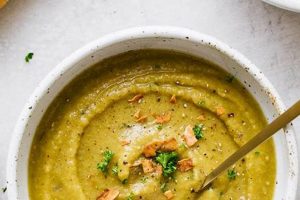
A plant-based dish featuring the starchy texture of potatoes combined with the nutritional density of kale, simmered in a vegetable broth to create a comforting and hearty meal. This preparation omits all animal products, relying solely on ingredients derived from plants for flavor and substance. It serves as an example of how traditional comfort food can be adapted to meet dietary restrictions or preferences.
This particular culinary creation offers a nutrient-rich alternative to heavier, cream-based soups. The combination of fiber from the vegetables and complex carbohydrates from the potato can contribute to sustained energy levels. Moreover, it aligns with dietary guidelines promoting increased vegetable consumption and reduction of animal product intake, potentially leading to improved health outcomes. This type of recipe likely emerged from home cooking traditions centered on resourcefulness and maximizing available seasonal produce.
The following sections will explore various aspects of crafting this wholesome dish, from ingredient selection and preparation techniques to flavor enhancements and serving suggestions. Further considerations will include its nutritional profile and potential variations that cater to diverse tastes and dietary needs.
Crafting a Superior Vegan Potato and Kale Soup
The creation of a flavorful and satisfying plant-based potato and kale soup requires careful attention to detail. Adhering to the following tips will assist in achieving a well-balanced and nutritious meal.
Tip 1: Prioritize Quality Produce: Select firm, unblemished potatoes and vibrant, dark green kale. The quality of the ingredients directly impacts the flavor and texture of the final product. Consider using Yukon Gold potatoes for a creamy texture or red potatoes for a slightly firmer bite.
Tip 2: Employ Aromatic Foundations: Begin by sauting diced onions, garlic, and celery in olive oil. These aromatics form the flavor base of the soup. Ensure they are cooked until softened and fragrant before adding other ingredients. Leeks can also be incorporated for a subtle sweetness.
Tip 3: Deglaze with White Wine (Optional): After sauting the aromatics, deglaze the pot with a splash of dry white wine. This process lifts any browned bits from the bottom of the pot, adding depth of flavor. Allow the wine to reduce slightly before proceeding.
Tip 4: Utilize Vegetable Broth Wisely: Opt for a high-quality vegetable broth with a low sodium content. Consider making your own broth from vegetable scraps for a more flavorful and cost-effective option. The broth serves as the primary liquid component of the soup.
Tip 5: Control Kale Bitterness: Kale can possess a slightly bitter taste. To mitigate this, remove the tough stems and massage the kale leaves with olive oil and a pinch of salt before adding them to the soup. This helps to break down the cellular structure and reduce bitterness.
Tip 6: Master the Potato Texture: Achieving the desired potato texture is crucial. For a creamy soup, partially mash some of the potatoes during the cooking process. Alternatively, blend a portion of the soup with an immersion blender to create a smoother consistency. If prefer a chunkier soup, leave the potatoes cubed.
Tip 7: Season Judiciously: Season the soup throughout the cooking process. Salt and pepper are essential, but consider adding other herbs and spices such as bay leaf, thyme, rosemary, or smoked paprika to enhance the flavor profile. Taste and adjust seasonings as needed.
Tip 8: Garnish Thoughtfully: Garnish the finished soup with a drizzle of olive oil, a sprinkle of red pepper flakes, or a dollop of vegan sour cream or yogurt. These garnishes add visual appeal and complement the flavors of the soup.
By adhering to these guidelines, the resulting plant-based potato and kale soup will be a flavorful, nutritious, and satisfying culinary experience, highlighting the versatility and health benefits of plant-based cuisine.
The following section will delve into potential variations and ingredient substitutions to further customize this versatile recipe.
1. Ingredients' freshness

Ingredient freshness significantly impacts the flavor profile and nutritional value of a plant-based potato and kale soup. Employing recently harvested or acquired ingredients directly translates to enhanced taste and a greater retention of vitamins and minerals, ultimately contributing to a more satisfying and healthful dish.
- Potato Quality and Texture
Fresh potatoes, characterized by their firm texture and lack of sprouting or discoloration, possess a naturally sweeter flavor and cook more evenly. Older potatoes, on the other hand, may exhibit a bitter taste and a mushy consistency when cooked, negatively affecting the soup’s overall texture and palatability. The starch content of fresh potatoes also contributes to a desirable creaminess, which can be critical in a plant-based soup where dairy is absent.
- Kale’s Nutritional Density and Flavor
Fresh kale, identifiable by its vibrant green color and crisp leaves, boasts a higher concentration of vitamins, minerals, and antioxidants compared to wilted or yellowing kale. The flavor of fresh kale is also notably milder, reducing the potential for bitterness that can sometimes overpower a soup. This milder flavor allows the other ingredients, such as the potatoes and aromatics, to contribute more effectively to the overall taste profile.
- Aromatic Intensity of Herbs and Vegetables
The freshness of aromatic vegetables, such as onions, garlic, and celery, directly correlates with their aromatic intensity. Freshly harvested or recently purchased aromatics release more potent flavors when sauted, creating a more robust and complex flavor base for the soup. The use of dried or aged aromatics, while convenient, often results in a diminished flavor impact, potentially leading to a blander final product.
- Broth Composition and Integrity
A freshly prepared vegetable broth, crafted from seasonal produce scraps, offers a superior flavor and nutrient profile compared to commercially produced broths, which may contain added sodium, preservatives, and artificial flavors. The vibrant flavors of freshly prepared broth enhance the overall depth of the soup, providing a more authentic and satisfying culinary experience. Furthermore, controlling the ingredients in a homemade broth ensures the absence of unwanted additives.
In conclusion, prioritizing the freshness of all componentsfrom the potatoes and kale to the aromatics and brothis paramount in crafting a truly exceptional plant-based potato and kale soup. The resulting dish will not only be more flavorful and nutritious but will also showcase the inherent qualities of plant-based cuisine at its finest.
2. Broth's quality

The quality of the broth serves as a foundational element in defining the overall character of a plant-based potato and kale soup. The broth is not merely a liquid medium; it functions as a primary flavor carrier, influencing the depth, complexity, and nutritional profile of the final dish. A well-crafted broth can elevate a simple combination of potatoes and kale into a nuanced and satisfying culinary experience, while a poorly executed broth can result in a bland or unpalatable outcome. The impact is analogous to that of a canvas on a painting; the quality of the base dictates the potential for the artwork layered upon it.
The selection of broth type is critical. Commercial vegetable broths, while convenient, often contain high levels of sodium and lack the depth of flavor achievable through homemade preparations. For instance, a homemade broth simmered with roasted vegetable scraps such as onion peels, carrot tops, and celery ends contributes a richer, more complex flavor profile than a commercially available alternative. Furthermore, the use of specific herbs and spices during the broth-making process such as bay leaves, thyme, or peppercorns can further enhance the soup’s character, complementing the inherent flavors of the potatoes and kale. The difference can be stark: a soup made with a bland, store-bought broth might taste flat and one-dimensional, whereas a soup crafted with a flavorful, homemade broth will exhibit a more vibrant and layered taste. Moreover, homemade broths allow for greater control over sodium content, a particularly important consideration for individuals adhering to low-sodium diets.
In conclusion, the choice and preparation of the broth are paramount to the success of a plant-based potato and kale soup. While other factors, such as the quality of the potatoes and kale themselves, also contribute to the final product, the broth serves as the essential building block upon which all other flavors are layered. Prioritizing a high-quality broth, whether homemade or carefully selected from commercial options, represents a fundamental step in creating a flavorful and nutritionally beneficial dish. The challenge lies in sourcing or preparing a broth that balances depth of flavor with considerations for sodium content and ingredient integrity, but the effort is demonstrably worthwhile in the final culinary result.
3. Kale preparation

Kale preparation significantly affects the palatability and nutritional contribution of this green in plant-based potato and kale soup. Raw kale possesses a fibrous texture and a naturally bitter flavor profile. If introduced directly into the soup without prior treatment, these characteristics can negatively impact the overall eating experience, potentially rendering the dish unappetizing. Effective kale preparation methods aim to mitigate these issues, enhancing both the texture and taste of the vegetable within the soup.
One common and effective technique involves massaging the kale leaves with a small amount of olive oil, lemon juice, or vinegar and salt. This process breaks down the tough cellular structure of the kale, tenderizing the leaves and reducing their bitterness. The acidity of the lemon juice or vinegar further contributes to flavor enhancement, complementing the earthy notes of the kale. Another method involves briefly blanching the kale in boiling water before adding it to the soup. Blanching softens the leaves and diminishes bitterness while preserving the vegetable’s vibrant green color. Chopping the kale into smaller pieces is also crucial, as larger pieces can remain tough and difficult to chew even after cooking in the soup. Failure to properly prepare the kale can result in a soup with an unpleasantly chewy texture and a dominant bitter flavor, detracting from the other carefully selected ingredients.
Proper kale preparation transforms what could be an unappealing component into a valuable addition to the soup. The techniques outlined contribute to a final product that is more flavorful, texturally satisfying, and nutritionally beneficial. Understanding the relationship between kale preparation and the overall success of the soup underscores the importance of this step in the culinary process, ensuring a palatable and wholesome plant-based meal. The challenges associated with preparing this leafy green are outweighed by the improved quality of the finished product.
4. Potato texture

Potato texture is a critical determinant of the overall character and palatability of plant-based potato and kale soup. The potato’s structural integrity directly impacts the soup’s viscosity, mouthfeel, and flavor delivery, thereby influencing the consumer’s sensory experience.
- Starch Release and Soup Consistency
The degree to which a potato releases starch during cooking dictates the soup’s consistency. High-starch potatoes, such as Russets, tend to break down more readily, contributing to a creamier, thicker texture. Conversely, low-starch potatoes, like red potatoes, maintain their shape, resulting in a chunkier soup. The selection of potato variety therefore allows for precise control over the final viscosity of the preparation.
- Potato Variety and Flavor Profile
Different potato varieties exhibit distinct flavor profiles that complement the other ingredients in the soup. Yukon Gold potatoes offer a buttery, slightly sweet flavor that enhances the overall richness of the dish. Red potatoes, with their subtly earthy taste, provide a contrasting flavor dimension. The intentional selection of a potato variety based on its flavor characteristics contributes to a more complex and nuanced taste experience.
- Cooking Method and Potato Integrity
The cooking method employed influences the structural integrity of the potato. Boiling potatoes whole or in large chunks minimizes starch release, preserving their shape and resulting in a chunkier soup. Conversely, dicing potatoes into smaller pieces and simmering them for an extended period encourages starch release, contributing to a creamier consistency. Adjusting the cooking method allows for fine-tuning of the potato’s texture.
- Balancing Creaminess and Texture
An optimal plant-based potato and kale soup balances creaminess and texture. Overly creamy soups can lack substance, while overly chunky soups may prove difficult to eat. Employing a combination of potato varieties, varying cooking times, and strategic mashing or blending can achieve this balance. The goal is to create a soup that is both satisfying in terms of texture and flavor.
Ultimately, the skillful manipulation of potato texture contributes significantly to the success of plant-based potato and kale soup. By considering starch release, potato variety, cooking method, and textural balance, a chef can craft a dish that is both visually appealing and sensorially pleasing, showcasing the versatility of the potato in plant-based cuisine.
5. Flavor balance

Flavor balance is a critical determinant of the overall success of a plant-based potato and kale soup, influencing its appeal and satiating qualities. The inherent flavors of potatoes and kale, while wholesome, require skillful manipulation to avoid a monotonous or underwhelming culinary experience. The earthy notes of potatoes, the slight bitterness of kale, and the potentially bland background of vegetable broth necessitate a strategic approach to seasoning and ingredient pairing. Without intentional flavor balancing, the resulting soup may lack depth, complexity, and the capacity to satisfy the palate.
Achieving flavor balance in this preparation involves several key considerations. The judicious use of aromatics, such as sauted onions, garlic, and celery, forms the foundation of the flavor profile, adding savory depth and complexity. Employing acidic elements, such as a splash of lemon juice or apple cider vinegar, counteracts the earthiness of the potatoes and the bitterness of the kale, providing brightness and balance. Herbs and spices, including thyme, rosemary, smoked paprika, or a pinch of red pepper flakes, contribute additional layers of flavor, enhancing the soup’s overall character. Salt plays a crucial role in intensifying existing flavors and unifying the various components. An under-salted soup will taste bland, while an over-salted soup will be unpalatable. Real-world examples demonstrate the practical significance of flavor balance. A soup lacking sufficient acid may taste heavy and one-dimensional, while a soup lacking sufficient salt may taste flat and uninspired. A soup with an overpowering bitterness from kale suggests inadequate preparation or an imbalance in flavor proportions.
In conclusion, flavor balance is not merely an aesthetic consideration but a fundamental requirement for creating a compelling and satisfying plant-based potato and kale soup. The skillful manipulation of aromatics, acids, herbs, spices, and salt is essential for transforming simple ingredients into a nuanced and flavorful culinary experience. Challenges in achieving flavor balance often stem from a lack of awareness of ingredient interactions or a failure to adjust seasonings throughout the cooking process. However, with attention to detail and a willingness to experiment, it is possible to create a soup that showcases the inherent qualities of potatoes and kale while delivering a balanced and satisfying flavor profile.
Frequently Asked Questions
The following questions address common inquiries and concerns regarding the preparation, nutrition, and suitability of a plant-based potato and kale soup.
Question 1: Is this soup nutritionally complete as a meal?
While this soup provides a source of carbohydrates, fiber, and vitamins, a complete meal typically requires a broader range of nutrients. Consider supplementing the soup with a source of plant-based protein, such as lentils or beans, and healthy fats, such as avocado or nuts, to ensure a more balanced nutritional profile.
Question 2: Can frozen kale be substituted for fresh kale?
Frozen kale can serve as a viable substitute for fresh kale, particularly when fresh kale is unavailable or out of season. However, frozen kale may have a slightly softer texture and a less pronounced flavor than fresh kale. Ensure the frozen kale is thoroughly thawed and excess moisture is removed before adding it to the soup.
Question 3: How can the soup be thickened without using dairy?
Various methods can be employed to thicken the soup without relying on dairy products. Blending a portion of the soup with an immersion blender or transferring it to a standard blender creates a creamy consistency. Alternatively, incorporating a thickening agent such as cornstarch or arrowroot starch, mixed with cold water to form a slurry, can effectively thicken the soup.
Question 4: What are suitable alternatives to potatoes for individuals with dietary restrictions?
Individuals seeking to reduce their carbohydrate intake or manage blood sugar levels can substitute potatoes with lower-carbohydrate alternatives, such as cauliflower, turnips, or celeriac. These vegetables offer similar textural qualities and contribute to the overall heartiness of the soup.
Question 5: How long can this soup be safely stored?
Plant-based potato and kale soup can be safely stored in an airtight container in the refrigerator for up to three to four days. Ensure the soup is cooled completely before refrigerating. For longer storage, the soup can be frozen for up to two to three months. Thaw completely before reheating.
Question 6: Is it possible to prepare this soup in advance?
This soup lends itself well to preparation in advance. The flavors often meld and deepen over time, resulting in an enhanced taste. Preparing the soup a day or two before serving allows for optimal flavor development. However, be mindful that the potatoes may absorb more liquid as the soup sits, potentially requiring the addition of more broth before serving.
In summary, plant-based potato and kale soup is a versatile dish that can be adapted to accommodate various dietary needs and preferences. With careful consideration of ingredient selection, preparation techniques, and storage guidelines, this soup can serve as a nutritious and satisfying meal option.
The subsequent section will explore potential variations and recipe modifications to further personalize the preparation of this wholesome soup.
Conclusion
The preceding analysis has elucidated various aspects of crafting a palatable and nutritionally sound plant-based potato and kale soup. From emphasizing ingredient freshness and broth quality to mastering kale preparation, potato texture, and flavor balance, these considerations contribute to a superior culinary outcome. Moreover, the FAQs addressed common concerns regarding nutritional completeness, ingredient substitutions, and storage protocols.
The systematic approach outlined serves as a foundation for both novice and experienced cooks seeking to incorporate this dish into their repertoire. The exploration underscores the potential of simple plant-based ingredients to coalesce into a satisfying and healthful meal. Further investigation into regional variations and ingredient sourcing may yield additional insights and refinements to this versatile culinary preparation. The opportunity to expand knowledge of plant-based cuisine remains substantial.