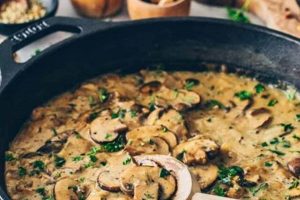
A creamy, plant-based alternative to traditional Alfredo sauce, this variation incorporates mushrooms to enhance its flavor profile. Typically, the standard recipe relies heavily on dairy products such as butter and cream. This version substitutes these with ingredients like cashews, coconut milk, or cauliflower to achieve a similar texture and richness, while remaining suitable for individuals following a vegan diet. Mushrooms contribute an earthy umami element, deepening the overall taste. An example of its use is as a topping for pasta, vegetables, or even as a component in baked dishes.
The appeal of this dish lies in its ability to provide a satisfying and flavorful meal option that aligns with ethical and dietary restrictions. It offers a healthier alternative to its dairy-laden counterpart, often lower in saturated fat and cholesterol. Furthermore, its creation reflects the growing awareness of plant-based eating and the increasing availability of ingredients that allow for the reimagining of classic recipes. The historical context reveals a shift towards more inclusive culinary practices, catering to a wider range of preferences and needs.
The following sections will explore the various ingredients used in its preparation, effective cooking techniques to achieve optimal flavor and texture, and potential nutritional benefits. The versatility of this sauce will also be highlighted, demonstrating its adaptability to different culinary applications.
Essential Preparation Guidance
Achieving optimal flavor and texture in this recipe requires careful attention to ingredient selection and preparation methods. The following tips aim to provide practical advice for a successful outcome.
Tip 1: Cashew Preparation is Crucial: If using cashews as a base, soak them in hot water for at least 30 minutes, or preferably longer, to ensure they blend into a perfectly smooth and creamy sauce. Insufficient soaking can result in a grainy texture.
Tip 2: Mushroom Selection Impacts Flavor: Different mushroom varieties offer varying flavor profiles. Cremini or shiitake mushrooms provide a richer, more intense flavor, while button mushrooms offer a milder taste. Experiment to find a preferred combination.
Tip 3: Sauting Technique Enhances Depth: Properly sauting the mushrooms before adding them to the sauce is essential. Allow the mushrooms to release their moisture and brown slightly to develop a deeper, more complex flavor. Avoid overcrowding the pan.
Tip 4: Nutritional Yeast Adds a Cheese-like Note: Nutritional yeast imparts a savory, umami flavor reminiscent of cheese. Begin with a small amount and adjust to taste, as overuse can result in an overpowering flavor.
Tip 5: Lemon Juice Balances Richness: A small amount of lemon juice can help balance the richness of the sauce and add a touch of brightness. Add it towards the end of the cooking process and taste frequently.
Tip 6: Consider the Liquid Base: Vegetable broth or pasta water can be used to thin the sauce to the desired consistency. Adjust the amount of liquid based on the thickness of the cashew cream and personal preference.
Tip 7: Seasoning Should Be Precise: Proper seasoning is paramount. Taste the sauce frequently throughout the cooking process and adjust the salt, pepper, and garlic powder accordingly.
By adhering to these guidelines, individuals can successfully create a delicious and satisfying dish. The resulting sauce offers a flavorful and plant-based alternative to traditional Alfredo, suitable for a variety of culinary applications.
The subsequent section will offer insights on the versatility and creative uses of this recipe, expanding on its application in various dishes.
1. Creamy Texture

The achievement of a satisfyingly smooth and rich texture is a critical factor in the overall appeal of a dairy-free mushroom Alfredo sauce. This characteristic contributes significantly to the sensory experience and influences the perception of the sauce as a credible alternative to traditional versions.
- Cashew-Based Emulsions
Cashews, when soaked and blended, form a naturally creamy base. Their high fat content, combined with the emulsifying properties released during blending, result in a texture remarkably similar to dairy cream. In this application, well-soaked cashews are essential for avoiding a grainy consistency in the sauce. If not soaked adequately the sauce will come out grainy.
- Coconut Milk Considerations
Full-fat coconut milk presents another avenue for achieving creaminess. However, careful selection is necessary to avoid an overpowering coconut flavor. The solids from refrigerated coconut milk can be whipped to further enhance the creaminess, contributing to a richer mouthfeel. This process is like dairy-based alfredo.
- Vegetable Purees as Thickeners
Pureed vegetables, such as cauliflower or white beans, can function as thickening agents. These ingredients contribute to the overall body of the sauce without significantly altering the flavor profile, allowing the mushroom and other seasonings to remain prominent. This is great if you do not want to taste cashews or coconut.
- Starch-Based Solutions
A small amount of tapioca starch or cornstarch, bloomed in cold water and added to the simmering sauce, can help achieve the desired viscosity. This technique is particularly useful when other thickening agents are insufficient or when a lighter sauce consistency is preferred. However, starch can lead to a gummy outcome if used incorrectly.
The strategic use of these methods allows for the creation of a dairy-free Alfredo sauce that mirrors the luxurious texture of its traditional counterpart. By understanding the individual contributions of each ingredient and technique, culinary professionals and home cooks can tailor the sauce to achieve a personalized and satisfying result, ultimately enhancing the overall dining experience and expanding the possibilities for plant-based cuisine.
2. Mushroom Umami

Umami, often described as a savory or “meaty” flavor, plays a crucial role in enhancing the overall taste profile of any vegan mushroom Alfredo sauce. Its presence contributes depth and complexity, mimicking the richness typically associated with dairy-based sauces. The incorporation of umami-rich ingredients is thus essential for achieving a satisfying and flavorful plant-based alternative.
- Glutamate Content and Flavor Enhancement
Mushrooms naturally contain glutamate, an amino acid responsible for umami. Different mushroom varieties possess varying levels of glutamate; for instance, dried shiitake mushrooms are particularly potent. The cooking process, especially sauting or roasting, intensifies umami by breaking down proteins and releasing free glutamate. This heightened umami character significantly elevates the savory aspect of the sauce.
- Synergistic Effect with Other Ingredients
Umami interacts synergistically with other ingredients in the sauce. When combined with nutritional yeast, which also contributes umami notes, the overall savory perception is amplified. Similarly, the addition of soy sauce or miso paste, used sparingly, can further enhance the umami profile without overpowering the other flavors. This synergistic effect demonstrates the importance of careful ingredient selection and balance.
- Masking Plant-Based Flavors
The strong umami flavor of mushrooms can effectively mask unwanted plant-based flavors often associated with vegan alternatives. For example, the earthy notes of cashews or the subtle sweetness of coconut milk, commonly used as a base, can be balanced by the intense savory character of the mushrooms. This is important for consumers who are not used to vegan alternatives.
- Sensory Satisfaction and Palatability
Umami contributes significantly to the sensory satisfaction and palatability of the sauce. The presence of umami triggers specific receptors on the tongue, leading to a more complete and fulfilling taste experience. This enhanced sensory perception makes the sauce more appealing, especially to individuals accustomed to the complex flavors of traditional Alfredo.
The strategic incorporation of mushroom umami is paramount in creating a flavorful and convincing version of dairy-free Alfredo sauce. This element not only provides depth and complexity but also balances other flavors, masks unwanted plant-based notes, and enhances the overall sensory experience. By understanding the principles of umami and its interactions with other ingredients, chefs and home cooks can develop versions that appeal to both vegans and those seeking healthier alternatives to classic dishes.
3. Plant-Based Base

The foundation of any successful version resides in its plant-based base. This fundamental element replaces the traditional dairy components of Alfredo sauce, thereby rendering the dish suitable for vegan diets and those seeking dairy-free alternatives. The selection and preparation of this base are crucial for achieving the desired texture, flavor, and nutritional profile.
- Cashew Cream Alternatives
Cashews, when soaked and blended, transform into a creamy base remarkably similar to dairy cream. The process involves softening raw cashews, typically through soaking in hot water, to facilitate a smooth emulsion upon blending. This base provides a rich mouthfeel and neutral flavor, allowing the mushroom and other seasonings to remain prominent. Improperly soaked cashews result in a grainy texture, detracting from the sauce’s overall appeal.
- Coconut Milk Integration
Full-fat coconut milk presents another viable option, offering a creamy consistency and a subtle sweetness. However, it is essential to mitigate the coconut flavor to prevent it from overpowering the other ingredients. Refrigerating the coconut milk beforehand allows the separation of the solids, which can then be whipped to enhance the creaminess. In many versions, it is combined with other ingredients to lessen its noticeable taste.
- Legume-Based Creams
White beans, such as cannellini beans, can be blended into a smooth puree to create a plant-based base. These legumes offer a neutral flavor and contribute to the sauce’s thickness. The beans must be thoroughly cooked before blending to ensure a seamless texture. Vegetable broth is used to thin the puree to the desired consistency. This is not the most common base but can work when done right.
- Seed-Based Foundations
Sunflower seeds, similar to cashews, can be soaked and blended to form a creamy base. These seeds offer a cost-effective alternative and possess a mild flavor that complements the mushroom component. As with cashews, adequate soaking is essential to achieve a smooth texture. These are becoming more popular because cashews can be quite expensive.
The careful selection and preparation of a plant-based base are paramount in creating a flavorful and texturally appealing vegan mushroom Alfredo sauce. Each base option offers unique characteristics, influencing the final product’s overall flavor profile and nutritional content. Understanding these nuances allows for informed decisions, resulting in a sauce that successfully replicates the experience of traditional Alfredo while adhering to plant-based dietary guidelines. Furthermore, as this cuisine grows, expect the above list to grow as well.
4. Nutritional Profile

The nutritional profile constitutes a significant aspect in evaluating the merits of vegan mushroom Alfredo sauce, particularly when contrasted with its traditional dairy-based counterpart. The alterations in ingredient composition yield substantial changes in macronutrient and micronutrient content, influencing its health implications. Examining this profile reveals both advantages and considerations relevant to dietary planning.
A primary distinction resides in the fat composition. Traditional Alfredo sauce is abundant in saturated fat derived from butter and cream, whereas a vegan version typically substitutes these with plant-based fats from cashews, coconut milk, or olive oil. These plant-based fats generally contain a higher proportion of unsaturated fatty acids, which are associated with positive effects on cardiovascular health. For instance, cashew-based sauces provide monounsaturated fats, while coconut milk offers medium-chain triglycerides. The calorie count can be similar but this option contains less saturated fat. Moreover, the elimination of dairy removes cholesterol from the sauce, an additional benefit for individuals concerned about their cholesterol levels.
Fiber content is another crucial difference. Plant-based ingredients such as mushrooms, nuts, and vegetables inherently contribute fiber, a nutrient absent in traditional Alfredo. Fiber aids in digestive health, promotes satiety, and helps regulate blood sugar levels. The increased micronutrient content is also relevant. Mushrooms are a source of B vitamins and selenium, while nutritional yeast often adds B12, a nutrient typically lacking in vegan diets. The understanding of this nutritional profile allows for informed decisions about incorporating vegan mushroom Alfredo sauce into a balanced diet. Careful consideration should be given to portion sizes and the overall dietary context to ensure a well-rounded nutrient intake. Ultimately, this version offers a potentially healthier and ethically aligned alternative to the classic sauce, provided that ingredients are chosen wisely and consumed in moderation.
5. Versatile Application

The utility of vegan mushroom Alfredo sauce extends significantly beyond a simple pasta topping. Its adaptable flavor profile and creamy texture allow for integration into a diverse array of culinary applications, enhancing the appeal of various dishes. This versatility stems from its plant-based composition, which complements both vegetarian and vegan meal plans, and its inherent umami derived from mushrooms, providing a savory depth that pairs well with numerous ingredients. The effect is a product that can transform simple ingredients into satisfying dishes. Understanding this facet is important for maximizing its use and appreciating its value as a culinary tool. The importance of this characteristic to this type of sauce is related to its ability to be used with many types of food.
Examples of practical applications are abundant. It can serve as a base for vegetable gratins, lending richness to roasted vegetables such as broccoli, cauliflower, or asparagus. This sauce can also be incorporated into casseroles, providing a creamy element without relying on dairy. Furthermore, it functions as a flavor enhancer for grain-based dishes, such as risotto or polenta, adding moisture and a savory dimension. On pizza, the sauce presents a dairy-free alternative to traditional cheese-based sauces. Even as a dipping sauce for breadsticks or vegetables, it finds application. This range of uses demonstrates its adaptability and capacity to elevate a multitude of meals. This characteristic of the sauce to adapt to different meals really sets it apart from other sauces.
In summary, the versatile application of plant-based Alfredo sauce highlights its significance in contemporary cuisine. While challenges may exist in achieving consistent results across diverse applications, its inherent flexibility and ability to cater to varied dietary needs render it a valuable culinary asset. The understanding of its characteristics promotes creativity in recipe development and allows for the creation of innovative and satisfying meals.
6. Flavor Harmony
Flavor harmony is a pivotal determinant of the palatability and overall success of vegan mushroom Alfredo sauce. The careful balancing of individual components, from the umami of the mushrooms to the creamy base and subtle seasonings, dictates whether the sauce achieves a cohesive and satisfying taste profile. Disharmony, where one flavor overpowers others or clashes unpleasantly, results in a subpar product that fails to emulate the desired experience of traditional Alfredo. For instance, excessive nutritional yeast can impart an overly cheesy, artificial flavor, while insufficient salt mutes the nuanced tastes of the mushrooms and other ingredients. Achieving this is not always easy and it takes practice.
Consider the interaction between the cashew cream base and the mushroom component. The inherent richness of cashews must be tempered by the earthy notes of the mushrooms and the brightness of lemon juice. Proper sauteing of the mushrooms is essential to develop their umami, but overcooking can lead to a bitter taste. Similarly, the selection of herbs and spices requires careful consideration. Garlic powder, while contributing to the savory profile, must be used sparingly to avoid overwhelming the more delicate flavors. White pepper provides a subtle heat without the assertive taste of black pepper. A real-life example can be seen in recipes that call for different variations of mushrooms. The recipes change in seasonings based on the mushroom profile.
In summation, flavor harmony is not merely an aesthetic consideration but a fundamental requirement for a successful end result. Balancing the diverse elements to create a cohesive and enjoyable taste experience is crucial. This delicate equilibrium demands a thorough understanding of ingredient interactions and careful attention to seasoning. While challenges exist in consistently achieving perfect flavor balance, a well-harmonized recipe stands as a testament to the art and science of plant-based cuisine.
Frequently Asked Questions
This section addresses common inquiries regarding the preparation, ingredients, and characteristics of plant-based mushroom Alfredo sauce. The aim is to provide clarity and address prevalent misconceptions.
Question 1: Is a cashew-free version of plant-based mushroom Alfredo sauce achievable?
Yes, alternatives to cashews exist. Sunflower seeds, white beans, or a combination of cauliflower and nutritional yeast can provide a creamy base. Each substitution alters the final flavor and texture; experimentation is encouraged.
Question 2: How can the mushroom flavor be enhanced within the sauce?
Employing dried mushrooms, particularly shiitake, and rehydrating them in warm water, can intensify the mushroom essence. The rehydration liquid can then be incorporated into the sauce base. Additionally, sauting the mushrooms to achieve a deep browning enhances their umami.
Question 3: What are the appropriate thickening agents for ensuring the correct sauce consistency?
Tapioca starch or cornstarch, when bloomed in cold water prior to addition, can thicken the sauce. Vegetable purees, such as cooked and blended cauliflower, also function as effective thickening agents, adding body without significantly altering the flavor profile.
Question 4: Can this sauce be prepared in advance, and how should it be stored?
The sauce can be prepared in advance and stored in an airtight container in the refrigerator for up to three days. Reheating should be done gently over low heat, stirring frequently to prevent separation. A small amount of vegetable broth or water can be added to restore the original consistency.
Question 5: What are the potential allergen concerns associated with this sauce?
The most common allergen concern is nuts, specifically cashews. Alternatives such as sunflower seeds or white beans should be utilized for individuals with nut allergies. Soy sauce, if included, presents another potential allergen.
Question 6: How does the nutritional profile of plant-based mushroom Alfredo sauce compare to traditional dairy-based Alfredo?
Plant-based versions generally contain less saturated fat and cholesterol and may offer a higher fiber content, depending on the ingredients used. However, the calorie count can be comparable. Careful ingredient selection is essential to optimize the nutritional value.
Understanding these FAQs provides a comprehensive overview of key considerations when preparing and consuming a vegan mushroom Alfredo sauce. The information facilitates informed culinary decisions and addresses common concerns.
The next section explores potential variations and recipe modifications.
Conclusion
This exploration has detailed the intricacies of vegan mushroom Alfredo sauce, emphasizing its plant-based composition, its reliance on mushroom umami for flavor depth, its diverse nutritional profile, and its versatile applications in the culinary realm. The importance of flavor harmony has been stressed, alongside the considerations necessary for achieving optimal texture and taste. Common questions regarding ingredient substitutions, preparation techniques, and allergen concerns have been addressed, providing a thorough understanding of this dish.
The information presented encourages a critical evaluation of dietary choices and the possibilities within plant-based cuisine. While challenges may exist in replicating the exact characteristics of traditional Alfredo sauce, the benefits of this alternativeethical considerations, reduced saturated fat content, and increased fiber intakewarrant further investigation and experimentation. The future of food lies in adapting and innovating, and vegan mushroom Alfredo sauce represents a compelling step in that direction.