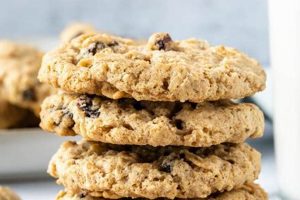
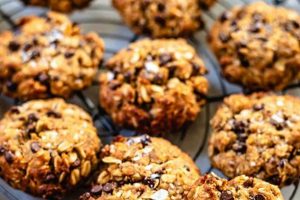
A specific type of plant-based baked treat aims to replicate the characteristics of the famed Levain Bakery cookies. These generally feature a thick, generously sized dough, often including ingredients such as plant-based butter alternatives, flaxseed meal as an egg substitute, and dairy-free chocolate. The desired outcome is a cookie with a crispy exterior and a soft, almost underbaked interior, mirroring the texture of the original non-vegan version.
The growing interest in these treats reflects a broader trend towards plant-based diets and ethical consumption. Their significance lies in demonstrating that beloved desserts can be adapted to accommodate dietary restrictions without sacrificing taste or texture. The adaptation also opens up opportunities for innovation in baking techniques, exploring alternative ingredients and processes to achieve desired results. The adaptation represents a modern take on traditional baking, reflecting changing consumer preferences and ethical considerations.
The subsequent sections will delve deeper into the specifics of creating these particular types of baked goods, addressing ingredient selection, baking techniques, and potential modifications to further enhance their flavor and texture.
Crafting Plant-Based Levain-Style Cookies
Achieving optimal results when producing plant-based, large-format cookies necessitates careful attention to ingredient selection and preparation. The following guidance offers best practices for replicating the texture and flavor profile of traditional baked goods in a vegan format.
Tip 1: Utilize High-Quality Vegan Butter: Selecting a vegan butter with a high fat content is crucial. Lower-quality alternatives may result in a flatter, less flavorful cookie. Test several brands to determine the optimal choice based on taste and performance in baking.
Tip 2: Incorporate Cold Ingredients: The use of cold vegan butter is essential. Employing softened or melted butter will alter the cookie’s texture, producing a thinner, crispier result rather than the desired thick, soft interior. Chilling other ingredients, such as plant-based milk, can also enhance the overall outcome.
Tip 3: Measure Flour Accurately: Employ a kitchen scale for precise flour measurement. Variations in flour density can significantly affect the final product. Over-measuring flour leads to a dry, crumbly cookie; under-measuring produces a flat, greasy outcome.
Tip 4: Employ Flaxseed Meal as an Egg Replacement: A mixture of ground flaxseed and water serves as an effective binder. Allow the mixture to sit for several minutes to thicken before adding it to the batter. This step is important for the cookie’s structure.
Tip 5: Avoid Overmixing the Dough: Overmixing develops the gluten in the flour, resulting in a tough cookie. Mix until the ingredients are just combined. Some visible flour streaks are acceptable.
Tip 6: Chill the Dough Before Baking: Chilling the dough for at least 30 minutes, or ideally longer, prevents excessive spreading during baking. This step is important for maintaining the cookie’s thick, domed shape.
Tip 7: Underbake Slightly: To achieve the characteristic soft interior, remove the cookies from the oven when they are slightly underbaked. The centers should appear soft and slightly doughy. They will continue to cook as they cool.
Tip 8: Incorporate Large Chocolate Chunks: Large pieces of vegan chocolate create pockets of melted chocolate within the cookie, enhancing the overall experience. Consider using a combination of dark and semi-sweet vegan chocolate.
Adhering to these techniques will contribute to the creation of plant-based baked goods with the texture and flavor characteristics associated with the specified style. The resulting product provides a comparable culinary experience to traditional versions while adhering to ethical and dietary guidelines.
The following section will address common challenges encountered during the production of these plant-based cookies and offer solutions for troubleshooting potential issues.
1. Ingredient Substitution
Ingredient substitution forms the core challenge and opportunity in creating plant-based large-format cookies. Replicating the structure and flavor of traditional baked goods requires strategic selection of plant-derived alternatives that mimic the functional properties of conventional ingredients.
- Vegan Butter Alternatives
Vegan butter substitutes play a critical role in emulating the richness and texture of dairy butter. The fat content and melting point of the chosen substitute significantly influence the cookie’s spread, crumb, and overall mouthfeel. High-quality vegan butter, containing a high percentage of fat, is essential to prevent a flat, greasy outcome. Lower-quality options may necessitate adjustments to other ingredients to compensate for deficiencies in fat content.
- Egg Replacers
Eggs contribute to binding, moisture, and leavening in traditional cookies. In plant-based versions, flaxseed meal, aquafaba, or commercial egg replacers serve as substitutes. Each option possesses distinct properties impacting the final texture. Flaxseed meal, when mixed with water, creates a gel-like consistency, providing binding and moisture. Aquafaba, the liquid from canned chickpeas, can be whipped into a meringue-like consistency, adding air and lightness. Understanding these properties is essential for selecting the appropriate replacer for the desired cookie texture.
- Dairy-Free Chocolate
The type of dairy-free chocolate employed influences the flavor profile and melting characteristics of the cookie. Not all vegan chocolates are created equal; some may contain a lower percentage of cocoa butter or utilize alternative sweeteners that affect the taste and texture. Opting for high-quality dairy-free chocolate, preferably with a significant cocoa butter content, ensures a smooth, rich chocolate experience within the baked product.
- Plant-Based Milk
Plant-based milk alternatives like almond, soy, or oat milk offer different fat contents and flavor profiles that subtly impact the cookies taste and moisture. Full-fat oat milk often provides richness and moisture due to its creamy texture and higher fat content. The selection influences the final flavor of these baked goods, so matching the milk to the desired flavor profiles or complementing other plant-based ingredients becomes crucial.
Strategic ingredient substitution is not merely about replacing animal products with plant-based counterparts; it requires a nuanced understanding of the functional roles of each component and the corresponding adjustments needed to achieve the desired sensory attributes of a successful plant-based cookie. Careful consideration of each substitution and iterative experimentation are necessary to develop a recipe that faithfully replicates the indulgent experience of traditional large-format cookies.
2. Dough Consistency

Dough consistency is a critical determinant in the final texture and structure of these plant-based baked goods. Achieving the desired outcome necessitates careful manipulation of ingredients and techniques to create a dough that is both cohesive and malleable, capable of yielding a thick, soft-centered cookie with a slightly crisp exterior.
- Hydration Levels
The ratio of liquid to dry ingredients directly influences dough consistency. Insufficient hydration results in a crumbly, dry cookie, while excessive liquid produces a flat, spread-out product. Plant-based recipes often require adjustments to hydration levels due to the different absorption rates of vegan butter alternatives and egg replacers. Monitoring the dough’s texture throughout the mixing process is essential to ensure the correct consistency is achieved. If the dough appears too dry, adding small amounts of plant-based milk or water can rectify the imbalance; conversely, incorporating more flour can address excessive moisture.
- Fat Content and Type
The type and amount of fat significantly impact dough consistency. Vegan butter alternatives with varying fat contents affect the dough’s spread and tenderness. A high-fat vegan butter tends to produce a richer, softer cookie, while a lower-fat option may result in a drier, cakier texture. Furthermore, the temperature of the vegan butter is crucial. Using cold vegan butter helps to prevent excessive spreading during baking, contributing to the desired thick, domed shape. Conversely, softened or melted vegan butter promotes a flatter, thinner cookie.
- Gluten Development
Gluten development affects the dough’s elasticity and chewiness. Overmixing the dough activates gluten, resulting in a tough, dense cookie. To minimize gluten development, mixing should be kept to a minimum, combining the ingredients until just incorporated. Allowing the dough to rest or chill before baking can also help relax the gluten, promoting a more tender crumb. However, the impact of gluten is less pronounced in plant-based versions due to the absence of eggs, which typically contribute to gluten strengthening.
- Temperature Control
Temperature control throughout the dough-making process plays a pivotal role in influencing its consistency. Using cold ingredients is crucial, particularly when using plant-based butter substitutes, to prevent excessive spreading during baking. Chilling the dough for a specified period prior to baking allows the fat to solidify, further minimizing spread and promoting a thicker, more structured cookie. The duration of chilling impacts the final texture; extended chilling times generally result in a denser, chewier cookie, while shorter chilling periods produce a slightly softer, more delicate texture.
These interplaying variableshydration, fat, gluten, and temperaturedictate the success in crafting a plant-based large-format cookie with the sought-after qualities. An awareness of these considerations, combined with attentive observation during the baking process, yields a final product satisfying the expectations of plant-based and traditional cookie enthusiasts alike.
3. Baking Temperature

Baking temperature exerts a significant influence on the structural integrity and textural characteristics of plant-based large-format cookies. The precise calibration of oven temperature is crucial for achieving the desired crispy exterior and soft, underbaked interior associated with the specific style. Deviations from the recommended temperature range can result in textural inconsistencies and diminished sensory appeal. Inadequate temperatures lead to undercooked centers and a doughy consistency, while excessively high temperatures produce overly browned exteriors and dry, crumbly interiors. The optimal baking temperature range generally falls between 350F and 375F (175C to 190C), depending on oven calibration and specific recipe parameters. The effect of baking temperature can also be compounded by the choice of baking sheet; darker baking sheets tend to absorb more heat, potentially leading to quicker browning of the cookie base.
For instance, a plant-based cookie baked at 325F (160C) may spread excessively before setting, resulting in a thin, flat cookie lacking the desired thickness. Conversely, baking at 400F (200C) might cause the exterior to brown prematurely, leaving the interior uncooked and potentially gummy. Achieving the specific textural contrast necessitates careful monitoring of the baking process and adjustments to temperature and baking time as needed. The selection of baking time and temperature is further influenced by the cookie’s size and the inclusion of ingredients such as chocolate chunks, which melt at varying rates.
In summary, baking temperature serves as a critical control variable in the creation of these plant-based baked goods. Consistent oven calibration, precise temperature management, and attentive monitoring of the baking process are essential for achieving the desired structural and textural attributes. Improper temperature control poses a significant challenge to replicating the characteristic qualities of this specific style, underscoring the importance of this parameter in achieving successful outcomes.
4. Chocolate Type

The selection of dairy-free chocolate significantly impacts the sensory experience of plant-based large-format cookies. The specific type of chocolate determines not only the flavor profile but also the melting characteristics and overall textural contribution to the finished product. Variations in cocoa content, sugar levels, and the inclusion of alternative sweeteners among different brands of dairy-free chocolate contribute to diverse outcomes, affecting the cookie’s sweetness, bitterness, and the formation of molten chocolate pockets within the dough. For example, a dairy-free dark chocolate with a high cocoa percentage will impart a more intense, less sweet flavor compared to a dairy-free milk chocolate alternative. This choice alters the cookie’s overall balance and appeal. Additionally, different formulations of dairy-free chocolate melt at varying temperatures, influencing the molten texture and distribution of chocolate throughout the cookie.
Practical applications of this understanding are crucial for recipe development and adaptation. A baker seeking to create a plant-based large-format cookie with a deeply rich and intensely chocolate flavor might opt for a dark chocolate with a 70% or higher cocoa content. Conversely, a recipe aiming for a sweeter, more approachable flavor profile might incorporate a dairy-free semi-sweet chocolate or even a dairy-free milk chocolate alternative. Furthermore, the size and shape of the chocolate pieces used can influence the distribution of molten chocolate within the cookie. Large chunks of chocolate tend to create more distinct pockets of melted chocolate, while smaller chocolate chips may disperse more evenly throughout the dough. Understanding these relationships enables bakers to tailor their chocolate selection to achieve specific flavor and textural goals.
In conclusion, the choice of dairy-free chocolate is not merely a substitution but a strategic ingredient decision that shapes the final sensory characteristics of plant-based large-format cookies. Careful consideration of cocoa content, sweetness levels, melting properties, and piece size is essential for creating a balanced, flavorful, and texturally appealing product. Challenges in this area often stem from the variability in quality and formulation among different brands of dairy-free chocolate, necessitating careful evaluation and testing to ensure optimal results, underlining its importance in the baking process.
5. Size Optimization

Size optimization in the context of plant-based large-format cookies directly impacts baking consistency, internal texture, and overall presentation. The mass of individual dough portions influences baking time and temperature calibration; larger portions necessitate longer baking times to ensure thorough cooking, while smaller portions require reduced times to prevent excessive browning. The correlation between portion size and internal texture is also significant. A larger dough mass, when properly baked, yields a molten center, whereas a smaller mass is more prone to developing a uniformly cooked interior. As a component of the targeted baked good, size optimization determines whether the cookie exhibits the desired contrast between a crispy exterior and a soft, almost underbaked interior. Real-life examples demonstrate that inconsistent sizing leads to a batch of cookies with varied textures: some may be overbaked and dry, while others may be underbaked and gummy. The practical significance lies in maintaining a consistent product quality and meeting consumer expectations regarding the signature texture.
Further analysis reveals that size optimization is not simply about achieving a uniform mass. It also pertains to the cookie’s diameter and height. A cookie that is too wide may spread excessively during baking, resulting in a thin and brittle product. Conversely, a cookie that is too tall may not bake evenly, leading to a scorched exterior and an uncooked center. In practice, this necessitates careful control over dough handling and placement on the baking sheet. For instance, pre-portioning dough using a scoop of a consistent volume ensures uniformity. Moreover, gentle shaping of the dough into a rounded mound helps to maintain its height during baking. These techniques require attentive execution and are pivotal in replicating the structure and form synonymous with high-quality renditions.
In summary, size optimization represents a key factor influencing the quality and consistency of this particular style of plant-based baked goods. Consistent portioning, proper dough shaping, and attentive temperature regulation directly contribute to the achievement of the desired texture and presentation. Challenges arise from variations in ingredient density and kitchen equipment, which can affect the accuracy of portioning. Overcoming these challenges requires precise measurement, iterative experimentation, and adherence to established best practices. The connection between size optimization and the overall success underscores its critical role in replicating the desired attributes.
6. Chilling Duration

Chilling duration exerts a direct and measurable effect on the texture and baking characteristics of plant-based large-format cookies. The duration for which cookie dough is refrigerated prior to baking influences the degree to which fats solidify, impacting dough spread and resulting in structural and textural alterations to the final product. This is because the solidifying fat slows down the melting of the dough while baking, resulting in less spread and a thicker structure. Inadequate chilling may result in excessive spreading and a flat, thin cookie, failing to replicate the desired height and soft interior. Conversely, excessively prolonged chilling can lead to a denser cookie with a less tender crumb. The chilling process allows the dry ingredients to fully hydrate, improving texture and the distribution of flavors.
Specific applications demonstrate the practical implications of this connection. A dough chilled for only 30 minutes may spread significantly during baking, resulting in a thinner cookie with a crispier texture throughout. Extending the chilling time to two hours, or even overnight, allows the fats to solidify more completely, which helps the cookie retain its shape during baking and contributes to a more pronounced contrast between the crisp edges and the soft, underbaked interior that is a characteristic of the targeted style. Precise control over chilling duration is essential for achieving this signature texture, as fluctuations can alter the final product’s structural integrity and taste profile. A further illustration is the application of chilling the dough after it is scooped out. The result is a dough structure that creates a more compact, domed structure that bakes at a slower rate.
In summary, chilling duration is an essential parameter to consider during the creation of plant-based large-format baked goods. Optimal results necessitate careful control of chilling time, ranging from at least 30 minutes to several hours. Insufficiently chilled dough may spread and lose structure, while excessively chilled dough may become dense and less tender. The effects of chilling duration are directly correlated with texture and overall quality. Addressing challenges regarding inconsistent refrigeration temperatures requires precise monitoring and calibration. Maintaining a consistent chilling temperature ensures uniformity and enables reproducible results, thereby strengthening the correlation between process variables and final product characteristics.
Frequently Asked Questions
The following section addresses common inquiries regarding the preparation, ingredients, and characteristics of plant-based, large-format cookies. The aim is to provide clear and informative answers based on established baking principles and best practices.
Question 1: What is the primary difference between a traditional large-format cookie and a plant-based version?
The core distinction lies in the substitution of animal-derived ingredients with plant-based alternatives. Traditional recipes typically incorporate dairy butter, eggs, and milk, whereas plant-based recipes utilize vegan butter substitutes, egg replacers (such as flaxseed meal or aquafaba), and plant-based milks (such as almond or oat milk).
Question 2: Can the texture of a plant-based large-format cookie truly replicate that of a traditional version?
While subtle differences may exist, a well-formulated plant-based recipe can closely mimic the texture of a traditional cookie. This requires careful selection of ingredients and precise adherence to baking techniques, particularly regarding temperature control and dough handling.
Question 3: What are the most common challenges encountered when baking plant-based large-format cookies?
Challenges often arise from the unique properties of plant-based ingredients. Vegan butter substitutes may have different melting points and fat contents than dairy butter, affecting spread. Egg replacers may not provide the same binding or leavening as eggs, impacting texture. Overcoming these challenges requires adjustments to ingredient ratios and baking times.
Question 4: How does chilling the dough affect the final product?
Chilling the dough solidifies the fats, reducing spread during baking and promoting a thicker, more structured cookie. It also allows for better hydration of the dry ingredients and a more uniform distribution of flavors. Insufficient chilling can result in a flatter, crispier cookie, while excessively long chilling can lead to a denser texture.
Question 5: Are all vegan chocolate chips created equal, and how does this affect the cookie?
No, dairy-free chocolate chips vary considerably in terms of cocoa content, sugar levels, and the inclusion of alternative sweeteners. These variations impact the flavor profile, melting characteristics, and overall texture of the cookie. Opting for high-quality dairy-free chocolate, preferably with a significant cocoa butter content, ensures a smooth, rich chocolate experience.
Question 6: Can gluten-free flour be used to make plant-based large-format cookies?
Yes, gluten-free flour blends can be used, but adjustments to the recipe are necessary. Gluten-free flours lack the gluten proteins that provide structure to traditional cookies. As a result, additional binding agents, such as xanthan gum, may be required to achieve the desired texture and prevent the cookies from crumbling.
In summary, successful creation of plant-based large-format cookies requires a comprehensive understanding of ingredient properties, careful technique execution, and iterative experimentation to achieve the desired taste and texture profiles. The versatility of plant-based baking allows for customizable recipes, with satisfying results.
The next section will explore potential variations and adaptations of the basic recipe, allowing for further customization and innovation.
Vegan Levain Cookies
The preceding analysis has elucidated the multifaceted aspects of creating plant-based adaptations of the renowned Levain Bakery cookie style. Considerations range from precise ingredient substitutions to meticulous control over dough consistency, baking temperature, chocolate selection, size optimization, and chilling duration. Each element contributes significantly to the final product’s textural integrity, flavor profile, and overall alignment with established quality standards. Achieving a successful adaptation necessitates a comprehensive understanding of these interconnected variables and their influence on the resulting sensory experience.
Further exploration and refinement of techniques remain essential for continued advancement in the field of plant-based baking. The pursuit of enhanced methodologies and novel ingredient combinations will undoubtedly yield increasingly sophisticated and accessible plant-based alternatives, solidifying their position within the broader culinary landscape. Such endeavors hold promise for expanding dietary options and fostering a more sustainable food system.