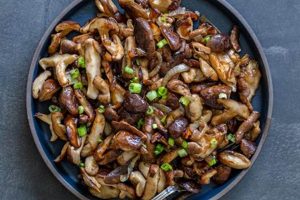
A plant-based alternative to traditional meat-based skewers, this culinary creation utilizes vegetables, plant-based proteins (such as tofu, tempeh, or seitan), or legumes marinated in flavorful sauces and grilled or roasted to perfection. For example, a combination of bell peppers, onions, zucchini, and marinated tofu cubes threaded onto skewers and cooked over an open flame represents a common instantiation.
The increasing adoption of plant-based diets has fueled the interest in these meatless variations. They offer a healthful and sustainable option, reducing the environmental impact associated with animal agriculture. Furthermore, they cater to individuals seeking alternatives that align with ethical or dietary considerations, while providing a novel way to consume a diverse range of vegetables and plant-based protein sources.
The subsequent sections will delve into specific variations, ingredient selection, preparation techniques, and culinary considerations to assist in crafting delicious and satisfying meat-free skewers.
Essential Guidance for Preparing Plant-Based Skewers
The following recommendations aim to enhance the preparation and palatability of meat-free skewers, ensuring optimal flavor and texture in the finished dish.
Tip 1: Protein Selection is Critical. Choose a plant-based protein source with appropriate texture and flavor absorption capabilities. Tofu requires pressing to remove excess moisture before marinating, while tempeh benefits from steaming prior to grilling or baking.
Tip 2: Marinade Time is Essential. Allow sufficient marinating time for ingredients to fully absorb the flavors. At least 30 minutes, and ideally several hours or overnight, is recommended for optimal flavor infusion into vegetables and plant-based proteins.
Tip 3: Vegetable Preparation Matters. Cut vegetables into uniform sizes to ensure even cooking. Dense vegetables, such as potatoes or carrots, may require pre-cooking (blanching or parboiling) before assembling the skewers.
Tip 4: Skewer Assembly Technique is Key. Avoid overcrowding the skewers to facilitate even cooking and prevent steaming. Leave small spaces between ingredients to allow heat to circulate freely.
Tip 5: Cooking Method Influences Results. Consider the cooking method (grilling, baking, or pan-frying) and adjust cooking times accordingly. Monitor internal temperature, especially when using plant-based proteins, to prevent overcooking and drying.
Tip 6: Flavor Pairing Enhances the Experience. Experiment with diverse flavor combinations. Employ complementary herbs, spices, and sauces to create complex and balanced flavor profiles.
Tip 7: Prevent Sticking on the Grill. Lightly oil the grill grates or use skewers that have been soaked in water to prevent the ingredients from sticking during the cooking process.
Adhering to these suggestions will lead to improved outcomes in crafting flavorful and texturally appealing meat-free skewers, enhancing the overall dining experience.
The subsequent sections will explore the versatile applications and variations of these plant-based skewers within a balanced dietary framework.
1. Flavorful marinade development

Flavorful marinade development represents a crucial step in the preparation of plant-based skewers, acting as a primary determinant of the final product’s palatability. Due to the inherent mildness of many plant-based protein sources, such as tofu or tempeh, the marinade assumes the responsibility of imparting significant flavor and character. The absence of a well-developed marinade often results in a bland and unappetizing dish, regardless of other preparation techniques. For instance, cubes of firm tofu, when marinated in a blend of soy sauce, ginger, garlic, and maple syrup for several hours, absorb these flavors, transforming into savory and nuanced components when grilled.
The composition of the marinade directly influences the finished flavor profile. Acidic ingredients, such as lemon juice or vinegar, contribute to tenderizing the protein and vegetables, while oils aid in heat transfer during cooking and prevent sticking. Sweet elements, like agave or brown sugar, offer a counterpoint to savory flavors and promote caramelization. Spices and herbs introduce complexity and aromatic depth. Practical application involves careful consideration of these elements, adjusting proportions to achieve a desired flavor balance. A marinade relying solely on salt, for example, will lack dimension and fail to deliver a satisfying taste experience.
In summary, flavorful marinade development is not merely an adjunct to the creation of plant-based skewers; it constitutes a foundational pillar upon which the overall success of the dish rests. Mastering the principles of flavor balancing, ingredient interaction, and marinating time is essential for transforming simple plant-based ingredients into memorable culinary creations. Challenges may arise in tailoring marinades to specific dietary needs or preferences, requiring experimentation and a nuanced understanding of flavor compatibility. This crucial step directly contributes to the broader objective of creating palatable and appealing plant-based meals.
2. Protein source selection

Protein source selection is a critical determinant of the nutritional profile, texture, and overall culinary success of plant-based skewers. The chosen ingredient serves as the structural foundation of the skewer, contributing significantly to the dish’s satiety value and flavor profile.
- Tofu’s Versatility and Preparation
Tofu, derived from soybean curds, exhibits a neutral flavor profile, rendering it highly adaptable to diverse marinades. Its texture ranges from silken to extra-firm, with firmer varieties preferred for skewering due to their ability to maintain structural integrity during grilling or baking. Pressing tofu before marinating removes excess water, improving flavor absorption and resulting in a denser, chewier final product. Failure to press tofu adequately may lead to a soggy texture, detracting from the overall eating experience.
- Tempeh’s Firm Texture and Nutritional Value
Tempeh, a fermented soybean cake, presents a denser and chewier texture compared to tofu, offering a more substantial bite. Its fermentation process imparts a slightly nutty and savory flavor, complementing various flavor combinations. Tempeh’s firm structure necessitates pre-steaming or boiling to soften it and enhance marinade absorption. This step prevents the tempeh from becoming overly dry during cooking. Its high protein and fiber content contribute to a nutritionally balanced skewer.
- Seitan’s Wheat-Based Composition and Meaty Texture
Seitan, crafted from wheat gluten, delivers a remarkably meat-like texture, making it a compelling alternative for individuals transitioning to plant-based diets. Its chewy consistency and ability to absorb flavors readily make it suitable for skewering. However, seitan’s high gluten content renders it unsuitable for individuals with celiac disease or gluten sensitivities. Pre-cooking seitan by steaming or poaching can improve its texture and prevent it from becoming overly dense during subsequent grilling or baking. Marinating seitan ensures a flavorful outcome.
- Legumes as a Complementary Protein Source
While less commonly used as the primary protein source, legumes such as chickpeas or lentils can be incorporated into skewers to enhance nutritional value and textural diversity. Pre-cooked legumes, such as canned chickpeas, offer convenience and require minimal preparation. When combined with other vegetables and a complementary protein source like tofu or tempeh, legumes contribute to a more balanced and satisfying skewer. The addition of spices and herbs further enhances their flavor and complements the overall dish.
The selection of a suitable protein source is therefore a pivotal element in the successful execution of plant-based skewers. Careful consideration of the ingredient’s texture, flavor profile, nutritional content, and preparation requirements is essential to create a dish that is both palatable and nutritionally complete. The chosen protein source should complement the other ingredients and cooking method to achieve a harmonious and satisfying culinary outcome.
3. Vegetable pairing strategy

The arrangement of vegetables on a plant-based skewer significantly impacts both the flavor profile and the cooking characteristics of the final product. Strategic pairings consider complementary tastes, textures, and cooking times to ensure a harmonious and well-cooked dish. Incompatible combinations may result in unevenly cooked skewers, with some vegetables becoming overcooked while others remain underdone. For example, pairing slow-cooking root vegetables like carrots with delicate vegetables like zucchini without pre-cooking the carrots would result in a suboptimal culinary outcome.
Successful vegetable pairing also accounts for flavor complementarity. Bell peppers, onions, and mushrooms offer a classic combination, providing sweetness, pungency, and earthiness, respectively. Tomatoes introduce acidity and moisture, while eggplant lends a smoky depth. The selection of vegetables should align with the desired flavor profile. Mediterranean-inspired skewers might incorporate artichoke hearts, olives, and sun-dried tomatoes, whereas Asian-inspired variations could feature bok choy, shiitake mushrooms, and bamboo shoots. A well-thought-out strategy enhances the overall sensory experience of the skewer.
In summary, vegetable pairing is not merely an aesthetic consideration but a critical component of a well-executed plant-based skewer. Careful attention to cooking times, textural contrasts, and flavor harmonies maximizes the potential of the ingredients, resulting in a dish that is both visually appealing and gastronomically satisfying. Challenges may arise when working with unfamiliar vegetables or attempting to balance diverse flavor profiles. However, adherence to these fundamental principles will elevate the culinary result, demonstrating the practical significance of strategic vegetable pairing.
4. Assembly and grilling technique

The physical construction and cooking method significantly influence the outcome of plant-based skewers. Improper assembly can lead to uneven cooking and structural instability, while incorrect grilling techniques may result in charred exteriors and undercooked interiors. The assembly process involves threading marinated plant-based proteins and vegetables onto skewers, ensuring optimal spacing for heat circulation. Overcrowding skewers hinders even cooking, causing vegetables to steam rather than grill. The type of skewer, whether metal or wooden, also plays a role. Wooden skewers require pre-soaking to prevent burning, whereas metal skewers conduct heat, potentially accelerating the cooking process from the inside.
Grilling technique is paramount for achieving desirable textures and flavors. Maintaining consistent heat distribution is crucial, necessitating periodic rotation of skewers to ensure all sides are evenly exposed to the heat source. Direct heat can quickly char the exterior, especially with sugar-rich marinades, so indirect heat or a combination of both may be necessary. The distance between the skewers and the heat source is another important variable. Too close, and the skewers will burn; too far, and the vegetables will not caramelize properly. Monitoring internal temperatures of the plant-based proteins helps prevent overcooking and drying, particularly with tofu and seitan. A practical example involves grilling tofu skewers marinated in a teriyaki sauce. Direct heat can cause the sugary sauce to burn rapidly. Therefore, grilling over medium heat with frequent turning is essential to achieve a caramelized glaze without charring.
In conclusion, assembly and grilling technique are integral components of successful skewer preparation. Precise assembly ensures structural integrity and even cooking, while proper grilling technique yields desirable textures and flavors. Challenges arise in balancing cooking times for different vegetables and preventing the burning of sugary marinades. These factors directly impact the overall palatability and presentation of the finished product. Mastering these techniques is essential for elevating the skewer from a simple dish to a culinary experience.
5. Balanced nutritional profile

The attainment of a balanced nutritional profile represents a primary objective in the formulation and execution of plant-based skewers. This profile encompasses macronutrient ratios, micronutrient diversity, and minimization of potentially detrimental components, thereby contributing to the overall healthfulness of the dish.
- Macronutrient Considerations: Protein, Carbohydrates, and Fats
Plant-based skewers should incorporate a sufficient quantity of protein, typically derived from tofu, tempeh, or seitan, to support satiety and tissue repair. Carbohydrates are primarily supplied by vegetables, providing energy and dietary fiber. Fat content is generally lower than in traditional meat-based skewers but can be enhanced through the addition of nuts, seeds, or avocado. Careful attention to the proportions of these macronutrients is essential for creating a balanced meal.
- Micronutrient Diversity: Vitamins and Minerals
A diverse selection of vegetables is crucial for ensuring a wide range of vitamins and minerals. Different colored vegetables, such as bell peppers (red, yellow, green), eggplant, zucchini, and onions, offer varying concentrations of vitamins A, C, and K, as well as minerals like potassium and magnesium. Incorporating leafy green vegetables, such as spinach or kale, further enhances the micronutrient profile. The selection of vegetables should be guided by their nutritional value and contribution to the overall flavor profile.
- Fiber Content: Supporting Digestive Health
Plant-based skewers are inherently rich in dietary fiber, primarily sourced from vegetables and legumes. Fiber promotes digestive health, aids in regulating blood sugar levels, and contributes to satiety. The inclusion of high-fiber vegetables, such as broccoli, carrots, and Brussels sprouts, further enhances the fiber content of the skewers. Adequate fiber intake is associated with a reduced risk of chronic diseases, making it a key consideration in the nutritional design of plant-based meals.
- Limiting Sodium and Saturated Fats
The sodium content of plant-based skewers can be influenced by the marinade and the addition of processed ingredients. Utilizing low-sodium soy sauce or tamari, and minimizing the use of salty seasonings, helps to control sodium levels. Saturated fats are generally low in plant-based ingredients but may be present in certain sauces or dressings. Opting for unsaturated fats, such as olive oil or avocado oil, and limiting the use of coconut oil or palm oil, promotes a healthier fat profile.
By strategically selecting ingredients and controlling preparation methods, plant-based skewers can be formulated to deliver a balanced nutritional profile, supporting overall health and well-being. The incorporation of diverse vegetables, protein-rich plant-based sources, and attention to macronutrient ratios and micronutrient diversity are essential considerations. The end result is a culinary offering that satisfies dietary needs while providing a flavorful and enjoyable eating experience.
Frequently Asked Questions
The following section addresses common inquiries regarding the preparation, nutritional aspects, and variations of plant-based skewers. These answers aim to provide clarity and guidance for individuals seeking to incorporate this dish into their dietary regimen.
Question 1: What are the primary protein sources suitable for meat-free skewers, and what are their respective characteristics?
Tofu, tempeh, and seitan represent frequently utilized protein sources. Tofu, derived from soybean curds, offers a neutral flavor and varying textures based on firmness. Tempeh, a fermented soybean product, exhibits a firmer texture and a slightly nutty flavor. Seitan, composed of wheat gluten, provides a meat-like texture and readily absorbs marinades. Each source presents distinct advantages depending on desired texture and flavor profile.
Question 2: How can the flavor of plant-based proteins, often perceived as bland, be effectively enhanced?
Marination represents a critical technique for imparting flavor. Extended marinating times, ideally several hours or overnight, allow the proteins to fully absorb the flavors of the marinade. Acidic components, such as lemon juice or vinegar, contribute to tenderization and flavor penetration. The incorporation of herbs, spices, and aromatic vegetables further enhances the flavor profile.
Question 3: What vegetables are best suited for skewering, and how should they be prepared to ensure even cooking?
Bell peppers, onions, zucchini, mushrooms, and cherry tomatoes represent commonly used vegetables. Cutting vegetables into uniform sizes promotes even cooking. Denser vegetables, such as potatoes or carrots, may require pre-cooking (blanching or parboiling) to ensure they soften sufficiently during grilling or baking.
Question 4: Is it necessary to pre-soak wooden skewers, and what alternatives exist?
Pre-soaking wooden skewers in water for at least 30 minutes prevents burning during grilling. Metal skewers offer a reusable alternative and eliminate the need for pre-soaking. However, metal skewers conduct heat and may accelerate cooking from the inside.
Question 5: How can one prevent plant-based skewers from sticking to the grill?
Thoroughly cleaning and oiling the grill grates before cooking reduces the likelihood of sticking. High-heat cooking oils, such as canola or grapeseed oil, are recommended. Ensuring the skewers are not overcrowded also helps to prevent sticking by allowing for better heat circulation.
Question 6: What considerations should be taken into account to ensure a nutritionally balanced skewer?
A balanced skewer incorporates a variety of vegetables, a sufficient quantity of plant-based protein, and healthy fats. Limiting sodium and saturated fats is also important. Utilizing whole, unprocessed ingredients contributes to a more nutrient-dense dish. Varying the vegetable selection maximizes micronutrient intake.
In summary, the successful preparation of meat-free skewers involves careful attention to protein selection, flavor enhancement, vegetable pairing, assembly technique, grilling method, and nutritional balance. Mastering these elements will result in a flavorful and satisfying culinary experience.
The subsequent section will explore creative variations and serving suggestions for meat-free skewers, further expanding the possibilities for this versatile dish.
Conclusion
This exploration of the plant-based skewer delved into essential aspects, including flavorful marinade development, protein source selection, vegetable pairing strategy, assembly and grilling technique, and balanced nutritional profile. Careful consideration of each dimension contributes to a successful culinary outcome, transforming simple ingredients into a satisfying and nutritious dish.
The adoption of plant-based dietary choices necessitates informed adaptation of traditional recipes. Mastering the techniques outlined herein empowers individuals to create delicious and sustainable meat-free alternatives, promoting both personal well-being and environmental consciousness. The ongoing evolution of plant-based cuisine offers continued opportunities for culinary innovation and exploration.