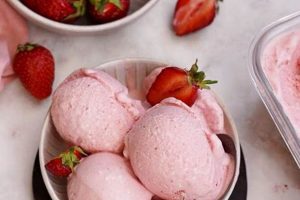
This treat combines the chewy texture of traditional Japanese confection with frozen dessert, using plant-based ingredients to exclude all animal products. It typically features a sweet rice dough exterior encasing a core of dairy-free frozen confection. Common base ingredients in the frozen center include coconut milk, cashew cream, or other plant-derived alternatives to achieve a creamy consistency. For instance, a mango-flavored variety might use coconut cream ice cream wrapped in a layer of subtly sweetened rice dough.
Its appeal lies in offering a familiar indulgence that aligns with dietary preferences and ethical considerations. Historically, traditional preparations of the rice dough confection often contained animal-derived ingredients. The development of plant-based alternatives broadens accessibility and caters to a growing market of consumers seeking sustainable and cruelty-free options. Furthermore, the bite-sized format contributes to portion control and ease of consumption.
The following sections will delve into specific aspects of its production, nutritional profile, available flavors, and consumer trends driving its increasing popularity. It will also explore the challenges and innovations within this growing segment of the frozen dessert market.
Considerations for Optimal Enjoyment
To maximize the experience with this product, several factors warrant attention. Proper handling and storage are crucial to maintaining quality and texture.
Tip 1: Storage Temperature Maintenance: Adherence to recommended freezer temperatures is paramount. Fluctuations can alter the rice dough’s texture, leading to either excessive hardness or undesirable stickiness upon thawing.
Tip 2: Thawing Protocol: Allow a brief thawing period before consumption. This softens the outer layer, enhancing the contrast between the chewy exterior and the frozen interior. A recommended time frame is typically between two and five minutes at room temperature.
Tip 3: Ingredient Awareness for Allergies: Carefully review ingredient lists for potential allergens. Common components such as nuts (cashews, almonds, coconut), soy, and certain fruits may be present. Cross-contamination in production facilities is also a potential concern for highly sensitive individuals.
Tip 4: Moderation in Consumption: While a delectable treat, its caloric content and sugar levels should be factored into overall dietary intake. Consuming excessively large quantities may contribute to imbalances in macronutrient ratios.
Tip 5: Flavor Pairing Exploration: Experiment with different flavor combinations to discover personal preferences. Varieties range from classic fruit flavors like strawberry and mango to more innovative options such as matcha and salted caramel.
Tip 6: Prioritize Consumption Freshness: Consume shortly after purchase to ensure optimal quality. Prolonged storage, even at recommended temperatures, can gradually degrade the textural integrity of the dough.
Tip 7: Handling to Prevent Damage: Exercise caution when handling to prevent rupture of the outer layer. Damage can lead to freezer burn and compromise the overall sensory experience.
Implementing these strategies will contribute to a more satisfying and informed enjoyment of this dessert alternative. Paying attention to storage, handling, and ingredient awareness ensures both quality and dietary safety.
The subsequent sections will provide a deeper understanding of the evolving market landscape and consumer demand for these frozen treats.
1. Ingredients

The composition of its ingredients dictates its suitability for vegan consumption and significantly impacts its overall sensory profile. The selection and proportion of each element are crucial to achieving the desired texture, flavor, and stability of the frozen confection.
- Plant-Based Milk Alternatives
Instead of dairy milk, plant-derived alternatives form the creamy base. Coconut milk is a prevalent choice due to its high fat content, mimicking the richness of dairy. Cashew cream, oat milk, and almond milk are also employed, each contributing a slightly different flavor and texture. The selection of plant milk influences the final product’s fat content and mouthfeel.
- Sweeteners
To achieve the desired sweetness, various sweeteners are incorporated. Refined sugars are common, but alternatives like agave nectar, maple syrup, and fruit purees are also utilized to cater to health-conscious consumers. The type and quantity of sweetener affect the overall sweetness profile and can also impact the freezing point and texture of the confection.
- Stabilizers and Emulsifiers
These components are essential for maintaining a homogenous texture and preventing ice crystal formation during freezing. Common vegan stabilizers include guar gum, locust bean gum, and tapioca starch. Sunflower lecithin is often used as an emulsifier to bind fats and liquids. These ingredients play a vital role in achieving a smooth and creamy consistency, preventing graininess and separation.
- Rice Flour and Modified Starches (for the Dough)
The outer layer relies on glutinous rice flour (mochiko) as its primary ingredient, lending the characteristic chewiness. Modified starches may be added to adjust the dough’s elasticity and prevent it from becoming overly sticky. Precise proportions of rice flour and starches are critical for achieving the desired texture and pliability of the mochi dough.
The careful selection and balancing of these constituents is essential for crafting a high-quality product. The interplay between plant-based milk, sweeteners, stabilizers, and the rice dough creates a unique dessert experience that caters to both vegan and non-vegan consumers. Ingredient innovation continues to drive the development of new and improved formulations.
2. Texture

Texture is a critical attribute dictating the overall palatability and consumer acceptance of the frozen confection. In this dessert, a harmonious interplay of contrasting textures is strategically engineered to deliver a unique sensory experience. The product’s defining characteristic arises from the juxtaposition of a soft, chewy exterior layer and a smooth, creamy interior.
The outer dough, crafted from glutinous rice flour, provides a distinct chewiness absent in conventional frozen desserts. This element requires meticulous preparation, including precise steaming and pounding to achieve the desired elasticity. Inadequate processing can result in a dough that is either excessively sticky or unpleasantly firm. Conversely, the ice cream component aims for a smooth, creamy consistency, devoid of large ice crystals. This is commonly achieved through the use of plant-based milk alternatives with high fat content, coupled with stabilizers and emulsifiers to prevent phase separation during freezing. Examples include the use of coconut milk for a richer texture or cashew cream for a slightly lighter mouthfeel. The successful integration of these contrasting textures is vital. For instance, a poorly textured ice cream filling, exhibiting graininess or excessive iciness, undermines the appeal, even if the dough is perfectly executed.
Understanding the interplay of these textural elements is of practical significance for manufacturers. It necessitates careful control over ingredient selection, processing parameters, and storage conditions. By optimizing each stage of production, it is possible to achieve a harmonious balance of chewiness and creaminess, ultimately enhancing the consumer’s sensory experience and driving product satisfaction. Challenges remain in maintaining consistent texture across different flavor profiles and storage durations, requiring ongoing research and innovation in formulation and processing techniques.
3. Flavors

The selection of flavors constitutes a pivotal element in the appeal and market success of plant-based frozen confections. It significantly influences consumer preference and shapes the overall sensory experience associated with the product.
- Traditional Japanese Flavors
Incorporating classic Japanese tastes represents a strategic approach to authenticity and cultural appeal. Matcha (green tea), red bean (azuki), and sesame are commonly employed to resonate with consumers familiar with traditional Japanese desserts. The use of these flavors connects the product to its cultural origins, enhancing its perceived value and uniqueness. For example, matcha offers a slightly bitter, earthy note that contrasts with the sweetness of the filling, creating a balanced and sophisticated flavor profile.
- Fruity and Tropical Variations
Offering a diverse range of fruit-based flavors broadens the product’s appeal to a wider consumer base. Mango, strawberry, coconut, and passion fruit are frequently utilized for their vibrant colors and refreshing tastes. These flavors often leverage the natural sweetness and acidity of the fruits, creating a more appealing and approachable taste profile for individuals less familiar with traditional Japanese flavors. The inclusion of tropical fruits also aligns with contemporary health trends emphasizing natural and minimally processed ingredients.
- Global Dessert Inspirations
Drawing inspiration from popular desserts worldwide allows for innovation and novelty in flavor development. Chocolate, vanilla, salted caramel, and coffee are common examples of flavors adapted from global dessert trends. These familiar flavors provide comfort and familiarity, particularly for consumers who may be hesitant to try more exotic or unfamiliar tastes. The adaptation of global dessert flavors allows the product to compete effectively in the broader frozen dessert market, attracting a wider audience beyond those specifically seeking Japanese-inspired treats.
- Innovative and Experimental Combinations
Pushing the boundaries of flavor combinations fosters a sense of excitement and differentiation. Examples include lavender honey, rose pistachio, or spicy chocolate. The use of less conventional flavor pairings caters to adventurous consumers seeking novel and unique sensory experiences. Such innovative combinations allow the brand to stand out in a crowded market and generate buzz through social media and word-of-mouth marketing.
The strategic selection and execution of flavors are paramount for establishing a distinct identity and capturing consumer interest. Balancing traditional Japanese elements with globally-inspired innovations is key to achieving both authenticity and broad market appeal.
4. Production

The production of this confectionery item involves a complex interplay of culinary techniques and food science principles to achieve the desired product characteristics. The process necessitates specialized equipment and precise control over various parameters to ensure both quality and consistency.
- Dough Preparation and Shaping
The initial phase involves preparing the glutinous rice dough, which requires precise measurement and mixing of ingredients, followed by steaming or microwaving to achieve the correct consistency. Overcooking results in a hard, brittle dough, while undercooking produces a sticky, unmanageable texture. The dough is then portioned and flattened into discs using specialized equipment to ensure uniform thickness, which is crucial for consistent filling distribution.
- Ice Cream Preparation and Freezing
The plant-based frozen dessert component is prepared separately, typically using coconut milk, cashew cream, or other dairy alternatives. The base is mixed with sweeteners, flavorings, and stabilizers, then pasteurized to eliminate potential pathogens. A crucial step involves controlled freezing, often using a continuous freezer, to minimize ice crystal formation and achieve a smooth, creamy texture. The frozen mixture is then extruded or portioned into specific sizes to match the prepared dough discs.
- Assembly and Enrobing
The assembly process requires careful placement of the frozen dessert portion onto the center of the flattened dough. The dough is then carefully sealed around the frozen filling, forming a spherical or semi-spherical shape. This step often requires manual dexterity or automated machinery to prevent tearing or leakage. Proper sealing is essential to maintain the integrity of the product during subsequent freezing and storage.
- Freezing and Packaging
Following assembly, the product undergoes a rapid freezing process, typically using a blast freezer, to quickly reduce the core temperature and prevent ice crystal growth. This step is critical for maintaining the texture and quality of the frozen dessert. Once frozen, individual pieces are packaged in airtight wrappers to prevent freezer burn and maintain freshness. Proper packaging also protects the product from physical damage during transportation and storage.
These distinct phases of production must be carefully coordinated to yield a high-quality product. Variations in any of these steps can significantly impact the final texture, appearance, and flavor profile, highlighting the importance of stringent quality control measures throughout the entire process.
5. Distribution
Effective distribution networks are crucial for the widespread availability and market penetration of vegan ice cream mochi. The perishable nature of the product, combined with the need to maintain its frozen state, imposes significant constraints on the distribution channels. A failure in maintaining the cold chain during transport and storage directly affects the product’s texture and sensory qualities, potentially leading to consumer dissatisfaction. For instance, improper handling during transit can cause partial thawing and refreezing, resulting in an icy or grainy texture that deviates from the intended smooth and chewy consistency. This emphasizes the importance of specialized refrigerated transport and storage infrastructure.
The distribution strategy often involves a multi-tiered approach, encompassing direct delivery to retail outlets, partnerships with established frozen food distributors, and the utilization of online platforms for direct-to-consumer sales. Major grocery chains frequently carry the product, placing it within the frozen dessert section alongside traditional ice cream offerings. Smaller, independent health food stores and specialty Asian markets also serve as important distribution points, catering to niche consumer segments. Online sales, facilitated through e-commerce websites and delivery services, offer expanded geographic reach and convenience for consumers. The rise of online grocery platforms has particularly amplified accessibility, enabling consumers in regions with limited retail availability to purchase and receive the product directly.
The efficiency and reliability of the distribution network directly correlate with the product’s market performance and consumer perception. Maintaining a consistent supply chain and upholding cold chain integrity are essential for preserving product quality and building brand trust. Challenges remain in optimizing distribution logistics to minimize costs while ensuring widespread availability, particularly in regions with limited cold storage infrastructure. Further advancements in sustainable packaging and transportation technologies may contribute to more environmentally friendly and cost-effective distribution solutions.
6. Consumption

Understanding patterns in consumption is crucial for producers and retailers. Analyzing who consumes the item, how often, and in what contexts provides valuable insights for market segmentation, product development, and distribution strategies. Consumption patterns are shaped by factors such as dietary preferences, cultural influences, and economic conditions.
- Dietary Preferences and Restrictions
Consumer choices are influenced by ethical considerations, health concerns, and allergies. The item caters directly to individuals adhering to vegan diets, and its consumption is driven by the desire to avoid animal products. Furthermore, it is a potential option for individuals with lactose intolerance or dairy allergies, expanding its consumer base. The nutritional profile, including sugar and fat content, also impacts consumption frequency among health-conscious individuals. The presence of potential allergens, such as nuts or soy, restricts consumption for specific segments of the population.
- Occasions and Seasonal Trends
Consumption patterns vary depending on the occasion and time of year. It serves as an occasional treat or dessert for personal consumption, social gatherings, or special events. Seasonal trends influence flavor preferences and overall demand. For example, fruity flavors are more popular during warmer months, while richer, more indulgent flavors gain prominence during colder seasons. Holiday periods also impact consumption, with increased demand for festive or celebratory flavors.
- Cultural Influences and Awareness
Consumer awareness of Japanese cuisine and culture plays a significant role in driving consumption. Consumers familiar with traditional Japanese confectionery are more likely to seek out the item as a novel variation. Increased awareness of veganism and plant-based diets, amplified through social media and online resources, also contributes to growing demand. Cultural exchange and globalization have fostered a greater appreciation for diverse culinary traditions, influencing consumer preferences and purchasing decisions.
- Pricing and Accessibility
The price point affects the product’s accessibility and consumption frequency. Higher prices may limit consumption to special occasions or specific consumer segments. Availability in various retail outlets, including grocery stores, specialty shops, and online platforms, influences overall accessibility. Consumers are more likely to purchase the item if it is readily available in their preferred shopping locations. Promotional offers, discounts, and bundle deals can stimulate consumption and encourage trial purchases.
Consumption patterns are dynamic and shaped by a complex interplay of factors. By carefully analyzing these factors, manufacturers can optimize product offerings, refine marketing strategies, and enhance distribution channels to meet evolving consumer demands effectively. These analyses will continue to be helpful as new vegan ice cream mochi flavors arrive in the market.
Frequently Asked Questions about vegan ice cream mochi
The following addresses common inquiries regarding the composition, properties, and handling of this specific type of frozen confectionery.
Question 1: What exactly constitutes “vegan ice cream mochi”?
It refers to a frozen dessert comprised of a sweet, chewy rice dough exterior encapsulating a plant-based ice cream filling. All ingredients are devoid of animal products, including dairy, eggs, and honey.
Question 2: How does plant-based ice cream compare to traditional dairy-based ice cream in terms of texture and taste?
Plant-based ice cream bases, such as coconut milk or cashew cream, offer a comparable creamy texture, although slight variations in flavor profiles may be discernible. Stabilizers and emulsifiers are often employed to mimic the smooth consistency of dairy-based ice cream.
Question 3: Is the rice dough component gluten-free?
The rice dough itself is typically gluten-free, as it is made from glutinous rice flour (mochiko). However, individuals with severe gluten sensitivities should carefully examine the product’s ingredient list for potential cross-contamination during manufacturing.
Question 4: What is the optimal method for storing vegan ice cream mochi?
It should be stored in a freezer at a consistent temperature of 0F (-18C) or lower. Proper storage prevents freezer burn and maintains the texture of both the dough and the ice cream filling. It is recommended to keep it in its original packaging or an airtight container.
Question 5: How long can it be stored in the freezer without significant degradation in quality?
While it can remain frozen for several months, optimal quality is generally maintained for up to two months. Prolonged storage may result in slight textural changes or a diminished flavor profile.
Question 6: Are there any common allergens to be aware of?
Common allergens may include nuts (such as coconut, cashews, or almonds, depending on the ice cream base), soy lecithin (used as an emulsifier), and certain fruits used for flavoring. A thorough review of the ingredient list is essential for individuals with known allergies.
In summary, understanding its composition, storage requirements, and potential allergens is crucial for ensuring both a satisfactory culinary experience and dietary safety.
The following section will explore potential challenges and future trends within the market for this frozen dessert.
Conclusion
This exploration has illuminated diverse facets of plant-based frozen confection, from ingredient sourcing and production methodologies to distribution networks and consumption trends. Key points include the necessity of specialized handling to maintain optimal texture, the influence of cultural factors on flavor preferences, and the increasing consumer demand driven by dietary considerations and ethical values. Ingredient innovation, coupled with stringent quality control, remains paramount for sustained market growth.
Continued research and development are essential to address existing challenges in scalability and sustainability. As consumer awareness expands, meticulous attention to ingredient transparency and ethical sourcing will further solidify its position within the competitive frozen dessert landscape. The future trajectory hinges on a commitment to both culinary excellence and responsible production practices.




![Best Vegan Ice Cream in Portland, ME: [Your Brand] & More! | Discover Delicious Vegan Food, Beauty Swaps, and Zero-Waste Tips for a Greener Life](https://thisvegangirl.com/wp-content/uploads/2026/04/th-87-300x200.jpg "Best Vegan Ice Cream in Portland, ME: [Your Brand] & More! Discover Delicious Vegan Food, Beauty Swaps, and Zero-Waste Tips for a Greener Life")