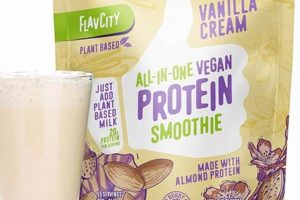
A breakfast preparation involving rolled oats soaked overnight in a liquid, often dairy-free milk, this particular iteration emphasizes the inclusion of plant-based protein sources. Examples of additions to achieve this protein enrichment include chia seeds, flax seeds, protein powder derived from peas or brown rice, and nut butters. The final product offers a convenient and customizable morning meal option.
This dietary choice provides several potential advantages. Primarily, it offers a sustained energy release due to the slow digestion of oats, promoting satiety and potentially aiding in weight management. Furthermore, the increased protein content supports muscle repair and growth, crucial for individuals engaged in physical activity. Historically, overnight oats have evolved from a simple method of softening oats for easier consumption to a vehicle for nutritional enhancement, reflecting a growing awareness of dietary needs and preferences.
The subsequent sections will delve into the specific ingredients suitable for creating these protein-rich breakfasts, examine the optimal ratios for macronutrient balance, and explore various flavor combinations to cater to diverse palates. Recipe adaptations for specific dietary requirements and considerations regarding storage and shelf life will also be addressed.
Optimizing High-Protein Vegan Overnight Oats
The following guidelines offer strategic insights for formulating nutritionally complete and palatable preparations.
Tip 1: Protein Source Selection: Prioritize complete protein sources. While plant-based options may require combination for optimal amino acid profiles, soy-based products such as tofu or tempeh, finely processed and incorporated, contribute a full complement of essential amino acids.
Tip 2: Liquid-to-Oats Ratio Calibration: Employ a liquid-to-oats ratio of approximately 2:1. This ensures adequate hydration of the oats without resulting in a soupy consistency. Adjustments may be necessary based on the viscosity of the liquid protein source utilized.
Tip 3: Incorporation of Healthy Fats: Integrate sources of unsaturated fats, such as chia seeds, flax seeds, or nut butters. These additions not only enhance satiety but also contribute essential fatty acids crucial for overall health.
Tip 4: Sweetening Strategies: Minimize added sugars. If sweetness is desired, opt for natural alternatives like stevia, erythritol, or small quantities of fruit purees. Monitor the glycemic index of chosen sweeteners to mitigate potential blood sugar fluctuations.
Tip 5: Flavor Enhancement Through Spices: Leverage the aromatic properties of spices, such as cinnamon, nutmeg, or ginger, to create complex flavor profiles without adding caloric density. Experimentation with spice blends is encouraged.
Tip 6: Overnight Refrigeration Duration: Refrigerate the mixture for a minimum of four hours, ideally overnight. Extended soaking softens the oats and allows flavors to meld, resulting in a more palatable final product.
Tip 7: Pre-Consumption Texture Adjustment: Prior to consumption, assess the texture and adjust accordingly. Additional liquid may be necessary to achieve the desired consistency. Thorough stirring ensures uniform distribution of ingredients.
Adhering to these guidelines facilitates the creation of a convenient, nutrient-dense breakfast option that aligns with both vegan dietary principles and high-protein nutritional targets.
The subsequent section will explore specific recipe formulations, building upon the principles outlined above.
1. Ingredient Selection

Ingredient selection is paramount in formulating nutritionally adequate and palatable iterations. The foundation of the meal, rolled oats, provides complex carbohydrates and soluble fiber. However, achieving a high-protein profile necessitates the strategic inclusion of plant-based protein sources. These sources are not merely additions; they fundamentally determine the product’s success in meeting its intended nutritional purpose. Inadequate protein ingredient selection results in a meal that is essentially carbohydrate-heavy, failing to deliver the satiety and muscle-building benefits associated with a high-protein dietary intake. For example, relying solely on rolled oats provides minimal protein. Instead, the incorporation of chia seeds, flax seeds, hemp seeds, protein powders derived from sources like peas or brown rice, and nut butters significantly elevates the protein content. The choice of protein source also influences the overall flavor profile, necessitating careful consideration to ensure a harmonious blend of tastes.
Furthermore, ingredient selection impacts the meal’s micronutrient profile. Chia seeds and flax seeds, beyond their protein contribution, offer omega-3 fatty acids, important for cardiovascular health. Nuts and seeds contribute essential minerals like magnesium and zinc. Certain protein powders may be fortified with vitamins and minerals, further enhancing the nutritional density of the preparation. Consider the example of a recipe that substitutes a portion of the rolled oats with quinoa flakes; this substitution not only increases the protein content but also adds iron, a crucial nutrient, especially for individuals following a vegan diet. The absence of these carefully selected ingredients results in a final product with diminished nutritional value, despite being labeled accordingly.
In summary, the careful selection of ingredients, particularly protein sources, is essential for realizing the intended benefits of vegan high protein overnight oats. The choice directly affects not only the protein content but also the overall nutritional profile and palatability. Challenges may arise in finding plant-based protein sources that offer a complete amino acid profile and a pleasing flavor. Understanding the role of each ingredient is therefore crucial for crafting a meal that is both nutritious and enjoyable, effectively linking it to the broader theme of healthy vegan eating.
2. Macronutrient Balancing

Macronutrient balancing represents a critical aspect of formulating effective vegan high-protein overnight oats. A strategic ratio of protein, carbohydrates, and fats not only influences satiety and energy levels but also ensures the provision of essential nutrients necessary for optimal physiological function.
- Protein’s Role in Satiety and Muscle Support
Protein consumption triggers the release of satiety hormones, promoting feelings of fullness and reducing overall caloric intake. In the context of overnight oats, a sufficient protein level, achieved through additions like protein powders or seed blends, aids in weight management. Furthermore, adequate protein intake is essential for muscle repair and growth, particularly beneficial for individuals engaged in physical activity. An insufficient protein level compromises these benefits, potentially leading to increased hunger and reduced muscle protein synthesis.
- Complex Carbohydrates for Sustained Energy
Rolled oats, the foundation of the preparation, provide complex carbohydrates, which release energy slowly, preventing rapid blood sugar spikes. This sustained energy release is advantageous for maintaining focus and preventing mid-morning energy crashes. Refining the carbohydrate source or adding excessive sugars negates these benefits, potentially leading to insulin resistance and weight gain.
- Healthy Fats for Hormone Regulation and Nutrient Absorption
Incorporating sources of unsaturated fats, such as chia seeds, flax seeds, or nut butters, contributes to hormone regulation and aids in the absorption of fat-soluble vitamins. These fats also enhance the satiety value of the meal. Excluding healthy fats or relying on saturated fat sources can negatively impact cardiovascular health and nutrient absorption efficiency.
- Fiber’s Impact on Digestion and Glucose Control
The soluble fiber present in oats and chia seeds promotes healthy digestion and helps regulate blood glucose levels. Adequate fiber intake contributes to gut health and reduces the risk of developing type 2 diabetes. Insufficient fiber intake can lead to digestive discomfort and impaired glucose control.
These interconnected macronutrient considerations underscore the importance of careful planning and execution in preparing vegan high-protein overnight oats. Each macronutrient contributes uniquely to the meal’s overall nutritional profile, with imbalances potentially undermining the intended health benefits. The optimal balance must be tailored to individual needs and activity levels to maximize effectiveness and promote long-term adherence to a healthy dietary pattern.
3. Flavor Combinations

The palatability of a meal directly influences adherence to dietary regimes; therefore, flavor combinations constitute an indispensable component of vegan high-protein overnight oats. The inherently bland nature of rolled oats necessitates strategic flavor enhancement to ensure both nutritional adequacy and sensory satisfaction. Flavor combinations are not merely aesthetic additions; they represent the critical link between dietary intention and long-term habit formation. For example, the combination of cocoa powder, plant-based protein powder with chocolate flavoring, and a sweetener provides a taste profile reminiscent of chocolate pudding, effectively masking the taste of the oats and protein powder. The absence of appealing flavor combinations can result in reduced consumption, thereby undermining the nutritional goals of the meal. Conversely, overly processed or artificially flavored additions compromise the health benefits by introducing undesirable ingredients. Therefore, the careful selection of ingredients that contribute both flavor and nutritional value is paramount.
Specific examples of effective flavor combinations include the pairing of berries and vanilla protein powder, providing a refreshing and antioxidant-rich option. The combination of cinnamon, nutmeg, and apple puree creates a comforting, spiced flavor profile. Savory variations can incorporate ingredients like spinach, nutritional yeast, and sun-dried tomatoes, broadening the meal’s appeal and providing additional nutrients. A critical consideration lies in the interaction between protein source and flavor. For instance, certain plant-based protein powders possess a distinct taste that may clash with some flavor profiles. Careful experimentation is required to identify complementary pairings that effectively mask any undesirable aftertastes. Furthermore, the addition of textural elements, such as chopped nuts or seeds, enhances the sensory experience, contributing to overall satisfaction.
In conclusion, flavor combinations are an essential factor determining the success of vegan high-protein overnight oats as a sustainable dietary choice. The strategic incorporation of ingredients that contribute both taste and nutritional value is critical for maximizing palatability and promoting long-term adherence. Challenges arise in masking the inherent taste of certain plant-based protein sources and balancing sweetness levels to avoid compromising the meal’s health benefits. By prioritizing thoughtful flavor pairings, this dietary option can be transformed from a mere nutritional necessity into an enjoyable and sustainable component of a healthy eating pattern.
4. Texture Optimization

Texture optimization significantly influences the palatability and overall acceptance of vegan high protein overnight oats. A poorly textured preparation, whether overly viscous, excessively liquid, or unpleasantly gritty, can deter consistent consumption, negating the intended nutritional benefits. Achieving an optimal texture requires a thorough understanding of ingredient interactions and appropriate preparation techniques.
- Liquid-to-Solid Ratio Calibration
The ratio of liquid to solid ingredients, primarily oats, directly impacts the final consistency. An insufficient liquid quantity results in a dense, almost paste-like texture, while excessive liquid yields an unappetizingly watery result. Careful measurement and adjustment are critical, considering that different types of plant-based milk and protein powders possess varying viscosities, influencing the overall texture. The ideal ratio typically falls between 1.5:1 and 2:1 (liquid to oats), but adjustments may be necessary based on ingredient-specific characteristics.
- Oat Variety Selection
Rolled oats, quick oats, and steel-cut oats exhibit distinct textural properties when soaked overnight. Rolled oats provide a balance between chewiness and softness, while quick oats tend to become mushier. Steel-cut oats, though less commonly used, retain a firmer texture and require a longer soaking duration. The choice of oat variety directly affects the final texture and should align with individual preferences.
- Protein Powder Integration Techniques
Plant-based protein powders, particularly those derived from peas or brown rice, can introduce a gritty or chalky texture if not properly incorporated. Blending the protein powder with the liquid component prior to adding it to the oats helps prevent clumping and ensures a smoother consistency. Allowing the mixture to sit for a longer duration facilitates the complete hydration of the protein powder, minimizing any undesirable textural elements.
- Incorporation of Textural Contrasts
While a smooth base texture is generally desirable, the strategic addition of contrasting textures enhances the overall sensory experience. The inclusion of chopped nuts, seeds, or granola provides a pleasant crunch, while fruit purees or compotes add a layer of smoothness and moisture. Balancing textural contrasts elevates the eating experience and prevents monotony.
These considerations underscore the importance of meticulous attention to detail in achieving optimal texture in vegan high protein overnight oats. A well-textured preparation not only enhances palatability but also contributes to a more satisfying and enjoyable eating experience, promoting adherence to the dietary regimen. Furthermore, a nuanced understanding of ingredient properties and preparation techniques enables customization to individual preferences, ensuring long-term satisfaction and nutritional success.
5. Storage Considerations

Appropriate storage protocols are crucial for maintaining the safety, quality, and palatability of vegan high protein overnight oats. Improper storage can lead to bacterial growth, ingredient degradation, and compromised nutritional value, thereby undermining the benefits of this meal preparation.
- Refrigeration Imperative
Refrigeration serves as the primary method for preserving overnight oats. Temperatures below 40F (4C) inhibit the proliferation of pathogenic bacteria that can cause foodborne illness. Overnight oats should be promptly refrigerated after preparation and maintained at a consistent low temperature until consumption. Delays in refrigeration or exposure to ambient temperatures increase the risk of spoilage.
- Container Selection
The type of container used for storage influences the shelf life and preservation of flavor. Airtight containers are recommended to prevent oxidation and the absorption of odors from the refrigerator environment. Glass or BPA-free plastic containers are suitable options. Avoid containers with loose-fitting lids, as they can facilitate microbial contamination and flavor degradation.
- Shelf Life Limitations
Refrigerated vegan high protein overnight oats generally remain safe and palatable for a period of up to five days. However, the exact shelf life depends on the freshness of the ingredients used and the adherence to proper storage practices. Visual inspection for signs of spoilage, such as discoloration or mold growth, is essential prior to consumption. A sour or off-putting odor indicates that the oats should be discarded.
- Ingredient-Specific Spoilage Factors
Certain ingredients commonly incorporated into vegan high protein overnight oats exhibit varying susceptibility to spoilage. Fresh fruits, for instance, may soften and degrade more rapidly than the oat base. Nut butters can become rancid over time, particularly if exposed to air and light. Monitoring the condition of individual ingredients is crucial for assessing the overall safety and quality of the stored oats.
The confluence of these storage factors directly impacts the longevity and integrity of vegan high protein overnight oats. Strict adherence to recommended refrigeration practices, selection of appropriate containers, and awareness of ingredient-specific spoilage patterns are necessary to ensure a safe, nutritious, and enjoyable meal.
6. Dietary Adaptability
Vegan high protein overnight oats benefit significantly from dietary adaptability. The inherently customizable nature of the dish allows for accommodation of a wide spectrum of dietary needs and preferences, making it a viable option for individuals with specific restrictions or nutritional goals. This adaptability is not merely a superficial feature; it represents a fundamental aspect of the dish’s utility and long-term sustainability as a dietary choice. Failure to recognize and implement dietary adaptations reduces the accessibility and potential benefits of this meal preparation. For instance, individuals with gluten sensitivities require the use of certified gluten-free oats to avoid adverse reactions. Those managing diabetes must carefully control the carbohydrate content and choose sweeteners with a low glycemic index to maintain stable blood sugar levels. These examples highlight the practical necessity of tailoring the recipe to individual physiological parameters.
Further examples of dietary adaptations include modifications for individuals with nut allergies, who can substitute nut butters with seed butters or sunflower seed-based alternatives. For those seeking to increase their iron intake, the addition of ingredients like blackstrap molasses or iron-fortified plant-based milk can be beneficial. Athletes may require a higher protein content and can achieve this through increased protein powder supplementation or the incorporation of higher-protein grains like quinoa. The versatility of vegan high protein overnight oats extends to texture modifications as well; individuals with dental issues or swallowing difficulties can adjust the liquid-to-oat ratio to create a softer, more easily consumed product. Moreover, the dish can be adapted to suit varying cultural preferences through the incorporation of diverse spices and flavorings, promoting adherence across different populations.
In summary, dietary adaptability is a critical factor in maximizing the utility and long-term sustainability of vegan high protein overnight oats. The ability to modify the recipe to accommodate individual dietary needs, allergies, and preferences ensures that this meal preparation remains a viable option for a diverse range of individuals. Ignoring this adaptability reduces the potential benefits and limits the accessibility of this dietary choice. By recognizing and implementing appropriate adaptations, individuals can effectively tailor vegan high protein overnight oats to meet their specific nutritional requirements and achieve their desired health outcomes, integrating this flexible and nutritious meal into a broader healthy eating plan.
Frequently Asked Questions
This section addresses common inquiries regarding the preparation, consumption, and nutritional aspects of the meal preparation. The aim is to provide clear and concise information to facilitate informed dietary choices.
Question 1: What constitutes a suitable protein source for vegan high protein overnight oats?
Acceptable plant-based protein sources include pea protein powder, brown rice protein powder, chia seeds, flax seeds, hemp seeds, and nut butters. Combinations of these sources may be necessary to ensure a complete amino acid profile.
Question 2: How can the texture of vegan high protein overnight oats be optimized?
Texture is primarily influenced by the liquid-to-oat ratio. A ratio of approximately 2:1 (liquid to oats) generally yields a desirable consistency. Furthermore, the soaking duration and oat variety impact the final texture.
Question 3: What is the recommended storage duration for vegan high protein overnight oats?
Refrigeration is essential for preserving the quality and safety of the meal preparation. Properly stored overnight oats typically remain safe and palatable for up to five days.
Question 4: Are there any considerations for individuals with gluten sensitivities?
Individuals with gluten sensitivities must utilize certified gluten-free oats to avoid adverse reactions. Cross-contamination during oat processing can introduce gluten, even if oats are naturally gluten-free.
Question 5: Can vegan high protein overnight oats be adapted for individuals with diabetes?
Adaptations for individuals with diabetes involve careful carbohydrate control and the selection of low-glycemic sweeteners. Monitoring blood glucose levels is recommended to assess individual responses.
Question 6: How can the flavor of vegan high protein overnight oats be enhanced without compromising its nutritional value?
Flavor enhancement can be achieved through the incorporation of spices, natural extracts, and fruit purees. Minimizing added sugars and artificial flavorings is crucial for maintaining the meal’s health benefits.
In summary, understanding the proper ingredients, preparation techniques, and storage protocols is essential for maximizing the benefits of this adaptable meal choice. Addressing individual dietary needs and preferences further enhances the value of this customizable option.
The subsequent section will explore advanced recipe variations and innovative ingredient combinations.
Conclusion
The preceding discussion has explored the multifaceted aspects of vegan high protein overnight oats, encompassing ingredient selection, macronutrient balancing, flavor optimization, texture considerations, storage protocols, and dietary adaptability. The analysis has underscored the importance of strategic planning and execution to maximize the nutritional benefits and palatability of this dietary choice.
The enduring relevance of vegan high protein overnight oats lies in its inherent versatility and potential to contribute to sustainable and health-conscious eating patterns. Further research and innovation in plant-based protein sources and flavor combinations will likely expand the applications of this meal preparation, solidifying its role in promoting individual and public health.