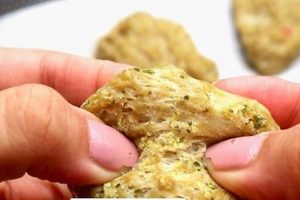
Plant-based alternatives designed to mimic the taste and texture of traditional grilled poultry are gaining prominence. These products often utilize ingredients such as soy, seitan (wheat gluten), or a blend of plant proteins to replicate the fibrous nature of chicken. Preparation typically involves marinating these substitutes and then cooking them on a grill to achieve a similar smoky flavor and char marks associated with conventional grilling methods.
The increasing popularity of these alternatives stems from various factors, including a growing awareness of animal welfare, environmental concerns related to meat production, and dietary preferences. Substituting animal-based protein with plant-based options can potentially contribute to a reduced carbon footprint and offer a source of protein for individuals adhering to vegetarian or vegan lifestyles. Furthermore, these products often contain lower levels of saturated fat and cholesterol compared to their animal-derived counterparts.
The subsequent sections will delve into the specific ingredients and production processes, explore nutritional profiles and potential health benefits, and offer guidance on preparation techniques and recipe ideas that maximize the appeal of this protein alternative.
Preparation and Cooking Tips
Achieving optimal results when preparing plant-based alternatives to grilled poultry requires careful attention to detail. The following tips are designed to enhance flavor, texture, and overall enjoyment.
Tip 1: Proper Marination is Essential. Plant-based proteins often benefit from extended marination periods to fully absorb flavors. Consider marinating for at least 2 hours, or preferably overnight, in the refrigerator. Acidic marinades, such as those containing lemon juice or vinegar, can aid in tenderizing the protein structure.
Tip 2: Control Grill Temperature. Maintaining a medium-high grill temperature is crucial. Excessive heat can lead to rapid burning on the exterior before the interior is adequately heated. Conversely, insufficient heat may result in a bland, undercooked final product.
Tip 3: Employ Indirect Heat. For thicker cuts, utilize indirect heat to ensure even cooking throughout. This technique involves positioning the food away from the direct flame, allowing it to cook more gently and preventing charring.
Tip 4: Monitor Internal Temperature. While precise temperature is less critical than with animal-based poultry, monitoring internal temperature can help determine doneness. A food thermometer can be used to verify that the center is heated through, aiming for a temperature range of 160-165F (71-74C).
Tip 5: Basting for Moisture. Regular basting with marinade or a flavorful sauce during grilling helps retain moisture and prevents the plant-based protein from drying out. Apply basting liquid every 5-7 minutes during the cooking process.
Tip 6: Allow Resting Time. After removing from the grill, allow the cooked plant-based protein to rest for a few minutes before slicing or serving. This allows the juices to redistribute, resulting in a more tender and flavorful experience.
Tip 7: Experiment with Smoke. Adding wood chips to the grill, such as hickory or mesquite, can impart a desirable smoky flavor profile that enhances the overall taste and aroma. This technique is particularly effective when using a charcoal grill.
Adhering to these guidelines will contribute to a more satisfying and palatable outcome when preparing plant-based grilled poultry alternatives, ensuring a balanced combination of flavor, texture, and visual appeal.
The following sections provide insights into recipe variations and serving suggestions, designed to maximize the versatility and enjoyment of this increasingly popular protein source.
1. Protein Source (Plant-Based)

The selection of a plant-based protein source is fundamental to the production and nutritional profile of alternatives to grilled poultry. The chosen source dictates the product’s amino acid composition, digestibility, and suitability for various dietary restrictions.
- Soy Protein: Versatility and Amino Acid Profile
Soy protein, derived from soybeans, is a widely utilized source in plant-based protein products. Its comprehensive amino acid profile makes it a near-complete protein, closely resembling that of animal-derived sources. It is available in various forms, including isolates, concentrates, and textured vegetable protein (TVP), each offering distinct textures and applications in the manufacturing of alternatives to traditional grilled poultry.
- Wheat Gluten (Seitan): Textural Properties and Protein Content
Seitan, composed primarily of gluten, provides a chewy, meat-like texture desirable in many meat alternatives. It is relatively high in protein but lacks the complete amino acid profile found in soy. Individuals with gluten sensitivities or celiac disease must avoid seitan-based products. Its ability to mimic the fibrous structure of muscle tissue contributes significantly to the sensory experience of these products.
- Pea Protein: Emerging Popularity and Sustainability Considerations
Pea protein, extracted from yellow split peas, has gained traction due to its neutral flavor and sustainability advantages. It is a good source of iron and contains a decent amino acid profile, though often enhanced through blending with other plant proteins. Its increasing availability and relatively low environmental impact contribute to its growing appeal in the plant-based food sector.
- Blends and Combinations: Optimization of Nutrition and Texture
Many products utilize blends of different plant proteins to achieve optimal nutritional profiles and textural properties. Combining soy with pea protein, for example, can enhance the amino acid composition while also creating a more desirable mouthfeel. These blends represent a strategic approach to overcoming the limitations of individual protein sources and maximizing the overall quality of plant-based alternatives.
The careful selection and utilization of plant-based protein sources directly impact the nutritional value, texture, and overall acceptability of plant-based grilled poultry alternatives. Manufacturers must consider these factors to create products that effectively meet consumer expectations and contribute to a healthy, sustainable food system.
2. Flavor Profile (Smoky, Savory)

The attainment of a smoky and savory flavor profile is paramount to the success of plant-based grilled poultry alternatives. This flavor combination directly influences consumer perception and acceptance by mimicking the characteristics traditionally associated with grilled chicken. The absence of these flavors often results in a product perceived as bland or lacking authenticity. The application of liquid smoke, the use of smoked paprika, or grilling over wood chips, for example, are techniques employed to impart the desired smoky notes. Furthermore, savory elements are often achieved through the incorporation of herbs, spices, and umami-rich ingredients such as mushrooms or soy sauce into marinades. These flavor compounds interact during the grilling process, creating a complex and palatable taste experience.
Consider, for instance, the impact of marinade composition on the final flavor outcome. A marinade incorporating smoked paprika, garlic powder, onion powder, and a touch of maple syrup can replicate the sweetness and smokiness found in many commercially available grilled chicken products. Conversely, a marinade lacking these elements would likely result in a significantly less appealing final product. The Maillard reaction, a chemical reaction between amino acids and reducing sugars, also plays a crucial role in developing savory flavors during the grilling process. This reaction is enhanced by higher temperatures and contributes to the formation of hundreds of different flavor compounds.
In conclusion, the development of a robust smoky and savory flavor profile is not merely an aesthetic consideration but rather a fundamental requirement for the commercial viability of plant-based grilled poultry alternatives. By carefully selecting flavoring agents, optimizing grilling techniques, and understanding the underlying chemical processes, manufacturers can create products that effectively satisfy consumer expectations and contribute to the broader adoption of plant-based diets.
3. Texture Mimicry (Chicken-Like)

The success of plant-based alternatives hinges significantly on their ability to replicate the textural characteristics of traditional animal products. For “vegan grilled chicken,” achieving a chicken-like texture is not merely an aesthetic consideration; it is a critical determinant of consumer acceptance and satisfaction. The presence of the correct fibrous structure and bite contributes directly to the perceived authenticity of the product. In the absence of a convincing texture, even a well-flavored product may fail to satisfy consumers accustomed to the mouthfeel of actual chicken. The cause-and-effect relationship is direct: superior texture mimicry leads to higher levels of consumer satisfaction and, consequently, increased adoption of the product. For instance, products utilizing high-moisture extrusion techniques to create layered protein structures often achieve a more realistic, chicken-like texture compared to those relying solely on simple protein binding methods. The importance of this component is amplified by the fact that many consumers transitioning to plant-based diets do so with the expectation of a comparable sensory experience.
The practical application of this understanding is evident in the research and development efforts focused on improving textural properties. Food scientists are constantly exploring novel methods to manipulate plant protein structures, using techniques such as shear-cell technology to align protein fibers and create a more realistic mouthfeel. Moreover, the strategic use of ingredients like methylcellulose can aid in binding proteins and retaining moisture during the grilling process, preventing the product from becoming dry or rubbery. Several commercially available products demonstrate the impact of this emphasis on texture. Brands that prioritize textural accuracy consistently receive higher ratings and positive reviews compared to those that prioritize flavor alone. These examples underscore the necessity of integrating texture mimicry as a core design principle in the development of “vegan grilled chicken”.
In summary, the connection between “texture mimicry (chicken-like)” and the market acceptance of “vegan grilled chicken” is undeniable. While flavor is undoubtedly important, the ability to replicate the characteristic texture of grilled chicken plays a pivotal role in bridging the gap between animal-based and plant-based protein sources. Challenges remain in consistently achieving this texture at scale and at a competitive price point. Continued innovation in food science and processing techniques will be essential to further refine the texture of these products and ensure their widespread adoption as a viable alternative to conventional poultry.
4. Nutritional Value (Fortification)

The nutritional value of plant-based alternatives to grilled poultry is a critical consideration, particularly concerning fortification. While these alternatives often provide a source of protein, they may lack essential nutrients typically found in animal products. Therefore, fortification plays a vital role in enhancing their nutritional profile and ensuring they can serve as a complete and balanced dietary component.
- Vitamin B12 Supplementation
Vitamin B12 is predominantly found in animal-derived foods, making it a common deficiency among individuals following a vegan diet. Fortifying plant-based alternatives with vitamin B12 addresses this concern, ensuring that consumers obtain an adequate intake of this essential nutrient. Deficiency can lead to neurological damage and anemia. Fortification ensures these risks are mitigated.
- Iron Enrichment
Iron from plant sources (non-heme iron) is less readily absorbed by the body compared to iron from animal sources (heme iron). Fortification with iron, often in the form of ferrous sulfate or ferrous fumarate, enhances the iron content of these alternatives. This is particularly important for women of reproductive age and individuals prone to iron deficiency anemia. Inclusion of vitamin C along with iron can help to improve iron absorbtion.
- Calcium Addition
Calcium is crucial for bone health and various physiological functions. While some plant-based ingredients naturally contain calcium, the levels may be insufficient to meet dietary requirements. Fortification with calcium carbonate or calcium phosphate increases the calcium content, contributing to bone density and reducing the risk of osteoporosis.
- Omega-3 Fatty Acids Enhancement
Omega-3 fatty acids, particularly EPA and DHA, are essential for brain health and cardiovascular function. While ALA, a precursor to EPA and DHA, can be obtained from plant sources, the conversion rate is often low. Fortification with algal oil, a plant-based source of EPA and DHA, enhances the omega-3 fatty acid content of these alternatives, providing additional health benefits.
In conclusion, the deliberate fortification of plant-based alternatives to grilled poultry with essential vitamins and minerals addresses potential nutritional gaps and enhances their value as a sustainable and healthy dietary option. Without such fortification, these alternatives may not adequately meet the nutritional needs of individuals, particularly those adhering to a vegan diet. The selection of appropriate fortificants and their levels should be carefully considered to ensure optimal nutritional outcomes.
5. Grilling Method (Direct/Indirect)
The selection of a grilling method, whether direct or indirect, significantly impacts the final quality of plant-based grilled poultry alternatives. Direct grilling, characterized by placing food directly over the heat source, is suitable for quickly searing the exterior and imparting a charred flavor. However, this method can lead to rapid burning and uneven cooking, particularly for thicker plant-based protein products. The high heat intensity may cause the outer layers to become overly dry or charred before the interior reaches a desirable temperature. Conversely, indirect grilling, which involves positioning the food adjacent to the heat source, allows for slower, more even cooking. This approach is beneficial for maintaining moisture and ensuring thorough heating throughout the product, especially for thicker cuts. The choice between these methods hinges on the specific characteristics of the plant-based protein and the desired outcome. The application of direct heat without proper monitoring invariably results in surface burning and an undercooked center.
Consider the practical application of these principles. A thin patty composed of soy protein, designed to mimic a chicken cutlet, can benefit from direct grilling to achieve a quick sear and a smoky flavor. A thicker seitan-based product, however, necessitates indirect grilling to ensure even cooking without excessive charring. Furthermore, a combination of both methods can be employed. Searing the product briefly over direct heat to develop surface flavor, followed by indirect grilling to cook it through, represents a strategic approach to optimizing both flavor and texture. The utilization of a meat thermometer, even in the context of plant-based proteins, provides a valuable tool for monitoring internal temperature and ensuring the product reaches a safe and palatable state. Examples of commercially available products often highlight recommended grilling methods on their packaging, demonstrating the industry’s recognition of the importance of this parameter.
In conclusion, the selection of an appropriate grilling method direct, indirect, or a combination thereof represents a critical factor in achieving optimal results with plant-based grilled poultry alternatives. Understanding the impact of each method on flavor, texture, and overall cooking uniformity enables both home cooks and food manufacturers to produce superior products. Challenges remain in educating consumers on the nuances of grilling plant-based proteins, and further research into optimal grilling techniques for specific plant-based protein matrices will be beneficial. The successful application of these principles contributes to a more satisfying and sustainable culinary experience.
Frequently Asked Questions
The following section addresses common inquiries concerning plant-based alternatives to traditional grilled chicken. The information aims to provide clarity and dispel misconceptions about this increasingly popular food category.
Question 1: What exactly is vegan grilled chicken?
Vegan grilled chicken refers to plant-based products formulated to replicate the taste, texture, and appearance of conventional grilled chicken. These products typically utilize ingredients such as soy protein, seitan (wheat gluten), pea protein, or a combination thereof. These ingredients are processed and seasoned to mimic the characteristics of chicken and are designed to be cooked on a grill.
Question 2: What ingredients are typically used to make vegan grilled chicken?
Common ingredients include soy protein isolate, textured vegetable protein (TVP), seitan (wheat gluten), pea protein, and various vegetable-based binders. Flavorings, such as smoked paprika, garlic powder, onion powder, and liquid smoke, are used to impart a smoky, savory taste. Stabilizers and texturizers, like methylcellulose, may be added to improve the product’s structure and moisture retention.
Question 3: Is vegan grilled chicken nutritionally comparable to traditional grilled chicken?
The nutritional profiles can vary. Generally, plant-based alternatives tend to be lower in saturated fat and cholesterol but may also be lower in certain micronutrients. Many manufacturers fortify their products with vitamin B12, iron, and calcium to enhance their nutritional value. Examining the product’s nutrition label is essential to determine its specific nutrient content.
Question 4: How is vegan grilled chicken prepared and cooked?
Preparation usually involves marinating the plant-based protein to enhance flavor. Cooking methods are similar to those used for traditional grilled chicken: grilling over direct or indirect heat until heated through. Monitoring internal temperature, though less critical than with animal products, helps to ensure the product is adequately cooked. Refer to product-specific instructions for optimal results.
Question 5: Are there any health concerns associated with consuming vegan grilled chicken?
Potential health concerns vary depending on the ingredients. Individuals with soy allergies should avoid soy-based products. Similarly, those with celiac disease or gluten sensitivities should avoid seitan-based products. Some products may be high in sodium; therefore, individuals monitoring their sodium intake should review the nutrition label carefully. Otherwise, vegan grilled chicken can be a healthy source of plant-based protein.
Question 6: Where can vegan grilled chicken be purchased?
Vegan grilled chicken is widely available in most major grocery stores, health food stores, and online retailers. The specific brands and availability may vary depending on the location. Checking the refrigerated or frozen sections of these stores is generally the best way to locate these products.
In summary, vegan grilled chicken provides a plant-based alternative to traditional grilled chicken, offering a comparable culinary experience with variations in nutritional content and ingredient composition. Consumers should review product labels carefully to ensure it aligns with their dietary needs and preferences.
The subsequent section delves into the environmental implications of choosing plant-based alternatives over animal-derived products.
Conclusion
The preceding analysis has explored various facets of vegan grilled chicken, encompassing its composition, preparation, nutritional profile, and consumer considerations. The investigation highlights the importance of plant-based protein sources, flavor development, textural mimicry, nutritional fortification, and appropriate grilling techniques in creating viable alternatives to conventional poultry. A comprehensive understanding of these factors is crucial for both manufacturers and consumers seeking to optimize the quality and acceptability of these products. Understanding key attributes and addressing concerns about dietary inclusion are essential for realizing potential benefit.
The continued evolution of food science and technology promises further refinements in the quality and accessibility of vegan grilled chicken. Consumers should remain informed about product-specific ingredients and nutritional information to make informed dietary choices. Ongoing efforts to enhance the environmental sustainability and nutritional completeness of plant-based protein sources are essential for realizing their full potential as a component of a balanced and responsible food system.


![Easy Vegan Chicken Enchiladas Recipe: [Delicious!] | Discover Delicious Vegan Food, Beauty Swaps, and Zero-Waste Tips for a Greener Life](https://thisvegangirl.com/wp-content/uploads/2025/12/th-507-300x200.jpg "Easy Vegan Chicken Enchiladas Recipe: [Delicious!] Discover Delicious Vegan Food, Beauty Swaps, and Zero-Waste Tips for a Greener Life")