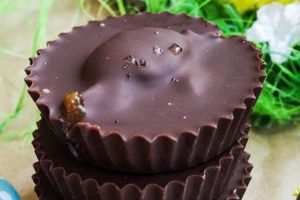
A confection typically involves sweet cherries enrobed in a rich, dark chocolate shell, with a liquid or soft fondant center. In its alternative form, no animal products are utilized in any part of its preparation. This requires careful selection of ingredients, replacing traditional dairy with plant-based alternatives in both the fondant and chocolate components. For example, a typical non-vegan version might use milk chocolate and dairy cream in the filling, while a plant-based version would use dark chocolate and coconut cream or other plant-based creams.
Offering an inclusive option for individuals adhering to dietary restrictions, this variation expands accessibility to a classic treat. Furthermore, it often aligns with ethical considerations concerning animal welfare and environmental sustainability. Historically, chocolate-covered cherries have been a popular indulgence, especially during holidays. This specific adaptation represents a modern evolution, reflecting growing consumer demand for ethical and plant-based food choices.
The following sections will explore the intricacies of crafting this type of treat, delve into ingredient considerations, and examine the various production methods employed by both commercial manufacturers and home confectioners. Furthermore, sourcing suitable ingredients, recipe variations, and storage recommendations will be addressed.
Crafting Plant-Based Chocolate-Covered Cherries
Producing satisfactory, plant-based chocolate-covered cherries requires careful attention to ingredient selection and process control. The following guidelines are designed to assist in achieving optimal results.
Tip 1: Cherry Selection: Opt for high-quality, pitted cherries, either fresh or preserved. If using fresh cherries, ensure they are thoroughly dried to prevent moisture from compromising the chocolate coating. Preserved cherries, such as maraschino, should be rinsed and patted dry.
Tip 2: Chocolate Tempering: Use a high-quality dark chocolate with a cocoa content of 70% or higher. Tempering the chocolate is crucial for achieving a smooth, glossy finish and preventing blooming. Employ a double boiler or microwave tempering method, ensuring the chocolate reaches the appropriate temperature range.
Tip 3: Fondant Preparation: When creating the plant-based fondant center, consider using a combination of plant-based butter or coconut oil, powdered sugar, and a liquid such as plant-based milk or cherry juice. The consistency should be firm enough to hold its shape around the cherry but soft enough to provide a pleasant texture.
Tip 4: Dipping Technique: Use dipping tools, such as forks or specialized dipping utensils, to ensure the cherries are fully coated in chocolate. Work quickly to prevent the fondant from softening due to the heat of the chocolate. Allow excess chocolate to drip off before placing the coated cherries on parchment paper.
Tip 5: Setting and Storage: Allow the chocolate-covered cherries to set completely at room temperature or in the refrigerator. Store them in an airtight container in a cool, dry place to maintain their texture and flavor. Avoid exposure to direct sunlight or excessive heat.
Tip 6: Alternative Sweeteners: Explore alternative sweeteners such as maple syrup or agave nectar in the fondant to cater to different dietary preferences or to reduce refined sugar content. Adjust the liquid content accordingly to maintain the desired consistency.
By adhering to these guidelines, one can effectively produce plant-based chocolate-covered cherries that meet expectations in terms of both taste and appearance. Careful preparation and precise execution are paramount.
The subsequent section will address potential challenges encountered during the preparation process and offer solutions for troubleshooting common issues.
1. Ingredients
The formulation of components stands as a critical determinant in the final quality and ethical standing of the confection. The replacement of traditional dairy and animal-derived ingredients with plant-based alternatives directly influences the taste, texture, and consumer appeal. For instance, conventional chocolate employs milk solids, while the alternative utilizes dark chocolate formulations free from dairy. The fondant center, typically containing butter or cream, necessitates substitution with plant-based fats like coconut oil or vegetable shortening to maintain a smooth consistency. The selection of high-quality cherries, whether fresh or preserved, is paramount, as the cherry’s flavor profile significantly impacts the overall taste. Inferior ingredients can compromise the product’s integrity, leading to undesirable outcomes in taste and texture.
An example of successful ingredient substitution is the utilization of aquafaba, the liquid from cooked chickpeas, as a binding agent in the fondant. This replicates the function of egg whites in conventional recipes, offering a suitable plant-based alternative. Furthermore, the selection of sustainably sourced cocoa and fair-trade certified sugar for the chocolate and fondant ensures ethical and responsible production practices. Conversely, the use of low-quality chocolate with artificial flavors or preservatives can detract from the overall sensory experience and undermine the health benefits associated with the plant-based components.
In summary, ingredient selection for plant-based chocolate-covered cherries is crucial for achieving the desired sensory attributes while adhering to ethical principles. The careful consideration of ingredient origin, quality, and processing methods is essential for delivering a product that meets consumer expectations and promotes responsible sourcing. Challenges exist in replicating the precise textures and flavors of traditional recipes, but innovative ingredient combinations offer solutions for creating a compelling alternative. Understanding the role of ingredients and their impact is foundational to the treat’s success.
2. Chocolate

Chocolate constitutes a defining element within the composition. Its role transcends mere flavor; it dictates the overall textural experience and significantly influences the perceived quality. The selection of the chocolate variety, its cocoa content, and its processing method directly impact the final product’s success. For plant-based versions, the absence of dairy requires the use of dark chocolate specifically formulated without milk solids or the implementation of plant-based milk alternatives within the chocolate’s production process. The choice between different dark chocolate types, such as those with varying cocoa percentages or those using different processing techniques (e.g., Dutch-processed), will profoundly affect the bitterness, sweetness, and melting characteristics of the chocolate enrobing the cherry and fondant.
The tempering process applied to the chocolate is also critical. Properly tempered chocolate exhibits a smooth, glossy appearance and a crisp snap, preventing the formation of bloom (a white, powdery coating caused by fat or sugar crystals rising to the surface). Untempered or poorly tempered chocolate will be dull, soft, and prone to melting at room temperature, detracting from the treat’s visual appeal and textural satisfaction. Therefore, a mastery of chocolate tempering techniques is essential for achieving a professional and palatable result. Consider, for instance, the difference between using a couverture chocolate specifically designed for coating versus a standard baking chocolate; the former, with its higher cocoa butter content, will yield a superior, more even coating.
In conclusion, the relationship between chocolate and the plant-based confection is one of fundamental importance. The chocolate’s quality, composition, and processing determine the overall success of the treat. Selecting appropriate dairy-free options, mastering tempering techniques, and understanding the nuances of different chocolate types are key to achieving a product that is visually appealing, texturally satisfying, and ethically sound. Ignoring these factors will inevitably lead to a substandard result, undermining the overall appeal of the confection. The chocolate itself becomes a hallmark of the quality.
3. Cherry Quality

Cherry quality is paramount in determining the overall appeal and flavor profile of any chocolate-covered cherry, and this holds especially true in its plant-based iterations. The cherry provides a counterpoint to the richness of the chocolate and sweetness of the fondant, making its inherent attributes critical to the final sensory experience. Poor quality cherries can detract significantly from the finished product, regardless of the quality of other components.
- Varietal Selection
The specific cherry varietal chosen influences the final product’s flavor, texture, and size. Tart varieties, such as Montmorency, provide a contrasting tang that balances the sweetness, while sweeter varieties, like Bing, offer a more harmonious blend. The choice directly affects the overall taste profile. For example, a confection using Rainier cherries will have a different flavor than one using dark sweet cherries.
- Freshness and Preservation
The state of the cherry, whether fresh, frozen, or preserved, impacts its texture and moisture content. Fresh cherries require careful handling to prevent bruising and spoilage, while preserved cherries, such as maraschino, often contain added sugars and artificial flavors that can alter the overall taste. Proper preservation methods are essential to maintain the cherry’s integrity. Improperly stored cherries, regardless of the preservation method, will diminish the quality of the final confection.
- Size and Pitting
Uniformity in size and efficient pitting are crucial for consistent chocolate coverage and a pleasant eating experience. Cherries that are too large may be difficult to coat evenly, while poorly pitted cherries present a safety hazard and detract from the overall quality. Furthermore, the visual appeal of the finished product relies on a uniform size. Manufacturers will often specify cherry sizes for automatic coating machines.
- Moisture Content
Excessive moisture in the cherries can compromise the chocolate coating, leading to blooming or a softened texture. Thoroughly drying fresh or preserved cherries is essential to ensure proper adhesion and a stable final product. Dehydration techniques, such as air drying or using a food dehydrator, are often employed to reduce moisture content. Failing to properly dry the cherries will affect the coating and shelf-life.
In conclusion, the quality of the cherry is an indispensable aspect of crafting a high-quality vegan chocolate-covered cherry. Attention to varietal selection, preservation method, size, pitting, and moisture content all contribute to the final taste, texture, and overall appeal. Neglecting these factors can result in a substandard product, regardless of the quality of the chocolate or fondant. The cherry is the keystone of this dessert.
4. Fondant texture

Fondant texture directly influences the overall eating experience of plant-based chocolate-covered cherries. Achieving a smooth, creamy, and slightly yielding center is crucial for complementing the snap of the chocolate shell and the burst of cherry flavor. An improperly textured fondantwhether too grainy, too firm, or too liquiddetracts from the sensory harmony of the confection. The texture dictates how the different components interact in the mouth, affecting perceived sweetness, richness, and overall satisfaction. For instance, a grainy fondant creates an unpleasant mouthfeel, while a runny fondant can compromise the chocolate coating and lead to a messy eating experience.
The creation of plant-based fondant presents unique challenges compared to traditional formulations, which often rely on dairy butter or cream for their smooth consistency. Plant-based fats, such as coconut oil or cocoa butter, require careful temperature control and precise ratios to achieve the desired texture. The addition of plant-based milks or fruit purees can further contribute to the smoothness and creaminess, but must be balanced to avoid excessive moisture. For example, a fondant recipe using too much almond milk may result in a soft, unstable center that oozes out over time, while a recipe relying solely on coconut oil at too low a temperature can produce a greasy or grainy texture. A successful plant-based fondant replicates the mouthfeel of traditional fondant, convincing those consumers who avoid animal products for health, ethical, or environmental reasons.
In summary, fondant texture represents a key attribute determining the quality and enjoyment of plant-based chocolate-covered cherries. Its impact spans from the initial tactile sensation to the overall balance of flavors and textures. Achieving an optimal texture requires a deep understanding of plant-based ingredient properties and meticulous attention to detail during the preparation process. Overcoming the challenges associated with plant-based ingredient substitution ultimately leads to a product that satisfies consumer expectations and aligns with ethical consumption principles. Careful consideration of fondant texture is not merely a culinary detail; it is a necessary element for delivering a superior plant-based confection.
5. Production methods
Production methods critically influence the quality, consistency, and scalability of plant-based chocolate-covered cherries. The choice of manufacturing processes affects everything from the texture of the fondant to the adhesion of the chocolate coating, impacting both the final product and its viability for mass production. The intricacies of each step necessitate precise control and adaptation to accommodate the unique characteristics of plant-based ingredients.
- Batch vs. Continuous Processing
Batch processing, suitable for smaller-scale production, allows for greater flexibility in recipe adjustments and closer monitoring of each stage. Continuous processing, common in large-scale operations, prioritizes efficiency and uniformity but requires precise standardization of ingredients and processes. The selection between these methods depends on production volume and desired level of customization. For example, a small-batch artisan producer may opt for manual dipping and individual attention to each cherry, while a large manufacturer would employ automated enrobing lines for increased throughput.
- Enrobing Techniques
Enrobing, the process of coating the cherries with chocolate, can be achieved through various methods. Hand-dipping, while labor-intensive, allows for meticulous control over chocolate thickness and placement. Automated enrobing machines offer speed and consistency but require careful calibration to ensure uniform coverage and minimize waste. The choice of enrobing technique impacts both the appearance and the structural integrity of the final product. An improperly calibrated enrobing machine can result in thin, uneven coatings that are prone to cracking or blooming.
- Temperature Control
Precise temperature control is paramount throughout the entire production process. From melting and tempering the chocolate to setting the finished cherries, maintaining the correct temperature range is crucial for achieving optimal texture and preventing defects. Inadequate temperature control can lead to grainy chocolate, soft fondant, or moisture migration, all of which compromise the quality and shelf life of the product. Industrial freezers are often utilized.
- Modified Atmosphere Packaging (MAP)
Employing MAP techniques can extend the shelf life of the confection by controlling the atmosphere within the packaging. This can reduce oxidation and microbial growth, preserving the quality and flavor of the finished product. This is especially relevant given that some ingredients may be prone to oxidation.
The selection and implementation of appropriate production methods are integral to the successful manufacture of plant-based chocolate-covered cherries. These methods must address the unique challenges associated with plant-based ingredients and ensure consistent quality, appearance, and shelf life. Efficient and controlled production, combined with packaging techniques, ensures the product reaches the consumer in optimal condition. Innovation in this area is ongoing, as manufacturers strive to optimize processes and create higher-quality, more appealing confections.
6. Storage
Proper storage is a critical determinant of the quality, shelf life, and overall consumer satisfaction associated with plant-based chocolate-covered cherries. Inadequate storage conditions can lead to a degradation of the product’s texture, flavor, and appearance, diminishing its appeal and potentially rendering it unsalable. The delicate nature of the confection, with its combination of chocolate, fondant, and cherries, necessitates careful consideration of environmental factors such as temperature, humidity, and light exposure.
- Temperature Control
Elevated temperatures can cause the chocolate to bloom, resulting in a dull, white coating on the surface. Furthermore, high temperatures can soften the fondant, leading to a loss of shape and a sticky texture. Refrigeration, while beneficial for slowing degradation, can also cause the chocolate to harden excessively, impacting the eating experience. Maintaining a stable, cool temperature, ideally between 60-70F (15-21C), is crucial. Improper temperature control directly affects the aesthetic appeal and textural quality of the confection, potentially deterring consumers.
- Humidity Levels
High humidity can promote moisture migration within the treat, causing the chocolate to become sticky and the fondant to liquefy. Conversely, low humidity can lead to drying and hardening of the fondant. Maintaining moderate humidity levels is essential for preserving the intended texture and preventing undesirable changes in consistency. Packaging that provides a moisture barrier is often utilized to mitigate the effects of fluctuating humidity. Failing to control humidity can lead to a significant reduction in the product’s shelf life and palatability.
- Light Exposure
Direct exposure to light, particularly sunlight, can accelerate the oxidation of fats in the chocolate and fondant, leading to rancidity and off-flavors. Furthermore, light can fade the color of the chocolate and any decorative elements, diminishing its visual appeal. Storing the confection in a dark, opaque container or shielding it from direct light is essential for preserving its flavor and appearance. Retail displays should be designed to minimize light exposure. Unprotected light exposure will accelerate product degradation, rendering it unappealing to consumers.
- Packaging Integrity
The packaging material plays a vital role in protecting the confection from environmental factors and physical damage. Airtight packaging is necessary to prevent moisture absorption and oxidation. Furthermore, the packaging should provide sufficient cushioning to prevent breakage or deformation during handling and transportation. Damaged packaging compromises the protective barrier, accelerating degradation and increasing the risk of contamination. The package should not only look nice, but perform a necessary function.
In summary, effective storage practices are indispensable for maintaining the quality and extending the shelf life of plant-based chocolate-covered cherries. Controlling temperature, humidity, and light exposure, along with ensuring packaging integrity, is essential for preserving the product’s desired characteristics and ensuring consumer satisfaction. Proper storage represents a critical element in the overall value chain, from production to consumption, ensuring that the confection reaches the consumer in optimal condition. Failing to implement appropriate measures has economic consequences.
Frequently Asked Questions About Plant-Based Chocolate Covered Cherries
This section addresses common inquiries regarding the composition, production, and characteristics of this specific confection. It aims to provide clear and concise answers to frequently raised points of concern or interest.
Question 1: What distinguishes a plant-based chocolate-covered cherry from a traditional one?
The primary distinction lies in the absence of animal-derived ingredients. Plant-based versions utilize dairy-free chocolate and substitute traditional fondant ingredients like butter or cream with plant-based alternatives such as coconut oil or plant-based butter. The cherry component remains consistent.
Question 2: What are common plant-based substitutes used in the fondant?
Common alternatives include coconut cream, plant-based butter, and nut butters. These ingredients are often combined with powdered sugar, plant-based milk, and flavorings to achieve a smooth and creamy texture comparable to traditional fondant.
Question 3: Does the absence of dairy impact the taste or texture of the chocolate?
The taste and texture can be affected, but high-quality dairy-free dark chocolate, often with a higher cocoa content, can provide a rich and satisfying alternative. Texture modifications may be necessary to mimic the creaminess of milk chocolate.
Question 4: Are these typically more expensive than traditional chocolate-covered cherries?
The cost can vary depending on the ingredients used and the production scale. Specialized plant-based ingredients may be more expensive than their conventional counterparts, potentially influencing the final price.
Question 5: What is the typical shelf life compared to traditional chocolate-covered cherries?
Shelf life can be similar, but it is influenced by the specific plant-based ingredients used. Some plant-based fats may be more prone to oxidation than dairy butter, potentially shortening the shelf life. Proper storage, in a cool, dry place, is essential for both types.
Question 6: Where can these confections be purchased?
These types of sweets are available at specialty stores, health food stores, and online retailers specializing in plant-based products. Major grocery chains may also carry select brands.
In summary, plant-based chocolate-covered cherries offer a viable alternative to traditional confections, appealing to those with dietary restrictions or ethical preferences. Careful attention to ingredient selection and production methods is essential for achieving a product that meets consumer expectations.
The subsequent section will provide some concluding remarks and thoughts regarding the future of this dessert.
Conclusion
This exploration has detailed the complexities of crafting plant-based chocolate-covered cherries, examining the essential aspects of ingredient selection, production methodologies, and storage considerations. The viability of this confectionery relies on a meticulous understanding of plant-based alternatives and the challenges inherent in replicating traditional textures and flavors. From the selection of high-quality cherries to the precise tempering of dairy-free chocolate and the formulation of a creamy plant-based fondant, each step demands careful attention to detail.
The evolution of food technology and consumer demand for ethical and inclusive food options suggests a continued expansion in the availability and refinement of plant-based confections. As the industry continues to innovate and address the challenges of ingredient substitution and production scaling, vegan chocolate covered cherries represent a compelling example of how traditional treats can be reimagined to meet evolving dietary and ethical considerations. Further research and development are crucial to optimizing these alternatives and solidifying their place in the broader confectionery landscape.