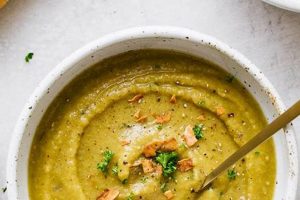
A creamy, plant-based dish featuring broccoli as a primary ingredient, emulating the taste and texture of traditional cheese-based broccoli soup while excluding all animal products. The “cheesy” flavor profile is typically achieved through ingredients such as nutritional yeast, cashews, or other plant-based cheese alternatives, blended to create a smooth and rich consistency. Examples include recipes using blended cashews and vegetables to create a smooth base, combined with steamed broccoli florets for texture.
This particular culinary creation offers a healthful and ethical alternative to dairy-laden versions. It can be a significant source of vitamins, minerals, and fiber, owing to the nutritional profile of broccoli and other added vegetables. The development and increasing popularity of this dish reflects a growing interest in plant-based diets and the desire for comforting, familiar foods adapted to vegan principles. Its appeal lies in its ability to deliver familiar flavors and textures while adhering to dietary restrictions and ethical considerations.
Understanding the composition and creation process of this soup opens the door to exploring various recipe adaptations, nutritional benefits, and ingredient substitutions. The following sections will delve deeper into specific aspects of crafting such a dish, providing insights into techniques, nutritional considerations, and common variations.
Crafting Excellent Results
Achieving optimal flavor and texture in this plant-based soup requires careful attention to ingredient selection and preparation techniques. The following tips provide guidance for consistently producing a high-quality dish.
Tip 1: Broccoli Preparation: Employ a combination of finely chopped broccoli stems and florets. Stems, often discarded, contribute significant flavor and body when properly cooked and blended. Blanching the florets briefly before adding them to the soup base helps retain their vibrant green color and crisp-tender texture.
Tip 2: The Cheesy Element: Nutritional yeast is vital. High-quality nutritional yeast provides the characteristic umami and cheesy flavor notes. Experiment with different brands, as flavor profiles can vary. Add it gradually, tasting as you go, to achieve the desired intensity.
Tip 3: Cashew Cream Mastery: If using cashews, ensure they are soaked for at least four hours, or ideally overnight. This step is crucial for achieving a smooth and creamy texture when blended. Boiling the cashews for 10-15 minutes after soaking can further enhance the blending process.
Tip 4: Flavor Depth Enhancement: Sauting aromatics such as onions, garlic, and celery in olive oil or vegan butter before adding the broth and broccoli deepens the overall flavor profile. Consider adding a pinch of smoked paprika or a dash of Dijon mustard for added complexity.
Tip 5: Liquid Ratio Management: Begin with a smaller amount of broth than the recipe suggests and gradually add more until the desired consistency is reached. This prevents the soup from becoming too thin. Remember the broccoli will release water as it cooks.
Tip 6: Salt Optimization: Properly seasoning the soup with salt is crucial for bringing out the flavors of the other ingredients. Add salt gradually, tasting frequently. The nutritional yeast may contribute some saltiness, so adjust accordingly.
Tip 7: Blending Technique: Use a high-powered blender for the smoothest possible texture. If using a regular blender, blend in batches to avoid overflowing. An immersion blender can also be used directly in the pot, but may not achieve the same level of smoothness.
By implementing these strategies, one can consistently achieve a flavorful, creamy, and texturally pleasing product. Paying attention to the nuances of ingredient preparation and blending is key to success.
The subsequent sections will further explore recipe variations and potential ingredient substitutions, providing additional avenues for culinary exploration.
1. Creaminess

Creaminess is a crucial attribute, significantly influencing the overall sensory experience. In the realm of such plant-based dish, the absence of traditional dairy products necessitates innovative approaches to achieve a comparable texture. The strategic incorporation of ingredients and techniques directly contributes to the soup’s perceived richness and smoothness, transforming it from a simple vegetable broth into a comforting and satisfying meal. Failure to achieve adequate creaminess can result in a thin and watery consistency, detracting from the desired indulgent quality.
Methods for achieving this characteristic in plant-based versions typically involve utilizing blended ingredients. Cashews, when soaked and blended, create a rich, dairy-like base. Full-fat coconut milk provides a similarly creamy texture. Other options include white beans or potatoes, which thicken the soup and contribute to a smoother mouthfeel. The choice of ingredient directly impacts the final flavor profile. For example, cashews impart a neutral flavor, while coconut milk adds a subtle sweetness. The blending process is equally critical. High-powered blenders are often essential to fully emulsify the ingredients and eliminate any graininess.
Mastering the art of creaminess in a vegan rendition offers practical benefits. It expands dietary options for individuals adhering to vegan or dairy-free lifestyles, providing a comforting and flavorful alternative to traditional soups. Furthermore, understanding the principles of plant-based creaminess allows for greater culinary creativity, enabling the adaptation of other dairy-based recipes into plant-based versions. The pursuit of ideal creaminess, however, presents challenges. The ingredients used can be calorie-dense, requiring careful portion control. Achieving the desired texture also requires attention to detail in both ingredient preparation and blending technique. Ultimately, the successful execution of creaminess is key to a satisfying dish and demonstrates the potential of plant-based cuisine.
2. Broccoli Texture
Broccoli texture plays a pivotal role in defining the overall eating experience of a plant-based cheesy soup variant. It provides a counterpoint to the creamy base, contributing to both the flavor profile and the mouthfeel. The proper management of broccoli texture enhances the appeal of this vegan adaptation.
- Degree of Doneness
The doneness of the broccoli directly influences its texture. Overcooked broccoli becomes mushy, detracting from the soup’s appeal. Undercooked broccoli, on the other hand, can be unpleasantly crunchy. The ideal texture lies in a state of crisp-tenderness, where the broccoli offers slight resistance to the bite but is easily chewed. Recipes often suggest steaming or lightly boiling the broccoli until it reaches this stage. This textural balance is critical for maintaining the soup’s overall integrity.
- Broccoli Preparation Style
The method of broccoli preparation significantly impacts its texture. Chopping the broccoli into uniformly sized florets ensures even cooking and a consistent texture throughout the soup. Some recipes call for reserving a portion of the broccoli to be added later in the cooking process, preserving its crispness and providing a textural contrast. Others advocate for blending a portion of the broccoli into the soup to further enhance its creamy consistency, while leaving the remaining florets intact for added texture.
- Impact of Freezing
The use of frozen versus fresh broccoli affects the final texture. Frozen broccoli, due to the freezing process, tends to be softer than fresh broccoli. This difference should be accounted for in the cooking time; frozen broccoli typically requires less cooking time to achieve the desired level of tenderness. If using frozen broccoli, it may be beneficial to add it towards the end of the cooking process to prevent it from becoming overly mushy.
- Textural Contrast
The textural contrast between the broccoli and the creamy base is essential for a satisfying culinary experience. A purely smooth soup can be monotonous. Introducing textural elements, such as small broccoli florets or even toasted breadcrumbs, provides a welcome variation. This interplay between textures elevates the dish, making it more engaging and pleasurable to consume.
In summation, Broccoli texture, when carefully considered, is a crucial determinant of the success of a dairy-free cheese-style broccoli soup. Whether aiming for a crisp-tender consistency or incorporating a variety of textures, the skillful management of this element enhances the overall sensory experience, resulting in a more enjoyable and satisfying dish.
3. Cheesy Flavor
The successful emulation of cheese flavor in dairy-free broccoli soup recipes is paramount to their culinary acceptance. This endeavor presents a unique challenge, requiring the strategic utilization of plant-based ingredients to replicate the complex flavor profile and umami depth typically associated with dairy cheese.
- Nutritional Yeast
Nutritional yeast is frequently employed to impart a savory, cheese-like flavor to vegan dishes. This deactivated yeast offers a naturally umami-rich taste due to the presence of glutamic acid. In the context of plant-based cheese-flavored broccoli soup, nutritional yeast contributes a foundational savory element, mimicking the inherent flavor compounds found in dairy cheese. The intensity of the cheesy flavor can be adjusted by varying the amount of nutritional yeast added to the recipe. Different brands of nutritional yeast exhibit varying flavor profiles, influencing the soup’s final taste.
- Cashews and Other Nuts
Cashews, and other nuts, when soaked and blended, create a creamy base that can be further flavored to resemble cheese. Their natural fats contribute to a rich mouthfeel, while the addition of ingredients such as lemon juice and garlic powder can enhance the perceived cheesy tang. The blending process is crucial; a high-powered blender is required to achieve a smooth and velvety texture. The use of nuts not only contributes to the flavor but also adds nutritional value, including protein and healthy fats.
- Vegetable Broth Enhancement
The selection of vegetable broth significantly impacts the overall flavor of the soup. A high-quality, flavorful vegetable broth provides a robust foundation for the other ingredients. Certain vegetable broths, particularly those with umami-rich vegetables like mushrooms or roasted tomatoes, can enhance the perceived cheese flavor. The careful selection of vegetable broth can reduce the reliance on other cheese-flavoring agents, resulting in a more balanced and nuanced final product.
- Fermented Ingredients
Incorporating fermented ingredients, such as miso paste or sauerkraut juice, can introduce complex savory notes that mimic the aged flavor of certain cheeses. Miso paste, in particular, offers a depth of flavor that complements the broccoli and other ingredients. The addition of fermented components requires careful balancing, as their strong flavors can easily overpower the other elements of the soup. A small amount of fermented ingredient can significantly enhance the overall complexity and perceived cheese flavor.
Achieving an authentic and compelling cheese flavor in a plant-based broccoli soup necessitates a strategic combination of ingredients and techniques. The interplay between nutritional yeast, nuts, enhanced vegetable broth, and fermented components allows for the creation of a flavorful and satisfying dish that caters to both vegan dietary restrictions and the desire for familiar comfort foods. These elements, properly integrated, elevate the soup beyond a simple vegetable broth, offering a convincing cheese-like experience.
4. Nutritional Profile

The nutritional profile of plant-based cheese-style broccoli soup constitutes a critical consideration for consumers seeking both palatable and health-conscious meal options. It is essential to evaluate the macro- and micronutrient composition of the dish to ascertain its contribution to a balanced diet. Understanding the inherent benefits and potential limitations associated with its nutrient content enables informed dietary choices.
- Vitamin and Mineral Content
Broccoli, the primary vegetable component, contributes substantially to the soup’s vitamin and mineral content. It is a significant source of vitamin C, an antioxidant that supports immune function, and vitamin K, which is essential for blood clotting and bone health. Broccoli also provides folate, a B vitamin crucial for cell growth and development, as well as potassium, which helps regulate blood pressure. The addition of other vegetables, such as onions and carrots, further enhances the vitamin and mineral profile of the soup. These micronutrients play vital roles in various physiological processes, contributing to overall health and well-being. A deficiency in these nutrients can lead to impaired immune function, increased risk of chronic diseases, and other adverse health outcomes.
- Fiber Contribution
The presence of broccoli and other vegetables results in a notable fiber content within the soup. Dietary fiber promotes digestive health, aids in regulating blood sugar levels, and contributes to feelings of satiety, which can assist in weight management. Both soluble and insoluble fiber are present, each offering distinct health benefits. Soluble fiber can help lower cholesterol levels, while insoluble fiber promotes bowel regularity. Adequate fiber intake is associated with a reduced risk of cardiovascular disease, type 2 diabetes, and certain types of cancer. The inclusion of whole plant foods, like broccoli, ensures a significant contribution to daily fiber requirements.
- Protein Sources and Amino Acid Profile
While broccoli provides some protein, the overall protein content of vegan cheese-style broccoli soup is often augmented by the addition of other plant-based protein sources. Cashews, nutritional yeast, or plant-based milk alternatives contribute essential amino acids. Nutritional yeast is a complete protein, meaning it contains all nine essential amino acids that the body cannot produce on its own. Cashews provide a source of protein and healthy fats. The combination of these ingredients ensures a more complete amino acid profile, which is crucial for muscle growth, repair, and overall protein synthesis. Insufficient protein intake can lead to muscle loss, impaired immune function, and hormonal imbalances. Therefore, strategic selection of protein sources is essential for optimizing the nutritional value of the soup.
- Fat Content and Quality
The fat content is primarily derived from ingredients such as cashews, coconut milk, or olive oil. The type of fat present significantly impacts the soup’s nutritional value. Cashews provide monounsaturated fats, which are considered heart-healthy. Coconut milk contributes saturated fat, the consumption of which should be moderated as part of a balanced diet. Olive oil offers monounsaturated fats and antioxidants. It is advisable to prioritize recipes that emphasize sources of unsaturated fats and minimize the use of saturated fats. The fat content contributes to the soup’s satiety and palatability, but excessive consumption can contribute to weight gain and elevated cholesterol levels. The judicious use of healthy fats is essential for maximizing the nutritional benefits while minimizing potential risks.
- Sodium Levels
Sodium content needs to be carefully monitored. Ingredients like vegetable broth, nutritional yeast, and some vegan cheese alternatives can contain significant amounts of sodium. Excessive sodium intake is linked to hypertension and increased risk of cardiovascular disease. Therefore, individuals should opt for low-sodium or no-salt-added vegetable broths and carefully monitor the amount of nutritional yeast and other sodium-containing ingredients used in the recipe. Seasoning with herbs and spices, rather than relying solely on salt, can help reduce sodium content without sacrificing flavor. Regular monitoring of sodium intake is crucial for maintaining cardiovascular health.
In conclusion, the careful selection of ingredients allows for a nutritionally sound meal. The inclusion of broccoli provides essential vitamins, minerals, and fiber, while protein sources like cashews and nutritional yeast contribute to a balanced amino acid profile. Managing fat content and sodium levels is essential for optimizing the dish’s nutritional value. By considering these factors, individuals can enjoy a flavorful and health-promoting plant-based meal.
5. Vegan Compliance

Vegan compliance forms the foundational principle upon which the very existence of plant-based cheese-style broccoli soup rests. It represents a strict adherence to a dietary philosophy that excludes all animal-derived products, necessitating the meticulous selection of ingredients and the conscious avoidance of any component originating from animal sources. Failure to uphold this compliance invalidates the dish’s categorization, transforming it into something distinct from its intended form. Real-world examples illustrate this: a recipe including dairy-based cheese, despite other vegan ingredients, would fail to achieve vegan compliance and thus not be accurately classified as a vegan dish.
The practical significance of understanding vegan compliance in the context of this soup lies in its implications for dietary restrictions and ethical considerations. Individuals adhering to a vegan lifestyle do so for various reasons, including animal welfare, environmental concerns, and health considerations. Ensuring that every ingredient aligns with vegan principles, from the vegetable broth to the thickening agent, is paramount. The utilization of carefully selected plant-based alternatives, such as nutritional yeast for cheesy flavor and blended cashews for creaminess, demonstrates a tangible commitment to upholding vegan compliance. Accurate labeling and transparent ingredient lists are essential for consumers to verify compliance and make informed choices.
In essence, vegan compliance is not merely a label but an inherent characteristic that defines the integrity of plant-based cheese-style broccoli soup. Challenges may arise in identifying hidden animal-derived ingredients or navigating complex manufacturing processes, but consistent vigilance and dedication to plant-based principles are crucial for maintaining authenticity. The connection between vegan compliance and this culinary creation underscores the broader movement towards ethical and sustainable food choices, influencing culinary innovation and promoting transparency in the food industry.
6. Aromatic Herbs

The strategic deployment of aromatic herbs significantly influences the flavor profile of vegan cheesy broccoli soup, elevating it beyond a simple vegetable pure. These herbs contribute volatile compounds that interact with the other ingredients, creating layers of complexity and depth that emulate, and in some cases surpass, the nuances of traditional dairy-based versions. The selection and application of these herbs requires a nuanced understanding of their individual characteristics and their synergistic potential within the soup’s composition.
- Thyme and Savory: Earthy Undertones
Thyme and savory introduce earthy and slightly peppery notes that complement the inherent flavors of broccoli and plant-based cheese alternatives. These herbs provide a grounding element, preventing the soup from becoming overly sweet or one-dimensional. Their subtle bitterness also balances the richness of the creamy base, creating a more complex and palatable taste experience. For example, a sprig of fresh thyme simmered in the soup during the cooking process releases its aromatic oils, infusing the entire dish with its distinctive flavor. Similarly, a pinch of dried savory added towards the end of cooking contributes a subtle savory depth that enhances the overall umami profile. These herbs mimic the complexity often found in aged cheeses.
- Chives and Parsley: Freshness and Brightness
Chives and parsley offer a contrasting element of freshness and brightness, cutting through the richness of the creamy base and providing a vibrant counterpoint to the earthier flavors. These herbs are typically added towards the end of cooking or as a garnish to preserve their delicate flavors and vibrant green color. Finely chopped chives contribute a mild onion-like flavor, while parsley provides a clean, herbaceous note. Their presence prevents the soup from becoming heavy or monotonous, adding a refreshing and uplifting quality. For instance, a sprinkle of freshly chopped parsley and chives on top of the finished soup enhances its visual appeal and provides a burst of fresh flavor with each spoonful. This approach mirrors the use of fresh herbs to brighten and balance rich dairy-based soups.
- Nutmeg and White Pepper: Subtle Warmth
A touch of nutmeg and white pepper, used sparingly, can introduce subtle warmth and enhance the overall flavor harmony. Nutmeg contributes a delicate, slightly sweet spice note that complements the creamy texture and cheese-like flavors. White pepper provides a gentle heat that is less assertive than black pepper, adding a subtle complexity without overpowering the other ingredients. These spices should be used with restraint, as their flavors can easily become dominant if overapplied. For example, a mere pinch of freshly grated nutmeg added towards the end of cooking can subtly enhance the soup’s overall depth and warmth. Similarly, a light dusting of white pepper provides a gentle, lingering heat that balances the richness of the creamy base. This technique mirrors the use of spices in traditional cheese sauces to enhance flavor and complexity.
- Rosemary and Sage: Aromatic Complexity
Rosemary and sage, while potent, can contribute significant aromatic complexity to vegan cheesy broccoli soup when used judiciously. These herbs possess strong, resinous flavors that can complement the earthiness of broccoli and the savory notes of plant-based cheese alternatives. However, due to their intensity, they should be used sparingly to avoid overpowering the other flavors. For example, a small sprig of rosemary infused in the soup during the cooking process can impart a subtle, woodsy aroma. Similarly, a pinch of dried sage added early in the cooking process can contribute a savory depth that enhances the overall flavor profile. These herbs provide a sophisticated twist, elevating the soup beyond simple comfort food.
In summary, the skillful integration of aromatic herbs is indispensable for creating a vegan cheesy broccoli soup that is both flavorful and nuanced. The strategic selection and application of herbs such as thyme, chives, nutmeg, and rosemary allows for the creation of a complex flavor profile that balances earthiness, freshness, warmth, and aromatic complexity. When artfully combined, these herbs elevate the dish, providing a palatable and satisfying experience that aligns with both dietary restrictions and gastronomic aspirations. These additions also highlight the creative potential of plant-based cuisine.
7. Seasoning Balance

Seasoning balance is a cornerstone of culinary excellence, particularly crucial when crafting complex dishes such as dairy-free cheese-style broccoli soup. It represents the harmonious interplay of various flavor elements, ensuring no single taste sensation dominates, but rather, all components coalesce into a cohesive and satisfying whole. Achieving this equilibrium requires careful consideration of each ingredient’s inherent characteristics and their potential interactions within the final product.
- Salt as a Flavor Enhancer
Salt functions not merely as a seasoning, but as a flavor enhancer, accentuating the inherent tastes of other ingredients. In dairy-free cheese-style broccoli soup, salt is crucial for bringing out the sweetness of the broccoli, the savory notes of nutritional yeast, and the richness of the cashew cream. Insufficient salt results in a bland and uninspired dish, while excessive salt overpowers the other flavors. A well-seasoned soup exhibits a subtle salinity that enhances the overall experience without being overtly salty. The judicious use of salt unlocks the full potential of the other components, creating a more vibrant and flavorful profile.
- Acidity for Contrast
Acidity provides a critical counterpoint to the richness and creaminess of the soup. A squeeze of lemon juice or a splash of apple cider vinegar introduces a tangy note that cuts through the fat and brightens the overall flavor profile. Acidity also balances the earthiness of the broccoli, preventing the soup from becoming overly heavy or monotonous. Insufficient acidity results in a soup that lacks vibrancy, while excessive acidity can create an overly sour or tart taste. A well-balanced soup showcases a subtle tanginess that complements the other flavors, adding complexity and depth. This approach mirrors the use of acidity in traditional cream-based soups to balance richness.
- Umami Depth
Umami, often described as a savory or meaty taste, contributes depth and complexity. In the context of plant-based cuisine, achieving umami often involves the strategic use of ingredients such as nutritional yeast, mushrooms, or soy sauce. Nutritional yeast, a key component in achieving a cheese-like flavor, also provides a significant source of umami. These elements amplify the existing flavor profile, making the soup richer, more complex, and more satisfying. Without adequate umami, the soup may lack depth and dimension. The integration of umami sources can mimic and enhance the savory aspects of traditional cheese.
- Spice Integration
The incorporation of spices contributes warmth and complexity. White pepper, nutmeg, or a pinch of smoked paprika introduces subtle layers of flavor that elevate the soup beyond a basic blend of ingredients. Spices should be used judiciously, as their intensity can easily overwhelm the other flavors. The goal is to enhance, not dominate. The specific spices used depend on the desired flavor profile, but a touch of warmth and spice adds depth and interest to the soup. This careful spice integration provides nuances often found in gourmet recipes.
The orchestration of these elements salt, acidity, umami, and spice constitutes the art of seasoning balance. In the context of a dairy-free cheese-style broccoli soup, achieving this equilibrium is paramount for creating a flavorful, satisfying, and nutritionally complete dish. This deliberate approach ensures an exceptional culinary outcome.
Frequently Asked Questions
The following addresses common inquiries concerning the preparation, ingredients, and nutritional aspects of dairy-free cheese-flavored broccoli soup.
Question 1: What is the primary ingredient used to replicate the cheese flavor in a vegan broccoli soup recipe?
Nutritional yeast serves as the primary ingredient for replicating the cheese flavor profile. This deactivated yeast provides a savory, umami-rich taste, emulating the inherent flavor compounds associated with dairy cheese.
Question 2: Can frozen broccoli be substituted for fresh broccoli in this type of soup?
Frozen broccoli can be substituted, though consideration should be given to the altered texture resulting from the freezing process. Frozen broccoli tends to be softer than fresh; therefore, cooking times should be adjusted accordingly to prevent overcooking.
Question 3: What methods are available for achieving a creamy texture in a dairy-free broccoli soup?
Various methods exist for achieving a creamy texture. Soaked and blended cashews provide a rich, dairy-like base. Full-fat coconut milk offers a similar texture. White beans or potatoes can also be used as thickening agents to enhance smoothness.
Question 4: Is it necessary to soak cashews before blending them for a dairy-free broccoli soup?
Soaking cashews prior to blending is highly recommended. Soaking softens the cashews, facilitating a smoother and creamier texture in the final product. Ideally, cashews should be soaked for at least four hours, or overnight.
Question 5: What are some common additions to enhance the overall flavor profile of this vegan soup?
Several additions can enhance the flavor profile. A pinch of smoked paprika or a dash of Dijon mustard can add complexity. Sauteing aromatics such as onions, garlic, and celery prior to adding the broth also deepens the overall flavor.
Question 6: What is the recommended approach for managing the sodium content in the vegan cheesy broccoli soup recipe?
Opt for low-sodium or no-salt-added vegetable broths. Additionally, carefully monitor the quantity of nutritional yeast and other sodium-containing ingredients used. Seasoning with herbs and spices, rather than relying solely on salt, can further help reduce sodium content.
Proper ingredient selection and preparation techniques are critical for achieving a flavorful and nutritionally balanced dairy-free cheese-flavored broccoli soup. Understanding the role of individual ingredients and adjusting cooking times as needed contributes to a successful culinary outcome.
The subsequent section will explore specific recipe adaptations, providing further insights into culinary innovation within this dietary framework.
Conclusion
The preceding exploration has illuminated various facets of plant-based cheese-flavored broccoli soup, encompassing its definition, creation, nutritional aspects, and culinary variations. Key considerations have included the critical role of ingredients such as nutritional yeast in replicating cheese flavor, the importance of appropriate vegetable preparation for optimal texture, and the need for careful attention to seasoning balance to achieve a satisfying final product.
The ability to create a palatable and nutritious plant-based version of a traditionally dairy-rich dish highlights the continued innovation within vegan cuisine. Continued exploration and refinement of these techniques promises to further expand the options available to individuals seeking both ethical and healthful dietary choices.