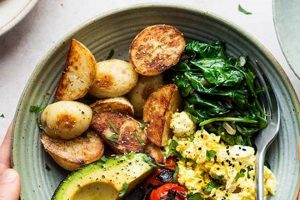
The term in question refers to a baked dish, often served in the morning, which substitutes animal-derived ingredients with plant-based alternatives. Its base usually consists of cubed or shredded potatoes, combined with vegetables, herbs, and spices. A binding agent, such as a plant-based milk alternative mixed with starch, helps to solidify the casserole. For instance, a recipe might include diced bell peppers, onions, and spinach mixed with potatoes and a cashew-based cream sauce.
The appeal of such a dish lies in its adaptability to dietary restrictions and ethical considerations. Individuals following a plant-based diet can enjoy a hearty and satisfying breakfast option that aligns with their values. Historically, casseroles have served as a convenient way to utilize leftover ingredients, minimizing food waste. This plant-based version provides the same benefits, while also offering a potentially healthier profile due to the absence of cholesterol and saturated fats found in traditional recipes.
Subsequent sections will delve into specific ingredient substitutions, preparation techniques, nutritional considerations, and recipe variations to facilitate the creation of a successful and flavorful dish that caters to those seeking a plant-based alternative to traditional breakfast casseroles.
Preparation and Enhancement Strategies
The following strategies aim to improve the outcome of a plant-based potato casserole, ensuring both flavor and texture meet expectations.
Tip 1: Potato Selection: Choose potato varieties based on desired texture. Russet potatoes provide a fluffy interior, while Yukon Golds offer a creamier consistency. Experimentation can lead to preferred outcomes.
Tip 2: Pre-Cooking Potatoes: Parboiling or roasting potatoes before adding them to the casserole prevents a gummy texture. Partial cooking ensures even heating and softens the potatoes for better integration with other ingredients.
Tip 3: Plant-Based Cheese Alternatives: Explore different plant-based cheese options. Some varieties melt better than others. A blend of nutritional yeast, cashews, and spices can mimic a cheesy flavor when suitable commercially produced alternatives are unavailable.
Tip 4: Incorporating Vegetables: Saut vegetables such as onions, peppers, and mushrooms before adding them to the casserole. This step enhances their flavor and reduces moisture content, preventing a soggy final product.
Tip 5: Binding Agents: Utilize a starch-based slurry (e.g., cornstarch or tapioca starch mixed with plant-based milk) to bind the casserole. This creates a cohesive structure and prevents separation of ingredients during baking.
Tip 6: Seasoning and Spices: Season generously with herbs and spices. Smoked paprika, garlic powder, onion powder, and dried thyme can add depth of flavor. Adjust seasoning to personal preferences.
Tip 7: Topping Considerations: Consider a crispy topping for added texture. Breadcrumbs, crushed cornflakes, or a mixture of oats and nuts can provide a satisfying crunch.
These strategies contribute to a more palatable and well-structured plant-based potato casserole, addressing common challenges associated with ingredient substitutions.
The concluding section will provide example recipes and address potential issues that may arise during preparation.
1. Potato Variety

The selection of potato variety exerts a direct influence on the texture, flavor profile, and overall structural integrity of a vegan breakfast casserole. Different potato types possess varying starch contents and moisture levels, thereby impacting the dish’s final consistency. High-starch potatoes, such as Russets, yield a light and fluffy interior when cooked, contributing to a less dense casserole. In contrast, low-starch, waxy potatoes like Yukon Golds or red potatoes maintain their shape during cooking, resulting in a creamier and more structured outcome. The choice hinges on the desired texture, with Russets best suited for a lighter, airy casserole and Yukon Golds preferable for a denser, richer consistency.
The specific attributes of the potato interact with other ingredients in the casserole. For example, a high-starch potato may require a greater proportion of binding agent (e.g., plant-based milk and cornstarch) to prevent dryness. Conversely, a waxy potato, due to its lower starch content, may require less binding agent. The selection also affects the absorption of flavors from other components, such as herbs, spices, and plant-based cheese alternatives. Experimentation with different varieties allows for fine-tuning the flavor profile and achieving the optimal balance of textures within the casserole.
In summary, the potato variety represents a critical variable in vegan breakfast casserole preparation. Understanding the characteristics of different potato types enables informed decisions that directly impact the textural and flavor qualities of the final dish. Choosing the appropriate variety, aligned with the intended texture and flavor profile, is a fundamental step toward creating a successful and satisfying plant-based breakfast casserole.
2. Plant-Based Cheese

Plant-based cheese alternatives serve as a crucial ingredient in the creation of a successful vegan breakfast casserole. Their role extends beyond mere flavor contribution; they significantly influence texture, moisture content, and overall palatability. Understanding the characteristics of different plant-based cheeses is essential for achieving the desired result.
- Melting Properties
The ability of a plant-based cheese to melt smoothly and evenly is paramount in a casserole. Some alternatives, particularly those based on tapioca starch or modified food starch, exhibit superior melting properties compared to nut-based varieties. In a casserole, adequate melting ensures the cheese integrates with other ingredients, contributing to a cohesive texture and preventing isolated pockets of unmelted cheese. Insufficient melting can result in a dry, crumbly texture, detracting from the overall eating experience.
- Flavor Profiles
Plant-based cheeses present a diverse range of flavor profiles, from mild and creamy to sharp and tangy. The choice of flavor profile should complement the other ingredients in the casserole. For instance, a smoked Gouda-style plant-based cheese can enhance the savory notes of potatoes and vegetables, while a mozzarella-style alternative provides a milder, more neutral base. Careful consideration of flavor pairings is vital for achieving a balanced and harmonious taste.
- Ingredient Composition
The primary ingredients in plant-based cheeses impact their performance in a casserole. Coconut oil-based cheeses tend to be high in saturated fat and may impart a distinct coconut flavor, while nut-based cheeses, such as those made from cashews or almonds, offer a richer, creamier texture but may not melt as readily. Understanding the composition of a particular cheese alternative allows for informed adjustments to the recipe, such as increasing the moisture content or adding a melting agent.
- Moisture Content
The moisture content of a plant-based cheese affects the overall moisture balance of the casserole. Cheeses with high moisture content can contribute to a soggy texture, while those with low moisture content may result in a dry casserole. It may be necessary to adjust other liquid ingredients (e.g., plant-based milk) accordingly, depending on the specific cheese alternative used. Monitoring the moisture level during preparation is crucial for achieving the desired consistency.
The integration of plant-based cheese alternatives represents a critical aspect of vegan breakfast casserole construction. Selection criteria encompass melting behavior, taste considerations, ingredient foundations, and maintaining a balance of moisture. Strategic use can improve the texture and flavor, satisfying the palate and dietary needs of those seeking a plant-based version of a traditional breakfast dish.
3. Egg Substitute
The absence of eggs in a vegan breakfast casserole necessitates the use of egg substitutes to provide binding, moisture, and structural integrity. The selection of an appropriate egg substitute directly impacts the texture and cohesiveness of the final product. Several plant-based options exist, each with distinct properties and suitability for this application.
- Flaxseed Meal
Ground flaxseed, when mixed with water, forms a viscous gel that emulates the binding properties of eggs. Typically, a mixture of one tablespoon of flaxseed meal and three tablespoons of water, left to sit for approximately five minutes, can replace one egg. In a potato casserole, flaxseed meal contributes to a slightly nutty flavor and aids in holding the ingredients together during baking. However, excessive use can result in a dense texture.
- Chia Seeds
Similar to flaxseed, chia seeds also create a gel-like consistency when hydrated. The ratio is generally the same as with flaxseed: one tablespoon of chia seeds mixed with three tablespoons of water replaces one egg. Chia seeds offer a more neutral flavor compared to flaxseed. They provide binding properties and contribute to moisture retention, although they may result in a slightly more textured casserole.
- Aquafaba
Aquafaba, the liquid derived from cooked chickpeas, possesses unique foaming and binding capabilities. It can be whipped to create a meringue-like texture or used directly as an egg replacement in baking. Approximately three tablespoons of aquafaba can substitute one egg. Its relatively neutral flavor makes it a versatile option, particularly useful for creating a lighter and airier casserole texture. However, its binding strength may be less pronounced than flaxseed or chia seeds.
- Commercial Egg Replacers
Several commercially available vegan egg replacers are formulated with a blend of starches, flours, and leavening agents. These products are designed to mimic the functionality of eggs in various baking applications. The usage instructions vary depending on the specific brand; therefore, adherence to the manufacturer’s guidelines is crucial. While convenient, these replacers may contain ingredients that are not suitable for all dietary restrictions or preferences.
The strategic incorporation of an appropriate egg substitute is crucial for achieving a satisfactory texture and structure in a vegan breakfast casserole. The choice depends on the desired outcome, with flaxseed and chia seeds offering stronger binding, aquafaba providing a lighter texture, and commercial replacers providing convenience. Careful consideration of the properties of each substitute ensures a cohesive and palatable plant-based casserole.
4. Vegetable Additions

The integration of vegetables into a vegan breakfast casserole featuring potatoes is not merely an aesthetic choice; it significantly contributes to the nutritional profile, flavor complexity, and textural diversity of the final dish. Careful selection and preparation of vegetables are paramount to creating a well-balanced and palatable meal.
- Nutritional Enhancement
Vegetables introduce a spectrum of vitamins, minerals, and dietary fiber that complement the carbohydrate content of potatoes. For instance, bell peppers offer vitamin C, spinach provides iron, and onions contribute quercetin, an antioxidant. The addition of diverse vegetables enhances the nutritional density of the casserole, promoting overall health and well-being. This is particularly relevant in a vegan diet, where obtaining a wide range of nutrients from plant-based sources is essential.
- Flavor Modulation
Vegetables impart a range of flavors that counterbalance the inherent starchiness of potatoes. Onions and garlic contribute pungent, savory notes, while mushrooms offer an earthy umami flavor. The combination of different vegetables creates a complex flavor profile that is more appealing than relying solely on potatoes. This is critical in a plant-based casserole, where the absence of animal products necessitates a more nuanced flavor development.
- Textural Contrast
Vegetables introduce varying textures that improve the eating experience of the casserole. Roasted root vegetables, such as carrots or parsnips, provide a firm bite, while sauted spinach offers a tender, leafy element. The interplay of textures adds interest and prevents the casserole from being monotonous. This is especially important in a dish where the primary ingredient, potatoes, can be relatively uniform in texture.
- Moisture Regulation
The moisture content of vegetables influences the overall consistency of the casserole. Vegetables with high water content, such as zucchini or tomatoes, release moisture during baking, which can help to prevent the casserole from becoming dry. Conversely, vegetables with low water content, such as sweet potatoes, can contribute to a drier texture. Balancing the types and quantities of vegetables is essential for achieving the desired moisture level in the finished dish. Improper balancing may lead to a soggy or dry result, negatively impacting the dish’s palatability.
The strategic selection and preparation of vegetable additions are integral to the success of a vegan breakfast casserole. Their presence not only elevates the dish’s nutritional value but also contributes significantly to its flavor complexity and textural diversity, transforming a simple potato-based dish into a well-rounded and satisfying meal.
5. Seasoning Profile
The seasoning profile represents a critical determinant of the flavor and overall success of a vegan breakfast casserole featuring potatoes. Given the inherent neutrality of potatoes and the absence of animal-derived ingredients that typically contribute richness and umami, the judicious application of herbs, spices, and other flavor enhancers becomes paramount. The seasoning profile is not merely an additive; it is a foundational element that shapes the entire culinary experience. The selection and proportion of seasonings must be carefully considered to create a harmonious and appealing flavor profile. Examples of successful seasoning profiles include a blend of smoked paprika, garlic powder, onion powder, and dried thyme to impart a savory, smoky depth. Conversely, a combination of nutritional yeast, turmeric, and Dijon mustard can simulate a cheesy flavor. The impact of an ill-conceived seasoning profile can be detrimental, resulting in a bland or unpalatable dish.
Practical application of this understanding manifests in several ways. Recipes should provide specific seasoning recommendations, acknowledging that individual preferences may warrant adjustments. It is essential to consider the inherent flavor characteristics of other ingredients, such as vegetables and plant-based cheeses, when developing the seasoning profile. For instance, a casserole featuring spicy sausage alternatives may require less chili powder than one that relies solely on potatoes. Furthermore, the timing of seasoning addition can impact the final flavor. Blooming spices in oil or sauting them with vegetables before incorporating them into the casserole can enhance their aroma and flavor intensity. Understanding the nuances of spice interactions and their release properties is critical for achieving a well-rounded and balanced taste.
In summary, the seasoning profile is inextricably linked to the success of vegan breakfast casserole. It serves as the primary driver of flavor, compensating for the absence of animal products and elevating the inherent neutrality of potatoes. Careful selection, proportioning, and timing of seasoning addition are crucial elements that require deliberate attention. The challenges lie in achieving a harmonious blend of flavors that complement the other ingredients and cater to diverse palates. Mastering the art of seasoning enables the creation of a flavorful and satisfying plant-based breakfast option.
6. Binding Agent

The structural integrity of a vegan breakfast casserole largely depends on the effectiveness of the binding agent. This component is crucial for holding together the various ingredients, such as potatoes, vegetables, and plant-based cheese alternatives, preventing the dish from becoming a crumbly, disjointed mass. The choice of binding agent and its proper application are therefore critical to the successful execution of a cohesive and palatable vegan breakfast casserole.
- Starch-Based Slurries
Starch-based slurries, typically composed of cornstarch, tapioca starch, or arrowroot powder mixed with plant-based milk, are frequently employed as binding agents. The starch granules, when heated, absorb water and swell, creating a gel-like network that encapsulates the solid ingredients. The proportion of starch to liquid must be carefully calibrated; an insufficient amount will result in inadequate binding, while an excess may lead to a gummy texture. For instance, using 2 tablespoons of cornstarch per cup of plant-based milk provides a suitable consistency for many casserole recipes. The effectiveness of this binding relies on achieving a proper gelatinization temperature during baking, typically around 150-170F.
- Flaxseed or Chia Seed Gels
Hydrated flaxseed meal or chia seeds form a viscous gel that can serve as a binding agent, particularly in vegan applications. These seeds contain soluble fiber that absorbs water, creating a mucilaginous substance. A mixture of one tablespoon of ground flaxseed or chia seeds with three tablespoons of water, allowed to sit for at least five minutes, can effectively bind the ingredients. While these options offer nutritional benefits, they may impart a slightly nutty or seedy flavor and can alter the overall texture of the casserole, potentially resulting in a denser outcome. Their binding strength may also be less robust than starch-based slurries, requiring adjustments to other ingredients to compensate.
- Tofu Puree
Silken tofu, when pureed, provides a creamy texture and binding properties. Its high moisture content helps to keep the casserole moist, while the protein content contributes to structural integrity. However, the use of tofu puree can significantly alter the flavor profile of the casserole, imparting a subtle soy flavor that may not be desirable in all recipes. Proper seasoning is essential to mask the tofu flavor and ensure it complements the other ingredients. Moreover, tofu’s water content requires careful monitoring during baking to prevent a soggy result.
- Commercial Egg Replacers
Commercial vegan egg replacers often contain a blend of starches, flours, and leavening agents designed to mimic the binding and leavening properties of eggs. These products can provide consistent results, but it is crucial to select a replacer that is appropriate for casserole applications. Some replacers are better suited for baking than others. Adhering to the manufacturer’s instructions is essential for achieving optimal binding and texture. The ingredient list of commercial egg replacers should be reviewed to ensure compatibility with dietary restrictions and preferences.
The proper selection and application of a binding agent are paramount to the successful construction of a vegan breakfast casserole. Each agent possesses unique properties that influence the texture, flavor, and overall cohesiveness of the dish. A careful understanding of these properties, coupled with appropriate recipe adjustments, ensures a satisfying and structurally sound plant-based breakfast option.
7. Baking Time

Baking time is a critical parameter in the preparation of plant-based potato casseroles. It directly influences texture, moisture content, and the overall doneness of the dish. Insufficient baking results in undercooked potatoes and a loose structure, whereas excessive baking leads to dryness and potential burning. Accurate control of baking time is therefore essential for achieving a palatable and visually appealing end product.
- Potato Doneness
The primary indicator of sufficient baking time is potato doneness. Potatoes must be cooked thoroughly to ensure a soft and palatable texture. The duration required for complete potato cooking varies depending on factors such as potato variety, size of potato pieces, and oven temperature. A fork test can be used to assess doneness; the fork should easily pierce the potatoes without resistance. If the potatoes remain firm, continued baking is necessary. Undercooked potatoes contribute an unpleasant, starchy taste and detract from the overall enjoyment of the casserole. Conversely, overcooked potatoes become mushy, compromising the structural integrity of the dish.
- Binding Agent Activation
Baking time is intrinsically linked to the activation of binding agents. Plant-based casseroles often rely on starches or gums to bind the ingredients in the absence of eggs. These binding agents require adequate heat and time to gelatinize or hydrate properly. Insufficient baking prevents full activation, resulting in a liquidy casserole that fails to hold its shape. The specific temperature and duration needed for activation depend on the type of binding agent used. For example, cornstarch requires a sustained temperature of approximately 170F (77C) to fully gelatinize. Close monitoring of the casserole’s consistency during baking helps to determine whether sufficient binding has been achieved. A fully activated binding agent contributes to a firm, sliceable casserole.
- Moisture Content Management
The careful manipulation of baking time allows for moisture management within the casserole. Vegetables naturally release moisture during baking, which can contribute to a soggy texture if not properly controlled. Prolonged baking evaporates excess moisture, resulting in a drier casserole. Striking a balance is crucial; sufficient moisture is needed to prevent the dish from becoming overly dry, but excessive moisture compromises its texture. Covering the casserole with foil during the initial baking period traps moisture, while removing the foil during the final stage allows for evaporation and browning. Monitoring the liquid level and adjusting baking time accordingly is essential for achieving the desired moisture content.
- Surface Browning and Crust Formation
Baking time directly impacts surface browning and crust formation. Achieving a golden-brown surface enhances the visual appeal and contributes to a more complex flavor profile through Maillard reactions. The duration required for browning depends on factors such as oven temperature and the presence of sugars or fats on the surface of the casserole. Removing the foil during the final stage of baking promotes browning. However, excessive browning can lead to burning, particularly on the edges of the casserole. Careful monitoring and adjustment of baking time are necessary to achieve a desirable level of browning without compromising the overall quality of the dish.
The aforementioned facets underscore the integral role of baking time in the creation of successful plant-based potato casseroles. Controlling the proper baking time is essential for complete potato cooking, activating the binding ingredients, managing moisture, and creating a browned and crusty surface. Attending to these considerations and adjusting based on individual circumstances is key to creating plant-based potato casseroles that meet culinary goals.
Frequently Asked Questions
The following questions address common concerns and misconceptions regarding the preparation and consumption of plant-based potato casseroles.
Question 1: Can vegan breakfast casserole potatoes achieve a texture comparable to traditional versions?
The texture of plant-based potato casseroles is influenced by ingredient selection and preparation techniques. Utilizing appropriate binding agents, such as starch-based slurries or flaxseed meal, and pre-cooking the potatoes can yield a texture similar to that of traditional casseroles. Experimentation with different potato varieties also contributes to achieving the desired consistency.
Question 2: What are viable alternatives to traditional cheese in a vegan breakfast casserole?
Plant-based cheese alternatives made from ingredients such as cashews, tapioca starch, or nutritional yeast can replicate the flavor and texture of dairy cheese. Some commercially available vegan cheeses melt well, while others are better suited for adding flavor without melting. A combination of different vegan cheeses may provide optimal results.
Question 3: How can sufficient protein be incorporated into a vegan breakfast casserole potatoes?
Protein content can be enhanced by adding ingredients such as tofu, tempeh, or plant-based sausage crumbles. Furthermore, the addition of nuts and seeds contributes to both protein and healthy fats. Nutritional yeast also offers a source of protein, along with a savory, umami flavor.
Question 4: Is it possible to prepare vegan breakfast casserole potatoes ahead of time?
Plant-based potato casseroles can be assembled in advance and refrigerated prior to baking. This allows flavors to meld and simplifies the preparation process. However, it may be necessary to slightly increase the baking time to ensure the casserole is heated through completely. Storage in an airtight container preserves freshness.
Question 5: What are common pitfalls to avoid when making vegan breakfast casserole potatoes?
Common mistakes include using insufficient binding agents, resulting in a crumbly texture, and failing to adequately season the dish. Overbaking can lead to dryness, while underbaking results in a soggy casserole. Careful attention to ingredient ratios and baking time is crucial for success.
Question 6: How does the nutritional profile of a vegan breakfast casserole potatoes compare to a traditional version?
Plant-based potato casseroles generally contain less saturated fat and cholesterol than traditional versions. However, the nutritional content varies depending on the specific ingredients used. Pay attention to sodium levels in processed vegan cheese alternatives and ensure a balanced intake of vitamins and minerals through the addition of diverse vegetables.
In summary, preparing a successful plant-based potato casserole requires careful consideration of ingredient selection, preparation techniques, and baking time. Addressing common concerns ensures a satisfying and nutritious meal.
The subsequent section will provide specific recipe examples, along with detailed instructions for preparing a flavorful and cohesive vegan breakfast casserole.
Concluding Remarks on Plant-Based Potato Casseroles
This exploration of vegan breakfast casserole potatoes has elucidated the multifaceted considerations involved in creating a palatable and structurally sound plant-based alternative to traditional breakfast casseroles. Key aspects include the strategic selection of potato varieties, appropriate use of plant-based cheese alternatives, effective egg substitution, judicious vegetable additions, a well-defined seasoning profile, application of a suitable binding agent, and precise control of baking time. Each of these elements directly influences the final product, impacting texture, flavor, and nutritional value.
The principles and techniques outlined provide a framework for individuals seeking to create delicious and ethical plant-based breakfast options. Further experimentation and recipe development are encouraged to refine the art of vegan breakfast casserole potatoes, promoting both culinary innovation and dietary inclusivity. The significance of this endeavor lies in the growing demand for sustainable and compassionate food choices, contributing to a more ethical and environmentally conscious culinary landscape.