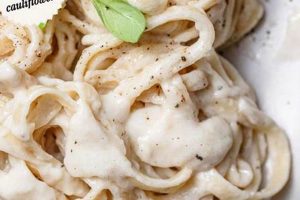
![Creamy Vegan Alfredo Sauce: Coconut Milk Magic [Recipe]](data:image/svg+xml;base64,PHN2ZyB4bWxucz0iaHR0cDovL3d3dy53My5vcmcvMjAwMC9zdmciIHdpZHRoPSI0NzQiIGhlaWdodD0iMTUwIiB2aWV3Qm94PSIwIDAgNDc0IDE1MCI+PHJlY3Qgd2lkdGg9IjEwMCUiIGhlaWdodD0iMTAwJSIgc3R5bGU9ImZpbGw6I2NmZDRkYjtmaWxsLW9wYWNpdHk6IDAuMTsiLz48L3N2Zz4= "Creamy Vegan Alfredo Sauce: Coconut Milk Magic [Recipe] Discover Delicious Vegan Food, Beauty Swaps, and Zero-Waste Tips for a Greener Life")
A dairy-free alternative to traditional Alfredo sauce, this creamy topping utilizes coconut milk as its base. The fat content inherent in coconut milk contributes to the sauce’s rich texture, mimicking the heavy cream found in conventional recipes. Nutritional yeast, often incorporated, provides a cheesy flavor profile, while ingredients like garlic, lemon juice, and black pepper enhance the overall taste. This adaptation allows individuals adhering to vegan or dairy-free diets to enjoy a similar culinary experience without animal products. For instance, this sauce can be served over pasta, vegetables, or used as a base for vegan pizza.
This culinary innovation addresses the growing demand for plant-based options and caters to those with dietary restrictions. Its creation marks a significant shift in accessible and inclusive cuisine, allowing a wider range of individuals to enjoy dishes traditionally off-limits. The utilization of readily available ingredients promotes home preparation, empowering consumers to control the nutritional content and quality of their meals. Historically, dairy-free alternatives were limited; this sauce demonstrates advances in plant-based ingredient applications and flavor development.
Subsequent sections will delve into specific recipes, nutritional considerations, tips for achieving optimal flavor and texture, and common variations of this sauce. These sections will also address potential challenges in preparation and provide solutions for troubleshooting common issues. Furthermore, the following content will explore applications beyond traditional pasta dishes, showcasing the versatility of this plant-based sauce in various culinary creations.
Preparation Guidance
The following guidance offers insights into maximizing the quality and consistency when creating a dairy-free Alfredo sauce utilizing coconut milk.
Tip 1: Select Full-Fat Coconut Milk: The success of this sauce hinges on the fat content. Canned, full-fat coconut milk yields the creamiest texture. Avoid “light” varieties, as they lack the necessary richness and may result in a watery sauce.
Tip 2: Refrigerate the Coconut Milk: Prior to use, refrigerate the can of coconut milk for at least several hours. This process facilitates the separation of the solid cream from the watery liquid. Scrape off the solid cream for the sauce, leaving the watery liquid behind.
Tip 3: Bloom the Garlic: Gently sauting minced garlic in olive oil or vegan butter before adding the coconut milk enhances its flavor. This process, known as blooming, releases the garlic’s aromatic compounds, resulting in a more flavorful sauce.
Tip 4: Nutritional Yeast Application: Nutritional yeast is crucial for achieving a cheesy flavor. Begin with a small amount (e.g., 2 tablespoons) and gradually increase until the desired intensity is reached. Different brands vary in potency, so taste and adjust accordingly.
Tip 5: Control Heat Levels: Maintain a low simmer while cooking. High heat can cause the coconut milk to separate or curdle. Consistent, gentle heating promotes a smooth and emulsified sauce.
Tip 6: Acidic Balance: Lemon juice or white wine vinegar brightens the flavor and balances the richness. Add a small amount towards the end of cooking, tasting and adjusting to preference.
Tip 7: Seasoning Precision: Black pepper is essential for this sauce. Freshly ground black pepper delivers a more potent and complex flavor compared to pre-ground. Salt is also vital to balance all the flavors and bring them together.
Adhering to these guidelines will contribute to a well-emulsified, flavorful, and texturally pleasing dairy-free Alfredo sauce alternative.
The subsequent section will address common variations and potential additions to customize this base recipe to individual preferences.
1. Creamy Texture

The creamy texture is a defining characteristic and a primary objective in the creation of any Alfredo sauce, including the vegan adaptation that uses coconut milk. This texture is traditionally achieved through the emulsification of butter and heavy cream. In the vegan version, full-fat coconut milk assumes a vital role in replicating this key attribute. The high fat content of the coconut milk, when properly incorporated, contributes significantly to a smooth, rich mouthfeel that closely mirrors the dairy-based original. Without sufficient fat, the sauce lacks the luxurious consistency expected of an Alfredo, potentially resulting in a thin and less appealing outcome. For example, using low-fat coconut milk typically yields a noticeably less creamy sauce. The selection of the right coconut milk is therefore essential.
Achieving this optimal texture requires careful attention to the cooking process. The coconut milk must be heated gently to prevent separation of the fats and liquids, which can lead to a grainy or curdled texture. Constant stirring during simmering helps to maintain the emulsion, ensuring a consistent creaminess. Furthermore, ingredients like blended cashews or white beans are sometimes added to augment the texture. A practical application of this understanding is evident in restaurant kitchens that utilize this sauce as a dairy-free option, satisfying customer demand for both vegan choices and familiar creamy textures.
In summary, the creamy texture represents a critical success factor for a vegan Alfredo sauce that is based on coconut milk. This texture significantly impacts its palatability and ability to serve as a convincing substitute for traditional Alfredo sauce. Maintaining proper temperature control, and understanding the necessity of using full-fat coconut milk ensures a desirable final product. While variations exist in the pursuit of replicating creaminess, the basic principles outlined here are fundamental to a successful outcome.
2. Coconut Flavor

The presence of coconut flavor represents a critical consideration in the context of vegan Alfredo sauce utilizing coconut milk. While coconut milk provides the necessary fat content for a creamy texture, its inherent flavor profile can significantly influence the final taste of the sauce. This flavor, if not managed effectively, can become overpowering and detract from the desired savory and cheesy character typically associated with Alfredo sauce. The level of coconut flavor perceived is directly proportional to the concentration of coconut milk used and the lack of countervailing flavors. For example, a recipe relying solely on coconut milk without the addition of strong complementary flavors is likely to exhibit a distinctly coconutty taste.
Mitigating the prominence of coconut flavor often involves strategic ingredient selection and preparation techniques. Acidic components, such as lemon juice or white wine vinegar, can effectively cut through the richness of the coconut milk and balance its sweetness. Furthermore, the use of umami-rich ingredients, such as nutritional yeast, miso paste, or roasted garlic, can contribute to a savory depth that masks the coconut. For example, sauting garlic until deeply caramelized before adding the coconut milk imparts a robust flavor that diminishes the coconut’s presence. In restaurants, chefs experiment with various spice blends, and aromatic herbs, such as nutmeg or thyme, to contribute complexity that overshadows the inherent coconut flavor. This represents a practical application of flavour-balancing, and showcases that a dairy free alfredo sauce is not as bland as many think.
In summary, coconut flavor is an unavoidable component in vegan Alfredo sauce based on coconut milk. Achieving a palatable and balanced sauce necessitates a conscious effort to manage and complement this flavour. Through the strategic application of acidic, umami, and aromatic ingredients, the coconut flavor can be successfully minimized, resulting in a sauce that effectively mimics the taste and texture of traditional Alfredo while remaining entirely plant-based. The significance of these findings highlight the importance of a deliberate and informed approach to recipe development when adapting traditionally dairy-based sauces for vegan consumption.
3. Nutritional Yeast
Nutritional yeast serves as a key ingredient in vegan Alfredo sauce recipes that utilize coconut milk, primarily functioning as a flavor enhancer to emulate the cheesy taste found in traditional Alfredo. The inclusion of nutritional yeast directly addresses the absence of dairy, providing a savory and umami-rich flavor profile that would otherwise be lacking. Without nutritional yeast, the sauce would lack the characteristic cheesy notes and potentially taste predominantly of coconut. For example, omitting nutritional yeast results in a sauce that is palatable but falls short of replicating the intended Alfredo flavor.
The practical application of nutritional yeast extends beyond merely providing flavor; it also contributes to the overall texture and body of the sauce. When combined with coconut milk and other ingredients, nutritional yeast can help thicken the sauce, enhancing its richness. Moreover, nutritional yeast offers nutritional benefits, providing B vitamins and protein, thus increasing the sauce’s overall nutritional value. Food manufacturers and home cooks frequently adjust the amount of nutritional yeast based on personal preference and desired intensity of cheesy flavor. This adjustment highlights a cause-and-effect relationship: increasing the amount of nutritional yeast directly increases the cheesy flavor.
In summary, nutritional yeast is an indispensable component of dairy-free Alfredo sauce recipes relying on coconut milk, acting as a primary flavor agent, a textural enhancer, and a source of nutritional value. Its presence compensates for the absence of dairy, resulting in a sauce that closely approximates the taste and texture of traditional Alfredo. Challenges may arise in determining the optimal quantity, as different brands possess varying levels of flavor intensity, requiring careful adjustments to achieve the desired taste. Understanding the role and proper application of nutritional yeast contributes significantly to the successful creation of a flavorful and convincing vegan Alfredo sauce.
4. Vegan Adaptability

Vegan adaptability, in the context of culinary applications, refers to the capacity of a recipe or ingredient to seamlessly integrate into a vegan dietary framework, while maintaining palatability and nutritional value. The subsequent exploration delves into the nuanced facets of vegan adaptability specific to non-dairy Alfredo sauce formulations utilizing coconut milk.
- Ingredient Substitution
Vegan adaptability necessitates replacing animal-derived components with plant-based alternatives. Coconut milk, in this scenario, effectively substitutes for heavy cream, providing the necessary fat content and creamy texture. Nutritional yeast replaces parmesan cheese, offering a savory umami flavor. This substitution exemplifies vegan adaptability by modifying traditional recipes to align with vegan principles, ensuring that no animal products are used. The practical implication of this adaptation lies in enabling individuals adhering to vegan diets to enjoy dishes traditionally off-limits.
- Maintaining Flavor Profile
Successful vegan adaptation requires preserving or replicating the original flavor profile of a dish. In the case of Alfredo sauce, this involves mimicking the rich, cheesy, and slightly savory taste. Ingredients such as garlic, lemon juice, and black pepper play a crucial role in enhancing and balancing the flavors, ensuring the final product closely resembles the traditional dairy-based version. This adaptability extends to the skillful manipulation of flavors to create an authentic sensory experience for the consumer, demonstrating that vegan food need not compromise on taste.
- Nutritional Considerations
Vegan adaptability encompasses a concern for nutritional adequacy. When adapting a recipe to be vegan, it is important to consider the nutritional implications of ingredient substitutions. Coconut milk, while providing fat, differs nutritionally from heavy cream. The addition of ingredients like nutritional yeast can help to compensate for any potential nutrient deficiencies. In practical terms, this means ensuring that the final sauce offers a balanced nutritional profile, providing essential vitamins, minerals, and macronutrients, thereby promoting health and well-being in those who consume it.
- Culinary Versatility
An adaptable recipe is one that can be readily incorporated into various culinary applications. Vegan Alfredo sauce made with coconut milk demonstrates versatility by serving as a base for pasta dishes, a topping for vegetables, or even a component in vegan pizzas. The adaptability allows for creative culinary experimentation and broadening of menu options for vegan diners. This illustrates the potential of plant-based adaptations to extend beyond mere substitution, transforming into versatile ingredients that enhance overall culinary creativity and innovation.
These facets collectively underscore the importance of vegan adaptability in culinary contexts. By strategically substituting ingredients, maintaining desired flavor profiles, addressing nutritional considerations, and ensuring culinary versatility, plant-based versions of traditionally animal-based dishes can be successfully created. This adaptation process, exemplified by the use of coconut milk in dairy-free Alfredo sauce, fosters inclusive dining experiences and promotes plant-based eating without sacrificing taste or nutritional value.
5. Versatile Application

The term “Versatile Application,” when linked to non-dairy Alfredo sauce, underscores its adaptability beyond traditional pasta dishes. This characteristic stems from the sauce’s creamy texture and savory flavor profile, achieved through ingredients such as coconut milk, nutritional yeast, and garlic. A direct effect of this versatility is an expansion of potential meal applications, moving beyond a single culinary category. If it lacked this property, its utility would be significantly limited, restricting its appeal and adoption across different culinary contexts.
Examples of this versatility are demonstrable in various settings. Restaurants now incorporate this sauce as a base for vegan pizzas, a component of vegetable gratins, or even as a dip for plant-based appetizers. Home cooks frequently use it to enrich soups, enhance roasted vegetables, or as a spread for sandwiches and wraps. These examples showcase how the non-dairy nature of the sauce, coupled with its rich flavor, allows it to seamlessly integrate into dishes where a creamy element is desired, irrespective of the dish’s traditional composition. In the absence of this adaptability, the recipe would remain confined to a specific niche, limiting its broader culinary impact.
In summary, versatile application is a defining characteristic of non-dairy Alfredo sauce that enables its use across various culinary domains. The result is enhanced culinary innovation. Understanding the implications of this attribute is vital for recipe developers and cooks seeking to expand plant-based menu options and adapt traditional dishes for diverse dietary needs. While variations in ingredient ratios may be necessary to optimize the sauce for specific applications, its inherent adaptability provides a foundation for creative culinary exploration, solidifying its position as a valuable addition to vegan and plant-based cuisine.
6. Dietary Inclusion
The concept of dietary inclusion, within the context of food preparation and consumption, emphasizes accommodating diverse dietary needs and preferences. Plant-based versions of traditionally animal-based dishes, such as Alfredo sauce, are key in broadening accessibility. The application of coconut milk as a base for vegan Alfredo sauce exemplifies this principle, creating culinary options that extend beyond traditional dietary restrictions.
- Addressing Lactose Intolerance
Lactose intolerance affects a significant portion of the global population, precluding the consumption of dairy-based sauces like traditional Alfredo. The coconut milk-based alternative bypasses this limitation, offering a palatable substitute free of lactose. Restaurants incorporating this option on their menus directly expand their customer base and meet the demands of lactose-intolerant individuals. The wider implication is creating a more inclusive dining experience, reducing barriers to enjoying common dishes.
- Accommodating Vegan Diets
Individuals adhering to vegan diets abstain from all animal products, rendering traditional Alfredo sauce unsuitable. Utilizing coconut milk as a base ingredient provides a creamy texture while aligning with vegan ethical considerations. The availability of vegan Alfredo sauce alternatives empowers individuals to maintain their dietary principles without sacrificing culinary enjoyment. The existence of this adaptation demonstrates that plant-based eating can encompass a wide variety of flavors and textures, thereby increasing dietary diversity.
- Managing Dairy Allergies
Dairy allergies, distinct from lactose intolerance, involve an immune response to proteins found in milk. Coconut milk-based Alfredo sauce entirely eliminates these proteins, rendering it safe for individuals with dairy allergies. Schools and institutional food services incorporating this alternative on their menus directly reduce the risk of allergic reactions. The importance of providing safe, allergy-free options cannot be overstated, as it directly impacts the health and well-being of affected individuals.
- Expanding Culinary Choices
Dietary inclusion extends beyond addressing restrictions; it also expands overall culinary choices. The availability of vegan Alfredo sauce enriches the diversity of available sauces and menu options, catering to a wider spectrum of preferences. Even individuals without specific dietary needs may appreciate the lighter flavor profile or reduced cholesterol content. The wider effect is creating a more dynamic culinary landscape, where diverse ingredients and dietary approaches are celebrated and accommodated.
The facets above collectively highlight the significance of coconut milk-based Alfredo sauce in promoting dietary inclusion. By addressing lactose intolerance, accommodating vegan diets, managing dairy allergies, and expanding culinary choices, this adaptation fosters a more accessible and equitable food system. Ultimately, the integration of such alternatives into both home cooking and commercial food service settings contributes to a more inclusive dining experience for all.
Frequently Asked Questions
The following questions address common inquiries and misconceptions regarding vegan Alfredo sauce prepared with coconut milk. The intent is to provide clear and concise answers for enhanced understanding.
Question 1: Does coconut milk impart a strong coconut flavor to the sauce?
While coconut milk serves as the creamy base, a strong coconut flavor is not an inevitable outcome. The addition of ingredients such as nutritional yeast, garlic, lemon juice, and black pepper serves to balance and mask the coconut flavor, resulting in a sauce that approximates the taste of traditional Alfredo. Flavor intensity varies based on recipe and ingredient ratios; however, a well-crafted recipe minimizes discernible coconut flavor.
Question 2: Can light coconut milk be used as a substitute for full-fat coconut milk?
Light coconut milk is not a suitable substitute for full-fat coconut milk in this recipe. The reduced fat content in light coconut milk results in a thinner, less creamy sauce lacking the desired richness and mouthfeel. The structural integrity of the sauce relies heavily on the fat content provided by full-fat coconut milk; using light coconut milk compromises the final product.
Question 3: How does nutritional yeast contribute to the flavor of the sauce?
Nutritional yeast provides a savory, umami-rich flavor that closely mimics the cheesy notes found in traditional Alfredo sauce. It is a crucial ingredient in achieving the desired flavor profile in the absence of dairy. The amount of nutritional yeast used can be adjusted to control the intensity of the cheesy flavor, allowing for customization based on individual preferences.
Question 4: Is it possible to freeze vegan Alfredo sauce made with coconut milk?
Freezing vegan Alfredo sauce made with coconut milk is generally not recommended. The freezing and thawing process can alter the texture of the coconut milk, leading to separation and a grainy consistency upon reheating. While the sauce remains safe to consume, the texture may be compromised, detracting from the overall eating experience.
Question 5: Can this sauce be prepared without nutritional yeast?
While the sauce can be prepared without nutritional yeast, the resulting flavor profile will differ significantly from traditional Alfredo. The omission of nutritional yeast eliminates the cheesy element, leaving a sauce that is creamy but lacking the characteristic savory taste. If nutritional yeast is unavailable or undesired, consider incorporating other umami-rich ingredients to enhance the flavor.
Question 6: What are some variations or additions to this sauce?
Numerous variations and additions can customize the sauce. Sun-dried tomatoes add a tangy sweetness, while roasted red peppers provide a smoky depth. Incorporating sauted mushrooms or spinach enhances the nutritional value and textural complexity. Experimentation with different herbs and spices, such as nutmeg or thyme, can further refine the flavor profile.
These questions and answers serve to clarify common points of concern and provide practical information for those preparing or considering vegan Alfredo sauce. Understanding these aspects can contribute to a more successful and enjoyable culinary experience.
The subsequent section explores potential issues during preparation and troubleshooting strategies.
Conclusion
The preceding discussion has explored key aspects of vegan alfredo sauce coconut milk, from its foundational ingredients and preparation techniques to its versatility and dietary implications. The utilization of coconut milk as a dairy substitute presents both opportunities and challenges, requiring careful attention to flavor balancing and texture management. The inclusion of nutritional yeast emerges as a critical factor in achieving a palatable and convincing plant-based alternative.
Continued exploration and refinement of plant-based recipes, such as this dairy-free Alfredo, are vital in promoting dietary inclusion and fostering sustainable food practices. The insights provided here should serve as a foundation for further culinary innovation and a broader understanding of plant-based food applications. Further research into plant-based alternatives can lead to new and unique recipes that satisfy everyones needs.
![Best Vegan Yum Sauce: Recipes & More [Quick!] | Discover Delicious Vegan Food, Beauty Swaps, and Zero-Waste Tips for a Greener Life](https://thisvegangirl.com/wp-content/uploads/2026/03/th-838-300x200.jpg "Best Vegan Yum Sauce: Recipes & More [Quick!] Discover Delicious Vegan Food, Beauty Swaps, and Zero-Waste Tips for a Greener Life")