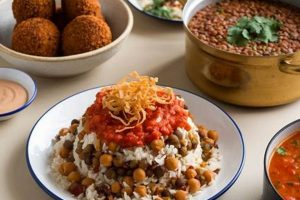
A method for preparing a dairy-free, egg-free dessert characterized by its smooth, creamy texture. The process typically involves combining plant-based milk, such as soy, almond, or coconut milk, with a thickening agent like cornstarch or tapioca starch, and a sweetener. Flavorings like vanilla extract, citrus zest, or chocolate can be added to enhance the taste profile. A notable example incorporates cashew cream for added richness and a silken tofu base to achieve a naturally smooth consistency.
The significance of developing these methods lies in offering dessert options that accommodate individuals with dietary restrictions, such as veganism or lactose intolerance. The availability of such recipes provides access to satisfying treats without requiring animal products. Historically, conventional versions relied heavily on dairy and eggs, making them inaccessible to certain populations. This adaptation broadens inclusivity and allows for exploration of diverse flavors and textures within a plant-based framework.
Subsequent discussion will delve into specific ingredient considerations, outlining methods for achieving optimal texture, and providing variations to customize the final product. The following sections will also address common challenges and offer solutions for crafting consistently desirable results.
Tips for Success
Achieving a desirable outcome requires careful attention to detail. The following guidelines offer insights to optimize the process and ensure a consistently pleasing final product.
Tip 1: Starch Selection Matters: Cornstarch provides a classic custard texture, while tapioca starch yields a glossier finish. Experimentation is encouraged to determine personal preference.
Tip 2: Prevent Lumps: Whisk the starch with a small amount of cold plant-based milk before adding it to the larger quantity. This ensures even distribution and prevents clumping during cooking.
Tip 3: Temperature Control is Crucial: Cook over medium-low heat, stirring continuously, to avoid scorching or uneven thickening. The custard is ready when it coats the back of a spoon and a line drawn through it holds its shape.
Tip 4: Dairy-Free Milk Selection Affects Flavor: Coconut milk imparts a richer, more noticeable flavor, while almond or soy milk offer a more neutral base. Adjust sweetener and flavorings accordingly.
Tip 5: Consider Adding Fat: For enhanced richness, incorporate a small amount of coconut oil or vegan butter. Be mindful of the melting point and stir until fully incorporated.
Tip 6: Proper Cooling Techniques: After cooking, transfer the custard to a bowl and cover the surface with plastic wrap to prevent a skin from forming. Chill thoroughly before serving.
Tip 7: Adjust Sweetness Carefully: Plant-based milks often have varying levels of inherent sweetness. Start with a smaller amount of sweetener and adjust to taste.
These recommendations emphasize the importance of precise technique and ingredient understanding. By implementing these suggestions, individuals can confidently create a delectable, dairy-free dessert.
The following sections will explore variations and applications, including using this custard as a base for other desserts.
1. Plant-based milk

Plant-based milks form the foundational liquid component, dictating the flavor, texture, and overall success of vegan custard formulations. Their selection requires careful consideration to achieve a desired result.
- Flavor Profile:
Different varieties, such as coconut, almond, soy, oat, and cashew, impart distinct flavors. Coconut milk contributes a rich, tropical note, almond milk offers a subtle nuttiness, while soy milk presents a more neutral base. These inherent flavors must be accounted for when balancing the recipe’s sweetness and additional flavoring agents. Overlooking this can lead to an unbalanced or undesirable taste.
- Fat Content and Texture:
The fat content of plant-based milk affects the final texture. Coconut milk, higher in fat, contributes to a creamier and richer result. Lower-fat alternatives like almond or oat milk require careful adjustment of other ingredients, such as thickening agents, to compensate for the lack of fat and achieve a comparable consistency. The custard may result in a thin and watery texture if this is not carefully managed.
- Protein Content and Stability:
Protein levels influence the custard’s stability during cooking. Soy milk, with its relatively higher protein content compared to other plant-based milks, can contribute to a slightly firmer set. However, excessive heat can denature the protein, potentially leading to curdling. Therefore, mindful temperature control and gradual heating are essential to maintain a smooth and stable emulsion.
- Sweetness Levels:
Commercially produced plant-based milks often contain added sugars, which must be considered when determining the appropriate amount of additional sweetener in the custard. Failure to account for this can result in an excessively sweet final product. Opting for unsweetened varieties allows for greater control over the sweetness level and enables more precise flavor balancing.
The specific properties of each plant-based milk necessitate adjustments to other components within the formulation. Selecting an appropriate plant-based milk is not merely a substitution but a crucial decision point that significantly affects the quality and characteristics of the resulting dessert.
2. Thickening agent
The thickening agent serves as a critical component within vegan custard formulations, directly influencing the texture and consistency of the final product. Selection and proper utilization are paramount to achieving a desirable, smooth, and stable dessert.
- Starch Gelatinization
Starches, such as cornstarch, tapioca starch, or arrowroot powder, are commonly employed as thickening agents. When heated in a liquid, starch granules absorb water and swell, a process known as gelatinization. This process increases the viscosity of the liquid, transforming it into a custard-like consistency. The type of starch influences the temperature at which gelatinization occurs and the resulting texture. For example, tapioca starch often produces a glossier, slightly elastic texture, whereas cornstarch provides a more opaque and firm result. Insufficient gelatinization results in a thin, watery custard, while over-gelatinization can lead to a lumpy or overly thick outcome.
- Hydrocolloids and Their Functionality
Hydrocolloids, including agar-agar, carrageenan, and xanthan gum, offer alternative thickening mechanisms. These substances form a network within the liquid, trapping water and increasing viscosity. Agar-agar, derived from seaweed, creates a firm gel upon cooling and can be used in smaller quantities compared to starches. Carrageenan, also from seaweed, provides a creamy mouthfeel and prevents syneresis (water separation). Xanthan gum contributes viscosity and stability, often used in conjunction with other thickening agents to enhance their performance and prevent separation of ingredients. Incorrect hydrocolloid concentration can lead to either a weak, unstable custard or an overly firm, rubbery texture.
- Fat Content and Emulsification
The thickening agent’s interaction with fat content, often derived from plant-based milks such as coconut milk, is crucial. Starches and hydrocolloids help to emulsify the fat, preventing it from separating and ensuring a homogenous texture. Insufficient thickening power can lead to a greasy or oily mouthfeel if the fat is not properly incorporated. Conversely, excessive thickening can mask the richness of the fat and result in a dense, unpleasant texture. A balanced ratio of thickening agent to fat is essential for optimal sensory properties.
- Impact on Flavor Perception
The choice of thickening agent can indirectly influence flavor perception. Some starches, particularly cornstarch, may impart a slightly starchy taste if not cooked thoroughly. Hydrocolloids, in general, are considered flavor-neutral, but their texture contribution can affect how flavors are released and perceived. A smooth, well-thickened custard allows flavors to disperse evenly and enhances the overall sensory experience. An improperly thickened custard, with either a starchy taste or an undesirable texture, can detract from the desired flavor profile.
The careful selection and precise application of thickening agents are critical factors determining the success of any vegan custard formulation. Their properties dictate not only the physical characteristics but also the sensory qualities and overall appeal of the final product, highlighting the importance of understanding their functionality in plant-based dessert applications.
3. Sweetening levels

Sweetening levels are a critical determinant of palatability in vegan custard formulations. The appropriate level of sweetness enhances the overall flavor profile, complements other ingredients, and contributes to the desired sensory experience.
- Types of Sweeteners and Their Impact
A variety of sweeteners can be used, each imparting a unique flavor and affecting the custard’s texture. Refined sugars provide a clean sweetness but lack complexity. Natural sweeteners such as maple syrup, agave nectar, and date syrup offer nuanced flavor profiles that can complement or compete with other ingredients. The choice of sweetener impacts not only the perceived sweetness but also the custard’s color and viscosity. For example, using dark molasses can result in a darker-colored custard with a more intense flavor.
- Balancing Sweetness with Other Flavors
The sweetness must be carefully balanced with other flavors, such as vanilla extract, citrus zest, or chocolate. Excessive sweetness can mask subtle flavors, while insufficient sweetness can leave the custard tasting bland. The ideal sweetness level depends on the specific ingredients and the desired flavor profile. A custard flavored with tart citrus zest might require a higher level of sweetness to achieve balance, whereas a custard flavored with rich chocolate might require less sweetness to avoid overpowering the chocolate flavor.
- Impact on Texture and Stability
Certain sweeteners, such as honey or corn syrup, can affect the custard’s texture and stability. These sweeteners are hygroscopic, meaning they attract and retain moisture, which can impact the custard’s consistency. High levels of these sweeteners can result in a softer, more pliable texture, while lower levels can produce a firmer, more stable custard. The choice of sweetener must be considered in relation to the thickening agent and other ingredients to achieve the desired texture and prevent separation or instability.
- Health Considerations and Dietary Restrictions
The sweetening level should be adjusted to accommodate health considerations and dietary restrictions. For individuals with diabetes or those following a low-sugar diet, alternative sweeteners such as stevia or erythritol can be used. These sweeteners provide sweetness without significantly impacting blood sugar levels. However, they may also have unique flavor profiles or aftertastes that must be considered. It’s important to note that some alternative sweeteners may not function identically to traditional sweeteners in terms of texture and stability, requiring adjustments to other recipe components.
Achieving optimal sweetness in vegan custard involves careful consideration of the sweetener type, flavor balance, textural effects, and dietary needs. Precise adjustment of sweetening levels is essential for crafting a palatable and satisfying dessert that meets individual preferences and requirements.
4. Flavor additions
Flavor additions represent a critical stage in the development of any method for creating a dairy-free, egg-free dessert. These augmentations directly influence the sensory experience, transforming a basic, bland base into a complex and appealing culinary creation. The impact of these additives ranges from subtle enhancements to dramatic alterations of the fundamental characteristics of the product. For example, the inclusion of vanilla extract contributes a familiar, comforting aroma and taste, increasing the perceived sweetness and richness without substantially altering the core texture. In contrast, the incorporation of citrus zest introduces acidity, balancing sweetness and imparting a refreshing, vibrant character. The selection and application of these components must be undertaken with careful consideration of the desired outcome.
The impact of flavor additions extends beyond mere taste. Certain ingredients, such as spices (cinnamon, nutmeg, cardamom), possess inherent aromatic properties that evoke specific emotions and memories, further enhancing the overall appeal. Furthermore, the visual presentation is affected. The addition of cocoa powder not only imparts a chocolate flavor but also changes the color, influencing the consumer’s initial impression. The combination of flavor and visual elements creates a multi-sensory experience. The practical implications of this are significant; a well-executed flavor profile can elevate an otherwise ordinary preparation, increasing its marketability and consumer satisfaction. A poorly considered flavor profile, however, can lead to a dish that is unappealing or even unpalatable.
In summary, flavor additions are not merely optional components but integral elements. Their precise selection and application are essential for achieving a balanced, harmonious, and desirable final product. Overlooking the importance of these elements can result in a substandard outcome, failing to fully realize the potential of a dairy-free, egg-free dessert. Mastering the art of flavor augmentation is key to consistently producing high-quality, appealing creations.
5. Cooling method

The cooling method directly affects the final texture and stability. Rapid cooling can lead to a grainy or uneven consistency due to the disruption of the starch matrix as it sets. Conversely, slow cooling can promote the formation of a skin on the surface, resulting from moisture evaporation and protein coagulation, which is undesirable. The ideal cooling process aims for a controlled temperature reduction, allowing the starch network to solidify evenly without surface defects. A common technique involves placing plastic wrap directly on the surface to prevent skin formation, a practical example highlighting the significance of method. The rate of cooling must be carefully managed to prevent textural defects from compromising quality.
Proper cooling extends beyond mere texture. It also inhibits microbial growth, prolonging the shelf life and safety. Vegan custards, lacking the inherent antibacterial properties of eggs or the preservatives often found in commercial dairy products, are more susceptible to spoilage. Refrigeration temperatures must be maintained consistently to slow down bacterial activity, a critical aspect of food safety. Furthermore, the cooling process affects the distribution of flavors. Gradual cooling allows flavors to meld and intensify, enhancing the overall sensory experience. An accelerated cooling process may hinder this melding, resulting in a less flavorful dessert. An example is cooling in a water bath helps to reduce the cooling rate. Cooling methods, therefore, influence both the physical characteristics and the organoleptic properties of the final product. This directly influences the quality and shelf life of the food.
In summation, the cooling method is an inseparable and essential step, intricately tied to the success. It directly impacts texture, stability, flavor development, and food safety. Careful consideration and precise execution are necessary to consistently achieve a high-quality, palatable, and safe final product. Overlooking this critical stage can negate the efforts made in other aspects of preparation, leading to an inferior outcome. The challenges are consistency and control. Therefore, awareness of the principles underpinning effective cooling techniques, such as controlled temperature reduction and protection from surface drying, are fundamental. These factors enable consumers to make an informed selection. This ensures the achievement of superior results.
Frequently Asked Questions
The following addresses frequently encountered inquiries regarding dairy-free, egg-free dessert preparation. These are designed to provide clear and concise information.
Question 1: What constitutes the primary difference between conventional and these methods?
Conventional preparations rely on animal-derived ingredients, primarily dairy milk and eggs. Dairy-free, egg-free versions replace these with plant-based alternatives, such as soy milk, almond milk, or coconut milk, and thickening agents like cornstarch or agar-agar.
Question 2: How does the selection of plant-based milk impact the outcome?
The selection influences both flavor and texture. Coconut milk imparts a richer taste and creamier consistency due to its higher fat content, while almond milk offers a more neutral flavor profile. The choice should align with the desired characteristics.
Question 3: Which thickening agents are most effective?
Cornstarch provides a classic texture. Tapioca starch yields a glossier finish. Agar-agar, a seaweed-derived gelatin, can produce a firmer set. The appropriate selection depends on the desired consistency.
Question 4: How are lumps avoided during preparation?
To prevent lump formation, the thickening agent should be whisked with a small amount of cold plant-based milk before combining it with the remaining liquid. This ensures proper dispersion and inhibits clumping during heating.
Question 5: What is the recommended cooling technique?
Covering the surface directly with plastic wrap prevents skin formation. Gradual cooling in the refrigerator is recommended to allow the structure to set evenly and inhibit microbial growth.
Question 6: Can these be used as a base for other desserts?
Yes, this method functions as a versatile base. It can be incorporated into parfaits, pies, or trifles. It can also be enhanced with additional flavorings and toppings to create a wide range of desserts.
These inquiries highlight crucial aspects of successful preparation. Understanding these factors enables the creation of desirable dairy-free, egg-free desserts.
Subsequent sections will explore recipe variations and advanced techniques.
Concluding Remarks on Methods for Preparing Dairy-Free, Egg-Free Desserts
The preceding exploration has illuminated the multifaceted considerations inherent in crafting acceptable versions of what used to be desserts that required dairy and eggs. The composition of plant-based milk, the functional role of thickening agents, the careful calibration of sweetness levels, the strategic integration of flavoring components, and the critical influence of the cooling process all converge to determine the quality and palatability of the finished product.
The ongoing refinement of plant-based culinary techniques holds significant implications for dietary inclusivity and sustainability. Continued experimentation and meticulous attention to detail are essential for advancing the versatility and widespread adoption of this process, thereby expanding options for individuals with specific dietary needs. The persistent application of knowledge and skills will lead to further innovations and improved culinary outcomes.
![Easy Vegan Cauliflower Steak Recipe [Delicious!] | Discover Delicious Vegan Food, Beauty Swaps, and Zero-Waste Tips for a Greener Life](https://thisvegangirl.com/wp-content/uploads/2026/04/th-199-300x200.jpg "Easy Vegan Cauliflower Steak Recipe [Delicious!] Discover Delicious Vegan Food, Beauty Swaps, and Zero-Waste Tips for a Greener Life")