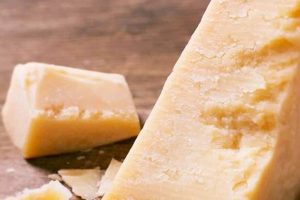
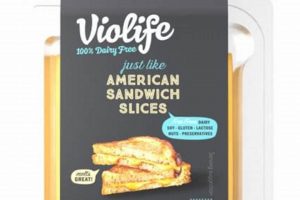
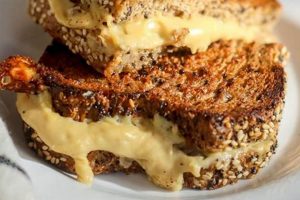
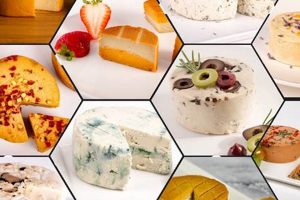
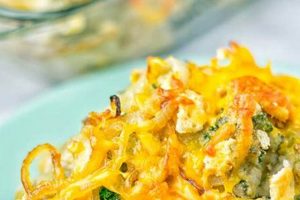
A plant-based alternative to traditional dairy products, this variation utilizes potatoes as a primary ingredient to achieve a creamy, cheese-like consistency. Starches present within the potato contribute to its texture, often combined with other ingredients such as nutritional yeast, plant-based milks, and seasonings to emulate the flavor profiles of conventional cheeses. This creation provides options for individuals adhering to vegan diets or those with lactose intolerance.
The appeal of this innovative food lies in its accessibility, affordability, and potential health benefits. Potatoes are a widely available and cost-effective base, making the final product potentially more budget-friendly than other vegan cheese alternatives. Furthermore, depending on the recipe, it can offer a lower fat and cholesterol profile compared to traditional dairy cheese. Historically, it represents a segment of the growing movement toward sustainable and ethical food choices, highlighting the ingenuity in utilizing common ingredients for novel applications.
The following sections will delve into the specific ingredients and processes involved in making this alternative, examine its nutritional aspects in detail, consider its environmental impact, and explore its diverse culinary applications.
Tips for Crafting Superior Potato-Based Vegan Cheese
Achieving optimal texture and flavor when creating potato-based vegan cheese requires careful attention to ingredient selection and preparation techniques. The following guidelines offer practical advice for consistent and satisfying results.
Tip 1: Select the Appropriate Potato Variety: Starchy potatoes, such as Russets, provide the best base for a creamy texture. Waxy potatoes, like Red Bliss, contain less starch and may result in a less desirable consistency.
Tip 2: Optimize Cooking Methods: Boiling potatoes until fork-tender is crucial for smooth blending. Overcooking can lead to a gummy texture, while undercooking can leave lumps. Steaming or baking offer alternatives that may preserve more nutrients and flavor.
Tip 3: Leverage Nutritional Yeast Judiciously: Nutritional yeast is essential for a cheesy flavor, but excessive amounts can impart a bitter taste. Start with a small quantity and adjust to taste, considering the specific brand’s potency.
Tip 4: Incorporate Acidic Elements: Adding lemon juice or apple cider vinegar balances the richness of the potato and enhances the overall flavor profile. The acidity also contributes to a sharper, more cheese-like tang.
Tip 5: Emulsify Fats Carefully: Incorporating oils, such as coconut oil or olive oil, adds richness and smoothness. Blend the oil in slowly and steadily to ensure proper emulsification and prevent separation.
Tip 6: Adjust Seasoning Meticulously: Garlic powder, onion powder, smoked paprika, and salt are commonly used to enhance the flavor. Taste frequently and adjust seasoning according to the desired profile, keeping in mind that flavors will meld and intensify over time.
Tip 7: Consider Textural Enhancements: For firmer cheeses, agar-agar powder can be added as a gelling agent. The amount required depends on the desired firmness; start with a small amount and test the setting properties.
Tip 8: Allow Sufficient Cooling Time: Refrigerating the completed potato vegan cheese allows it to solidify and develop its full flavor. A minimum of several hours, preferably overnight, is recommended for optimal results.
By carefully following these guidelines, individuals can create high-quality, flavorful, and texturally appealing potato-based vegan cheeses, catering to various dietary preferences and culinary applications.
The subsequent section explores recipe variations and application suggestions to further expand the versatility of this plant-based alternative.
1. Base ingredient

The functionality of the alternative is intrinsically linked to its fundamental component: potatoes. Acting as the foundational element, potatoes provide the necessary starch and moisture that form the cheese-like texture. Without this starchy base, the emulation of conventional cheese’s consistency would be unattainable. Different potato varieties, like Russets, yield varying degrees of starch content, thus influencing the final product’s textural outcome. The practical implication is that successful replication of the alternative depends critically on potato selection and preparation.
The connection is also causal. The inherent properties of potatoestheir capacity to gelatinize upon heating and blend smoothlydictate the processes involved in producing the item. Boiling or steaming softens the potato structure, facilitating easy blending with other components such as nutritional yeast, plant-based milks, and seasonings. For example, a recipe demanding a spreadable texture must incorporate potatoes cooked until excessively soft, ensuring a seamlessly integrated product. Conversely, a firmer version may necessitate careful adjustment of cooking duration and inclusion of gelling agents to counterbalance the inherent potato texture.
The understanding of the potato’s significance in this context has far-reaching consequences. Recipes must be carefully calibrated around the inherent attributes of the potatoes to achieve the desired outcome. Ignoring this central role results in a failure to emulate the intended cheese qualities, highlighting the necessary synergy between knowledge of the base ingredient and the execution of the recipe. Therefore, in this plant-based variant, the characteristics of the humble potato are not merely incidental, but determinative.
2. Texture Variability

The textural properties exhibited by potato-based vegan cheese are a defining characteristic, influencing its suitability for diverse culinary applications and directly impacting consumer acceptance. This variability arises from multiple factors inherent in the production process and ingredient selection.
- Starch Content Influence
Potato varieties differ significantly in starch content, directly correlating with the final product’s consistency. High-starch potatoes, such as Russets, yield a creamier, smoother texture due to their increased capacity to gelatinize and bind water. Conversely, low-starch varieties, like Red Bliss, may result in a grainier or less cohesive product. The selection of potato variety is thus a primary determinant of the final cheese’s textural profile.
- Moisture Content Management
The amount of moisture incorporated during the blending process and the cooking method employed significantly affects the texture. Excessive moisture results in a thin, sauce-like consistency, while insufficient moisture can lead to a dry, crumbly product. Precise control over liquid addition and cooking parameters is essential for achieving the desired textural outcome, whether it be a spreadable cream cheese alternative or a firmer, sliceable variant.
- Gelling Agent Integration
The inclusion of gelling agents, such as agar-agar or tapioca starch, provides a mechanism for manipulating and stabilizing the texture. These agents, when heated in conjunction with the potato base, create a network that traps water and imparts firmness. The concentration of the gelling agent directly influences the degree of firmness, allowing for the creation of products ranging from soft and spreadable to hard and grateable.
- Blending Technique Effects
The method and duration of blending impact the final texture by affecting the particle size and distribution of ingredients. High-speed blending promotes a smoother, more homogenous texture by breaking down potato particles and emulsifying fats. Conversely, less intensive blending can result in a slightly coarser texture. The blending process must be carefully controlled to achieve the desired level of smoothness and prevent over-processing, which can lead to a gummy consistency.
In summary, the textural versatility of potato-based vegan cheese is a direct consequence of controlled manipulation of starch content, moisture levels, gelling agent integration, and blending techniques. This adaptability allows manufacturers and home cooks to create a wide range of plant-based cheese alternatives, catering to diverse culinary needs and preferences. The interplay of these factors underscores the importance of precision and understanding in achieving the desired textural outcome in potato-based vegan cheese production.
3. Flavor emulation
The successful adoption of any vegan cheese alternative, including those derived from potatoes, hinges significantly on its capacity for flavor emulation. Consumers expect plant-based products to approximate the taste profiles of traditional dairy cheeses, and failure to meet these expectations can hinder widespread acceptance. In the context of potato-based versions, achieving convincing cheese-like flavors presents a distinct challenge, as raw potatoes possess a relatively neutral taste that lacks the characteristic tang, sharpness, or umami notes associated with conventional cheeses. Therefore, flavor emulation becomes a critical component in transforming a simple potato base into a palatable and desirable alternative.
Various techniques are employed to achieve successful flavor emulation. Nutritional yeast, a deactivated yeast with a savory, umami-rich flavor, is commonly used to impart a cheesy taste. The addition of acids, such as lemon juice, apple cider vinegar, or lactic acid, helps to replicate the characteristic tanginess found in many cheeses. Furthermore, ingredients like garlic powder, onion powder, and smoked paprika can be incorporated to create more complex and nuanced flavor profiles, mimicking specific cheese varieties. For example, the addition of miso paste could evoke the savory depth of aged cheeses, while the inclusion of herbs like dill or chives might emulate the flavor of herb-infused cheeses. The effectiveness of these flavor-enhancing components is determined by the specific recipe and the intended cheese style, requiring careful balancing and adjustment to achieve optimal results. The practical significance lies in the ability to cater to different consumer preferences and expand the culinary applications of potato-based vegan cheese.
In summary, the importance of flavor emulation cannot be overstated in the development and marketing of potato-based vegan cheese. While the potato base provides a neutral canvas for textural manipulation, it is the strategic application of flavor-enhancing ingredients that ultimately determines the product’s success in mimicking the taste of traditional dairy cheese. This complex interplay of ingredients underscores the need for careful formulation and sensory evaluation to create plant-based alternatives that satisfy consumer expectations and contribute to the broader acceptance of vegan food options. The challenge lies in creating authentic and appealing flavors while remaining true to the principles of plant-based eating.
4. Nutritional composition

The nutritional composition of potato vegan cheese diverges significantly from traditional dairy cheese, a direct consequence of the ingredients and production methods employed. Potatoes, the base ingredient, contribute carbohydrates, fiber, and certain vitamins and minerals, such as potassium and vitamin C. The absence of animal products inherently eliminates cholesterol and reduces saturated fat content compared to dairy cheese. However, the overall nutritional profile is heavily dependent on the additional ingredients used to achieve the desired flavor and texture. For instance, the inclusion of nutritional yeast enhances the vitamin B content, while the addition of plant-based oils impacts the fat profile and caloric density. The potential benefits of this alternative, therefore, reside in its ability to offer a lower-fat, cholesterol-free option with comparable texture and flavor to dairy cheese, contingent upon careful recipe formulation.
The practical significance of understanding the nutritional composition lies in informed dietary choices. Individuals seeking to reduce their saturated fat intake, manage cholesterol levels, or increase their intake of specific vitamins and minerals can benefit from a detailed understanding of the ingredients and their nutritional contributions. For example, a commercially produced version might contain added salt or sugar to enhance palatability, potentially negating some of the health benefits derived from the potato base. Conversely, a homemade version allows for greater control over ingredient selection, enabling individuals to prioritize healthier options such as whole-food ingredients and minimal processing. Reading nutritional labels and considering the specific ingredients used are essential steps in evaluating the suitability of a potato-based vegan cheese for individual dietary needs.
In conclusion, the nutritional composition is a critical attribute that defines the health implications of potato vegan cheese. While the inherent characteristics of potatoes offer certain advantages over dairy cheese, the overall nutritional profile is subject to considerable variation depending on the recipe and ingredients used. By carefully considering the nutritional content and prioritizing whole, unprocessed ingredients, consumers can make informed choices and leverage this plant-based alternative as a component of a balanced and health-conscious diet. The ongoing challenge lies in balancing flavor and texture with optimal nutritional value to create products that are both appealing and beneficial to consumer health.
5. Production process

The production process is paramount in determining the final characteristics of potato vegan cheese, influencing its texture, flavor, nutritional profile, and overall appeal. The specific steps and techniques employed directly impact the quality and consistency of the end product.
- Potato Preparation and Cooking
The initial stage involves the selection, cleaning, and cooking of potatoes. The choice of potato variety (e.g., Russet, Yukon Gold) affects the starch content and, consequently, the texture of the cheese. Cooking methods, such as boiling, steaming, or baking, influence the moisture content and the degree of starch gelatinization. Improper cooking can lead to undesirable textures, ranging from gummy to grainy. For example, overcooked potatoes can result in an excessively sticky cheese, while undercooked potatoes may retain a raw flavor and coarse texture.
- Blending and Emulsification
This phase involves combining the cooked potatoes with other ingredients, such as nutritional yeast, plant-based milk, oils, and seasonings, to create a homogenous mixture. Effective blending and emulsification are crucial for achieving a smooth, creamy texture. High-speed blenders or food processors are often used to break down the potato particles and ensure uniform distribution of ingredients. Insufficient blending can result in a lumpy or separated product, while over-processing may lead to an undesirable gummy consistency.
- Flavor Infusion and Stabilization
Flavor enhancement is achieved by incorporating ingredients that mimic the taste profiles of traditional cheeses. Nutritional yeast provides a savory, umami-rich flavor, while acids like lemon juice or vinegar contribute tanginess. Herbs, spices, and other flavorings are added to create specific cheese variations (e.g., cheddar, mozzarella). Stabilization techniques, such as refrigeration or the addition of gelling agents (e.g., agar-agar), are employed to solidify the cheese and improve its shelf life. Inadequate stabilization can result in a product that is too soft or prone to spoilage.
- Packaging and Preservation
The final step involves packaging the finished cheese to maintain its quality and prevent contamination. Appropriate packaging materials and methods (e.g., vacuum sealing, modified atmosphere packaging) are essential for extending shelf life and preserving flavor. Improper packaging can lead to oxidation, microbial growth, and degradation of the cheese’s sensory attributes.
These production facets are interconnected and collectively determine the overall quality of the potato vegan cheese. Variations in any of these stages can lead to significant differences in the final product. Therefore, careful control and optimization of the production process are essential for creating a consistent, palatable, and appealing alternative to traditional dairy cheese.
6. Culinary applications

The utility of potato vegan cheese is determined by its adaptability within diverse culinary contexts. Its textural and flavor versatility dictates its suitability for various dishes, ranging from simple snacks to complex meals. The following points illustrate the spectrum of its practical application.
- Sauces and Dips
Potato vegan cheese, when prepared with a smooth consistency, serves as a base for creamy sauces and dips. Its neutral flavor profile allows it to readily absorb and complement added seasonings and herbs. Examples include vegan cheese sauces for pasta dishes, dips for vegetables or tortilla chips, and creamy bases for gratins and casseroles. This application leverages the cheese’s textural properties to replicate the richness and mouthfeel of dairy-based sauces.
- Spreads and Fillings
With a slightly firmer texture, it functions as a spread for sandwiches, crackers, and bagels. It can also serve as a filling for stuffed vegetables, such as peppers or mushrooms, or as a component in vegan enchiladas and burritos. This application emphasizes the cheese’s ability to provide substance and binding within a dish, contributing to both flavor and structural integrity.
- Toppings and Garnishes
Potato vegan cheese, when grated or crumbled, acts as a topping for pizzas, salads, and baked potatoes. The capacity to melt (though often less pronounced than dairy cheese) enhances the visual appeal and adds a layer of flavor. It provides a plant-based alternative to conventional cheese toppings, catering to vegan and lactose-intolerant diets without sacrificing textural or gustatory satisfaction.
- Baked Goods
Incorporating it into baked goods, such as vegan cheesecakes, muffins, or breads, contributes moisture and a subtle cheesy flavor. It may necessitate adjustments to recipes to account for its unique properties compared to dairy cheese, but it offers a viable option for creating plant-based versions of traditionally dairy-rich baked goods. This application highlights the cheese’s ability to integrate into complex recipes, contributing to both flavor and texture.
The culinary applications of potato vegan cheese demonstrate its adaptability and potential as a plant-based alternative. While it may not perfectly replicate the characteristics of traditional dairy cheese in all applications, its versatility and accessibility make it a valuable ingredient in vegan and vegetarian cuisine. Careful consideration of its properties and appropriate recipe adjustments are essential for maximizing its culinary potential.
7. Cost-effectiveness

The production of potato vegan cheese exhibits a significant degree of cost-effectiveness, primarily due to the low cost and wide availability of its primary ingredient. Potatoes, in comparison to nuts (cashews, almonds) or specialized plant-based protein isolates (soy, pea), represent a substantially more economical base material. This affordability directly translates to lower production costs, potentially rendering the final product more accessible to a broader consumer base. For instance, in regions where potatoes are a staple crop, the economic advantage is further amplified due to reduced transportation expenses. This accessibility is particularly important in democratizing plant-based alternatives, allowing consumers with varying income levels to participate in vegan diets.
The impact of cost-effectiveness extends beyond simple ingredient sourcing. The simplicity of the production process further contributes to economic efficiency. Compared to the complex fermentation processes involved in some dairy-free cheese alternatives, potato-based versions typically require less specialized equipment and fewer processing steps. This streamlined production reduces energy consumption and labor costs, further enhancing the financial viability of this alternative. A practical example is the home-based production of potato vegan cheese, where minimal kitchen equipment (blender, pot) is sufficient for creating a usable product, whereas other vegan cheeses may necessitate specific cultures or temperature-controlled environments.
In conclusion, cost-effectiveness is a defining characteristic of potato vegan cheese, stemming from the affordability of potatoes and the simplicity of its production. This economic advantage not only makes the product more accessible to consumers but also enhances its competitiveness within the broader market of plant-based alternatives. While taste and texture remain crucial factors, the price point offered by potato-based vegan cheese significantly contributes to its potential for wider adoption and sustainable market presence.
Frequently Asked Questions Regarding Potato Vegan Cheese
The following questions address common inquiries and misconceptions surrounding potato-based alternatives to traditional dairy cheese. The information presented aims to provide clarity and informed understanding of this plant-based product.
Question 1: Is potato vegan cheese nutritionally equivalent to dairy cheese?
No. Potato vegan cheese typically exhibits a different nutritional profile compared to dairy cheese. It generally contains less protein and fat, and is cholesterol-free. The specific nutritional content varies depending on the ingredients used in its production.
Question 2: How does the texture of potato vegan cheese compare to dairy cheese?
The texture of potato vegan cheese can range from creamy and spreadable to firm and sliceable, depending on the recipe and production methods. While it can mimic the textures of some dairy cheeses, it may not perfectly replicate the melting properties or overall mouthfeel of all varieties.
Question 3: What are the primary ingredients in potato vegan cheese?
The primary ingredient is, as the name suggests, potatoes. Other common ingredients include nutritional yeast for flavor, plant-based milk for creaminess, oils for richness, and seasonings for added taste. Some recipes may also incorporate gelling agents to achieve a firmer texture.
Question 4: Is potato vegan cheese suitable for individuals with allergies?
The suitability for individuals with allergies depends on the specific ingredients used. While it is inherently dairy-free and lactose-free, individuals with allergies to potatoes or other ingredients commonly used in its production should exercise caution and review ingredient lists carefully.
Question 5: How long does potato vegan cheese last in the refrigerator?
The shelf life of potato vegan cheese in the refrigerator varies depending on the recipe and storage conditions. Generally, it can last for 3-7 days when properly stored in an airtight container. Commercial products may have longer shelf lives due to the inclusion of preservatives.
Question 6: Can potato vegan cheese be used in cooked dishes?
Yes, potato vegan cheese can be used in cooked dishes, such as sauces, gratins, and pizza toppings. However, its melting properties may differ from those of dairy cheese, and adjustments to cooking times or temperatures may be necessary to achieve the desired results.
Potato vegan cheese offers a plant-based alternative to traditional dairy products, possessing unique characteristics that distinguish it from conventional cheese. Understanding these differences is crucial for making informed dietary choices and utilizing this product effectively in culinary applications.
The following section will explore the environmental impacts associated with its production, providing a holistic perspective on its sustainability.
Conclusion
This exploration of potato vegan cheese has revealed its multifaceted nature, encompassing textural variability, flavor emulation strategies, nutritional considerations, production processes, culinary applications, and cost-effectiveness. The characteristics of the foundational ingredient, the potato, significantly influence the final product. While offering a plant-based alternative free from cholesterol and potentially lower in saturated fat than dairy cheese, its nutritional composition depends heavily on supplementary components. The success of this product hinges on achieving palatable flavors and desirable textures through careful recipe formulation and processing techniques.
As consumer demand for plant-based options continues to grow, further research and development are essential to optimize the nutritional value, improve the sensory attributes, and enhance the sustainability of potato vegan cheese. A deeper understanding of its environmental impact and a commitment to transparent labeling practices will contribute to informed consumer choices and promote the responsible growth of this segment within the food industry. The future of potato vegan cheese depends on continued innovation and a commitment to delivering a product that meets both dietary and environmental needs.