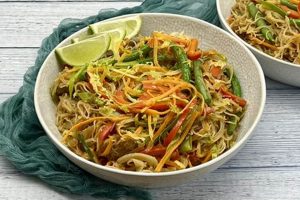
This culinary adaptation presents a plant-based version of a Southeast Asian noodle soup characterized by its rich, spicy broth. Typically, the traditional dish features seafood or meat, but this variation substitutes these ingredients with plant-derived alternatives such as tofu, tempeh, or mushrooms, while maintaining the signature coconut milk-based broth and aromatic spices. The resulting creation offers a satisfying and flavorful meal suitable for individuals adhering to a vegan lifestyle.
The appeal of this plant-based variant stems from its ability to deliver the authentic flavors of the original dish while aligning with ethical and dietary considerations. It offers a nutritious and flavorful alternative for those seeking to reduce their animal product consumption. The historical context of the original dish highlights the diverse culinary traditions of Southeast Asia, and this adaptation demonstrates the adaptability of these traditions to modern dietary preferences.
Subsequent sections will delve into specific ingredient substitutions, detailed preparation methods, and variations of this flavorful soup. Emphasis will be placed on achieving authentic flavor profiles using readily available plant-based ingredients.
Preparation Insights
The following recommendations aim to enhance the creation of a satisfying and authentic plant-based variant of the Southeast Asian noodle soup.
Tip 1: Aromatics are Paramount. Achieve depth of flavor by utilizing a generous blend of aromatics such as ginger, garlic, galangal, and lemongrass. Properly sauting these ingredients in oil releases their essential oils, contributing significantly to the overall taste profile.
Tip 2: Spice Paste Optimization. Consider creating the spice paste from scratch. The use of dried chilies rehydrated and blended, along with other spices, will result in a more complex and vibrant flavor than pre-made versions.
Tip 3: Coconut Milk Selection. Opt for full-fat coconut milk to achieve the desired creamy texture and richness in the broth. Lighter versions may result in a less satisfying final product.
Tip 4: Tofu Preparation. If utilizing tofu, press it thoroughly to remove excess water. This will allow the tofu to better absorb the flavors of the broth and achieve a more desirable texture. Marinating the pressed tofu prior to adding it to the soup will further enhance its flavor.
Tip 5: Vegetable Broth Enhancement. Enhance the depth of the vegetable broth by incorporating umami-rich ingredients such as dried shiitake mushrooms or a small amount of soy sauce. This will contribute to a more savory and well-rounded flavor.
Tip 6: Noodle Selection. Select noodles that complement the broth’s richness. Rice noodles, either thick or thin, are a traditional choice and offer a suitable texture. Cook the noodles separately to prevent them from becoming overly starchy in the broth.
Tip 7: Garnish Appropriately. Fresh herbs, such as cilantro, mint, and Thai basil, are essential garnishes that add brightness and aromatic complexity. Bean sprouts provide a refreshing crunch, and a squeeze of lime juice adds acidity to balance the flavors.
Adhering to these suggestions will result in a plant-based version of the soup that captures the essence of the original while catering to vegan dietary requirements, maximizing flavor and textural satisfaction.
The subsequent sections will detail specific variations and serving suggestions to further enhance the culinary experience.
1. Flavor complexity

Flavor complexity stands as a critical determinant of the overall success of any culinary creation, especially when adapting a traditionally non-vegan dish to a plant-based format. The pursuit of a nuanced and layered flavor profile is paramount in achieving a satisfactory representation of the original, while adhering to ethical and dietary restrictions.
- Spice Blend Composition
The cornerstone of flavor complexity rests upon the skillful combination of spices. Traditional preparations often rely on a proprietary blend unique to the region or family recipe. The vegan adaptation necessitates a careful assessment of these spices, ensuring accurate replication while omitting any animal-derived ingredients. Examples include the judicious use of galangal, lemongrass, turmeric, coriander, and chilies, each contributing a distinct aromatic and flavor dimension. The interplay of these spices dictates the intensity and depth of the final product.
- Umami Enhancement
Umami, often described as savory or meaty, is a key component of many traditionally prepared dishes. In the context of a plant-based adaptation, the source of umami must be strategically replaced. Ingredients such as dried shiitake mushrooms, fermented bean curd, or even a small amount of seaweed (kombu) can be incorporated into the broth to provide this essential element. The extraction of umami from these sources requires careful attention to cooking time and temperature to maximize flavor release.
- Acidity and Sweetness Balance
The interplay between acidity and sweetness creates a dynamic flavor profile, preventing the dish from becoming monotonous. Acidity, often derived from lime juice or tamarind, provides a refreshing counterpoint to the richness of the coconut milk. A subtle sweetness, achievable through the addition of palm sugar or a small amount of agave nectar, balances the sourness and complements the spicy elements. The precise ratio of these components is crucial to achieving harmonious flavor.
- Depth Through Layering
True flavor complexity arises from the layering of flavors at different stages of the cooking process. Sauting aromatics in oil before adding the spice paste releases essential oils, creating a foundational layer of flavor. Simmering the broth with vegetables and spices allows for further infusion, building upon the initial base. Garnishing with fresh herbs and a squeeze of lime juice at the end provides a final burst of freshness and aromatic complexity. This multi-stage approach ensures a well-rounded and intricate flavor profile.
The success of a plant-based adaptation hinges on the meticulous attention paid to these facets of flavor complexity. A dish with a well-balanced and layered flavor profile not only replicates the essence of the original, but also transcends expectations, offering a satisfying and memorable culinary experience for individuals adhering to plant-based diets. It underscores that plant-based cuisine is not about deprivation, but rather a creative exploration of flavor possibilities.
2. Ingredient substitution

Ingredient substitution is pivotal in the adaptation of Southeast Asian noodle soup to meet vegan dietary requirements. Successful transformation necessitates the replacement of animal-derived components with plant-based alternatives that maintain the dish’s characteristic flavors and textures. This process demands a nuanced understanding of both the original ingredients and their suitable substitutes.
- Seafood Replacement
Traditionally, prawns, fish cakes, or cockles contribute significantly to the flavor profile. Plant-based alternatives include firm or extra-firm tofu, tempeh, or king oyster mushrooms. Tofu and tempeh benefit from pressing and marinating in seaweed-infused solutions to impart a subtle marine essence. King oyster mushrooms, when scored and pan-fried, develop a texture reminiscent of calamari.
- Broth Enhancement
Shrimp paste is a common flavoring agent in the broth. Its vegan counterpart can be replicated through the use of fermented soybean products, such as miso or doubanjiang. These ingredients introduce umami and depth, mimicking the savory notes of the traditional ingredient. Incorporating dried shiitake mushrooms, simmered for an extended period, further enhances the broth’s complexity.
- Dairy Alternatives
Coconut milk forms the base of the soup. While it is inherently plant-based, variations in fat content influence the final texture. Full-fat coconut milk is generally preferred for its richness. Coconut cream can be used sparingly to further enhance the creamy consistency. Alternatives such as cashew cream may be incorporated in small quantities, but their flavor profile can deviate significantly from the traditional coconut base.
- Spice and Aromatic Adjustments
While most spices and aromatics are naturally vegan, careful consideration should be given to the source and freshness of these ingredients. Homemade spice pastes, prepared with fresh chilies, galangal, lemongrass, and turmeric, offer superior flavor compared to pre-made alternatives. These pastes should be sauted in oil to release their aromatic compounds before adding liquid.
The effectiveness of ingredient substitution directly impacts the authenticity of the vegan adaptation. A thoughtful and informed approach, considering flavor profiles, textures, and cooking techniques, is crucial in achieving a satisfying and representative plant-based dish. The selection and preparation of these substitutes are paramount to retaining the defining characteristics of Southeast Asian noodle soup, while adhering to ethical and dietary principles.
3. Texture replication

Texture replication holds substantial importance in the creation of a satisfying plant-based version of Southeast Asian noodle soup. Beyond flavor, the tactile experience contributes significantly to the perception of authenticity and overall enjoyment. The successful imitation of key textural elements, typically derived from animal products, is essential for a compelling vegan alternative.
- Tofu Preparation Techniques
Tofu, a common protein source in vegan cuisine, possesses a relatively neutral texture in its raw state. Achieving textural similarity to seafood or meat requires specific preparation methods. Pressing tofu removes excess water, resulting in a firmer consistency. Freezing and thawing tofu alters its internal structure, creating a more porous texture capable of absorbing flavors. Cubing, slicing, or crumbling tofu allows for variations in mouthfeel, mimicking different protein sources in the traditional dish.
- Mushroom Selection and Cooking
Certain mushroom varieties offer naturally appealing textures that can approximate meat or seafood. King oyster mushrooms, when scored and pan-fried, develop a slightly chewy texture reminiscent of calamari. Shiitake mushrooms, known for their umami flavor, also provide a meaty texture, particularly when rehydrated and simmered. The careful selection and cooking of mushrooms contribute significantly to the textural complexity of the dish.
- Noodle Choice and Consistency
Noodles constitute a core element of the dish, and their texture directly impacts the overall experience. Rice noodles, available in various thicknesses, are a common choice. The appropriate cooking time is critical to achieving a desirable texture avoiding both undercooking (which results in a hard texture) and overcooking (which leads to a mushy consistency). The selection of wider or narrower noodles also influences the mouthfeel, offering opportunities to replicate the texture of specific noodle types used in traditional versions.
- Vegetable Component Textural Variety
The inclusion of a diverse range of vegetables not only enhances the nutritional profile but also contributes to textural variety. Bean sprouts provide a refreshing crunch, while softened eggplant offers a creamy contrast. Properly cooked green beans or snap peas add a satisfying snap. The strategic incorporation of vegetables with distinct textures creates a multi-sensory experience that elevates the dish beyond a simple soup.
The mindful manipulation of plant-based ingredients to mimic the textures of their animal-derived counterparts is integral to the success of any vegan adaptation of this Southeast Asian noodle soup. By attending to the tactile dimensions of the dish, the overall sensory experience is enhanced, resulting in a more authentic and enjoyable plant-based culinary creation.
4. Broth richness

Broth richness constitutes a defining characteristic of Southeast Asian noodle soup, substantially influencing its perceived quality and authenticity, particularly in vegan adaptations. Achieving a robust and flavorful broth without animal-derived ingredients necessitates careful consideration of alternative techniques and ingredients.
- Coconut Milk Application
Coconut milk serves as the primary contributor to broth richness. The selection of full-fat coconut milk is critical to achieving the desired creamy texture and mouthfeel. The concentration of coconut milk relative to other liquids directly influences the overall richness; higher concentrations yield a more decadent broth. Overuse, however, can result in an excessively heavy or oily consistency. Balancing coconut milk with vegetable broth or water is essential.
- Spice Infusion Strategies
Spices contribute layers of flavor that enhance the perception of richness. Sauting spices in oil before adding liquid extracts essential oils, maximizing their aromatic and flavor contributions. The duration of simmering influences the depth of spice infusion; longer simmering times generally yield a more complex and potent broth. Careful monitoring is necessary to prevent bitterness from prolonged cooking of certain spices.
- Vegetable Stock Enhancement
A well-prepared vegetable stock forms the foundation of a flavorful broth. Incorporating umami-rich vegetables such as mushrooms, tomatoes, and seaweed (kombu) augments its depth. Roasting vegetables prior to simmering intensifies their flavors, adding a layer of complexity to the stock. Seasoning the stock with soy sauce or miso paste further enhances its savory character. The quality of the vegetable stock directly impacts the richness of the final broth.
- Textural Additives
Certain ingredients contribute textural elements that enhance the perceived richness of the broth. Pureed vegetables, such as pumpkin or sweet potato, add body and creaminess without significantly altering the flavor profile. Ground nuts, such as cashews or almonds, can be incorporated to impart a subtle richness and nutty aroma. These additions should be used judiciously to avoid overpowering the other flavors.
The successful attainment of broth richness in a vegan Southeast Asian noodle soup relies on a nuanced understanding of ingredient interactions and cooking techniques. Strategic application of coconut milk, meticulous spice infusion, enhancement of vegetable stock, and the judicious use of textural additives collectively contribute to a flavorful and satisfying plant-based dish.
5. Aromatic balance

The achievement of aromatic balance stands as a critical factor in the successful execution of a plant-based adaptation of Southeast Asian noodle soup. This balance is not merely a superficial characteristic but rather a fundamental aspect that influences the overall sensory experience and perceived authenticity of the dish. The interaction of various aromatic compounds, derived from spices, herbs, and other ingredients, dictates the complexity and harmony of the final product. Imbalances can lead to a dish that is either overwhelmingly pungent or disappointingly bland.
Consider, for example, the interplay of lemongrass, galangal, and chilies. Lemongrass contributes a citrusy, slightly floral note, while galangal imparts an earthy, peppery aroma distinct from ginger. Chilies provide varying degrees of heat, but also contribute subtle fruity or smoky undertones depending on the variety. The precise ratio of these ingredients is crucial. Excessive chilies can mask the more delicate aromas of lemongrass and galangal, resulting in an unbalanced, overly spicy dish. Conversely, insufficient chilies may lead to a bland, uninspired flavor profile. The selection of fresh, high-quality ingredients is paramount, as dried or stale spices will lack the intensity and complexity needed to achieve the desired aromatic balance. The practical significance of this understanding lies in the ability to adjust the recipe based on individual preferences and the availability of specific ingredients, while still maintaining a harmonious and appealing aromatic profile.
In conclusion, aromatic balance is not a static element but a dynamic interplay of flavors that requires careful consideration and adjustment. Its successful implementation elevates a plant-based adaptation of Southeast Asian noodle soup from a mere imitation to a flavorful and authentic culinary creation. Challenges in achieving this balance can arise from variations in ingredient quality or individual preferences, but a thorough understanding of the aromatic properties of each component allows for informed adjustments. This understanding is paramount for anyone seeking to master the art of creating a truly exceptional vegan version of this complex and satisfying dish.
6. Nutritional profile
The nutritional profile of a plant-based adaptation of Southeast Asian noodle soup is intrinsically linked to the selection and preparation of its constituent ingredients. The substitution of animal-derived products necessitates a careful consideration of nutrient sources to ensure a balanced and complete dietary intake. A well-formulated recipe provides an opportunity to deliver a meal rich in vitamins, minerals, and fiber, while simultaneously minimizing saturated fat and cholesterol content. For instance, the replacement of seafood with tofu or tempeh offers a comparable protein source while introducing beneficial isoflavones and reducing saturated fat. The inclusion of diverse vegetables contributes a wide array of micronutrients and dietary fiber, crucial for digestive health and overall well-being. The selection of whole grains for the noodles further enhances the fiber content and provides sustained energy release.
The practical significance of understanding the nutritional profile lies in the ability to tailor the recipe to meet specific dietary needs and preferences. Individuals seeking to increase their protein intake can opt for tofu or tempeh as primary protein sources. Those aiming to reduce sodium consumption can adjust the amount of soy sauce or miso paste used in the broth. The fat content can be controlled through the selection of low-fat coconut milk or by reducing the amount of oil used in the spice paste. Furthermore, knowledge of nutrient bioavailability allows for the incorporation of ingredients that enhance the absorption of certain vitamins and minerals. For example, the addition of lime juice, rich in vitamin C, can improve the absorption of iron from plant-based sources. Examples include variations designed to be gluten-free, low-sodium, or high-protein, catering to various dietary requirements. Careful attention to the nutritional content allows for the creation of a dish that is not only flavorful and satisfying but also contributes to overall health and well-being.
In summary, the nutritional profile is an integral component of any plant-based version of Southeast Asian noodle soup. By carefully selecting and preparing ingredients, it is possible to create a dish that is both delicious and nutritionally balanced. Understanding the nutritional implications of ingredient substitutions allows for customization to meet individual dietary needs and preferences. The key challenge lies in achieving a balance between flavor, texture, and nutritional content, ensuring that the final product is not only appealing to the palate but also beneficial to health. This holistic approach transforms a traditionally non-vegan dish into a healthful and sustainable culinary option.
Frequently Asked Questions
The following addresses common inquiries regarding the creation and characteristics of a vegan version of Southeast Asian noodle soup, offering clarifications and insights into various aspects of this culinary adaptation.
Question 1: What are the essential substitutions for achieving a vegan version of traditional Southeast Asian noodle soup?
Essential substitutions involve replacing seafood or meat with plant-based protein sources such as tofu, tempeh, or mushrooms. Additionally, vegan-friendly alternatives for shrimp paste or fish sauce are necessary to replicate the umami flavor profile.
Question 2: How can one replicate the creamy texture of the broth without using animal-derived products?
The creamy texture of the broth is primarily achieved through the use of full-fat coconut milk. Additional richness can be introduced by incorporating blended cashews or other plant-based creams, though flavor adjustments may be necessary.
Question 3: Is it possible to achieve an authentic flavor profile without using traditional ingredients like shrimp paste?
While replicating the precise flavor is challenging, an authentic flavor profile can be approximated through the use of fermented soybean products like miso or fermented bean curd, combined with seaweed and other umami-rich ingredients.
Question 4: What are the most suitable types of noodles for a plant-based Southeast Asian noodle soup?
Rice noodles, available in various widths and thicknesses, are generally the most suitable choice. These noodles complement the broth’s richness and offer a traditional textural element.
Question 5: How can the nutritional value of a plant-based version be optimized?
Optimizing nutritional value involves incorporating a variety of colorful vegetables, ensuring sufficient protein intake through tofu or tempeh, and utilizing whole-grain noodles for added fiber.
Question 6: Are there any specific challenges in creating a plant-based version, and how can they be overcome?
A primary challenge lies in replicating the umami flavor and creamy texture without animal products. Overcoming this requires strategic ingredient substitutions, careful flavor layering, and experimentation to achieve a satisfactory result.
In summary, creating a plant-based version of this noodle soup necessitates careful ingredient substitutions, a focus on flavor layering, and an understanding of how to replicate textures without animal products. The result can be a flavorful, nutritious, and ethically conscious meal.
Subsequent sections will provide detailed recipes and serving suggestions to further guide the creation of this plant-based dish.
Conclusion
This exploration of a plant-based adaptation of a Southeast Asian noodle soup has illuminated the key elements required to create a satisfying and authentic dish. From ingredient substitutions and textural considerations to achieving aromatic balance and broth richness, the principles outlined provide a framework for culinary success. The nutritional profile of this adaptation underscores its potential as a healthful and sustainable dietary choice.
The continued refinement and adaptation of traditional recipes to meet evolving dietary needs and ethical considerations represent an ongoing culinary endeavor. Further research into innovative plant-based ingredients and techniques promises to expand the possibilities for creating delicious and nutritious meals that align with diverse values and preferences. The pursuit of culinary excellence in the realm of plant-based cuisine remains a worthwhile and impactful endeavor.