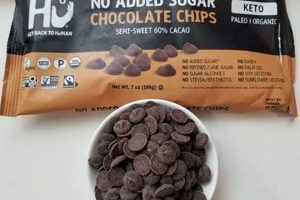
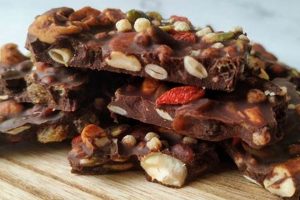
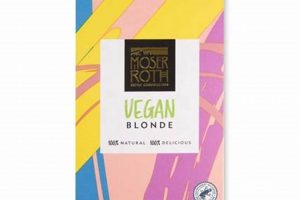
Confections lacking any animal-derived ingredients are available. These alternatives exclude dairy milk, whey, casein, and butter, commonly found in standard formulations. Instead, these products frequently utilize plant-based milks, such as rice, soy, almond, or coconut milk, alongside cocoa solids, sugar, and vegetable fats.
The increasing demand for ethical and sustainable food options has fueled the growth of this specialized market. Individuals following plant-based diets, those with dairy allergies, and consumers seeking products with a smaller environmental footprint often opt for these alternatives. Historically, limited availability and perceived inferior taste were barriers, but advancements in food technology have led to significant improvements in quality and flavor profiles, making it more appealing to a wider audience.
Therefore, the following article will delve into the specifics of identifying truly animal-product-free confections, the range of available varieties, and the factors contributing to their taste and texture, allowing informed purchasing decisions.
Guidance on Identifying Animal-Product-Free Confections
Careful assessment of product labels and ingredient lists is crucial when ensuring the absence of animal-derived components in chocolate purchases.
Tip 1: Scrutinize the Ingredient List: Thoroughly examine the ingredients. Avoid products listing dairy milk, milk solids, whey, casein, butter, or any other ingredient derived from animals.
Tip 2: Look for Vegan Certifications: Seek out products bearing certifications from reputable vegan organizations (e.g., Vegan Society, Certified Vegan). These marks indicate independent verification of the product’s animal-free status.
Tip 3: Be Wary of “May Contain” Statements: Products labeled “may contain milk” are produced in facilities that also process dairy. Individuals with severe allergies or strict dietary requirements should exercise caution.
Tip 4: Research Lesser-Known Ingredients: Investigate ingredients that are unfamiliar. Some additives or emulsifiers may be animal-derived. Online resources and ingredient databases can assist in determining their origin.
Tip 5: Contact the Manufacturer: When uncertainty arises regarding an ingredient, contact the manufacturer directly. Inquire about the source and processing methods used for potentially ambiguous ingredients.
Tip 6: Consider Dark Chocolate: Dark chocolate with a high percentage of cocoa solids often contains fewer animal-derived ingredients than milk or white chocolate varieties. However, it is still essential to verify the ingredient list.
Tip 7: Beware of Added Flavorings: Some flavorings, such as caramel or toffee, may traditionally contain dairy products. Ensure that any added flavorings are explicitly identified as plant-based.
Diligent ingredient analysis and awareness of potential animal-derived components are essential for guaranteeing the plant-based status of confectionery items.
The subsequent sections will explore various vegan chocolate brands and provide practical guidance on evaluating their quality and taste profiles.
1. Ingredient Substitution

The viability of producing animal-product-free confections hinges directly on successful ingredient substitution. The replacement of traditional dairy components with plant-based alternatives forms the foundation for these specialized products. Without effective substitution strategies, producing chocolate suitable for individuals avoiding animal products is not feasible. The core challenge lies in replicating the sensory characteristics taste, texture, and mouthfeel of conventional formulations using ingredients derived solely from plants. This necessitates a comprehensive understanding of the functional properties of both dairy and plant-based materials.
Specific examples illustrate this point. Dairy milk, contributing sweetness, richness, and a creamy texture, is commonly replaced by ingredients such as coconut milk, almond milk, oat milk, or rice milk. Each of these alternatives imparts a unique set of attributes. Coconut milk, for instance, provides a characteristic flavor and a higher fat content, potentially mimicking the richness of dairy. Conversely, almond milk offers a lighter flavor profile and lower fat content. The selection of appropriate plant-based substitutes is therefore crucial in achieving the desired final product characteristics. Furthermore, emulsifiers and stabilizers derived from plant sources are often employed to ensure proper mixing and prevent separation of ingredients, further contributing to the overall quality.
In summary, ingredient substitution is not merely a replacement; it is a complex process requiring careful consideration of the functional properties of both the ingredients being replaced and the substitutes. The success of creating appealing animal-product-free confections depends on mastering this process, ensuring that the final product meets consumer expectations regarding taste, texture, and overall sensory experience. Ongoing research and development in plant-based ingredient technology are critical to further refining these substitution techniques and expanding the range of available animal-product-free confectionery options.
2. Dairy-Free Alternatives

Dairy-free alternatives are fundamental to the availability and characteristics of animal-product-free confections. The omission of dairy, a traditional component, necessitates the use of plant-derived substitutes to achieve comparable taste and texture profiles. The success of these alternatives dictates the viability of a substantial animal-product-free chocolate market.
- Plant-Based Milks
Plant-based milks, such as those derived from soy, rice, almonds, oats, or coconuts, serve as direct replacements for dairy milk. These alternatives contribute varying degrees of sweetness, fat content, and flavor nuances, influencing the final product’s overall sensory characteristics. The specific type of plant-based milk selected impacts the resultant confection’s texture and mouthfeel, requiring careful consideration during formulation.
- Vegetable Fats
Cocoa butter, the natural fat extracted from cocoa beans, often serves as the primary fat component. However, additional vegetable fats, such as palm oil or shea butter, may be incorporated to modify texture or improve processing. The source and quality of these vegetable fats impact the melting point and overall mouthfeel of the chocolate.
- Sweeteners
Refined sugar is a common sweetener; however, animal-product-free versions may employ alternative sweeteners such as agave nectar, maple syrup, or stevia. These sweeteners impact the overall sweetness profile and may contribute subtle flavor nuances. The choice of sweetener can significantly alter the final confection’s overall character.
- Emulsifiers
Lecithin, derived from soy or sunflower, acts as an emulsifier, ensuring the proper mixing of fat and water-based components. This prevents separation and contributes to a smooth, consistent texture. The type and concentration of emulsifier influence the stability and overall mouthfeel of the animal-product-free confection.
The collective impact of these dairy-free alternatives directly determines the palatability and market acceptance of animal-product-free confections. Ongoing advancements in plant-based food technology continue to refine these alternatives, yielding products increasingly comparable to their conventional dairy-containing counterparts. This progress is crucial for expanding the availability and consumer appeal of confections that align with vegan or dairy-free dietary preferences.
3. Ethical Sourcing

The pursuit of animal-product-free confectionery frequently intersects with concerns regarding ethical sourcing practices within the cocoa industry. While eliminating animal-derived ingredients addresses one set of ethical considerations, responsible sourcing addresses issues related to labor practices, environmental impact, and farmer livelihoods.
- Fair Labor Practices
The cocoa industry has historically been associated with exploitative labor practices, including child labor and unfair wages. Ethical sourcing initiatives aim to ensure fair compensation and safe working conditions for cocoa farmers and laborers. Purchasing animal-product-free chocolate from companies committed to fair labor practices supports these initiatives and helps to combat exploitation within the supply chain.
- Environmental Sustainability
Cocoa production can contribute to deforestation and habitat loss, particularly when unsustainable farming practices are employed. Ethical sourcing prioritizes environmentally sustainable methods, such as agroforestry and organic farming, which minimize environmental impact and promote biodiversity. Choosing animal-product-free options from sustainably sourced cocoa supports responsible land management practices.
- Farmer Empowerment
Many cocoa farmers operate on small plots of land and lack access to resources and market information. Ethical sourcing programs often include initiatives to empower farmers through training, access to credit, and fair pricing mechanisms. Supporting these programs helps to improve the livelihoods of cocoa farmers and promotes sustainable agricultural development.
- Traceability and Transparency
Consumers are increasingly demanding greater transparency regarding the origins of their food. Ethical sourcing emphasizes traceability, enabling consumers to trace the cocoa used in their chocolate back to specific farms or cooperatives. This transparency allows for greater accountability and enables consumers to make informed purchasing decisions.
Therefore, selecting animal-product-free confectionery produced with ethically sourced cocoa addresses both animal welfare and broader social and environmental concerns. Consumers can contribute to a more just and sustainable cocoa industry by prioritizing products that align with these ethical principles. The availability of certified animal-product-free chocolate produced with ethically sourced cocoa provides a viable option for those seeking to align their purchasing decisions with their values.
4. Certification Standards
The presence of certification standards serves as a critical determinant in verifying the animal-product-free status of confectionery items. These standards, established by independent organizations, provide a framework for assessing and validating whether a product meets specific criteria regarding the absence of animal-derived ingredients. Certification acts as a form of quality assurance, mitigating the risk of inaccurate labeling or unintentional inclusion of non-animal-product-free components. For instance, a product bearing the “Certified Vegan” logo from Vegan Action demonstrates adherence to a rigorous screening process, instilling confidence in consumers seeking bona fide animal-product-free options. Without such standards, the market would be characterized by ambiguity, making it challenging for consumers to reliably identify and purchase suitable chocolate.
Several recognized certification bodies operate within the food industry, each employing distinct protocols and requirements. Examples include the Vegan Society, Vegan Action, and various organic certification agencies that also address animal-product-free status as part of their broader scope. The varying degrees of stringency across these certifications highlight the importance of understanding the specific criteria associated with each label. Some certifications focus solely on ingredient composition, while others incorporate assessments of manufacturing processes and supply chain traceability. This differentiation underscores the necessity for consumers to research and select certifications that align with their individual values and requirements.
In conclusion, certification standards are inextricably linked to the credibility and accessibility of animal-product-free chocolate. They provide a mechanism for verifying claims of animal-product-free status, enabling consumers to make informed purchasing decisions and supporting manufacturers committed to transparency. While challenges remain in harmonizing global certification standards and ensuring consistent enforcement, the ongoing development and adoption of robust certification programs are essential for fostering trust and expanding the availability of genuine animal-product-free confections.
5. Taste Parity
The pursuit of taste parity represents a central challenge and a critical determinant in the widespread acceptance of confectionery products devoid of animal-derived ingredients. The extent to which animal-product-free chocolate replicates the sensory experience of conventional chocolate directly impacts its market viability and consumer appeal. Substantial advancements in ingredient technology and formulation techniques are imperative to bridging the gap between plant-based alternatives and traditional formulations. Examples abound where initial attempts at animal-product-free versions failed to achieve broad acceptance due to perceived inferior taste, texture, or mouthfeel. This underscores taste parity as not merely an aesthetic consideration but a practical necessity for market success.
Achieving taste parity requires a multifaceted approach encompassing ingredient selection, processing methods, and flavor optimization. The choice of plant-based milk, the control of particle size, and the addition of carefully selected flavor enhancers all play a role in approximating the sensory profile of conventional chocolate. For instance, some manufacturers employ specialized techniques to refine plant-based milks, reducing off-flavors and enhancing their creamy texture. Others focus on optimizing the roasting and conching processes to develop richer, more complex flavor notes. The practical significance lies in the ability of these innovations to overcome consumer preconceptions and establish animal-product-free chocolate as a genuinely appealing alternative, rather than a compromise.
In conclusion, taste parity is not simply a desirable attribute but a foundational requirement for the sustained growth and acceptance of the animal-product-free chocolate market. Overcoming the sensory differences between plant-based and traditional formulations demands ongoing research, innovative ingredient solutions, and a rigorous focus on flavor optimization. While challenges persist, the continued pursuit of taste parity is essential for expanding the reach of animal-product-free chocolate and promoting its integration into mainstream consumer preferences.
Frequently Asked Questions Regarding Animal-Product-Free Confectionery
The following questions address common inquiries and misconceptions concerning confectionery products formulated without animal-derived ingredients.
Question 1: Is all dark chocolate inherently animal-product-free?
Dark chocolate is not automatically free of animal products. While a high cocoa percentage often reduces the likelihood of dairy inclusion, careful examination of the ingredient list is still required to ensure the absence of milk solids, butterfat, or other animal-derived components.
Question 2: What are the common plant-based milk alternatives used?
Common plant-based milk alternatives utilized are coconut milk, almond milk, oat milk, soy milk, and rice milk. Each alternative possesses unique flavor profiles and textural properties that influence the final product’s sensory characteristics.
Question 3: How can the presence of hidden animal products be verified?
Verify by scrutinizing ingredient lists for whey, casein, lactose, or other animal-derived additives. Contacting the manufacturer directly for clarification on ambiguous ingredients or processing methods is also advisable.
Question 4: Are there certified animal-product-free chocolates?
Yes, several certification bodies, such as Vegan Action and The Vegan Society, offer certifications that verify the absence of animal products in food items. Products bearing these certifications have undergone independent evaluation to ensure compliance with established animal-product-free standards.
Question 5: Does animal-product-free chocolate taste the same as traditional chocolate?
Taste profiles can vary depending on the type of plant-based milk and other ingredients used. Advancements in formulation and ingredient technology have resulted in animal-product-free chocolates increasingly comparable to their conventional counterparts.
Question 6: Are ethically sourced cocoa and animal-product-free status related?
While distinct considerations, ethical sourcing and animal-product-free status often overlap. Consumers seeking ethically produced chocolate may also prioritize animal-product-free options to align their purchasing decisions with broader ethical principles.
Accurate identification and informed purchasing decisions are essential for individuals seeking animal-product-free confectionery.
The concluding section will summarize the key considerations discussed within this article.
Conclusion
This article has explored the question of “is there vegan chocolate,” outlining the critical aspects of ingredient substitution, dairy-free alternatives, ethical sourcing, certification standards, and taste parity. The availability of confections devoid of animal-derived components is confirmed, contingent upon meticulous ingredient analysis and adherence to established certification protocols. Plant-based milks, vegetable fats, and alternative sweeteners are central to these formulations. Furthermore, ethically sourced cocoa, fair labor practices, and environmental sustainability constitute integral elements of responsible animal-product-free chocolate production. Achieving comparable sensory characteristics represents an ongoing area of innovation.
The growing demand for ethical and sustainable food choices will continue to drive the evolution of the animal-product-free confectionery market. The availability of credible certifications will provide consumers assurance. Continued research and development are vital to refine flavor profiles and production methods. With vigilant evaluation and a commitment to ethical sourcing, informed choices within this market are possible, contributing to both personal dietary preferences and a more sustainable future.