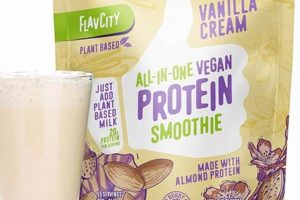
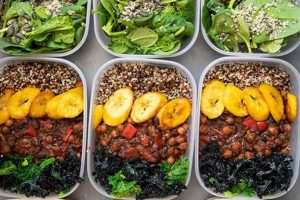
The practice involves creating a nutritional supplement from plant-based ingredients at home to increase protein intake. This process generally includes combining various protein-rich plant sources like legumes, seeds, and grains, then processing them into a powdered form. For example, a common recipe might involve blending brown rice protein, pea protein, and chia seeds.
Formulating one’s own protein supplement allows for greater control over ingredients, potentially avoiding artificial additives, sweeteners, and allergens commonly found in commercially produced alternatives. This can be particularly beneficial for individuals with specific dietary needs or preferences. Historically, this type of preparation was necessitated by limited access to commercially produced options, but today it represents a deliberate choice driven by health and ethical considerations.
The subsequent discussion will examine sourcing appropriate components, optimal combinations for achieving a complete amino acid profile, methods for preparation and storage, and the cost-effectiveness relative to commercially available products.
Tips for Homemade Plant-Based Protein Supplement Creation
Achieving optimal results when formulating a plant-based protein supplement at home requires careful attention to ingredient selection, processing techniques, and storage practices. These recommendations offer guidance for maximizing nutritional value and maintaining product quality.
Tip 1: Prioritize a Complete Amino Acid Profile: Combine multiple protein sources to ensure a comprehensive range of essential amino acids. Rice protein, for example, is low in lysine, while legumes are often lower in methionine. Blending these can create a more balanced profile.
Tip 2: Source High-Quality Ingredients: Select organic, non-GMO ingredients to minimize exposure to pesticides and genetically modified organisms. Verify the purity and source of each component to ensure product safety and efficacy.
Tip 3: Employ Proper Grinding Techniques: Use a high-speed blender or a grain mill to achieve a fine powder consistency. Uniform particle size facilitates easier mixing and improved digestibility.
Tip 4: Incorporate Flavor Enhancers Strategically: While avoiding artificial sweeteners, consider natural flavorings like cocoa powder, cinnamon, or vanilla extract to improve palatability. Start with small amounts and adjust to taste.
Tip 5: Control Moisture Content: Ensure all ingredients are completely dry before blending to prevent clumping and mold growth. Consider using a dehydrator for ingredients prone to moisture retention.
Tip 6: Store Properly for Longevity: Store the prepared supplement in an airtight container in a cool, dark, and dry place. This helps to prevent oxidation and degradation of nutrients.
Tip 7: Research potential allergens Before creating and ingesting any new powder, be sure that all ingredients are right for your diet and any restrictions you may have.
Adhering to these recommendations can significantly enhance the nutritional quality, safety, and shelf life of homemade plant-based protein supplements, allowing for a more cost-effective and personalized approach to protein supplementation.
The next section provides further insights into cost considerations and comparisons with commercially available protein powders.
1. Ingredient Sourcing

Ingredient sourcing forms the foundational element of creating personalized plant-based protein supplements. The origin, quality, and processing of constituent components exert a direct influence on the final product’s nutritional value, purity, and overall efficacy. The practice is directly linked to the ability to control the presence of allergens, additives, and contaminants. Sourcing organic ingredients, for example, reduces exposure to pesticides and herbicides, aligning with health-conscious consumers.
Consider a scenario where a consumer seeks to avoid gluten. Direct control over ingredient sourcing allows for the selection of certified gluten-free oats or rice protein, ensuring product suitability. Conversely, reliance on commercially produced protein powders often necessitates meticulous label scrutiny to identify potential hidden gluten sources or cross-contamination risks. Transparency in sourcing also allows for verification of ethical and sustainable farming practices. Choosing suppliers that prioritize fair labor and environmentally responsible cultivation methods aligns with the ethical considerations that often drive the decision to formulate one’s own nutritional supplements.
Ultimately, informed ingredient sourcing empowers individuals to create protein supplements that precisely meet their dietary requirements, ethical values, and health goals. While meticulous sourcing demands time and effort, it offers unparalleled control over the final product, contributing significantly to the nutritional value and overall benefits derived from a do-it-yourself approach. The challenges associated with this process are generally offset by the advantages of product customization and quality assurance.
2. Amino acid balancing

The practice of amino acid balancing is paramount when creating plant-based protein supplements. Unlike animal-derived proteins, individual plant sources are often incomplete, lacking sufficient quantities of one or more essential amino acids. Therefore, strategic combination of various plant-based proteins is critical to achieving a complete amino acid profile.
- Complementary Protein Pairing
Different plant protein sources possess varying amino acid profiles. For instance, legumes are generally high in lysine but low in methionine and cysteine, while grains tend to be low in lysine but contain adequate levels of methionine and cysteine. Combining legumes and grains ensures sufficient intake of all essential amino acids. A common example is the combination of brown rice protein and pea protein.
- Lysine Optimization
Lysine is frequently a limiting amino acid in plant-based diets, especially for individuals relying primarily on grains and seeds. Incorporating lysine-rich sources, such as legumes (beans, lentils, chickpeas) and quinoa, is essential. Careful consideration must be given to the relative proportion of these ingredients to achieve a balanced profile. Failure to address this can compromise the supplement’s overall protein quality.
- Leucine Threshold for Muscle Protein Synthesis
Leucine plays a critical role in stimulating muscle protein synthesis. While plant-based proteins can provide leucine, some sources may be lower compared to animal-based proteins. Ensuring adequate leucine intake through strategic ingredient selection is crucial for individuals seeking to optimize muscle growth and repair. Concentrated protein isolates from soy or sunflower seeds can contribute to this goal.
- Digestibility Considerations
The digestibility of protein sources also affects amino acid availability. Processing techniques, such as cooking or sprouting, can improve digestibility and enhance amino acid absorption. Furthermore, combining protein sources with enzymes or probiotics may improve protein breakdown and assimilation. Therefore, consideration should be given to the processing and preparation methods applied to each ingredient.
Effective amino acid balancing is integral to the creation of nutritionally complete plant-based protein supplements. Strategic combination of diverse plant sources, with attention to limiting amino acids like lysine and leucine, and consideration of digestibility factors, is paramount for optimizing the efficacy and nutritional value of homemade protein supplements. Improper balancing can result in suboptimal muscle protein synthesis and reduced overall health benefits, negating the intended advantages of a self-formulated product.
3. Preparation Methods

Preparation methods directly impact the final quality and nutritional profile of plant-based protein supplements made at home. The techniques employed influence protein digestibility, bioavailability of amino acids, and the overall shelf life of the prepared product. Inadequate preparation can render the supplement ineffective or even detrimental. For example, failing to properly dry ingredients before grinding them into a powder can introduce moisture, fostering mold growth and reducing shelf life. Conversely, employing excessive heat during processing can denature proteins, diminishing their nutritional value.
Specific preparation choices exert significant influence. Fine grinding of ingredients using a high-speed blender or grain mill is crucial for achieving a uniform particle size, which facilitates optimal mixing and improved digestibility. Utilizing a coffee grinder on flax seeds to break the tough outer shell increases nutrient absorption compared to consuming them whole. The decision to sprout grains and legumes before drying and grinding can further enhance digestibility and increase the concentration of certain vitamins and minerals. Dehydration techniques also play a key role. Low-temperature dehydration preserves heat-sensitive nutrients, while higher temperatures accelerate the process but may compromise certain vitamins and enzymes. Therefore, carefully selecting preparation methods, such as choosing low-temperature dehydration over oven-drying, optimizes nutritional retention.
In conclusion, selecting and implementing appropriate preparation methods are critical for maximizing the benefits of homemade plant-based protein supplements. Factors such as protein digestibility, nutrient preservation, and product stability are directly influenced by these techniques. A thorough understanding of these influences ensures the final product aligns with intended nutritional goals and remains safe for consumption, ultimately validating the effort invested in creating a personalized protein supplement.
4. Storage solutions

Effective storage solutions are a crucial, often overlooked, component of creating plant-based protein supplements at home. The method of storage directly impacts the longevity, quality, and safety of the product. Improper storage can lead to degradation of nutrients, development of rancidity, and the growth of harmful microorganisms, negating the benefits of a carefully formulated supplement. The fundamental goal of storage is to minimize exposure to factors that promote deterioration, such as oxygen, moisture, light, and heat. For instance, storing a supplement in a clear container on a sunny windowsill will accelerate oxidation and nutrient loss, diminishing its nutritional value.
Optimal preservation requires airtight containers crafted from opaque materials, such as dark-colored glass or food-grade plastic, stored in a cool, dry, and dark environment. Oxygen exposure can cause fats within ingredients like flaxseed or chia seeds to turn rancid, rendering the supplement unpalatable and potentially harmful. Moisture absorption can lead to clumping and, more seriously, promote the growth of mold or bacteria. Regularly inspect stored supplements for changes in odor, color, or texture, which can indicate spoilage. Furthermore, consider portioning the supplement into smaller containers to minimize repeated exposure to air during use. Adding a desiccant packet can help absorb any residual moisture, extending shelf life. Properly sealed and stored, a well-formulated powder can maintain its quality for several months. However, overlooking these storage practices can result in rapid deterioration and compromise the intended benefits.
In summary, appropriate storage solutions are an indispensable part of the process of creating plant-based protein supplements at home. By minimizing exposure to detrimental environmental factors and implementing suitable storage protocols, individuals can ensure the safety, potency, and longevity of their homemade supplements. This investment in proper storage safeguards the nutritional value and cost-effectiveness of a do-it-yourself approach, while a lack of such care leads to rapid spoilage and loss of investment.
5. Cost-effectiveness
Evaluating cost-effectiveness is a critical consideration when opting to formulate plant-based protein supplements. A comprehensive assessment requires comparing the expenses associated with sourcing individual ingredients, preparation, and storage against the purchase price of commercially available alternatives.
- Ingredient Price Fluctuation
The cost of individual plant-based protein sources, such as pea protein, brown rice protein, and chia seeds, can vary significantly based on market conditions, seasonal availability, and sourcing location. Purchasing ingredients in bulk often reduces per-unit cost, but requires adequate storage capacity and consideration of expiration dates. For example, organic pea protein isolate sourced from a local supplier may be more expensive than non-organic options purchased online, impacting the overall cost-effectiveness.
- Equipment Investment and Energy Consumption
Preparing supplements necessitates equipment such as high-speed blenders or grain mills. While these appliances represent an initial investment, they can contribute to long-term cost savings. However, energy consumption during blending and dehydration processes should be factored into the total cost assessment. A high-wattage blender used frequently can increase electricity bills, partially offsetting the cost advantages of DIY production.
- Labor and Time Allocation
Formulating a plant-based protein supplement requires time for ingredient sourcing, preparation, and storage. This labor should be considered an opportunity cost, especially for individuals with high hourly wages. While some may find the process enjoyable, others may perceive it as a burden that diminishes the overall cost-effectiveness. Calculating the monetary value of the time invested is essential for accurate cost analysis.
- Customization vs. Standardization
The ability to customize a supplement to meet specific dietary needs represents a significant advantage. Individuals with allergies or sensitivities can avoid certain ingredients, potentially reducing healthcare costs associated with adverse reactions. However, commercial protein powders offer standardized formulations at known costs. The cost-effectiveness of customization depends on the complexity of individual requirements and the price premium associated with specialized commercial products.
Ultimately, determining the cost-effectiveness requires a detailed analysis of individual circumstances, ingredient costs, equipment needs, time investment, and the value placed on customization. A spreadsheet comparing these factors to the price of comparable commercial products provides a clear understanding of the economic benefits, facilitating informed decisions. A well-considered approach ensures the financial advantages of a DIY protein supplement are fully realized.
Frequently Asked Questions Regarding DIY Vegan Protein Powder
This section addresses common inquiries and clarifies misunderstandings surrounding the practice of creating plant-based protein supplements. These responses aim to provide clear, evidence-based information.
Question 1: Is homemade vegan protein powder nutritionally complete?
The nutritional completeness of self-formulated protein powder hinges on the strategic combination of ingredients. Single-source plant proteins often lack sufficient quantities of specific essential amino acids. Blending complementary protein sources, such as legumes and grains, is necessary to ensure a comprehensive amino acid profile.
Question 2: How does the cost compare to commercially available vegan protein powders?
Cost varies based on ingredient choices, sourcing practices, and equipment availability. Bulk purchasing of ingredients can reduce expenses, but necessitates proper storage. A thorough cost analysis should compare ingredient prices, equipment amortization, and time investment against the price of comparable commercial products.
Question 3: What are the potential risks associated with consuming homemade protein powder?
Potential risks include allergen contamination, microbial growth due to improper storage, and nutrient imbalances resulting from inadequate formulation. Sourcing ingredients from reputable suppliers, maintaining strict hygiene standards, and formulating based on established nutritional guidelines mitigate these risks.
Question 4: How long can homemade vegan protein powder be stored safely?
Storage duration depends on ingredient dryness, container sealing, and storage environment. When stored in an airtight container in a cool, dark, and dry place, homemade powder can typically maintain quality for several months. Regular inspection for changes in odor, color, or texture is recommended.
Question 5: What equipment is required to make vegan protein powder at home?
Essential equipment includes a high-speed blender or grain mill for grinding ingredients into a fine powder. A dehydrator may be useful for removing moisture from certain ingredients. Measuring cups and spoons ensure accurate ingredient ratios.
Question 6: Can homemade protein powder replace a balanced diet?
Homemade protein powder is intended as a supplement to, not a replacement for, a balanced diet. A varied diet rich in fruits, vegetables, whole grains, and healthy fats is essential for overall health. Protein powder serves to augment protein intake when dietary needs are not adequately met through whole foods alone.
In summary, creating vegan protein powder requires careful attention to nutritional completeness, safety, storage, and cost. Informed decision-making is essential for realizing the benefits of a do-it-yourself approach.
The subsequent discussion will explore potential recipes and formulation guidelines.
In Conclusion
The preceding analysis underscores the complexities inherent in the formulation of homemade plant-based protein supplements. Careful consideration must be given to ingredient sourcing, amino acid balancing, preparation techniques, and storage protocols to ensure both nutritional efficacy and product safety. Cost-effectiveness requires thorough evaluation, accounting for ingredient prices, equipment investment, and labor allocation.
The creation of diy vegan protein powder represents a commitment to personalized nutrition. Success hinges on informed decision-making and diligent execution. Those undertaking this endeavor should prioritize comprehensive research and adhere to established nutritional guidelines to maximize benefits and mitigate potential risks. Further advancements in plant-based protein extraction and processing may streamline the process in the future, but a foundation in these core principles will remain essential.