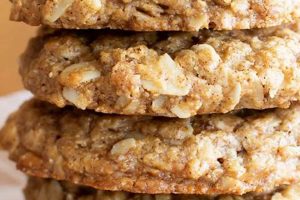
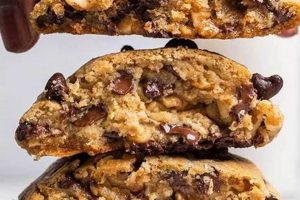
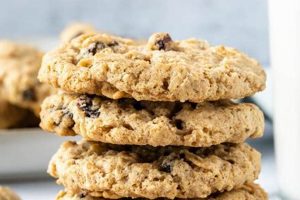
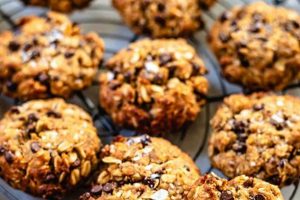
A specific type of baked good, these treats replace traditional butter with a plant-based alternative derived from coconuts. These are further distinguished by the absence of animal products, aligning with a specific dietary practice. As an example, a recipe might call for coconut oil instead of butter, and plant-based milk and egg substitutes to create a batch of these specific cookies.
The increasing interest in these items reflects a growing awareness of dietary choices and ethical consumption. Substituting coconut oil can offer a distinct flavor profile and altered texture compared to conventional recipes. The removal of animal-derived components allows individuals adhering to certain dietary philosophies, or those with allergies, to enjoy a familiar comfort food.
The following sections will delve into the considerations involved in formulating recipes, the potential nutritional aspects, and the techniques for achieving optimal results when preparing this particular variety of cookie.
Formulation Strategies for Plant-Based Coconut Oil Treats
Achieving optimal texture and flavor in plant-based baked goods requires careful consideration of ingredient properties and interactions. The following tips provide guidance on formulating successful recipes using coconut oil in place of traditional fats.
Tip 1: Select Refined Coconut Oil for Neutral Flavor: Unrefined coconut oil imparts a distinct coconut flavor, which may not be desirable. Refined versions offer a more neutral profile, allowing other flavors to dominate.
Tip 2: Manage Coconut Oil Temperature: Coconut oil’s melting point affects cookie texture. Solidified coconut oil may result in a crumbly outcome; slightly softened, but not melted, is often optimal. Experiment with chilling the dough to control spread during baking.
Tip 3: Employ Starch-Based Binders as Egg Replacers: Cornstarch, tapioca starch, or arrowroot powder, when combined with water, act as effective binders in the absence of eggs. These contribute to structure and prevent excessive spreading.
Tip 4: Choose Plant-Based Milk Alternatives Wisely: The moisture content of plant-based milks varies. Oat milk and soy milk generally perform well due to their higher protein content, while almond milk may require adjustments to the dry ingredients.
Tip 5: Adjust Sweetener Levels: Coconut oil may contribute a subtle sweetness. Reduce the amount of added sugar to compensate, preventing an overly sweet final product. Maple syrup or agave can provide complex flavor notes.
Tip 6: Incorporate a Touch of Acid: A small amount of lemon juice or apple cider vinegar can enhance leavening and create a chewier texture by reacting with baking soda.
Tip 7: Consider the Impact of Flour Type: All-purpose flour provides a standard structure, but incorporating whole wheat flour can add a nutty flavor and denser texture. Adjust the liquid content as needed to maintain proper dough consistency.
The skillful application of these formulation strategies leads to plant-based cookies with desirable texture, flavor, and structure, expanding options for individuals with dietary restrictions or preferences.
The subsequent sections will address common challenges encountered during baking and offer troubleshooting advice for achieving consistent results.
1. Texture

Texture plays a crucial role in the overall sensory experience of consuming these plant-based baked goods. The absence of traditional butter and eggs necessitates careful manipulation of alternative ingredients to achieve a desirable mouthfeel.
- Melting Point of Coconut Oil and its Impact
Coconut oil’s relatively low melting point significantly influences the final texture. If the oil is too warm during dough preparation, the cookies may spread excessively and become thin and greasy. Conversely, using coconut oil that is too cold can result in a crumbly, dry texture. The ideal state is often a slightly softened, but not melted, consistency.
- Starch Selection and Resulting Chewiness
The type and amount of starch used as an egg replacement directly impacts the chewiness. Starches like tapioca or arrowroot contribute to a chewier texture due to their ability to absorb liquid and create a gel-like structure during baking. Overuse, however, can lead to an overly gummy result.
- Gluten Development and its Role in Structure
While excessive gluten development is generally undesirable in cookies, a moderate amount provides necessary structure. Overmixing the dough can lead to a tougher texture. Strategies such as using cake flour or adding a small amount of an acid (like lemon juice) can help inhibit gluten formation and promote a more tender crumb.
- Sugar Type and its Contribution to Crispness
The type of sugar influences the cookie’s edges. Granulated sugar promotes crispness, while brown sugar contributes to a softer, chewier texture. A combination of both can create a balance. The hygroscopic properties of brown sugar, which attract moisture, prevent the edges from becoming overly brittle.
Understanding these factors allows bakers to control and manipulate the texture of these treats, resulting in a final product that is both palatable and texturally satisfying. Careful attention to ingredient ratios and baking techniques is essential for replicating consistent results.
2. Flavor

The flavor profile of these baked goods is significantly influenced by the substitution of traditional butter with coconut oil. Unlike butter, coconut oil contributes a subtle, often detectable, characteristic note that interacts with other ingredients. Refined coconut oil offers a more neutral base, minimizing its impact on overall flavor, while unrefined varieties impart a distinct coconut taste, altering the anticipated experience. This choice directly affects consumer acceptance, particularly among those expecting a conventional flavor.
In addition to the base fat, the absence of dairy components necessitates adjustments to enhance flavor complexity. Vanilla extract and other aromatic compounds become crucial for compensating for the missing richness associated with butter. The interplay between the coconut oil, the type of chocolate used (dark, semi-sweet, or vegan), and any added nuts or spices creates a multifaceted flavor spectrum. A recipe using unrefined coconut oil may benefit from the addition of toasted coconut flakes to complement and amplify the existing flavor notes. Conversely, if the intention is to minimize coconut influence, refined oil paired with a robust chocolate and a touch of sea salt can create a balanced and satisfying result.
The flavor of these cookies is a result of careful ingredient selection and balancing. The choice between refined and unrefined coconut oil dictates the foundational flavor profile. Complementary additions, such as extracts, spices, and the type of chocolate, further shape the overall taste experience. By understanding these relationships, bakers can create plant-based cookies that appeal to a wide range of palates, successfully replicating or enhancing the flavor profiles of traditional recipes.
3. Ingredients

The formulation of recipes for plant-based versions of these baked goods necessitates a strategic selection of components, considering both functional properties and potential flavor contributions. The following outlines critical ingredient considerations in the context of this specific variation of a well-known treat.
- Coconut Oil Source and Processing
The choice between refined and unrefined oil has a substantial effect on the flavor profile. Refined oil undergoes processing that removes most of its characteristic coconut scent and taste, making it a more neutral base for the cookie. Unrefined, or virgin, oil retains a pronounced coconut flavor, which may be desirable or undesirable depending on the intended outcome. The selection should align with the desired flavor profile. Different brands also exist, each with its own production methods.
- Flour Types and Gluten Content
The type of flour dictates the cookie’s texture and structure. All-purpose flour provides a standard level of gluten, yielding a chewy texture. Cake flour, with lower protein content, results in a more tender crumb. Gluten-free flour blends are necessary for individuals with gluten sensitivities, requiring additional binding agents such as xanthan gum to compensate for the lack of gluten’s structural properties. The flour choice must suit dietary needs and textural preferences.
- Sweeteners and Their Impact on Texture and Taste
Granulated sugar, brown sugar, maple syrup, and agave nectar can all be utilized, each contributing unique characteristics. Granulated sugar promotes crisp edges, while brown sugar enhances chewiness due to its molasses content. Liquid sweeteners, such as maple syrup or agave, introduce moisture, potentially altering the baking time and texture. The appropriate sweetener balances taste and achieves the desired textural properties. The ratio should be balanced.
- Chocolate and its Plant-Based Certification
Not all chocolate is free from animal products. Milk solids are a common ingredient in many commercially available items. Selecting chocolate explicitly labeled as vegan is essential. Dark chocolate is often a suitable choice, but verifying the ingredient list is necessary. The percentage of cacao also affects flavor intensity, providing another variable to consider when formulating the recipe. Some high-quality ingredients often involve expensive process.
The deliberate selection of these ingredients, taking into account their functional properties and interactions, dictates the success in achieving the desired texture, flavor, and dietary compliance in this type of plant-based cookie. Precise measurement and appropriate mixing techniques complement careful ingredient selection.
4. Baking time
The duration of baking is a critical variable that influences the final quality of these plant-based cookies. Deviations from optimal baking times can lead to undesirable outcomes, affecting texture, color, and overall palatability.
- Impact of Coconut Oil’s Melting Point on Baking Time
Coconut oil’s relatively low melting point necessitates careful monitoring of baking time. Overbaking results in excessive spreading and thin, brittle cookies. Conversely, underbaking leads to doughy interiors. The baking time must be calibrated to ensure the cookies are set but not overcooked, accounting for the oil’s rapid liquefaction at oven temperatures. Adjustments based on visual cues are essential.
- Influence of Oven Calibration and Accuracy
Ovens vary in their actual temperature output. Inaccurate oven calibration can lead to inconsistent results, even with precise adherence to recipe instructions. Using an oven thermometer to verify the internal temperature and adjusting baking time accordingly is crucial for repeatable success. A consistently accurate oven minimizes variability in the final product.
- Role of Cookie Size and Thickness on Baking Duration
Smaller, thinner cookies require shorter baking times compared to larger, thicker variations. The baking time must be adjusted based on the dimensions of the cookies to ensure even cooking throughout. Standardizing the size and thickness of the dough portions promotes consistent results and prevents uneven baking.
- Effect of Ingredient Temperature on Baking Time
The temperature of the dough and ingredients influences baking time. Dough that is too warm spreads rapidly during baking, requiring shorter times. Chilling the dough before baking can slow the spread, potentially necessitating a slight increase in baking duration. Maintaining consistent ingredient temperatures contributes to predictable baking times.
The careful control and monitoring of baking time is paramount in achieving successful plant-based cookies with a desirable texture and appearance. The interplay between coconut oil’s melting point, oven accuracy, cookie dimensions, and ingredient temperatures demands precise adjustments to ensure optimal results. Understanding these factors allows for consistent reproduction of quality cookies.
5. Temperature

Temperature is a critical factor throughout the preparation and baking of these plant-based cookies, influencing both the chemical reactions and physical structure of the final product. Precise temperature control is essential for achieving optimal texture, flavor, and appearance.
- Coconut Oil Consistency and Dough Preparation Temperature
The consistency of coconut oil is highly sensitive to temperature. Solid at cooler temperatures and liquid above its melting point (around 76F or 24C), its state directly affects dough consistency. If the oil is too warm, the dough will be excessively soft, leading to flat, greasy cookies. Conversely, if it is too cold and solid, it may not incorporate evenly, resulting in a crumbly texture. Maintaining the coconut oil at a slightly softened, but not melted, state is optimal for even distribution and desired dough consistency. The ambient room temperature greatly dictates the initial state of the ingredient, requiring adjustments to the recipe if baking in a warm environment.
- Oven Temperature and Baking Consistency
The accuracy of the oven’s temperature is paramount for consistent results. An oven that is too hot can cause the cookies to spread too quickly, resulting in thin, burnt edges, while an oven that is too cool may lead to underbaked, doughy centers. Using an oven thermometer to verify the internal temperature and making adjustments accordingly is crucial. The appropriate baking temperature ensures even heat distribution and proper setting of the cookie structure. Every oven type may need a specific approach.
- Chilling Dough and Controlling Spread
Chilling the dough before baking retards the melting of coconut oil in the oven, controlling the spread of the cookies. This technique promotes a thicker, chewier texture and prevents excessive flattening. The duration of chilling depends on the ambient temperature and the recipe. Experimentation may be necessary to determine the optimal chilling time for specific environmental conditions and recipe formulations. Usually 30-60 minutes is enough.
- Post-Baking Cooling Temperature and Texture Development
The rate at which the cookies cool after baking also affects their final texture. Allowing the cookies to cool on the baking sheet for a few minutes before transferring them to a wire rack allows them to set and prevents them from breaking apart. Rapid cooling can lead to a harder, less chewy texture, while slow cooling may result in a softer, more pliable cookie. The cooling process allows the internal structure to stabilize and solidify.
Temperature, therefore, is a pivotal factor in the entire process, from ingredient preparation to post-baking cooling, significantly impacting the texture, appearance, and overall success of plant-based cookies. By understanding and controlling these temperature-dependent variables, bakers can consistently produce high-quality treats.
6. Consistency

In the realm of these plant-based treats, “Consistency” manifests across several dimensions, each contributing to the overall quality and replicability of the final product. Dough uniformity, baking process control, and ingredient ratios are primary areas where consistency is paramount. A lack of uniformity in any of these areas can lead to unpredictable results, varying widely from batch to batch. For instance, variations in dough consistency due to inconsistent measurement of liquid ingredients can result in cookies that either spread too thin or remain too thick, altering both texture and appearance.
One practical example of the importance of consistency lies in the preparation of the coconut oil itself. Because coconut oil’s state (solid, semi-solid, or liquid) is temperature-dependent, inconsistent handling can cause significant variations. Using melted coconut oil in one batch and semi-solid oil in another, even with the same recipe, will yield cookies with notably different textures and spread characteristics. Similarly, consistent oven temperature is vital. A poorly calibrated oven can fluctuate, leading to over- or under-baked cookies despite adhering strictly to the prescribed baking time. Standardized measuring techniques, precise temperature regulation, and uniform dough portioning are practices that contribute to achieving batch-to-batch consistency.
Achieving consistency in “plant-based coconut oil cookies” presents challenges, particularly due to the variability inherent in plant-based ingredients and the sensitivity of coconut oil to temperature changes. Overcoming these challenges requires meticulous attention to detail, the use of reliable measuring tools, and a thorough understanding of the interplay between ingredients and baking conditions. Successfully addressing these issues translates to consistent results, enabling reproducible preparation of high-quality baked goods that align predictably with expected sensory qualities.
7. Substitutions

The formulation of plant-based recipes inherently relies on the strategic substitution of conventional ingredients with alternatives that align with dietary restrictions and ethical considerations. In the context of baked goods, these replacements must not only mimic the functional properties of the original components but also contribute to the desired flavor and texture. Understanding the nuances of these exchanges is critical for successfully producing high-quality plant-based “coconut oil chocolate chip cookies vegan”.
- Egg Replacers: Functional and Textural Considerations
Eggs contribute binding, moisture, and leavening to traditional cookies. Substitutes such as flaxseed meal, applesauce, or commercially available egg replacement powders must replicate these functions. Flaxseed meal, when mixed with water, forms a gel that provides binding. Applesauce adds moisture and slight sweetness. Commercial powders often contain a blend of starches and gums designed to mimic egg proteins. The choice of substitute affects the final texture, with flaxseed tending to produce a chewier result and applesauce contributing to a softer consistency. Over or under use of these substitutes can result in undesirable cookie texture.
- Dairy-Free Milk Alternatives: Impact on Moisture and Flavor
Dairy milk contributes moisture and richness. Plant-based alternatives, including almond milk, soy milk, oat milk, and coconut milk, vary in their fat content and flavor profiles. Soy and oat milk generally offer a creamier texture and more neutral flavor compared to almond milk, which can be thinner. Coconut milk, particularly the canned variety, introduces a distinct coconut flavor that may or may not complement the other ingredients. The liquid content of these alternatives also affects the dough consistency and baking time. Adjustments to the recipe may be necessary to compensate for differences in moisture and fat content.
- Butter Replacement: Coconut Oil Properties and Usage
Coconut oil replaces butter as the primary fat source. Its impact on texture and flavor requires careful consideration. Refined coconut oil offers a neutral flavor, while unrefined oil imparts a coconut taste. The melting point of coconut oil is relatively low, influencing the spread of the cookies during baking. Solidified coconut oil may result in a crumbly outcome, while excessively warm oil can lead to flat, greasy cookies. Achieving the correct consistency slightly softened, but not melted is crucial. Coconut oil also contains less water than butter, which need to be taken into account.
- Chocolate Selection: Ensuring Plant-Based Compliance
Many commercially available chocolate chips contain dairy. Selecting chocolate specifically labeled as vegan is essential. Dark chocolate is often a suitable choice, but verifying the ingredient list is necessary to ensure the absence of milk solids or other animal-derived ingredients. The percentage of cacao in the dark chocolate affects the flavor intensity, allowing for customization of the final product’s taste profile. Always carefully check the label.
The successful creation of these types of plant-based cookies hinges on a thorough understanding of these substitutions and their effects on the final product. Balancing the properties of the replacement ingredients ensures a desirable texture, flavor, and overall quality that aligns with both dietary needs and culinary expectations.
Frequently Asked Questions
The following addresses common inquiries regarding the preparation, ingredients, and characteristics of these specialized baked goods.
Question 1: What is the primary difference between these and traditional chocolate chip cookies?
The primary difference lies in the absence of animal-derived products. Butter is replaced with coconut oil, and eggs are substituted with plant-based binders, altering both the flavor and texture profile.
Question 2: Does coconut oil impart a strong coconut flavor?
The strength of the coconut flavor depends on the type of coconut oil used. Refined coconut oil has a neutral flavor, while unrefined (virgin) coconut oil has a distinct coconut taste. The recipe should specify which type to use based on the desired flavor profile.
Question 3: How does one ensure the chocolate chips are compliant with a plant-based diet?
Carefully examine the ingredient list of the chocolate chips. Look for explicit labeling indicating “vegan” or “dairy-free.” Avoid products that list milk solids, milk fat, or other animal-derived components.
Question 4: What are suitable egg substitutes for these cookies?
Common substitutes include flaxseed meal mixed with water, applesauce, mashed banana, or commercially available egg replacement powders. The choice depends on desired texture; flaxseed meal lends a chewier texture, while applesauce contributes to a softer consistency.
Question 5: How does coconut oil affect the texture of these cookies?
Coconut oil’s relatively low melting point influences cookie spread and texture. Using slightly softened, but not melted, coconut oil and chilling the dough before baking can help control spreading and produce a chewier texture. Improper temperature management can result in excessively thin or crumbly cookies.
Question 6: Can gluten-free flour be used in this recipe?
Yes, gluten-free flour blends can be used, but they typically require the addition of a binding agent such as xanthan gum to compensate for the lack of gluten. Adjustments to the liquid content may also be necessary to achieve the desired dough consistency.
Understanding these key considerations allows for the informed preparation of these specialized cookies, catering to both dietary restrictions and culinary expectations.
The subsequent sections will delve into common challenges encountered during baking and offer troubleshooting advice for achieving consistent results.
Conclusion
This exposition has detailed the various aspects involved in producing “coconut oil chocolate chip cookies vegan.” From the selection of appropriate ingredients and the understanding of their functional properties to the careful control of baking parameters, it is clear that achieving a satisfactory result requires attention to detail and a nuanced understanding of plant-based baking techniques. The substitution of traditional ingredients, such as butter and eggs, with plant-derived alternatives necessitates adjustments to both the recipe and the baking process.
The information provided serves to empower bakers to experiment with and refine their own recipes, adapting them to specific dietary needs and preferences. As interest in plant-based diets continues to grow, mastering the art of crafting these specialty baked goods will become increasingly valuable. Further research and experimentation will undoubtedly lead to new innovations and improved techniques in this ever-evolving culinary field.