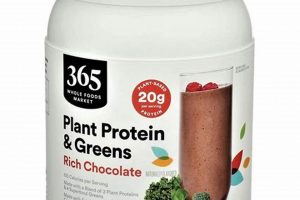
A category of dietary supplements utilizes plant-based protein sources processed to yield a translucent or transparent appearance when dissolved in liquid. This distinguishes it from traditional protein powders that typically produce opaque or milky solutions. It caters to individuals seeking alternatives to animal-derived proteins while prioritizing a lighter, more refreshing consumption experience.
The appeal stems from several factors, including heightened digestibility due to the processing methods, a lighter taste profile that avoids the chalkiness associated with some conventional plant-based options, and suitability for individuals with specific dietary needs or preferences. Historically, plant-based protein powders often faced challenges related to taste and texture, but these clear formulations represent an advancement in addressing those concerns, promoting wider acceptance and consumption. These products offer a convenient way to increase protein intake for athletes, individuals managing weight, or those simply aiming to improve their overall nutritional profile.
The following sections will explore the specific protein sources used in these products, manufacturing processes employed, and considerations for optimal usage and selection.
Optimizing the Use of Clear Vegan Protein Powders
The following recommendations aim to provide guidance on effectively integrating clear vegan protein powders into one’s dietary regimen, maximizing their potential benefits.
Tip 1: Prioritize Ingredient Scrutiny. Carefully examine the product label for the protein source. Pea protein isolate, rice protein isolate, and soy protein isolate are common choices. Select products that utilize high-quality, complete protein sources, ensuring an adequate amino acid profile. Additionally, verify the absence of artificial sweeteners, excessive additives, or allergens relevant to individual sensitivities.
Tip 2: Assess Sweetener Profiles. Evaluate the sweetener composition. While some products employ natural sweeteners like stevia or monk fruit, others may contain artificial alternatives. Consider individual preferences and potential gastrointestinal effects when making a selection. Unsweetened varieties offer the greatest control over flavor profiles.
Tip 3: Master Mixing Techniques. Employ proper mixing techniques to prevent clumping and ensure optimal dissolution. Using a shaker bottle with a wire whisk or blending the powder with a small amount of liquid before adding the remaining volume can improve texture and palatability.
Tip 4: Explore Flavor Pairing Options. Experiment with diverse flavor combinations to enhance the overall experience. Clear vegan protein powders readily complement fruits, vegetables, and other beverages. Consider adding berries, citrus fruits, or herbal infusions to create unique and appealing recipes.
Tip 5: Consider Timing and Dosage. Strategically time consumption to align with individual fitness goals and dietary needs. Consuming a serving post-workout can aid in muscle recovery, while incorporating it into meal replacements can contribute to satiety and weight management. Adhere to the recommended serving size indicated on the product label.
Tip 6: Hydration is Paramount. Adequate hydration is crucial for protein digestion and absorption. Ensure sufficient water intake throughout the day, particularly when supplementing with protein powders, to support optimal bodily function and prevent potential digestive discomfort.
Effective integration of these products necessitates a mindful approach that considers individual needs and preferences. By adhering to these guidelines, individuals can maximize the benefits of clear vegan protein powders while promoting overall well-being.
The subsequent sections will address potential safety considerations and guide readers through the process of selecting the appropriate product.
1. Source Identification

The selection of the protein source is paramount in determining the nutritional value, digestibility, and overall suitability of any plant-based protein powder. For products aiming for clarity and transparency in solution, the inherent characteristics of the source material and the processing methods applied become even more critical.
- Protein Concentration and Purity
The source material dictates the attainable protein concentration following processing. Pea protein isolate and brown rice protein isolate are common choices due to their relatively high protein content. However, the presence of residual carbohydrates, fats, or other non-protein components can impact the clarity of the final product. Rigorous purification processes are essential to remove these impurities and achieve the desired transparency. The purity of the source material directly affects the solubility and clarity of the protein in solution.
- Amino Acid Profile
Different plant-based sources possess varying amino acid profiles. While some, like soy protein, are considered complete proteins containing all nine essential amino acids, others may be limiting in one or more. The source material dictates the amino acid profile of the final product. To achieve a complete protein profile from a source lacking certain essential amino acids, manufacturers may blend multiple plant protein sources. This strategy allows for a balanced amino acid composition in the final product.
- Allergenicity
Certain plant-based protein sources are associated with allergenic reactions in sensitive individuals. Soy, for instance, is a common allergen. The selected source directly influences the potential allergenicity of the protein powder. Manufacturers must clearly label the product with any potential allergens and consider alternative sources for individuals with known sensitivities. Careful source selection minimizes the risk of adverse reactions.
- Sustainability and Environmental Impact
The environmental footprint associated with the production of different plant-based protein sources varies significantly. Pea protein, for example, is often considered a more sustainable option compared to soy protein due to its lower water and fertilizer requirements. Consumers increasingly consider the environmental impact of their dietary choices, and source selection plays a crucial role in aligning with sustainability goals. Source selection should reflect ethical and environmental considerations.
In summary, the protein source selection fundamentally determines the nutritional composition, allergenic potential, and environmental impact of clear, plant-based protein powders. The characteristics of the source material and the processing methods employed are intrinsically linked to the attainment of the desired clarity and functionality. Informed consumers will carefully evaluate these aspects to choose a product that aligns with their individual health needs and values.
2. Processing Method

The attainment of a translucent or transparent solution from plant-based protein necessitates specific processing methodologies. Conventional methods used for creating traditional, opaque protein powders are inadequate for this purpose. Therefore, the chosen processing method is not merely a step in production but a defining factor in achieving the defining characteristic of this product category: its clarity. Improper processing invariably results in a cloudy or opaque final product, disqualifying it from being accurately described within this niche. For instance, simple milling of pea protein will yield a product that, when mixed with water, creates a chalky, opaque beverage.
Enzymatic hydrolysis is frequently employed. This process breaks down long protein chains into smaller peptides and amino acids. Smaller molecules scatter less light, contributing to increased transparency. Filtration is another crucial step. Microfiltration and ultrafiltration techniques remove larger, undissolved particles that cause turbidity. Without these steps, even a hydrolysate may lack the desired clarity. Real-world examples demonstrate the direct correlation: Companies utilizing these advanced techniques consistently produce clearer solutions compared to those relying on basic protein extraction methods. These examples show that, the more thorough the filtration and breakdown, the clearer the final product.
In conclusion, the processing method stands as a critical determinant in achieving the desired outcome for plant-derived protein products with clarity. From enzymatic hydrolysis to advanced filtration, each technique plays a vital role in removing impurities and reducing particle size, directly impacting the solution’s transparency. Understanding the intricacies of these methods is essential for both manufacturers aiming to produce quality products and consumers seeking plant-based protein options that deliver a refreshing and palatable experience. Without the use of the right processing techniques a product cannot deliver what customers expect from a clear protein powder.
3. Solubility Enhancement

Solubility enhancement constitutes a foundational pillar in the production of transparent, plant-derived protein formulations. The inherent insolubility of many plant proteins poses a significant challenge to achieving the desired clarity and palatability associated with these specialized products. Poor solubility leads to visible particles, turbidity, and a gritty texture, directly contradicting the intended consumer experience. Thus, strategies for enhancing solubility are not merely desirable but essential for delivering a product that aligns with its defining characteristic.
Techniques employed for solubility enhancement include enzymatic hydrolysis, pH adjustment, and the use of specific excipients. Enzymatic hydrolysis breaks down large protein molecules into smaller peptides, improving their dispersibility in aqueous solutions. Adjusting pH levels can alter protein charge, influencing protein-protein interactions and thus enhancing solubility. Certain food-grade excipients, such as specific amino acids or hydrocolloids, can also be incorporated to prevent aggregation and promote dissolution. The effectiveness of these methods is evident in comparing traditional plant protein powders to these transparent alternatives. While traditional powders often exhibit significant sedimentation and cloudiness upon mixing, these advanced formulations demonstrate near-complete dissolution, yielding a clear and homogenous solution.
The practical significance of solubility enhancement extends beyond aesthetics. Improved solubility facilitates faster digestion and absorption, potentially increasing the bioavailability of amino acids. Furthermore, it allows for higher protein concentrations without compromising the drinking experience. Therefore, understanding the relationship between solubility enhancement and these specialized protein products is crucial for both manufacturers aiming to produce high-quality products and consumers seeking effective and palatable plant-based protein options. Lack of solubility causes issues with both flavor and absorbtion.
4. Flavor Optimization
Flavor optimization plays a critical role in the acceptance and consumption of plant-based protein products, particularly within the “clear protein powder vegan” category. Traditional plant protein sources often exhibit inherent off-flavors, such as bitterness or earthy notes, that detract from the overall sensory experience. If not addressed, these undesirable tastes can significantly limit the appeal of the product, regardless of its nutritional benefits or clarity. Thus, effective flavor optimization is not merely an aesthetic concern but a fundamental requirement for ensuring consumer satisfaction and encouraging consistent use. Real-world examples demonstrate this: early iterations of plant-based protein often faced market resistance due to unpalatable tastes, while more recent, flavor-optimized products have gained wider acceptance.
Flavor optimization strategies for these protein powders typically involve masking agents, sweeteners, and flavor enhancers. Masking agents work to neutralize or suppress the inherent off-flavors of the plant protein source. Sweeteners, both natural and artificial, can improve palatability by adding a desirable taste component. Flavor enhancers, such as fruit extracts or natural flavorings, contribute distinct and appealing profiles. Careful selection and balancing of these ingredients are crucial. Overuse of masking agents can result in a bland or artificial taste, while excessive sweetness can be undesirable for health-conscious consumers. The choice of flavor enhancers must also complement the inherent characteristics of the protein source and the intended application. For instance, a citrus flavor might pair well with a tart fruit extract. Flavoring also determines who is buying your clear protein product.
In conclusion, flavor optimization is integral to the success of plant-based protein products aiming for clarity. It directly impacts consumer perception, acceptance, and long-term adherence to dietary regimens incorporating these supplements. The challenges lie in achieving a balance between effective flavor masking and maintaining a clean label, minimizing artificial additives, and delivering a taste profile that resonates with the target consumer. By prioritizing flavor, manufacturers can transform these supplements into a desirable and sustainable source of protein for a broader audience. Therefore, it is important for companies to hire a professional to optimize their flavors.
5. Digestive Impact

The digestive impact of clear plant-based protein products constitutes a significant factor influencing consumer acceptance and sustained utilization. Traditional plant protein powders, due to their inherent composition and processing methods, often present digestive challenges, including bloating, gas, and general discomfort. These issues arise from the presence of complex carbohydrates, fiber, and certain anti-nutritional factors naturally found in plant sources. The manufacturing of these specific products directly addresses these potential digestive drawbacks through specialized techniques. For example, enzymatic hydrolysis breaks down complex proteins into smaller peptides, facilitating easier digestion and absorption. Filtration processes remove indigestible components, minimizing the likelihood of gastrointestinal distress. These interventions directly affect the physiological response to consumption, potentially mitigating adverse effects commonly associated with other plant-based protein supplements. Real-world examples of this effect exist within market research studies where participants consistently report improved digestive tolerance when consuming this type of protein formula compared to standard plant-based protein powders. This improvement in digestive tolerance enhances the practical appeal of the product.
The reduced digestive burden offered by these proteins extends beyond simple comfort. By facilitating more efficient protein absorption, these formulations optimize the bioavailability of essential amino acids, maximizing their utilization for muscle repair and overall protein synthesis. Individuals with sensitive digestive systems, or those prone to gastrointestinal issues, may find these formulations particularly beneficial as they provide a readily digestible source of protein without exacerbating existing conditions. The processing is essential, because the source material can be difficult to digest without it. In addition, digestive aids may be added to improve the products impact.
In summary, the digestive impact of clear plant-based protein powders is a key differentiator. The specialized processing methods employed in their production directly address the digestive challenges often associated with traditional plant proteins, resulting in improved tolerance, enhanced protein absorption, and increased overall consumer satisfaction. While individual responses may vary, the objective remains the same: to provide a readily digestible and effective source of plant-based protein that aligns with the dietary needs and preferences of a broad range of individuals. This makes these protein powders suitable for individuals with digestive issues.
6. Amino Acid Profile

The amino acid profile of a plant-based protein powder is a critical determinant of its nutritional value and suitability as a dietary supplement. For clear plant-based protein formulations, the profile dictates its effectiveness in supporting muscle protein synthesis, recovery, and overall health.
- Essential Amino Acid Composition
Essential amino acids, which cannot be synthesized by the body, must be obtained through dietary sources. The completeness of a protein source hinges on the presence of all nine essential amino acids in adequate proportions. Clear plant-based protein products often rely on single-source proteins like pea or rice, which may be limiting in certain essential amino acids, such as lysine or methionine. Supplementation strategies or protein blending techniques may be employed to rectify these deficiencies and create a more complete amino acid profile. This is crucial for individuals relying on these protein powders as a primary protein source.
- Branched-Chain Amino Acids (BCAAs)
Branched-chain amino acids (BCAAs) leucine, isoleucine, and valine play a vital role in muscle protein synthesis and reducing muscle soreness. The BCAA content of a clear plant-based protein powder directly impacts its effectiveness in promoting muscle recovery after exercise. Products with higher BCAA concentrations, or those supplemented with additional BCAAs, may offer enhanced benefits for athletes and individuals engaging in regular physical activity. The inclusion of BCAAs elevates the efficacy of the powder.
- Digestibility and Bioavailability
The digestibility and bioavailability of amino acids within a protein source influence their utilization by the body. Factors such as protein structure, processing methods, and the presence of anti-nutritional factors can affect amino acid absorption. Specialized processing techniques, such as enzymatic hydrolysis, are often employed in the production of clear plant-based protein products to improve digestibility and enhance the bioavailability of amino acids. Greater bioavailability translates to more efficient protein utilization.
- Protein Digestibility Corrected Amino Acid Score (PDCAAS)
The Protein Digestibility Corrected Amino Acid Score (PDCAAS) provides a standardized measure of protein quality based on both the amino acid profile and digestibility. A PDCAAS score of 1.0 indicates a complete and highly digestible protein source. While challenging to achieve with single-source plant proteins, clear plant-based protein formulations can attain higher PDCAAS scores through strategic blending of different protein sources or supplementation with limiting amino acids. This score serves as a valuable metric for assessing the overall protein quality of the product.
The amino acid profile is a paramount consideration when evaluating clear plant-based protein supplements. Understanding the essential amino acid composition, BCAA content, digestibility, and PDCAAS score allows consumers to make informed choices and select products that effectively support their dietary needs and fitness goals. Strategic protein blending and processing techniques are essential for optimizing the amino acid profile and maximizing the nutritional value of these specialized protein powders.
Frequently Asked Questions
The following section addresses common inquiries surrounding transparent, plant-based protein supplements. These questions aim to clarify the nature, usage, and benefits associated with this product category.
Question 1: What distinguishes clear protein powder vegan from conventional plant-based protein powders?
The primary distinction lies in the visual clarity of the dissolved product. Specialized processing techniques remove impurities and reduce particle size, resulting in a translucent or transparent solution. Traditional plant-based protein powders typically produce opaque or milky mixtures.
Question 2: Are clear protein powders vegan nutritionally complete?
The nutritional completeness depends on the protein source and any added ingredients. Single-source plant proteins may be limiting in certain essential amino acids. Products utilizing protein blends or supplemented with specific amino acids offer a more complete nutritional profile. Always review the product label to assess amino acid composition.
Question 3: How should clear protein powder vegan be incorporated into a diet?
It can be incorporated into various beverages, smoothies, or recipes as a protein supplement. The powder dissolves readily in water or other liquids. Serving sizes typically range from 20 to 30 grams of protein per serving. Follow the manufacturer’s instructions for optimal mixing and consumption.
Question 4: Are there any potential side effects associated with clear protein powders vegan?
While generally well-tolerated, some individuals may experience digestive discomfort, particularly with initial use. Potential side effects can include bloating, gas, or changes in bowel habits. Selecting products with minimal additives and prioritizing hydration may mitigate these effects. As always, if side effects persist it is recommended that you consult with your doctor or dietician.
Question 5: How does the flavor profile of clear protein powder vegan differ from traditional plant-based options?
Clear protein powders tend to exhibit a lighter, more refreshing flavor profile compared to traditional plant-based options. Masking agents and flavorings are often employed to minimize inherent off-flavors associated with plant proteins. This leads to a more neutral or fruity taste that is easily complemented by other ingredients.
Question 6: What factors should be considered when selecting a clear protein powder vegan product?
Key considerations include the protein source, amino acid profile, ingredient list, sweetener type, and manufacturing processes. Opt for products with high-quality ingredients, minimal additives, and transparent labeling practices. Consider individual dietary needs and preferences when making a selection.
In summary, clear plant-based protein supplements offer a convenient and palatable way to increase protein intake. Careful attention to product selection and usage guidelines can maximize their benefits and minimize potential drawbacks.
The next article section will address potential safety considerations and guide readers through the process of selecting the appropriate product.
Conclusion
The preceding examination has illuminated the defining characteristics, production methodologies, and nutritional considerations associated with clear protein powder vegan. This specific category distinguishes itself through its emphasis on transparency, palatability, and digestibility, seeking to address limitations inherent in conventional plant-based protein supplements. Successful formulation requires careful attention to protein source selection, specialized processing techniques, and effective flavor optimization strategies.
The continued evolution of clear protein powder vegan formulations holds potential for broadening the appeal of plant-based nutrition. Further research into novel protein sources, advanced processing methods, and targeted flavor solutions will likely drive future innovation within this domain. Prudent evaluation of product attributes remains essential for informed consumer decision-making.