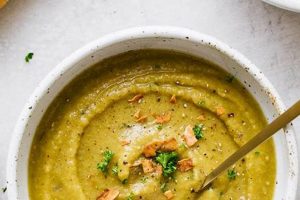
This culinary creation represents a plant-based adaptation of a traditionally dairy-rich dish. It replicates the creamy texture and savory flavor profile commonly associated with its non-vegan counterpart through the use of ingredients such as plant-based milk alternatives, nutritional yeast for a cheesy essence, and blended vegetables for body. One example is a recipe utilizing cashews soaked and pureed to provide a smooth, rich base combined with broccoli florets and vegetable broth.
The growing demand for plant-based options makes this type of recipe increasingly relevant. It allows individuals adhering to vegan dietary guidelines to enjoy familiar comfort foods without compromising their ethical or dietary choices. Its nutritional benefits can include high levels of vitamins, minerals, and fiber, depending on the specific ingredients used. Adaptations of classic recipes have existed for decades, evolving alongside the expanding availability of plant-based ingredients and increased awareness of veganism.
The following sections will delve into the specific ingredients and techniques required to create a delectable and satisfying version. We will explore options for achieving optimal creaminess, intensifying the cheesy flavor, and ensuring the broccoli is cooked to perfection. Further discussion will cover potential variations and modifications to suit individual preferences and dietary needs.
Essential Guidance for Optimal Preparation
Achieving the desired flavor and texture requires attention to specific details. These guidelines aim to enhance the final product.
Tip 1: Ingredient Selection: Opt for high-quality vegetable broth as the base. This significantly impacts the overall flavor profile. Low-sodium options allow for better control over seasoning.
Tip 2: Broccoli Preparation: Lightly steam or blanch the broccoli before adding it to the soup. This ensures tenderness while preserving its vibrant green color and nutritional value. Avoid overcooking.
Tip 3: Achieving Creaminess: Utilize soaked and blended cashews or white beans as a thickening agent. These provide a naturally creamy texture without relying on dairy. Adjust the amount based on desired consistency.
Tip 4: Enhancing Cheese Flavor: Nutritional yeast is a key ingredient. Experiment with different brands and quantities to find the ideal level of cheesy flavor. Adding a small amount of miso paste can also enhance the umami notes.
Tip 5: Seasoning Precisely: Taste frequently and adjust seasoning throughout the cooking process. Salt, pepper, garlic powder, and onion powder are essential. A dash of smoked paprika can add depth of flavor.
Tip 6: Blending Technique: Use an immersion blender or transfer the soup carefully to a regular blender. Blend until completely smooth and creamy. Exercise caution when blending hot liquids.
Tip 7: Garnishing for Appeal: Garnish with fresh herbs such as parsley or chives, a sprinkle of red pepper flakes for a touch of heat, or a swirl of plant-based cream to elevate the presentation.
Following these points will help ensure a flavorful and visually appealing result. Attention to detail significantly influences the final outcome of this plant-based creation.
The subsequent section will provide additional recipe variations and suggestions for adapting the dish to meet specific dietary requirements and preferences.
1. Flavor Balance

Flavor balance is a cornerstone of successful culinary creations, and its importance is magnified when adapting traditionally dairy-rich recipes to a vegan format. The absence of dairy necessitates careful consideration of alternative ingredients and techniques to achieve a harmonious and satisfying flavor profile. The overall success of this dish hinges on achieving a harmonious interplay between savory, cheesy, and subtly sweet notes.
- Umami Enhancement
Umami, often described as a savory taste, is crucial for replicating the depth of flavor commonly found in cheese-based soups. Ingredients such as nutritional yeast, miso paste, or even a small amount of soy sauce can contribute to this sensation, creating a more complex and satisfying flavor experience. Achieving the right level of umami prevents the dish from tasting bland or one-dimensional.
- Broccoli Bitterness Mitigation
Broccoli, while nutritious, can impart a slight bitterness to the soup. Roasting the broccoli before blending can help mellow this bitterness and bring out its natural sweetness. Additionally, balancing the bitterness with a touch of sweetness from caramelized onions or a small amount of maple syrup can create a more rounded flavor profile.
- Acidity Integration
A touch of acidity can brighten the flavor of the soup and prevent it from feeling heavy or overly rich. Lemon juice, apple cider vinegar, or even a small amount of Dijon mustard can provide this necessary acidity. The acidity also serves to cut through the richness of the creamy base, resulting in a more refreshing and palatable final product.
- Herb and Spice Complementarity
Careful selection of herbs and spices is essential for complementing the other flavors in the soup. Garlic, onion powder, smoked paprika, and a blend of Italian herbs can enhance the savory and cheesy notes. The use of fresh herbs such as parsley or chives as a garnish can also add a burst of freshness and visual appeal. Avoiding overpowering spices that clash with the other flavors is crucial.
These elements demonstrate that the final taste is not merely a sum of its parts, but is actually a careful, well-orchestrated combination of all ingredients. By carefully manipulating the flavors inherent in each component, from the earthy broccoli to the savory notes of vegan cheese substitutes, a cook can create a well-balanced soup, enjoyable by both vegans and non-vegans alike. The thoughtful integration of umami, management of broccoli bitterness, incorporation of acidity, and selection of complementary herbs and spices culminates in a product that accurately mimics the taste of traditional recipes.
2. Creamy Texture

Creamy texture is a defining characteristic of cheesy broccoli soup, and its replication in a vegan version poses a significant culinary challenge. The traditional creamy texture originates from dairy ingredients, such as milk, cream, and cheese. Achieving a similar mouthfeel without these components necessitates the utilization of alternative thickening agents and emulsification techniques. The presence or absence of this characteristic has a direct and substantial impact on the perceived quality and authenticity of the final product. The perceived enjoyment is directly proportional to successful mimicry.
Several methods can be employed to create the desired creaminess. Soaking and blending cashews to form a rich, smooth base is a common and effective approach. Other options include using cooked white beans, potatoes, or pureed cauliflower. These ingredients, when blended with vegetable broth and seasonings, provide a substantial body and velvety texture. Ineffective blending yields a grainy or watery result. Practical applications of this understanding include precise measurement and preparation of thickening ingredients, coupled with the use of high-powered blenders to ensure complete smoothness. Failure to follow procedure results in unpleasant taste and texture.
Successful replication of creamy texture in vegan cheesy broccoli soup is not merely an aesthetic concern; it is fundamental to the overall sensory experience. It contributes significantly to the perception of richness, satiety, and comfort associated with the dish. Overcoming challenges through informed ingredient selection and precise technique achieves an acceptable dish that is on par with its diary counterparts. Without it, the eating experience will lack what is expected.
3. Broccoli Texture
The texture of broccoli within a plant-based, cheese-flavored soup is a critical factor influencing the overall palatability and culinary success of the dish. Overcooked broccoli becomes mushy, detracting from the soup’s structural integrity and resulting in an unappealing mouthfeel. Conversely, undercooked broccoli remains too firm, rendering it difficult to chew and disrupting the smooth consistency of the soup base. Achieving the correct broccoli texture tender yet slightly firm is essential. This balance provides a pleasant contrast to the creaminess of the soup, enhancing the overall sensory experience. For instance, lightly steaming broccoli florets before incorporating them into the soup ensures that they retain some bite while avoiding excessive fibrousness.
The selection of broccoli preparation method directly impacts texture. Roasting imparts a slightly caramelized flavor and can soften the broccoli, while steaming or blanching yields a brighter green color and retains more nutrients. Adding the broccoli towards the end of the cooking process prevents overcooking. Some recipes call for pureeing a portion of the broccoli to thicken the soup, while leaving the remaining florets intact for textural variation. The ability to monitor and adjust the cooking time based on broccoli variety and size is crucial. Examples include decreasing cooking time for tender baby broccoli versus mature, thicker-stalked broccoli.
In conclusion, broccoli texture is not merely a superficial attribute but an integral component of successful creation of a plant-based, cheese-flavored soup. Attaining the correct texture enhances the flavor profile and sensory pleasure. Challenges lie in controlling cooking time and technique to maintain that delicate balance. Mastery of broccoli texture ensures an appealing vegan adaptation of a classic comfort food.
4. Vegan Cheese Alternative

The adaptation of cheesy broccoli soup to a vegan diet necessitates the utilization of cheese alternatives to replicate the flavor and texture profile of traditional dairy-based cheeses. These alternatives are crucial for achieving the desired taste and mouthfeel in the absence of animal products. The characteristics and performance of the cheese alternative significantly impact the overall success of the recipe.
- Nutritional Yeast as a Primary Flavor Component
Nutritional yeast, a deactivated yeast with a nutty, savory flavor, is frequently employed as a primary vegan cheese alternative. It provides a source of umami and imparts a cheesy flavor note to the soup. The quantity of nutritional yeast added directly influences the intensity of the cheese-like flavor. For example, increasing the amount of nutritional yeast can amplify the cheesy taste, while decreasing it can result in a more subtle flavor profile. Some brands exhibit a stronger flavor than others. Nutritional yeast lacks the melting properties of dairy cheese and functions primarily as a flavoring agent.
- Cashew-Based Cheese Substitutes for Creaminess and Flavor
Cashews, when soaked and blended into a smooth cream, can serve as a base for vegan cheese alternatives. The resulting cashew cream provides a creamy texture similar to that of dairy-based cheeses. Further flavor enhancements, such as lemon juice, garlic powder, and onion powder, can be incorporated to mimic the flavor of specific cheese varieties. While cashew-based cheeses contribute to both the flavor and texture of the soup, they lack the distinct sharpness often found in mature cheeses. The natural sweetness of cashews must be balanced with other flavor elements to avoid an overly sweet final product. Other nuts can also be used, but the flavor will change based on their natural sweetness
- Commercially Available Vegan Cheese Products
A wide variety of commercially produced vegan cheese products are available, ranging from shredded cheeses to cream cheese alternatives. These products often utilize ingredients such as tapioca starch, coconut oil, and plant-based proteins to mimic the texture and melting properties of dairy cheese. While some commercially available vegan cheeses melt and stretch, others may not perform as well in cooked applications. The flavor profiles vary significantly between brands and varieties. The selection of a commercially available vegan cheese product should be guided by the desired flavor and melting characteristics in the final soup.
- Blending Vegetables for Texture and Flavor
Certain vegetables, such as potatoes and carrots, when cooked and blended, can contribute to the creamy texture and subtle sweetness of a vegan cheese alternative. These vegetables can enhance the overall flavor profile of the soup. Incorporating roasted vegetables can add a depth of flavor and umami to the final product. While vegetables alone cannot replicate the complex flavor of dairy cheese, they can serve as a foundational element in a multi-faceted vegan cheese alternative strategy.
The effective utilization of a vegan cheese alternative is paramount to achieving a satisfying and authentic adaptation. The selection of the appropriate alternative depends on the desired flavor profile, texture, and melting characteristics. A combination of multiple alternatives, such as nutritional yeast, cashew cream, and commercially available vegan cheese, can be used to create a more complex and nuanced flavor experience, improving the authenticity of the soup.
5. Nutritional Content
The nutritional composition of a plant-based adaptation of cheesy broccoli soup differs significantly from its dairy-based counterpart. A comprehensive understanding of these differences and the specific contributions of each ingredient is essential for assessing the healthfulness of the vegan version. Calorie count, macronutrient ratios, and micronutrient profiles warrant careful consideration.
- Vitamin and Mineral Density
Vegan cheesy broccoli soup typically exhibits high concentrations of vitamins and minerals derived from broccoli and other vegetable components. These include vitamin C, vitamin K, folate, and potassium. The presence of nutritional yeast can further enhance the vitamin B content, particularly vitamin B12 if fortified. However, the bioavailability of certain minerals, such as iron, may be lower compared to animal-based sources. The overall vitamin and mineral density supports immune function, bone health, and various metabolic processes. Broccoli, in particular, is a cruciferous vegetable known for its potential anti-cancer properties attributed to its high levels of glucosinolates.
- Fiber Content and Digestive Health
The plant-based nature of this soup contributes significantly to its fiber content. Broccoli, vegetables, and thickening agents such as cashews or white beans are sources of dietary fiber. Adequate fiber intake promotes digestive regularity, supports gut health, and contributes to feelings of fullness, potentially aiding in weight management. Fiber content also influences the glycemic response, leading to a more gradual release of glucose into the bloodstream. Recipes incorporating high-fiber ingredients offer greater satiety and can aid in blood sugar control.
- Fat Profile and Lipid Composition
The fat profile of the soup depends largely on the ingredients used to achieve creaminess. Cashews and other nuts contribute unsaturated fats, which are considered beneficial for cardiovascular health. Coconut milk or coconut oil, if used, will increase the saturated fat content. The overall fat content and the ratio of saturated to unsaturated fats should be considered in the context of individual dietary needs and recommendations. A balance of healthy fats is important for hormone production, nutrient absorption, and cell function.
- Protein Content and Amino Acid Profile
The protein content of vegan cheesy broccoli soup is generally lower compared to traditional dairy-based versions. Protein sources include broccoli, nuts, seeds, and nutritional yeast. The amino acid profile may not be as complete as that of animal-based proteins. Combining various plant-based protein sources can help ensure adequate intake of essential amino acids. Protein is essential for tissue repair, enzyme production, and hormone synthesis.
The nutritional attributes of the vegan adaptation can be strategically optimized through careful ingredient selection and portion control. A focus on whole, unprocessed ingredients, coupled with mindful attention to macronutrient ratios, can result in a nutritious and satisfying meal option. This is especially relevant when considering individuals with specific dietary requirements or health conditions.
6. Preparation technique

The preparation technique for a plant-based adaptation is central to the overall success in replicating the taste and texture of its dairy-containing counterpart. Meticulous execution of each step directly influences the final products palatability and appeal. Variations in technique will yield different outcomes.
- Broccoli Cooking Method and its Effects
The method employed to cook broccoli significantly impacts its texture and flavor profile within the soup. Steaming or blanching preserves a vibrant green color and retains nutrients, but may result in a slightly less intense flavor. Roasting the broccoli concentrates its flavor and imparts a subtle sweetness but can diminish the green hue. Overcooking, regardless of the method, leads to a mushy texture, rendering the broccoli unappetizing. The chosen method should align with the desired balance of texture and flavor. Correctly cooked broccoli has a slight “bite”.
- Blending Techniques and Creaminess
The method employed to blend the soup directly affects its final texture. Immersion blenders offer convenience and allow for partial blending, leaving some chunks for textural variation. Countertop blenders, particularly high-powered models, achieve a smoother, more uniform consistency. Insufficient blending results in a grainy or separated soup. Conversely, over-blending can create an overly thick or gluey texture. Optimal blending strikes a balance between smoothness and structural integrity.
- Vegan Cheese Incorporation Timing and Method
The timing and method of incorporating vegan cheese alternatives influence their distribution and impact on the soups flavor. Nutritional yeast can be added early in the cooking process to allow its flavor to meld with the other ingredients or later as a finishing touch to preserve its distinct character. Cashew cream is typically added towards the end of cooking to prevent curdling or separation. Commercially available vegan cheeses may require specific melting techniques to ensure even distribution and prevent clumping. Incorrect incorporation leads to uneven flavor and texture. Adding nutritional yeast towards the end of cooking helps it stay on top, thus improving the flavor for most.
- Seasoning and Flavor Development Strategies
Strategic seasoning is crucial for replicating the complex flavors of traditional cheesy broccoli soup. Adding salt, pepper, garlic powder, and onion powder at different stages of cooking allows the flavors to develop and meld. The use of smoked paprika can impart a subtle smokiness reminiscent of certain cheeses. Tasting and adjusting the seasoning throughout the cooking process is essential for achieving a well-balanced flavor profile. Insufficient seasoning results in a bland soup, while excessive seasoning overpowers the other flavors. Experimentation with different herbs and spices enhances the flavor.
These preparation techniques, when executed with precision and attention to detail, collectively contribute to the successful creation of plant-based cheesy broccoli soup. Each element interacts to determine the dish’s overall appeal and its ability to convincingly mimic its dairy-based predecessor. Skillful execution makes all the difference.
7. Ingredient Sourcing

The quality and origin of ingredients exert a profound influence on the final characteristics of vegan cheese-flavored broccoli soup. Specifically, the method by which ingredients are obtainedtheir sourcingdirectly impacts flavor, nutritional value, and ethical considerations related to the dish. Ingredient sourcing is therefore not merely a logistical concern, but an integral component that dictates the overall quality and integrity of the final product. For instance, locally sourced, organic broccoli may exhibit a more intense flavor and higher nutrient density compared to broccoli from industrial farms, which often relies on synthetic fertilizers and pesticides. The selection of vegan cheese alternatives, influenced by sourcing considerations, directly alters both flavor and texture outcomes.
The decision to use cashews from fair-trade sources affects more than just the flavor; it also impacts ethical responsibilities. Sourcing plant-based milk alternatives impacts the flavor. Using almond milk from local source can change the flavor and creamy texture. Choosing imported versions from large corporate farms will produce a watery output. The choice to use nutritional yeast grown in organic conditions is another example. While it does not greatly affect the product, it changes the nutrients within. In all cases, ingredient choice, including its origin, defines the quality.
In summary, ingredient sourcing is not just a preliminary step but an active determinant of the attributes of the plant-based cheese-flavored broccoli soup. From flavor to ethical practice, the quality chain defines the meal. Its impact is direct. Challenges lie in balancing cost considerations with ethical and quality considerations. This underscores the importance of informed decision-making in ingredient procurement, highlighting how sourcing informs not only the flavor profile but also the ethical footprint of this culinary creation.
Frequently Asked Questions
This section addresses common inquiries concerning the creation of a cheese-flavored broccoli soup without the inclusion of animal products, providing insight into ingredient selection, techniques, and potential challenges.
Question 1: How is a cheesy flavor achieved without using dairy?
The cheesy flavor profile is typically replicated using nutritional yeast, a deactivated yeast with a savory, umami-rich taste. This ingredient, when combined with other flavor enhancers such as garlic powder and onion powder, mimics the characteristic taste of cheese.
Question 2: What are the best vegan cheese alternatives to use in this soup?
Various options exist, including cashew cream, which provides a creamy texture and subtle flavor, and commercially available vegan cheese shreds. The choice depends on personal preference and desired texture. Consider the melting properties of each alternative.
Question 3: How can a creamy texture be achieved without using milk or cream?
Creaminess can be achieved by blending soaked cashews, cooked white beans, or potatoes into the soup base. These ingredients provide a smooth, velvety texture that replicates the richness of dairy-based creams.
Question 4: What is the best method for cooking broccoli to prevent it from becoming mushy?
Lightly steaming or blanching the broccoli before adding it to the soup is recommended. This ensures that the broccoli remains tender-crisp and avoids overcooking, which can result in a mushy texture. Addition during the later stages of the cooking process minimizes overcooking.
Question 5: Can this soup be made gluten-free?
Yes, provided that gluten-containing ingredients are avoided. Specifically, ensure that the vegetable broth and any thickening agents used are certified gluten-free. Many commercial vegetable broths contain gluten, so careful label reading is essential.
Question 6: How can the nutritional content of this soup be optimized?
The nutritional content can be enhanced by using a variety of vegetables, including dark leafy greens, and by incorporating protein-rich ingredients such as nuts, seeds, or lentils. Choosing organic ingredients can also minimize exposure to pesticides.
In summary, achieving a palatable and nutritious outcome hinges on proper ingredient selection, technique, and a thorough understanding of the roles each ingredient plays in the final dish.
The subsequent section explores potential modifications to this recipe to suit individual dietary restrictions and preferences.
Cheesy Broccoli Soup Vegan
This exploration of the topic has revealed that crafting a successful version requires a meticulous understanding of ingredient interactions and preparation techniques. The creation hinges upon achieving a balanced flavor profile, replicating the creamy texture of traditional dairy-based soups, and ensuring optimal broccoli doneness. Effective vegan cheese alternatives, notably nutritional yeast and cashew-based creams, play a pivotal role. Furthermore, the selection and sourcing of ingredients directly impact the nutritional content and overall ethical implications of the dish.
Ultimately, the adaptation exemplifies a commitment to both culinary innovation and dietary inclusivity. Further exploration of plant-based adaptations of classic dishes remains a worthwhile endeavor, as culinary boundaries continue to expand and consumer demand for ethical and sustainable food choices increases. Further research can be on the perfect vegan cheese melting property.