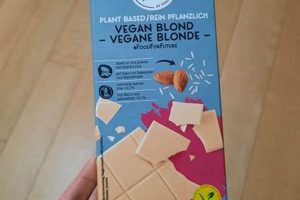
Sourced from the leaves of the Copernicia prunifera palm, a plant native to Brazil, this substance provides a durable, glossy finish in various applications. It is an alternative derived entirely from plant material, specifically avoiding any animal-derived components. A common application is in the coating of confectionery items to impart a shiny appearance and prevent sticking.
The appeal of this plant-based material stems from its natural origin and versatile properties. Historically, it has been valued for its high melting point and ability to create a hard, protective layer. Its utilization contributes to products appealing to individuals seeking alternatives that align with specific dietary or ethical considerations, broadening market reach and consumer inclusivity.
Further discussion will explore the diverse applications of this palm-derived ingredient, its processing methods, and its comparative advantages relative to other similar substances. Additionally, the environmental considerations surrounding its harvest and production will be addressed, providing a holistic understanding of its role in various industries.
Practical Guidance Regarding Plant-Based Glazing
The following offers actionable advice for those interested in utilizing a specific plant-derived glazing agent in various applications. These tips aim to optimize its use while highlighting key considerations.
Tip 1: Understanding Grades and Applications: Recognize that the raw material is available in different grades, each suitable for specific purposes. Grade T1, for example, is commonly used in cosmetics and food, while others are more appropriate for industrial applications. Select the grade that aligns with the intended use.
Tip 2: Optimizing Concentration for Desired Sheen: The level of gloss achieved is directly proportional to the concentration used. Begin with lower concentrations in initial testing and gradually increase until the desired finish is attained. Excessive amounts can lead to cloudiness or an uneven texture.
Tip 3: Temperature Control During Application: This specific material requires careful temperature management during the melting and application process. Overheating can degrade the ingredient, altering its properties and reducing its effectiveness. Maintaining a consistent, controlled temperature is crucial.
Tip 4: Evaluating Compatibility with Other Ingredients: When incorporating this substance into formulations, assess its compatibility with other components. Certain solvents or additives may affect its stability or alter the final products characteristics. Preliminary small-scale testing is recommended.
Tip 5: Considering Ethical Sourcing: Prioritize suppliers that adhere to ethical and sustainable harvesting practices. Inquire about the origin of the raw material and ensure that it is sourced responsibly, supporting fair labor standards and minimizing environmental impact.
Tip 6: Proper Storage Conditions: To maintain its quality and extend its shelf life, it should be stored in a cool, dry environment away from direct sunlight and extreme temperatures. Improper storage can lead to degradation and reduced effectiveness.
Adhering to these guidelines enables the effective and responsible use of this ingredient, yielding optimal results while supporting ethical sourcing practices.
The following sections will explore case studies demonstrating successful applications, addressing common challenges and offering solutions for efficient utilization.
1. Plant-based origin

The defining characteristic of this specific glazing agent lies in its exclusively plant-based origin, directly linking it to the descriptive term implying that no animal products are utilized in its composition or production. This characteristic arises because it is derived from the leaves of the Copernicia prunifera palm tree, indigenous to Brazil. The effect of this origin is the material’s suitability for use by those adhering to dietary restrictions, religious observances, or ethical principles that prohibit the consumption or use of animal-derived substances. A real-life example of this significance is its prevalent employment in the production of confectionery and pharmaceutical coatings marketed towards consumers with dietary requirements. The practical implication is the ingredients market accessibility and its role in inclusive product development, increasing its demand.
Further elaborating on the importance of its plant-based source is its influence on its material properties. The wax’s unique chemical composition, dictated by its plant origins, contributes to its desirable characteristics, such as its high melting point, hardness, and ability to impart a glossy finish. This is in contrast to animal-derived waxes, such as beeswax, which possess different chemical structures and, consequently, distinct physical properties that may be less suitable for certain applications. Its vegetable origin dictates its chemical composition and unique characteristics, such as its high melting point, hardness, and gloss. Its plant-based nature means it does not present the same allergen risks of using animal byproducts, which leads to safer products.
In summary, the plant-based origin of this waxy substance is the essential predetermining factor underlying its identity and functionality. This singular characteristic informs its suitability for numerous applications, including those prioritizing plant-based or ethical sourcing. Understanding this fundamental aspect is vital for effective product development and ethical consumerism. A challenge arises in ensuring that the harvesting process remains sustainable and does not negatively impact the environment or the local communities involved. Addressing these challenges is crucial for maintaining the integrity of the claim regarding its plant-based origin and upholding its appeal to those seeking ethical product options.
2. Hardness and gloss
The physical attributes of hardness and gloss are directly relevant when evaluating the utility of the specific plant-derived wax under discussion. These properties determine its suitability for various industrial and consumer applications.
- Protective Coating Efficacy
The substances hardness contributes significantly to its ability to form a durable, protective layer on surfaces. This resistance to abrasion and physical damage extends the lifespan of coated items. In automotive waxes, for example, this property safeguards paint finishes from environmental wear and tear. This translates to tangible benefits, such as reduced maintenance costs and extended product lifespan.
- Aesthetic Enhancement
The gloss imparted by the wax enhances the visual appeal of treated surfaces. This high-gloss finish is desirable in applications ranging from confectionary coatings to furniture polishes. The enhanced aesthetics increase the perceived value of finished goods, directly impacting consumer appeal and market competitiveness.
- Melting Point and Application
The inherent hardness of the material is linked to its relatively high melting point. This necessitates careful temperature control during application to achieve optimal results. Inconsistent temperature management can compromise the gloss and uniformity of the coating, leading to substandard outcomes.
- Comparison with Alternatives
The hardness and gloss of this specific material differentiate it from other waxes and coating agents. Compared to softer waxes, it provides superior durability. Synthetic alternatives may offer similar gloss but may lack the plant-based origin. This comparison highlights the specific benefits and trade-offs associated with its use.
The interplay between hardness and gloss is a critical determinant of this plant-derived wax’s performance and value. These characteristics, combined with its plant-based origin, position it as a viable alternative for applications demanding both functional protection and aesthetic enhancement. However, careful attention to application parameters is necessary to fully realize its potential.
3. Food-grade option

The designation of a substance as a “food-grade option” is directly contingent upon its compliance with stringent regulatory standards governing safety and purity for human consumption. When applied to plant-based waxes, this categorization signifies that the specific product has undergone rigorous testing and quality control procedures to ensure it does not contain harmful contaminants, toxins, or other substances that could pose a risk to human health. In the context of this specific glazing agent, the “food-grade option” designation allows its application in the coating of candies, fruits, and other food products, enhancing their appearance and extending their shelf life. The presence of a “food-grade option” widens the consumer market while minimizing potential risks, and real-life case studies of contamination can be used as examples of risk mitigation efforts.
The availability of the “food-grade option” stems from the careful selection and processing of the raw material. It necessitates that the source plant, the Copernicia prunifera palm, is cultivated and harvested in a manner that minimizes exposure to pesticides, herbicides, and other potentially harmful chemicals. Furthermore, the extraction and refinement processes must adhere to Good Manufacturing Practices (GMP) to prevent contamination and ensure the final product meets the required purity standards. An example of this is the solvent used in extraction, which is typically a food-grade alcohol or other approved substance, carefully controlled to prevent residual solvent levels from exceeding acceptable limits.
In summation, the existence of a “food-grade option” is an essential consideration for products intended for human consumption. It validates their safety and suitability for use in food-related applications. While the presence of the term “food-grade” does not guarantee absolute safety, it signifies adherence to established quality control protocols and regulatory standards designed to minimize potential health risks. Challenges remain in ensuring consistent quality and traceability throughout the supply chain, from cultivation to final product, particularly given the global nature of food production. The ability to verify the “food-grade” status of this specific glazing agent is crucial for maintaining consumer confidence and upholding product integrity.
4. Alternative source

The designation of this glazing agent as an “alternative source” gains significance when contrasted with materials traditionally used for similar purposes, namely those of animal or fossil fuel origin. The inherent value of an alternative arises from its ability to address limitations, ethical concerns, or sustainability issues associated with conventional options. This plant-derived ingredient serves as a substitute for beeswax, shellac, and petroleum-based waxes in applications ranging from food coatings to cosmetics and polishes. The consequence of its availability as an alternative is the provision of a viable choice for manufacturers and consumers seeking to reduce reliance on animal products or environmentally problematic materials. A real-world example is the growing adoption of this substance in the confectionery industry as companies strive to cater to the increasing demand for vegan and plant-based products. The practical significance of this substitution lies in its contribution to more sustainable and ethically conscious production practices.
Furthermore, the “alternative source” aspect extends beyond ethical considerations to encompass supply chain resilience and potential price stability. Reliance on a single source of raw material can create vulnerability to disruptions caused by environmental factors, geopolitical events, or disease outbreaks. Diversifying sourcing options through the adoption of plant-based alternatives like this particular material mitigates these risks. Moreover, the long-term price volatility associated with fossil fuel-derived waxes makes plant-based substitutes attractive from an economic perspective. The food industry benefits directly from this as it mitigates the possible price increases that accompany standard production ingredients. This contributes to budget planning. It is also viable for businesses to market products using this substitute as ethically sourced.
In summary, the importance of this glazing agent as an “alternative source” is multifaceted, encompassing ethical, environmental, and economic considerations. Its availability allows for the replacement of animal-derived and fossil fuel-based materials with a plant-based option that aligns with evolving consumer preferences and sustainability goals. While challenges remain in ensuring the sustainable harvesting and processing of the raw material, its continued development and adoption as an alternative source represent a positive trend toward more responsible production practices. The material also lends itself to a growing subset of consumers as ethical and environmentally conscious.
5. Ethical sourcing

The procurement of Copernicia prunifera derivatives directly correlates with socioeconomic and environmental implications within the source regions of Brazil. Adherence to ethical sourcing principles is, therefore, not merely a desirable attribute but a fundamental imperative in the production and distribution of this material. Improper harvesting methods and unfair labor practices can negate the benefits of utilizing a plant-based alternative if such practices contribute to environmental degradation or social inequity. The integrity of the “vegan” designation is intrinsically linked to the ethical conditions under which the plant material is obtained; a product cannot be considered truly ethically sound if its production involves exploitation or ecological damage. The practical significance of this understanding is that conscientious manufacturers and consumers must actively seek assurance that the supply chain adheres to fair labor standards and sustainable harvesting techniques. Lack of it could lead to greenwashing.
The implementation of ethical sourcing strategies necessitates rigorous traceability measures and independent certification schemes. These mechanisms enable the verification of fair wages, safe working conditions, and environmentally responsible harvesting practices at each stage of the supply chain. Certification initiatives, such as Fair Trade, provide a framework for ensuring that producers receive equitable compensation for their product, empowering them to invest in their communities and protect the environment. Furthermore, sustainable harvesting methods are critical to preventing deforestation, soil erosion, and biodiversity loss. Examples include the implementation of rotational harvesting schemes that allow palm populations to regenerate, and the avoidance of slash-and-burn agriculture, which releases harmful greenhouse gases and destroys valuable habitat. Without these measures, the long-term viability of the raw material supply is threatened.
In conclusion, the consideration of ethical sourcing is not merely a supplementary aspect but an indispensable component in the utilization of this specific plant-based wax. The integrity of its “vegan” status is contingent upon ensuring that the production and distribution processes uphold ethical labor standards and environmental sustainability. While challenges exist in achieving complete transparency and traceability within complex global supply chains, the adoption of certification schemes, sustainable harvesting practices, and responsible sourcing policies is essential for mitigating risks and promoting positive social and environmental outcomes. A failure to prioritize ethical sourcing undermines the very values that drive the demand for plant-based alternatives, jeopardizing the long-term sustainability of the industry.
6. Versatile applications

The extensive range of applications attributable to this specific plant-derived wax stems directly from its unique combination of physical and chemical properties, inherently linked to its origin and processing. Its hardness, high melting point, and ability to impart a glossy finish contribute to its suitability across diverse sectors, from food and cosmetics to automotive and industrial coatings. The “vegan” aspect further broadens its applicability by catering to a growing consumer base seeking products that align with specific dietary and ethical considerations. The effect of this versatility is increased market demand and a wider range of product formulations that incorporate this ingredient. For instance, its use in fruit and vegetable coatings is to enhance their appearance and extend shelf life, contrasting its function as a polishing agent to give motor vehicles a glossy sheen. These applications highlight its functionality and adaptability.
Further illustrating this versatility is its employment as a hardening agent in lipstick formulations, providing structure and durability. Simultaneously, it functions as a mold release agent in the manufacturing of plastics, facilitating the efficient production of diverse goods. These seemingly disparate applications underscore the material’s capacity to fulfill multiple roles, a crucial factor in its appeal to manufacturers seeking multi-functional ingredients. The practical implication of this versatility lies in its potential to streamline production processes, reduce inventory costs, and create products with enhanced performance characteristics. Its integration in diverse products, from surf boards to shoe polish, points to the breadth of its applicability, owing to its water-resistant property.
In conclusion, the versatility of this material is a key driver of its widespread adoption. This quality is a direct consequence of its inherent properties and its “vegan” status, making it suitable for a wide array of applications and consumer preferences. Addressing the challenges associated with sustainable sourcing and consistent quality control is essential to maintain this ingredient’s appeal and ensure its long-term viability across diverse industries. As consumer demand for plant-based and ethically sourced products continues to rise, the importance of its multifaceted application and responsible production practices will only increase. A manufacturer benefits from using this wax as it improves the perceived quality of the product.
Frequently Asked Questions
The following addresses common inquiries regarding this specific plant-derived wax, offering clarification on its properties, sourcing, and applications.
Question 1: Is this material truly free of all animal-derived substances?
This specific substance, by definition, is derived exclusively from the leaves of the Copernicia prunifera palm tree. Its vegan status hinges upon the absence of any animal-based ingredients or processing aids throughout its production chain. Verification through certification or supplier documentation is advisable.
Question 2: What distinguishes this option from beeswax?
Beeswax is secreted by honeybees, rendering it an animal product. The plant-derived alternative originates solely from a plant source. Furthermore, the plant-based counterpart possesses a higher melting point and imparts a harder, glossier finish than beeswax.
Question 3: How can the ethical sourcing of this material be verified?
Ethical sourcing can be assessed through independent certifications, such as Fair Trade or Rainforest Alliance. These certifications indicate adherence to fair labor practices, environmental sustainability, and community development standards within the source regions.
Question 4: Is the ingredient considered safe for consumption?
Food-grade designations indicate compliance with safety regulations governing the use of this ingredient in food products. However, verification of the specific grade and adherence to recommended usage levels are essential for ensuring consumer safety.
Question 5: What are the primary applications of this glazing agent?
Its versatile properties enable its use in a wide range of applications, including confectionery coatings, cosmetics, automotive waxes, and industrial polishes. Its hardness, gloss, and plant-based origin make it a suitable alternative to animal-derived and petroleum-based materials.
Question 6: How does its environmental impact compare to synthetic waxes?
The environmental impact is dependent upon the sustainability of harvesting practices. When sourced responsibly, it presents a potentially lower environmental footprint than synthetic waxes derived from fossil fuels. However, deforestation and habitat loss are concerns that must be addressed through sustainable sourcing initiatives.
In summary, this specific plant-based material presents a viable alternative to animal-derived and synthetic waxes, provided that ethical sourcing and safety standards are rigorously upheld.
The following section will explore future trends and emerging research related to this substance.
Carnauba Wax Vegan
The preceding exploration has elucidated the multifaceted nature of “carnauba wax vegan,” ranging from its botanical origins and intrinsic material properties to its diverse applications and critical ethical considerations. It has established the substance as a viable alternative to animal-derived and fossil fuel-based waxes, with the potential to contribute to more sustainable and ethically responsible production practices across various industries. The analyses underscore the inherent importance of responsible sourcing and quality control mechanisms in maintaining the integrity of its plant-based designation and realizing its full potential.
As consumer demand for plant-based and ethically sourced alternatives continues to rise, “carnauba wax vegan” is poised to play an increasingly prominent role in shaping product formulations and driving market trends. The ongoing success and long-term viability of this material will depend on a collective commitment from producers, manufacturers, and consumers alike to prioritize sustainable harvesting practices, transparent supply chains, and rigorous adherence to quality standards. Continued research into refining extraction processes and optimizing application methods will further enhance its value and contribute to its responsible integration across global industries.