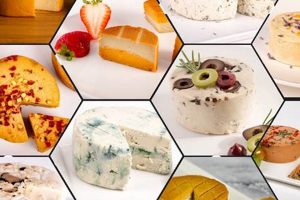
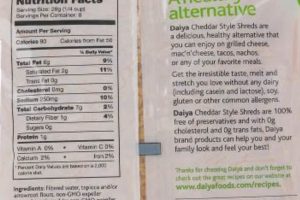
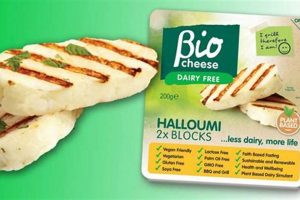
The ability of plant-based cheese alternatives to transition from a solid to a liquid state when heated is a crucial characteristic for its culinary application. The melting behavior directly impacts the texture and functionality within dishes such as pizzas, gratins, and grilled cheese sandwiches. The successful liquefaction of these products depends on the specific ingredients and production methods employed.
Achieving satisfactory melting qualities in dairy-free cheese analogues expands their versatility in cooking. This characteristic addresses a major barrier to adoption for consumers seeking plant-based options without sacrificing the textural experiences associated with traditional dairy cheeses. Improvements in ingredient formulations and manufacturing processes have progressively enhanced the thermal behavior of these alternatives, leading to greater consumer acceptance.
Therefore, a deeper understanding of the factors influencing the melting properties of vegan cheese is warranted. This knowledge allows for targeted development of improved products. Subsequent discussion will focus on the composition, production techniques, and influential variables that affect the thermal behavior of these dairy-free alternatives.
Tips for Optimizing Melted Vegan Cheese
Achieving optimal melting in plant-based cheese alternatives requires consideration of several key factors during preparation and cooking.
Tip 1: Select the Appropriate Product: Not all vegan cheeses exhibit equal melting capabilities. Choose varieties specifically formulated for melting, often indicated on the packaging.
Tip 2: Consider Moisture Content: Drier vegan cheeses may require added moisture to facilitate melting. Sprinkling a small amount of water or plant-based milk can improve results.
Tip 3: Employ Low and Slow Heat: Applying gradual, consistent heat prevents burning and promotes even melting. Avoid high temperatures, which can lead to separation or hardening.
Tip 4: Grate or Shred Finely: Smaller pieces melt more readily and uniformly. Grating or shredding the cheese ensures greater surface area exposure to heat.
Tip 5: Cover During Baking: Covering dishes during baking traps moisture and heat, encouraging the cheese to melt more effectively.
Tip 6: Pre-heat the cooking surface : preheating pan to cook vegan cheese help activate the ingredients and improve the melting process. For example, preheating the pizza stone help melting the vegan cheese better.
Implementing these strategies can significantly enhance the melting properties of vegan cheese, resulting in improved texture and flavor in cooked dishes.
By understanding and addressing the specific characteristics of these plant-based products, cooks can effectively leverage the advantages of vegan cheese while minimizing potential challenges.
1. Composition

The constituent ingredients of a vegan cheese analogue are fundamentally linked to its ability to melt. The proportion and type of each component significantly influence the thermal properties and overall behavior of the product when subjected to heat. Formulations that replicate the protein matrix and fat structure of dairy cheese generally exhibit more desirable melting characteristics. For example, vegan cheeses using modified starches and plant-based fats attempt to mimic the viscosity and flow observed in melted dairy cheese, enabling them to spread and brown similarly on pizza or in grilled sandwiches.
Specific ingredients play distinct roles in the melting process. Modified food starches provide structure and viscosity, enabling the melted product to hold its shape and prevent excessive separation. Plant-based oils, such as coconut or shea butter, contribute to the creamy texture and promote spreadability. The inclusion of stabilizers, such as gums, helps to maintain emulsion stability and prevent phase separation during heating. Varying the ratios and types of these components directly affects the cheese’s melting temperature, viscosity, and elasticity.
Understanding the compositional impact on meltability is crucial for both manufacturers and consumers. Manufacturers can optimize formulations to achieve desired melting properties. Consumers can make informed choices based on ingredient lists, selecting products formulated for optimal melting performance in specific applications. In conclusion, composition is a primary determinant of meltability in plant-based cheese alternatives. Adjustments to ingredient selection and proportions can significantly enhance the product’s thermal behavior and overall culinary performance.
2. Ingredients

The ability of plant-based cheese alternatives to melt is fundamentally determined by their constituent ingredients. The selection and proportion of these ingredients directly influence the thermal behavior of the product. Unlike traditional dairy cheese, which relies on casein protein for its melting characteristics, vegan cheeses utilize a variety of plant-derived components to mimic these properties. Starches, plant-based oils, and gums are commonly employed to create a similar texture and melting profile. For example, vegan cheeses containing modified tapioca starch tend to exhibit a stringy, mozzarella-like melt, while those formulated with coconut oil may melt smoothly but lack elasticity. The absence or presence of specific ingredients can therefore have a drastic effect on the end result.
The type of plant-based oil used plays a crucial role in determining the melting point and texture. Coconut oil, with its relatively low melting point, contributes to a smooth, creamy melt. However, it can also result in a greasy mouthfeel if not properly balanced with other ingredients. Shea butter, with a higher melting point, can provide a firmer texture and prevent excessive greasiness. The addition of gums, such as xanthan or guar gum, helps to stabilize the emulsion and prevent separation of the oil and water phases during heating. Furthermore, ingredients like nutritional yeast, while contributing flavor, may also impact the overall texture and melting behavior. The careful combination and balance of these diverse ingredients are critical for achieving a satisfactory melt.
In summary, the ingredients used in vegan cheese analogues are the primary determinants of their melting properties. The selection of appropriate starches, plant-based oils, and stabilizers, and their careful proportioning, are essential for creating a product that mimics the melt and texture of traditional dairy cheese. Understanding the specific roles of each ingredient allows for targeted formulation adjustments to achieve the desired melting characteristics and overall culinary performance. Further research and development in ingredient technologies will continue to improve the meltability and functionality of plant-based cheese alternatives.
3. Processing
The manufacturing process profoundly influences the melt characteristics of vegan cheese. Various techniques, from ingredient mixing to curing, affect the final product’s structure and its subsequent response to heat. For example, high-shear mixing can create a finer emulsion of oils and starches, leading to a smoother melt. Conversely, inadequate mixing may result in phase separation and an undesirable, grainy texture upon heating. The order in which ingredients are combined also matters; introducing starches before oils may improve their dispersion, promoting a more uniform melting profile. Thus, processing parameters act as critical determinants of whether the cheese achieves a desired melted state.
Specific processing steps contribute uniquely to meltability. Fermentation, when employed, introduces acids that can modify starch gelatinization and protein coagulation (if plant-based proteins are present), impacting the final texture and melting behavior. Heat treatment, such as pasteurization, affects the degree of starch swelling and protein denaturation, influencing the cheese’s structure and preventing microbial spoilage. Furthermore, the duration and temperature of these steps must be carefully controlled to avoid over-processing, which can lead to hardening or undesirable flavors. A real-world example is the use of modified atmosphere packaging (MAP) which extends shelf life but may also influence enzymatic activity affecting the melt characteristics over time.
In conclusion, processing techniques are instrumental in determining the melt properties of vegan cheese. Controlled mixing, fermentation, heat treatment, and other manufacturing parameters dictate the final product’s structure, texture, and thermal behavior. Understanding these processing-meltability relationships is essential for manufacturers to create vegan cheese alternatives that meet consumer expectations for melting performance. Challenges remain in replicating the complex protein matrix of dairy cheese, but advancements in processing technologies continue to improve the functionality and appeal of plant-based alternatives.
4. Temperature

Temperature is a paramount factor governing the melting behavior of plant-based cheese alternatives. The thermal properties of the constituent ingredients dictate the temperature range within which a solid-to-liquid transition occurs. Precise temperature control is critical for achieving desired textures and avoiding undesirable outcomes, such as separation or burning.
- Melting Point of Ingredients
Each component within vegan cheese has a specific melting point. Plant-based oils, such as coconut oil, melt at relatively low temperatures, influencing the overall softening of the cheese. Starches and gums require higher temperatures to gelatinize and contribute to the molten texture. Failure to reach the necessary temperature for all ingredients results in incomplete melting and a less desirable consistency.
- Rate of Temperature Change
The speed at which the cheese is heated affects the uniformity of melting. Rapid temperature increases can cause localized overheating, leading to burning or separation of oils. Gradual heating allows the ingredients to transition phase simultaneously, promoting a more homogenous and visually appealing melt. This is particularly relevant in baking applications where even heating is crucial for consistent results.
- Ambient Temperature and Initial State
The initial temperature of the vegan cheese prior to heating influences the energy required for melting. A cheese stored at room temperature will melt more quickly and evenly than one taken directly from the refrigerator. Similarly, the physical state of the cheese, whether grated, sliced, or in a block, affects the surface area exposed to heat, influencing the rate of melting.
- Cooking Method and Temperature Distribution
Different cooking methods exhibit varying temperature distribution patterns. Ovens provide relatively uniform heat, suitable for baking applications. Stovetop cooking introduces direct heat, which can lead to uneven melting if not properly managed. Microwaving subjects the cheese to rapid and potentially uneven heating, requiring careful monitoring to prevent burning or hardening. The choice of cooking method impacts the outcome and necessitates adjustments in temperature and duration.
These facets underscore the complex relationship between temperature and the melting behavior of plant-based cheese alternatives. Control over temperature, both in terms of range and distribution, is essential for achieving optimal results and realizing the full culinary potential of these products. Adjustments to cooking techniques can mitigate challenges posed by the inherent thermal properties of vegan cheese formulations, thereby improving the overall dining experience.
5. Formulation

The precise formulation of a plant-based cheese alternative dictates its thermal properties and directly impacts its ability to melt. The ratios and types of ingredients chosen define the structure and behavior of the cheese when subjected to heat. Understanding the intricacies of formulation is crucial for developing vegan cheeses that effectively mimic the melting characteristics of traditional dairy cheeses.
- Starch Selection and Concentration
Modified starches, such as tapioca or potato starch, are commonly used to provide structure and viscosity to melted vegan cheese. The type of starch and its concentration significantly influence the melt’s texture and elasticity. Higher starch concentrations can result in a gummy or overly viscous melt, while insufficient starch may lead to a watery or separated consistency. For example, a cheese formulated with high amylose starch might exhibit a more stringy, mozzarella-like melt, while one with a higher amylopectin content could melt more smoothly. The choice must balance structural integrity with desirable flow properties.
- Plant-Based Oil Composition
The type and amount of plant-based oil contribute significantly to the melting point and overall texture. Coconut oil, with its low melting point, facilitates a smooth melt but can result in a greasy mouthfeel if not properly balanced. Shea butter offers a higher melting point and a firmer texture, preventing excessive oiliness. Palm oil provides structural stability but can raise sustainability concerns. The selection of the appropriate oil or blend of oils is crucial for achieving a desirable melt profile, balancing fluidity and structural integrity.
- Hydrocolloid Usage
Hydrocolloids, such as xanthan gum or carrageenan, play a role in stabilizing the emulsion and preventing phase separation during heating. These ingredients help to maintain a smooth and uniform melt, preventing the oil and water components from separating. Excessive hydrocolloid use can lead to a gummy or rubbery texture, while insufficient use can result in a grainy or separated melt. The optimal concentration depends on the other ingredients and the desired texture, demonstrating the importance of a balanced formulation.
- pH Adjustment and Acidulants
Adjusting the pH of the vegan cheese formulation influences the interaction between starches, proteins (if present), and other ingredients, affecting the melting behavior. Acidulants, such as lactic acid or citric acid, can modify the texture and promote protein coagulation (in protein-containing formulations), contributing to a firmer or more elastic melt. Precise pH control is essential for achieving consistent melting properties and preventing undesirable textures or flavors.
The interplay between these formulation parameters determines the melting behavior of vegan cheese. By carefully selecting and balancing these ingredients, manufacturers can create plant-based alternatives that approximate the melting characteristics of dairy cheese, expanding their culinary applications and consumer appeal. Further advances in ingredient technology and formulation techniques will continue to improve the meltability and overall functionality of vegan cheeses.
6. Application

The manner in which a plant-based cheese alternative is used, termed “Application,” significantly impacts the perception and realization of its melting capabilities. Regardless of inherent compositional or processing attributes, the specific culinary context dictates whether the melting behavior is deemed satisfactory or deficient. Therefore, application is a crucial, often overlooked, determinant of success.
- Pizza Topping
When used as a pizza topping, the even distribution and uniform melting of the vegan cheese are paramount. A cheese that melts into a cohesive layer, browning slightly without excessive oil separation, is generally preferred. Uneven melting can result in dry patches and a less appealing visual presentation. Furthermore, the cheese must maintain its structural integrity when sliced, preventing it from sliding off the pizza. This application demands a balance between meltability and structural stability.
- Grilled Cheese Sandwich Filling
In a grilled cheese sandwich, the ability of the vegan cheese to melt into a gooey, cohesive mass is essential. The cheese should spread evenly between the bread slices, providing a consistent and satisfying textural experience. Excessive melting, leading to leakage from the sandwich, is undesirable. Conversely, insufficient melting results in a dry and crumbly filling. This application necessitates a cheese that melts readily but retains its form within the bread.
- Gratin Ingredient
As an ingredient in gratins, the melting behavior contributes to the overall texture and flavor integration. The vegan cheese should melt sufficiently to bind the other ingredients together, creating a cohesive and creamy sauce. Browning on the surface is desirable, enhancing the visual appeal and adding a toasted flavor. However, excessive browning or burning is detrimental. This application requires a cheese that melts smoothly, binds effectively, and browns appropriately.
- Sauce Component
When incorporated into sauces, the melting characteristics of the vegan cheese determine the sauce’s viscosity and smoothness. The cheese should melt readily and blend seamlessly with other ingredients, creating a uniform and emulsified texture. A cheese that separates or forms clumps is undesirable. The flavor profile must complement the other sauce components, adding richness and depth without overpowering the other flavors. This application requires a cheese that melts easily and integrates cohesively.
These varied applications illustrate the context-dependent nature of evaluating plant-based cheese alternatives. A cheese deemed suitable for one application may prove inadequate for another, highlighting the importance of considering the intended use when assessing its melting properties. The “can vegan cheese melt” question, therefore, requires careful consideration of the specific culinary context and the desired functional and sensory attributes. Further research and development efforts should focus on tailoring vegan cheese formulations to optimize performance across a range of applications.
Frequently Asked Questions
This section addresses common inquiries and misconceptions surrounding the melting properties of plant-based cheese alternatives. Clear and concise answers are provided based on current scientific understanding and culinary experience.
Question 1: Is it universally true that plant-based cheese alternatives melt?
No, not all vegan cheeses are formulated to melt. The ability to melt is dependent on the specific ingredients and manufacturing processes employed. Products intended for melting often include modified starches, plant-based oils with appropriate melting points, and stabilizers to facilitate a smooth transition from solid to liquid.
Question 2: What ingredients are crucial for meltability in vegan cheese?
Key ingredients include modified starches (such as tapioca or potato starch) for viscosity and texture, plant-based oils (such as coconut or shea butter) for a creamy mouthfeel and desired melting point, and hydrocolloids (such as xanthan gum or carrageenan) to prevent phase separation. The specific proportions of these ingredients greatly influence the cheese’s melting properties.
Question 3: Can the melting characteristics of a plant-based cheese alternative be improved at home?
To some extent, yes. Factors such as grating the cheese finely, adding a small amount of moisture (plant-based milk or water), and using low and slow heat can improve melting. Selecting varieties specifically designed for melting is, however, the most effective strategy.
Question 4: Why does some vegan cheese separate or become oily when melted?
Separation occurs when the emulsion of oils and water within the cheese breaks down. This can be due to insufficient stabilization from hydrocolloids, excessive heat, or an imbalance in the formulation. Choosing products with appropriate stabilizers and avoiding high cooking temperatures can help prevent this issue.
Question 5: Are there specific applications where plant-based cheese alternatives melt better than others?
Certain applications, such as gratins where a creamy sauce is desired, may be more forgiving of slight imperfections in melting behavior. Pizza toppings and grilled cheese sandwiches, where uniform melting and cohesive texture are essential, demand a higher level of meltability.
Question 6: Is the melting point of vegan cheese the same as dairy cheese?
Generally, no. The melting point of vegan cheese is often different due to the varying composition. It may require slightly different cooking techniques and temperature adjustments to achieve the desired melting outcome. Carefully monitoring the cheese during cooking is recommended.
In summary, the melting behavior of plant-based cheese alternatives is governed by their formulation, processing, and the cooking method used. Careful selection of products and attention to technique can significantly improve the culinary experience.
Further exploration will delve into future trends and innovations in vegan cheese technology.
Conclusion
The preceding exploration of “can vegan cheese melt” has elucidated the complexities inherent in replicating the thermal behavior of dairy cheese using plant-based alternatives. Key factors, including composition, ingredient selection, processing techniques, temperature control, and intended application, significantly influence the melting characteristics of these products. The development of effective vegan cheeses requires a nuanced understanding of these variables and a commitment to optimizing formulations for specific culinary uses.
Continued research and innovation in ingredient technology and manufacturing processes are essential for advancing the quality and functionality of plant-based cheese alternatives. A focus on improving meltability will not only enhance the culinary appeal of these products but also contribute to the broader adoption of sustainable and ethical food choices. The ongoing pursuit of dairy-free cheeses with superior melting properties represents a significant opportunity for the food industry and a vital step towards a more inclusive and environmentally conscious culinary landscape.