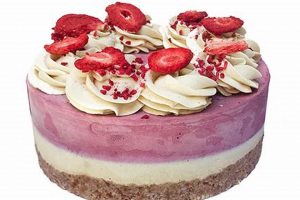
The combination of commercially available cake mixes altered to exclude animal-derived ingredients describes a specific category of baking. A common illustration involves substituting ingredients such as eggs and dairy milk with plant-based alternatives like applesauce or non-dairy milk to create a confection suitable for those adhering to a vegan diet.
This approach to baking offers increased accessibility and convenience for individuals seeking to avoid animal products. Its historical context stems from the growing demand for plant-based options across various food sectors, driven by ethical, environmental, and health considerations. The resulting product delivers a familiar taste and texture while aligning with vegan principles.
The subsequent discussion will delve into specific ingredient substitutions, recipe modifications, and considerations for achieving optimal results when preparing this type of dessert. Further topics will explore flavor variations, frosting options, and troubleshooting common baking challenges.
Tips for Vegan Box Cake Preparation
Achieving optimal results requires careful attention to ingredient selection and preparation techniques. The following tips are designed to enhance the quality and consistency of the final product.
Tip 1: Ingredient Substitution Precision: Accurate measurement of substitute ingredients, such as applesauce or mashed banana for eggs, is critical. Too much or too little can significantly impact texture and moisture.
Tip 2: Non-Dairy Milk Selection: Different non-dairy milks (almond, soy, oat) yield varying results. Experimentation is recommended to determine the preferred flavor and consistency. Unsweetened varieties are generally favored to control sugar levels.
Tip 3: Leavening Agent Adjustment: Vegan cakes may benefit from a slight increase in baking powder to compensate for the absence of eggs. Adding an extra half-teaspoon can improve rise and lightness.
Tip 4: Mixing Technique: Avoid overmixing the batter, as this can lead to a dense, gummy texture. Mix until just combined to maintain airiness.
Tip 5: Baking Time Monitoring: Vigilant monitoring of baking time is crucial. A toothpick inserted into the center should come out clean or with a few moist crumbs. Ovens vary, so adjusting baking time accordingly is often necessary.
Tip 6: Cooling Procedure: Allow the cake to cool completely in the pan before frosting. This prevents crumbling and ensures a stable base for decoration.
Tip 7: Vegan Frosting Compatibility: Select a vegan frosting that complements the cake’s flavor profile. Homemade vegan frosting or commercially available options can be used.
Implementing these strategies enhances the likelihood of producing a palatable and visually appealing dessert that aligns with dietary requirements. Consistent application of these principles contributes to repeatable success.
These recommendations serve as a foundation for consistent success. Further investigation into specific recipes and customization options can tailor the final product to individual preferences.
1. Ingredient Substitution

Ingredient substitution forms the cornerstone of producing palatable desserts without animal-derived components. This adaptation is essential to transforming conventional mixes into items suitable for a vegan diet. Failure to appropriately substitute ingredients leads to structural deficiencies, altered flavor profiles, and compromised texture in the finished product. For instance, replacing eggs, a critical binder and leavening agent, with alternatives such as applesauce or flaxseed meal requires careful calibration to replicate their functionalities. Overuse of applesauce can lead to a gummy texture, while insufficient flaxseed meal can result in a crumbly, poorly bound cake. The selection and proportion of these substitutes directly determine the success or failure of creating a viable product.
Beyond eggs, dairy milk is another primary target for substitution. Non-dairy milk options like almond, soy, or oat milk offer diverse flavor and textural contributions. Soy milk, for example, possesses a higher protein content, which can contribute to a slightly chewier texture, while almond milk offers a subtler flavor. Furthermore, shortening or butter typically present in standard mixes must be replaced with plant-based alternatives such as vegan butter or vegetable oil. The choice of these fat substitutes impacts the cake’s moisture and richness. Vegan butter, formulated to mimic the properties of dairy butter, is generally preferred for its flavor and ability to create a tender crumb. Vegetable oil, while a viable option, might result in a slightly less flavorful outcome.
In summation, the efficacy of achieving desirable results relies heavily on mastering ingredient substitution techniques. Precise measurement, informed selection of alternatives, and an understanding of their impact on the final product are paramount. While challenges exist in perfectly replicating the qualities of traditional cakes, a rigorous approach to substitution enables the production of baked goods that meet both dietary requirements and expectations of taste and texture. These substitutions, while initially complex, unlock accessibility to individuals adhering to specific dietary constraints.
2. Moisture Retention

Moisture retention is a critical attribute of a successful final product. Plant-based substitutions, integral to this specific application, often exhibit different moisture properties compared to traditional ingredients. The absence of eggs and dairy necessitates strategic modifications to maintain adequate hydration within the cake matrix. For instance, the substitution of eggs with applesauce, while providing binding properties, also introduces a significant amount of moisture. The improper balance can lead to a final product that is either overly dense and gummy or, conversely, excessively dry and crumbly. These variations in texture directly impact the consumer’s experience.
Further complicating moisture control is the use of different non-dairy milks. Almond milk, with its lower fat content, may result in a drier cake compared to oat milk, which possesses a slightly higher fat content and can contribute to increased moisture retention. Furthermore, over-baking, a common error, exacerbates moisture loss. While visual cues and toothpick tests are helpful, careful monitoring of baking time is crucial to prevent desiccation. Adjustments to the liquid-to-dry ingredient ratio may also be necessary to compensate for the inherent differences in moisture levels present in alternative ingredients. The type of fat used, such as oil versus vegan butter, similarly influences the final moisture content.
In conclusion, effective moisture management is essential for achieving a palatable outcome. Vigilant attention to ingredient ratios, baking time, and the inherent properties of plant-based substitutes is paramount. Successfully balancing these factors allows for the creation of a desirable final product that meets the expectations of texture and taste, ensuring satisfaction. The challenges presented by moisture retention highlight the need for precise adjustments, furthering the specialized techniques necessary for success.
3. Flavor Enhancement

Achieving satisfactory flavor profiles in plant-based commercially available cake mixes necessitates deliberate enhancement strategies. The inherent characteristics of ingredient substitutions often result in a product that lacks the nuanced richness associated with traditional dairy and egg-based counterparts. The replacement of butter with vegan alternatives, while addressing dietary requirements, can diminish the depth of flavor due to differences in fat composition and aromatic compounds. Similarly, the absence of egg yolks reduces the overall richness and eggy taste that contributes to a customary cake flavor. Therefore, supplementary flavor agents become crucial in compensating for these inherent losses.
Vanilla extract is a common and versatile additive, providing a foundational enhancement that complements a range of cake flavors. Citrus zest, such as lemon or orange, introduces brightness and acidity, balancing the sweetness and adding complexity. Spices like cinnamon, nutmeg, or cardamom can impart warmth and depth, particularly effective in chocolate or spice-themed creations. Emulsified flavorings, designed to disperse evenly throughout the batter, are also beneficial in achieving a consistent and pronounced taste. Chocolate, specifically cocoa powder or vegan chocolate chips, provides an alternative to spice or fruit flavors.
In summary, deliberate flavor enhancement is essential to counter the flavor deficit resulting from substituting animal-derived ingredients. Strategic selection and application of extracts, spices, citrus, and other complementary components are vital in ensuring that the final product delivers a satisfying and well-rounded taste experience. These additions are essential to achieving a final product that mirrors traditional versions and meeting the standards of the end user.
4. Texture Modification

Texture modification plays a critical role in the successful adaptation of commercially available cake mixes to align with vegan dietary guidelines. The absence of traditional ingredients, such as eggs and dairy, necessitates deliberate adjustments to replicate desired textural qualities. These adjustments directly influence the final product’s mouthfeel, crumb structure, and overall palatability.
- Gluten Development Control
Gluten development, a key factor in determining cake texture, requires careful management. Over-mixing vegan cake batter can lead to excessive gluten formation, resulting in a dense, rubbery product. Strategies to mitigate this include using cake flour with a lower protein content or incorporating ingredients like cornstarch to inhibit gluten development. The correct control directly influences the final product to become more palatable.
- Alternative Flour Selection
The choice of flour significantly impacts texture. Substituting traditional wheat flour with gluten-free alternatives like almond flour or rice flour introduces distinct textural challenges. Almond flour, for instance, tends to produce a more crumbly texture, while rice flour can result in a slightly gritty mouthfeel. Blending different gluten-free flours or adding binding agents such as xanthan gum is often necessary to achieve a cohesive and desirable texture. The selection of these flours provides different results.
- Fat Content Adjustment
Fat content influences cake tenderness and moisture. Replacing butter or shortening with vegan alternatives like oil or vegan butter substitutes requires careful consideration. Oils tend to produce a moister cake, while vegan butter substitutes can mimic the tenderness of dairy butter. Adjusting the amount of fat and considering the type of fat used are critical for achieving the desired texture. The balancing of fat content is required when baking vegan.
- Moisture Balance
Maintaining proper moisture balance is essential for preventing a dry or gummy final product. Vegan cakes tend to dry out more quickly than their traditional counterparts. Incorporating ingredients like applesauce, mashed banana, or flaxseed meal helps to retain moisture and improve the overall texture. Careful monitoring of baking time and temperature is also crucial to prevent excessive moisture loss. This balance results in the preferred outcome.
The aforementioned texture modification techniques are integral to successfully creating dessert items derived from commercially available mixes that adhere to vegan guidelines. The careful selection and manipulation of ingredients allows for the creation of a final product that not only meets dietary requirements but also maintains the expected and desired sensory qualities of a traditional confection. The final product requires texture modification.
5. Leavening Action

Leavening action is a fundamental aspect of achieving a desirable texture and rise in commercially available mixes adapted for vegan diets. Traditional mixes rely on ingredients like eggs for leavening properties, as the protein structure of eggs traps air when beaten, expanding during baking to create volume. This mechanism is absent in vegan formulations, necessitating the strategic utilization of alternative leavening agents. The cause-and-effect relationship is direct: insufficient leavening results in a dense, flat cake, while adequate leavening produces a light, airy texture. The importance of leavening action cannot be overstated; it dictates the cake’s overall structure and palatability.
Common vegan leavening strategies involve increasing the amount of baking powder or baking soda in the recipe. These chemical leavening agents release carbon dioxide gas when exposed to heat and moisture, causing the batter to rise. However, careful attention must be paid to the ratio of leavening agent to other ingredients, as excessive amounts can impart an unpleasant, bitter taste. For example, a standard mix might require an additional half-teaspoon of baking powder to compensate for the absence of eggs. Another effective technique involves combining an acid (like lemon juice or vinegar) with baking soda to create a more potent leavening reaction. This approach can improve the cake’s rise and texture, particularly in recipes utilizing dense ingredients like applesauce. Practical significance lies in the ability to transform a potentially dense and unappetizing product into a light and airy treat.
In conclusion, leavening action is a critical component that determines the structural integrity and texture of a product derived from commercially available mixes. The challenges lie in replicating the leavening properties of eggs using alternative agents while maintaining a balanced flavor profile. Mastering these techniques is essential for achieving satisfactory results. Further research into specific ingredient combinations and baking methods will improve the end product.
6. Frosting Compatibility
Frosting compatibility constitutes a crucial element in the preparation of desserts originating from commercially available mixes adapted for vegan dietary requirements. The selection of an appropriate frosting directly impacts the final product’s overall flavor profile, texture, and aesthetic appeal. A mismatch between the cake and frosting can detract from the intended culinary experience, despite careful attention to ingredient substitution and baking techniques. For instance, a rich, decadent frosting might overwhelm a subtly flavored cake, whereas a light, delicate frosting might lack sufficient presence to complement a bolder cake flavor. The success of a dessert depends not only on the individual components but also on their synergistic interaction.
The practical significance of this understanding extends to both the home baker and commercial food producers. For the home baker, selecting a vegan frosting that complements the cake’s flavor and texture enhances the likelihood of a satisfying outcome. Commercial food producers face the added challenge of ensuring that the chosen frosting maintains its stability and visual appeal during storage and transportation. Examples of compatible combinations include a vanilla cake paired with a light coconut cream frosting or a chocolate cake complemented by a rich chocolate avocado frosting. Conversely, a lemon cake topped with a heavy peanut butter frosting would likely result in an imbalanced flavor experience. Moreover, the texture of the frosting must align with the texture of the cake; a stiff frosting on a delicate cake can make it difficult to cut and consume, while a runny frosting on a dense cake might lack visual appeal.
In conclusion, frosting compatibility significantly impacts the overall success of desserts prepared using commercially available cake mixes altered for vegan diets. Strategic selection of frosting, taking into account both flavor and texture considerations, is essential for achieving a balanced and satisfying final product. The challenges lie in identifying combinations that enhance the cake’s inherent qualities and ensure a cohesive culinary experience. A meticulous approach to frosting selection, coupled with careful execution of the cake recipe, leads to a dessert that satisfies both dietary requirements and expectations of taste and presentation.
Frequently Asked Questions
This section addresses common inquiries regarding the adaptation of commercially available mixes to adhere to vegan dietary guidelines. It aims to provide clear and concise answers to assist in achieving optimal results.
Question 1: Are all commercially available cake mixes suitable for vegan adaptation?
No. Many commercially available cake mixes contain animal-derived ingredients such as dried milk or eggs. Careful inspection of the ingredient list is essential prior to modification. Select mixes with minimal animal product inclusion to simplify the substitution process.
Question 2: What are the most common egg substitutes in this context?
Common egg substitutes include applesauce, mashed banana, flaxseed meal mixed with water, and commercially available egg replacers. The choice depends on the desired texture and flavor profile. Experimentation is often necessary to determine the optimal substitute for a given mix.
Question 3: How does non-dairy milk impact the final product?
Different non-dairy milks (almond, soy, oat, coconut) impart varying flavors and textures. Soy milk often has a higher protein content, contributing to a slightly denser cake. Almond milk may result in a drier texture. Oat and coconut milk offer increased moisture and subtle flavor nuances. The selection should align with the desired outcome.
Question 4: Is it necessary to adjust baking time or temperature?
Adjustment of baking time or temperature may be required due to the altered composition of the batter. Vegan cakes tend to bake faster. Regular monitoring and the toothpick test are recommended to prevent over-baking.
Question 5: Why does the texture of vegan cakes sometimes differ from traditional cakes?
The absence of gluten development from eggs can result in a different texture. Vegan cakes may be denser or more crumbly. Techniques such as adding a small amount of cornstarch or using cake flour can help to improve the texture.
Question 6: Can vegan frosting be used interchangeably with traditional frosting recipes?
While many vegan frosting recipes mimic the taste and texture of traditional frostings, certain considerations apply. Vegan butter substitutes may have different melting points, affecting the frosting’s stability. Some vegan frostings may require refrigeration to maintain their consistency.
These frequently asked questions highlight key considerations for adapting mixes to fit within vegan dietary guidelines. Careful attention to ingredients, techniques, and adjustments will yield a successful and enjoyable final product.
The subsequent article section will delve into troubleshooting common issues encountered during preparation.
Box Cake Vegan
This exploration has detailed the intricate processes involved in adapting commercially available cake mixes to comply with vegan dietary standards. Key areas examined include ingredient substitution, moisture retention, flavor enhancement, texture modification, leavening action, and frosting compatibility. Each element presents unique challenges requiring specific techniques and adjustments to achieve satisfactory results. Successful execution necessitates a thorough understanding of the interactions between various plant-based alternatives and their impact on the final product’s sensory characteristics.
The ongoing pursuit of accessible and palatable plant-based options underscores the significance of mastering these adaptations. Continued research and refinement of techniques will further enhance the quality and availability of commercially viable solutions. The challenge remains to bridge the gap between dietary requirements and consumer expectations, ensuring that box cake vegan offerings meet the standards of taste and texture demanded by a discerning market.