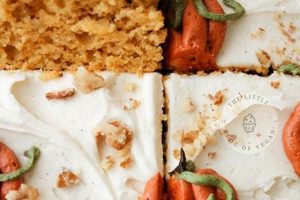
The preparation of a plant-based alternative to traditional cake mix involves substituting animal-derived ingredients with plant-based counterparts. This process typically entails replacing eggs with ingredients such as applesauce or flaxseed meal, dairy milk with plant-based milk options like almond or soy milk, and butter with vegetable oil or vegan butter substitutes. This substitution ensures the final product is free from animal products while maintaining desirable characteristics in texture and taste. As an example, a standard cake mix calling for eggs and milk could be modified by replacing each egg with a mixture of one tablespoon of ground flaxseed and three tablespoons of water, and the dairy milk with an equal amount of almond milk.
Creating a vegan cake mix allows individuals adhering to a vegan lifestyle, or those with dairy or egg allergies, to enjoy baked goods without compromising their dietary principles. The availability of plant-based cake options broadens accessibility to those with specific dietary requirements. Historically, the increased awareness of animal welfare and the rise in plant-based diets have fueled the demand for vegan alternatives in various food sectors, including baking. This trend reflects a growing concern for sustainable and ethical food choices.
The subsequent sections will detail specific methods and ingredient considerations for developing a successful plant-based cake mix, exploring various substitute options and highlighting the key aspects to consider for optimal results.
Guidance on Plant-Based Cake Mix Formulation
The successful development of a plant-based cake mix necessitates meticulous ingredient selection and careful consideration of their interactions. The following guidelines offer insights into critical aspects of formulation and preparation.
Tip 1: Hydration Optimization. Pay close attention to the hydration levels required by the egg replacement ingredient. Flaxseed meal or chia seeds, when used as egg substitutes, require adequate water to form a binding gel. Insufficient hydration can lead to a dry or crumbly final product.
Tip 2: Leavening Agent Adjustment. Plant-based cake mixes often require an increased amount of leavening agents such as baking powder or baking soda, to achieve a light and airy texture. This adjustment is necessary due to the absence of eggs, which contribute to the structure and lift in conventional cakes. Experimentation may be required to determine the optimal quantity for specific formulations.
Tip 3: Fat Content Considerations. The selection of fats significantly influences the texture and moisture content. Vegetable oils or vegan butter substitutes are commonly employed. The type and quantity of fat used must be carefully balanced to prevent a greasy or overly dry outcome.
Tip 4: Gluten Content Management. The use of all-purpose flour is typical, but for gluten-free variations, a blend of gluten-free flours is necessary. The ratios of different gluten-free flours such as rice flour, tapioca starch, and almond flour must be carefully balanced to replicate the structure provided by gluten.
Tip 5: Sweetener Selection. Various sweeteners can be utilized, including granulated sugar, brown sugar, or liquid sweeteners like maple syrup or agave. Liquid sweeteners may necessitate a reduction in the amount of other liquids in the recipe to maintain the correct batter consistency.
Tip 6: Flavor Enhancement. Plant-based milks may exhibit subtle differences in flavor compared to dairy milk. Incorporating extracts, such as vanilla or almond, can enhance the overall flavor profile and mask any undesirable tastes.
Tip 7: Batch Testing and Refinement. Due to the complexities of ingredient interactions, it is recommended to conduct small-scale batch testing to refine the recipe and optimize the texture and flavor of the final product. Document all adjustments made during the testing process for future reference.
Proper attention to these factors will contribute to the successful creation of plant-based cake mixes that meet desired textural and taste characteristics.
The following section will discuss common issues encountered during plant-based cake mix preparation and potential solutions.
1. Ingredient substitutions

Ingredient substitutions form the cornerstone of plant-based cake mix formulation. The absence of animal-derived components, such as eggs, dairy milk, and butter, necessitates the identification and application of suitable plant-based alternatives. The success of creating a viable vegan cake mix hinges on the ability to replicate the functional properties of these traditional ingredients through appropriate substitutions. For example, eggs provide binding, moisture, and leavening properties in conventional baking; therefore, a successful vegan cake mix must incorporate ingredients that fulfill these roles. Applesauce, mashed banana, or flaxseed meal mixed with water are often employed as egg substitutes. The choice of substitute directly impacts the cake’s texture, moisture content, and overall structure. A poorly chosen substitution may result in a cake that is either too dense, too dry, or lacks the necessary rise.
The selection of dairy milk alternatives also presents a critical substitution challenge. Plant-based milks, such as almond, soy, or oat milk, offer varying levels of fat and protein, which influence the cake’s final characteristics. Almond milk, with its lower fat content, may require the addition of other fats to achieve the desired richness and moistness. Similarly, the replacement of butter with vegan butter substitutes or vegetable oils necessitates careful consideration of the fat’s melting point and impact on the cake’s crumb structure. Incorrect substitutions can result in a cake with an undesirable texture or flavor profile. For instance, using a vegetable oil with a strong flavor may impart an unwanted taste to the final product.
In summary, ingredient substitutions are a foundational element in developing a successful plant-based cake mix. Each substitution must be carefully considered to replicate the functional roles of the ingredients being replaced, and the interactions between all ingredients must be understood to achieve the desired texture, flavor, and structural integrity. The successful application of ingredient substitution principles is a critical determinant of the overall quality and acceptability of the resulting vegan cake mix.
2. Moisture balance

Moisture balance represents a critical factor in the successful creation of plant-based cake mixes. The absence of traditional binding agents like eggs necessitates a precise calibration of liquid and dry ingredients to achieve the desired texture and prevent undesirable outcomes.
- Role of Liquid Ingredients
Plant-based milk alternatives, fruit purees, and oils contribute significantly to the overall moisture content. The inherent water content of each ingredient must be accounted for when formulating the recipe. Over-hydration can result in a soggy or gummy texture, while insufficient hydration leads to a dry and crumbly product. Accurate measurement and understanding of the moisture contribution from each component are essential for consistent results.
- Impact of Dry Ingredients
Flour type, including gluten-free varieties, significantly impacts moisture absorption. Some flours, such as rice flour, tend to absorb more liquid than others. This difference in absorption rates must be considered to prevent an imbalance in the batter’s hydration level. The ratio of flour to liquid must be adjusted accordingly based on the specific flour blend employed.
- Influence of Sweeteners
Liquid sweeteners like maple syrup or agave nectar introduce additional moisture. When utilizing these sweeteners, the overall liquid content of the recipe must be reduced proportionally to maintain the desired batter consistency. Failure to adjust the liquid content can lead to an excessively wet batter and a cake that fails to bake properly.
- Effects of Humectants
Humectants, such as molasses or vegetable glycerin, retain moisture, contributing to a softer and more pliable texture. Strategic use of humectants can help prevent the cake from drying out, particularly in plant-based formulations that lack the natural moisture-retaining properties of eggs. However, excessive use of humectants can result in a sticky or overly moist cake.
In summation, the attainment of a balanced moisture level is paramount when preparing plant-based cake mixes. A precise understanding of the hygroscopic properties of each ingredient, along with careful measurement and adjustment, is crucial for achieving the desired texture and preventing common baking issues. The proper management of moisture balance directly impacts the final quality and palatability of the cake.
3. Leavening efficiency

Leavening efficiency is a critical parameter in the preparation of plant-based cake mixes. The absence of eggs, which contribute significantly to the leavening process in conventional cakes, necessitates a careful evaluation and adjustment of leavening agents to achieve a desirable texture and volume in the final product. The effectiveness of leavening agents directly influences the cake’s rise, crumb structure, and overall palatability.
- Chemical Leavening Agents
Baking powder and baking soda are commonly employed chemical leavening agents. Baking powder, a complete leavening agent containing both an acid and a base, releases carbon dioxide gas upon activation by moisture and heat. Baking soda, conversely, requires the presence of an acidic ingredient to trigger the release of carbon dioxide. In plant-based formulations, the addition of acidic ingredients such as vinegar or lemon juice may be necessary to activate baking soda effectively. The quantity of chemical leavening agents must be carefully calibrated based on the specific recipe and the other ingredients’ acidic or alkaline properties. An imbalance can result in either insufficient rise or an undesirable chemical taste.
- Impact of Egg Substitutes
Egg substitutes, such as applesauce or flaxseed meal, can affect leavening efficiency. While they provide moisture and binding, they do not contribute to leavening in the same way as eggs. The use of these substitutes often requires an increase in the quantity of chemical leavening agents to compensate for the lack of egg-derived lift. The consistency and density of the egg substitute also influence the leavening process; heavier substitutes may require more leavening to achieve the desired lightness.
- Gluten-Free Considerations
Gluten-free plant-based cake mixes present unique leavening challenges. Gluten provides structure and elasticity, trapping the carbon dioxide released by leavening agents. The absence of gluten necessitates the use of alternative binding agents, such as xanthan gum or guar gum, to mimic gluten’s structural properties. These gums help to trap the carbon dioxide, allowing the cake to rise effectively. The ratio of gluten-free flour, binding agent, and leavening agent must be carefully balanced to achieve an optimal rise and texture.
- Environmental Factors
Ambient temperature and humidity can impact leavening efficiency. High humidity may cause baking powder or baking soda to activate prematurely, resulting in a loss of leavening power. Similarly, fluctuations in oven temperature can affect the rate at which the leavening agents release carbon dioxide. Maintaining a consistent oven temperature and storing leavening agents in airtight containers can help mitigate these environmental factors.
In conclusion, leavening efficiency plays a pivotal role in the successful preparation of plant-based cake mixes. A thorough understanding of the interactions between leavening agents, egg substitutes, gluten-free alternatives, and environmental factors is essential for achieving the desired texture and volume. Careful calibration and adjustment of these factors are critical for producing a plant-based cake that meets the expected standards of quality and palatability.
4. Fat selection

Fat selection constitutes a pivotal determinant in the formulation of plant-based cake mixes, impacting texture, flavor, and overall structural integrity. The characteristics of the chosen fat source significantly influence the final product’s moistness, crumb structure, and mouthfeel, thereby dictating the sensory experience.
- Type of Fat and its Melting Point
Different fats possess varying melting points, influencing the cake’s texture at both room temperature and after refrigeration. Solid fats, such as vegan butter or coconut oil, contribute to a denser crumb and a more structured cake, particularly if the melting point is higher than room temperature. Conversely, liquid oils, such as canola or sunflower oil, tend to produce a more tender crumb. The selection of a fat with an appropriate melting point is crucial to achieving the desired mouthfeel and structural characteristics in the final product.
- Flavor Profile and Aroma
The inherent flavor profile of the chosen fat source imparts a distinct characteristic to the cake. Refined oils, such as canola or sunflower, possess a neutral flavor, allowing other ingredients to dominate the flavor profile. Conversely, unrefined coconut oil or olive oil may impart a distinct flavor that can either complement or clash with other ingredients. Careful consideration of the fat’s flavor profile is essential to ensure compatibility with the overall flavor goals of the plant-based cake mix.
- Emulsification Properties
Fats with good emulsification properties contribute to a smoother batter and a more uniform crumb structure. Emulsification aids in the distribution of fat molecules throughout the batter, preventing separation and promoting a cohesive mixture. Fats high in saturated fatty acids tend to exhibit better emulsification properties. However, the health implications of saturated fats must also be considered in the fat selection process.
- Fat Content and Moistness Retention
The fat content directly influences the moistness of the cake. Higher fat content generally results in a more moist and tender crumb, due to the fat’s ability to prevent gluten development and trap moisture. However, excessive fat can lead to a greasy or heavy texture. A balanced approach is essential to optimize the moistness without compromising the cake’s structural integrity. The type of fat also affects moisture retention over time; some fats are more effective at preventing the cake from drying out during storage.
The judicious selection of fats, therefore, directly influences the sensory attributes and structural characteristics of plant-based cake mixes. A comprehensive understanding of the melting point, flavor profile, emulsification properties, and fat content of various plant-based fat sources enables informed decision-making, ultimately leading to the creation of superior plant-based cake products. The interplay between these facets underscores the importance of fat selection as a critical step in achieving desirable results when preparing vegan cake mixes.
5. Gluten alternatives

The incorporation of gluten alternatives represents a fundamental aspect of plant-based cake mix formulation, especially when targeting individuals with celiac disease, gluten intolerance, or those seeking to reduce their gluten consumption. The selection and utilization of appropriate gluten alternatives are critical for replicating the structural and textural properties typically attributed to gluten in conventional baking.
- Flour Blends and Starch Combinations
The creation of a gluten-free flour blend is often necessary to mimic the characteristics of wheat flour. This typically involves combining various gluten-free flours, such as rice flour, tapioca starch, and almond flour, in specific ratios. Each flour contributes unique properties, such as starch content, protein level, and particle size, which collectively influence the final product’s texture and structure. An imbalanced flour blend can result in a cake that is either too dense, too crumbly, or lacks sufficient structure to support its own weight.
- Hydrocolloids as Structural Support
Hydrocolloids, such as xanthan gum and guar gum, are frequently employed to provide structural support and binding properties in gluten-free cake mixes. These additives mimic the viscoelastic properties of gluten, enhancing the batter’s ability to retain gas and preventing the cake from crumbling. The appropriate quantity of hydrocolloid is crucial; excessive use can result in a gummy texture, while insufficient use leads to a fragile structure.
- Protein Enrichment for Enhanced Texture
Protein enrichment can improve the texture and nutritional profile of gluten-free vegan cake mixes. Ingredients such as soy flour, chickpea flour, or pea protein isolate can be added to increase the protein content, which contributes to a more stable and less crumbly structure. However, the addition of protein-rich ingredients may also alter the flavor profile, necessitating careful flavor balancing to maintain palatability.
- Moisture Management and Starch Gelatinization
Gluten-free flours often exhibit different water absorption characteristics compared to wheat flour. Precise moisture management is essential to achieve the correct batter consistency and prevent a dry or gummy texture. The gelatinization of starches during baking is also critical for setting the structure of the cake. The baking temperature and duration must be optimized to ensure proper starch gelatinization and prevent a collapse of the cake’s structure.
The successful integration of gluten alternatives into plant-based cake mixes necessitates a comprehensive understanding of their individual properties and interactions. Careful consideration of flour blends, hydrocolloid usage, protein enrichment, and moisture management is essential for achieving a desirable texture, structure, and flavor profile in the final product. These elements collectively influence the overall quality and acceptability of gluten-free vegan cake mixes, impacting their market viability and consumer satisfaction.
6. Flavor enhancements

Flavor enhancements are integral to the creation of acceptable plant-based cake mixes, compensating for the absence of animal-derived fats and proteins that contribute significantly to the flavor profile of conventional baked goods. These enhancements aim to deliver a palatable and satisfying sensory experience, appealing to a broad range of consumer preferences.
- Extracts and Essences
The incorporation of concentrated flavor extracts, such as vanilla, almond, or lemon, serves to amplify existing flavor notes and introduce complementary aromatic compounds. The selection and dosage of these extracts necessitate careful consideration to avoid overpowering the delicate balance of flavors. For instance, an excessive amount of almond extract can impart a bitter aftertaste, detracting from the overall palatability of the cake.
- Spices and Aromatics
The addition of spices, including cinnamon, nutmeg, or cardamom, introduces complexity and warmth to the flavor profile. These spices contribute volatile compounds that interact with other ingredients, enhancing the overall aromatic experience. The type and quantity of spice must be carefully calibrated based on the desired flavor outcome and the specific characteristics of the plant-based ingredients. An overabundance of certain spices can lead to an unbalanced and unpleasant flavor profile.
- Citrus Zest and Juices
The inclusion of citrus zest and juices provides brightness and acidity, counteracting the potential for excessive sweetness or blandness. Citrus zest contains concentrated aromatic oils that contribute a fresh and vibrant flavor note. Citrus juice adds a tangy element that balances the overall flavor profile. The use of organic citrus fruits is recommended to minimize the presence of pesticide residues.
- Cocoa and Chocolate Derivatives
The incorporation of cocoa powder, chocolate chips, or melted chocolate introduces a rich and decadent flavor element. Cocoa powder contributes a deep and complex chocolate flavor, while chocolate chips provide textural contrast and bursts of intense chocolate flavor. The selection of high-quality chocolate products is essential for achieving a superior flavor outcome. Plant-based chocolate alternatives, such as dairy-free chocolate chips, can be used to maintain the vegan status of the cake mix.
In summary, the strategic application of flavor enhancements is crucial for elevating the sensory appeal of plant-based cake mixes. By carefully selecting and balancing extracts, spices, citrus elements, and chocolate derivatives, manufacturers can create plant-based cakes that rival the flavor complexity and satisfaction of their conventional counterparts. The successful integration of these enhancements hinges on a thorough understanding of flavor interactions and a commitment to using high-quality ingredients to achieve a superior culinary outcome.
Frequently Asked Questions
The following section addresses common inquiries regarding the preparation and formulation of plant-based cake mixes. The information provided aims to clarify best practices and resolve potential issues encountered during the baking process.
Question 1: What are the primary ingredient substitutions required to convert a conventional cake mix into a plant-based formulation?
The key substitutions involve replacing eggs with plant-based binders like applesauce or flaxseed meal, dairy milk with plant-based alternatives such as almond or soy milk, and butter with vegan butter substitutes or vegetable oils. Specific ratios may require adjustment based on the recipe.
Question 2: Why does a plant-based cake mix often require more leavening agent than a traditional mix?
The absence of eggs, which contribute to leavening in conventional cakes, necessitates an increased amount of baking powder or baking soda to achieve a comparable rise and texture. The precise amount needed may vary depending on the specific formulation.
Question 3: How does the selection of fat impact the final product in plant-based cake mixes?
Fat selection significantly influences the texture and moisture content. Vegetable oils or vegan butter substitutes are commonly used. The type and quantity of fat must be carefully balanced to prevent a greasy or overly dry outcome. Melting point of the fat is also a factor.
Question 4: What challenges arise when formulating gluten-free plant-based cake mixes, and how are they addressed?
Gluten provides structure in conventional cakes. In gluten-free formulations, a blend of gluten-free flours, such as rice flour and tapioca starch, is required, along with binding agents like xanthan gum, to replicate that structure. Ratios must be carefully balanced.
Question 5: How can flavor be enhanced in plant-based cake mixes to compensate for the absence of animal-derived components?
Extracts, such as vanilla or almond, spices like cinnamon or nutmeg, and citrus zest can be used to enhance the flavor profile and compensate for subtle differences in taste resulting from plant-based ingredients.
Question 6: What factors should be considered when adjusting baking time and temperature for plant-based cake mixes?
Plant-based ingredients may react differently to heat than conventional ingredients. Monitoring the cake’s internal temperature and appearance is crucial. Minor adjustments to baking time or temperature may be required to ensure even cooking and prevent over-browning or under-baking.
Formulating successful plant-based cake mixes requires careful ingredient selection, precise measurement, and an understanding of how plant-based ingredients interact to create the desired texture and flavor. Experimentation and refinement are often necessary to achieve optimal results.
The subsequent section will provide a summary of key considerations for successful plant-based cake mix preparation.
How to Make Vegan Cake Mix
The process, “how to make vegan cake mix,” entails a comprehensive understanding of ingredient substitutions, moisture management, leavening dynamics, fat selection, gluten alternatives, and flavor enhancements. Successful formulations demand meticulous attention to detail, acknowledging the distinct behaviors of plant-based components. Achieving optimal results requires a systematic approach, combining scientific precision with culinary skill.
Continued exploration and refinement of plant-based baking techniques will undoubtedly lead to further advancements in the creation of high-quality, accessible vegan cake mixes. The future of this culinary sector hinges on the commitment to innovation and a dedication to satisfying the evolving needs of consumers seeking sustainable and ethical food choices.