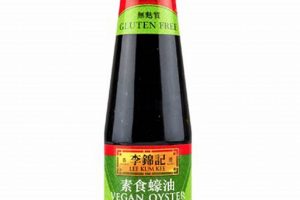
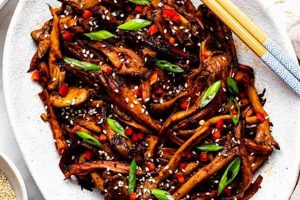
A culinary formulation designed to impart savory, umami-rich flavor to vegetable and plant-based protein stir-fries without the inclusion of animal-derived ingredients. The composition typically involves a blend of soy sauce or tamari for saltiness, sweeteners like maple syrup or agave for balance, acidifiers such as rice vinegar or lime juice for brightness, and flavor enhancers like ginger, garlic, and chili for depth and complexity. A common example involves combining low-sodium soy sauce, rice vinegar, maple syrup, minced garlic, ginger paste, and a dash of red pepper flakes.
This specific type of condiment allows individuals adhering to plant-based diets to enjoy the diverse and flavorful world of stir-fried dishes. Its versatility extends beyond simple vegetable medleys; it can also be used to season tofu, tempeh, and plant-based meat alternatives. From a historical perspective, the development of such blends represents a growing awareness of dietary diversity and a desire to accommodate various ethical and health-related food choices, offering accessible and flavorful options for a broadening consumer base.
The following sections will explore different approaches to creating this flavourful addition, variations on core ingredients, tips for achieving optimal taste profiles, and guidance on adapting formulations to suit individual preferences and dietary needs.
Tips for Perfecting Vegan Stir Fry Sauce
Achieving a balanced and flavorful stir fry hinges on the quality and execution of its accompanying sauce. The following tips provide guidance on formulating and utilizing a sauce that complements and elevates a vegan stir fry.
Tip 1: Utilize Low-Sodium Soy Sauce or Tamari. This minimizes excessive saltiness, allowing other flavors to emerge. It also provides greater control over the sodium content of the dish.
Tip 2: Incorporate an Acidic Element. Rice vinegar, lime juice, or even a small amount of apple cider vinegar adds brightness and cuts through the richness of the other ingredients. Adjust the quantity to taste, but ensure its presence for overall flavor balance.
Tip 3: Sweeten Judiciously. Maple syrup, agave nectar, or brown sugar can be used to balance the salty and acidic components. Begin with a small amount and increase gradually, tasting frequently, to avoid overpowering the sauce with sweetness.
Tip 4: Emulsify Thoroughly. To ensure a homogenous sauce, whisk the ingredients together vigorously until fully combined. Alternatively, shake the ingredients in a sealed jar.
Tip 5: Thicken if Desired. A slurry of cornstarch or arrowroot powder mixed with cold water can be added to the sauce during the stir-frying process to create a thicker consistency. This helps the sauce cling to the vegetables and protein.
Tip 6: Adjust for Spice Level. Red pepper flakes, chili garlic sauce, or a dash of cayenne pepper can be added to introduce heat. Start with a small amount and increase to the desired level of spiciness.
Tip 7: Taste and Adjust. The most crucial step is to taste the sauce before adding it to the stir fry and make any necessary adjustments. This ensures that the final dish is well-balanced and flavorful.
Adhering to these guidelines will facilitate the creation of a well-balanced and flavorful element, substantially enhancing the overall quality and enjoyment of the dish.
The subsequent section will explore common variations and ingredient substitutions.
1. Umami Base

The umami base represents a cornerstone in crafting flavorful vegan stir-fry sauces. This foundational element provides the savory depth crucial for mimicking the satisfying taste profiles often associated with meat-based sauces. The selection of a suitable umami base directly impacts the overall complexity and palatability of the finished sauce. The absence of a strong umami component typically results in a bland or one-dimensional flavor experience.
Soy sauce and its gluten-free alternative, tamari, serve as primary umami sources in many formulations. These ingredients, produced through the fermentation of soybeans, contribute glutamates the compounds responsible for the umami sensation. Coconut aminos, derived from coconut sap, offer a naturally sweeter and less salty option while still providing a degree of umami. Miso paste, made from fermented soybeans and grains, presents another viable alternative, delivering a more complex, fermented flavor profile that complements vegetable stir-fries. The choice between these ingredients depends on the desired flavor profile and any dietary restrictions of the consumer. For example, a sauce intended for pairing with delicate vegetables may benefit from the lighter umami of coconut aminos, while a sauce for heartier vegetables and plant-based proteins might benefit from the richer flavor of miso paste.
Ultimately, the strategic selection and application of an umami base are paramount to creating a robust and satisfying plant-based stir-fry sauce. A well-chosen base not only provides savory depth but also harmonizes with other sauce components like sweeteners, acids, and aromatics. A thorough understanding of the characteristics of various umami sources empowers cooks to tailor sauces that complement specific ingredients and meet diverse dietary preferences, addressing potential challenges and emphasizing flavor complexity.
2. Sweetener Balance

The successful creation of a condiment for stir-fried dishes hinges on a carefully considered balance of flavors. The strategic integration of sweeteners plays a pivotal role in achieving this equilibrium, complementing the savory umami notes and acidic tangs characteristic of such sauces. The proper calibration of sweetness ensures a nuanced flavor profile, preventing any single element from overpowering the others and contributing to a harmonious culinary experience.
- Counteracting Saltiness
Excessive salinity, often imparted by soy sauce or tamari, requires a counterpoint to achieve palatable equilibrium. Sweeteners serve to temper the saltiness, preventing it from becoming overly assertive. Maple syrup, agave nectar, or brown sugar can be employed, each offering a distinct flavor profile that interacts uniquely with the other ingredients. The appropriate amount depends on the sodium content of the base and the desired overall intensity.
- Enhancing Umami Perception
While seemingly contradictory, sweetness can enhance the perception of umami. The subtle presence of a sweetener can round out the savory notes, making them more pronounced and satisfying. This effect is particularly noticeable when using less intense umami sources, such as coconut aminos, where a touch of sweetness can boost the overall flavor impact. Experimentation is key to discovering the optimal ratio for a particular sauce formulation.
- Modulating Acidity
Acidic elements, such as rice vinegar or lime juice, contribute brightness and tanginess. However, an excess of acidity can result in a sour or unbalanced flavor. Sweeteners can be used to soften the acidic edge, creating a more rounded and approachable flavor profile. The interaction between sweeteners and acids is complex, with different sweeteners exhibiting varying degrees of buffering capacity. For example, honey may impart a distinct floral note, while brown sugar may contribute a subtle molasses-like depth.
- Textural Influence
Certain sweeteners, particularly those with higher viscosity like molasses or brown rice syrup, can influence the texture of the final sauce. This can be advantageous in creating a sauce that clings well to stir-fried ingredients, enhancing the overall eating experience. The choice of sweetener should therefore consider not only its flavor profile but also its impact on the physical properties of the sauce.
The thoughtful application of sweeteners, therefore, extends beyond simple taste modification. These compounds play a crucial role in shaping the overall sensory experience, harmonizing disparate flavor elements, and enhancing the textural properties of a plant-based condiment. Mastering the art of sweetener balance is fundamental to creating a truly exceptional vegan stir-fry sauce.
3. Acidic Counterpoint

Acidic components are essential within vegan stir-fry sauces due to their role in balancing the inherent richness and saltiness of other ingredients. Without acidity, the sauce risks becoming heavy and one-dimensional. Ingredients such as rice vinegar, lime juice, or even a small quantity of apple cider vinegar introduce brightness and a tangy edge that cuts through the umami imparted by soy sauce or tamari and the sweetness from added sugars. This interplay of flavors prevents the sauce from being cloying, contributing to a more dynamic and palatable final dish. An example is the addition of rice vinegar to a sauce base comprised of soy sauce, maple syrup, ginger, and garlic. The vinegar elevates the other flavors, preventing them from blending into a homogenous, and therefore less interesting, profile.
The specific acid chosen impacts the final flavor profile. Rice vinegar offers a milder, slightly sweet acidity suitable for delicate vegetable stir-fries. Lime juice provides a sharper, more citrusy note, working well with dishes featuring bolder flavors or those intended to evoke Southeast Asian cuisines. Apple cider vinegar, used sparingly, adds a complex, fruity acidity, lending depth to the sauce. The inclusion of acidic ingredients is not merely about adding sourness, but about enhancing the perception of other flavors and creating a more balanced sensory experience. The correct proportion is crucial; too little acid and the sauce lacks vibrancy, too much and it becomes unpleasantly tart.
Therefore, the mindful incorporation of an acidic counterpoint is a critical determinant of a successful plant-based stir-fry sauce. It is the ingredient that prevents the sauce from becoming overly rich or salty, lifting the overall flavor profile and making the dish more enjoyable. Understanding the nuances of different acidic elements and their respective interactions with other components is vital for crafting stir-fry sauces that are both balanced and flavorful, and essential to the success of any vegan stir fry creation.
4. Aromatic Infusion

Aromatic infusion, representing the introduction of fragrant elements, holds significant importance in the formulation of sauces intended for vegetable and plant-based protein stir-fries. The strategic incorporation of aromatics contributes layers of complexity and depth, elevating the sensory experience and preventing a bland or monotonous flavor profile. Examples of ingredients frequently used for aromatic infusion include garlic, ginger, shallots, and various herbs and spices. Without aromatic infusion, a vegan stir-fry sauce lacks dimension, resulting in a less satisfying culinary outcome. For instance, a simple combination of soy sauce and sweetener, absent aromatic elements, yields a flat and uninteresting flavor.
Garlic and ginger, often used in combination, are prominent examples of aromatics employed in stir-fry sauces. Garlic, when heated, releases pungent compounds that contribute savory notes and enhance the overall flavor. Ginger provides a warm, slightly spicy element, complementing garlic and other ingredients. The method of preparation also influences the aromatic intensity; minced or grated garlic and ginger release more flavor compounds compared to sliced or whole pieces. Additionally, the timing of their introduction during the cooking process affects the final outcome. Adding aromatics at the beginning of the stir-fry allows their flavors to meld and infuse the oil, while adding them later retains their fresh, vibrant character.
In conclusion, aromatic infusion is not merely an optional addition but a fundamental component in creating a nuanced and flavorful condiment. The appropriate selection and application of aromatics can transform a basic sauce into a complex and satisfying element, enhancing the overall culinary experience of a plant-based stir-fry. Furthermore, proper understanding of how to integrate various aromatics allows cooks to tailor sauce flavor profiles to suit various dishes and individual palates.
5. Texture Control
Texture control is an important element within the creation of a plant-based condiment for stir-fried dishes. The viscosity and mouthfeel of the final sauce directly impact its ability to coat ingredients effectively and contribute to the overall sensory experience of the dish. A sauce that is too thin may fail to adhere adequately to the vegetables and plant-based proteins, resulting in a dish that lacks flavor consistency. Conversely, a sauce that is overly thick may become gummy or unpleasant, masking the flavors of the other ingredients. Therefore, modulating the texture of the sauce represents a crucial step in optimizing its functionality and appeal. For example, a sauce intended for coating noodles requires a different consistency than a sauce designed to drizzle over rice. This difference is achieved through strategic texture manipulation.
Achieving the desired texture typically involves the incorporation of thickening agents. Cornstarch, arrowroot powder, or tapioca starch are commonly employed to increase viscosity. These starches, when mixed with cold water to form a slurry and then added to the simmering sauce, gelatinize and create a thicker consistency. The amount of starch used directly influences the final texture; a small quantity results in a light glaze, while a larger amount produces a more substantial coating. The decision to incorporate any thickening agent at all depends on the intended use of the sauce and personal preference. Some cooks prefer a thinner, more fluid sauce that evenly distributes flavor, while others favor a thicker sauce that clings to the ingredients and provides a more concentrated taste.
In summary, texture control significantly influences the success of a condiment. By adjusting viscosity through strategic ingredient selection and technique, the sauce’s ability to deliver flavor is optimized. Addressing challenges related to appropriate thickness ensures sensory satisfaction, reinforcing the importance of texture control as a key component of plant-based recipes.
6. Spice Adjustment

Spice adjustment within a vegan stir fry formulation represents a pivotal control point for tailoring the overall flavor profile to individual preferences and dietary needs. The absence of meat necessitates a heightened attention to seasoning, as plant-based ingredients often require enhancement to achieve a satisfying depth of flavor. The inclusion of spices, therefore, directly impacts the perceived palatability and complexity of the finished dish. For example, the addition of red pepper flakes imparts a discernible heat, while a measured quantity of smoked paprika contributes a smoky depth. Precise control over spice levels is therefore essential for avoiding flavor imbalances.
The practical application of spice adjustment involves a nuanced understanding of individual spice characteristics and their interaction with other sauce components. Certain spices, such as chili garlic sauce, offer both heat and aromatic complexity, while others, such as white pepper, deliver a more subtle and nuanced heat. The order of addition and the cooking time also affect the final flavor. For instance, dry spices benefit from being toasted briefly in oil to bloom their flavors before the addition of other ingredients, while fresh herbs are best added towards the end of the cooking process to preserve their volatile aromatic compounds. An example is the addition of star anise at the beginning of the cooking process to infuse the oil with its licorice-like aroma. Conversely, fresh cilantro is usually added at the end to provide a vibrant, fresh note. Spice adjustment becomes particularly crucial when accommodating dietary restrictions. Individuals with sensitivities to capsaicin, the compound responsible for the heat in chili peppers, may require alternative spice blends utilizing ingredients like black pepper or ginger to achieve a similar level of flavor complexity without the associated heat.
In summary, spice adjustment in a vegan stir fry formulation functions as a critical tool for flavor customization. Strategic utilization offers a method for compensating for the absence of meat-derived flavors. Careful consideration of the characteristics of individual spices, combined with an understanding of their interaction with other sauce components, facilitates the creation of sauces that are both balanced and satisfying. The ability to fine-tune the spice level therefore is essential for creating a tailored vegan culinary experience.
7. Ingredient Sourcing

The selection and procurement of ingredients significantly influences the quality, flavor, and ethical implications associated with any culinary creation, including condiments for plant-based stir-fries. Ingredient sourcing directly impacts the sensory characteristics and nutritional value. Furthermore, it reflects broader considerations pertaining to sustainability, fair labor practices, and environmental responsibility. For example, the choice between conventionally grown soybeans for soy sauce versus organically certified soybeans impacts not only the flavor profile of the resultant sauce but also the environmental impact of its production. This decision impacts the plant-based meal.
Considerations within the ingredient sourcing process should encompass several factors. The origin of soy sauce or tamari is paramount, with variations in fermentation techniques and soybean varieties leading to distinct flavor nuances. Local sourcing, where feasible, reduces transportation emissions and supports regional economies. Furthermore, the procurement of sweeteners, such as maple syrup or agave nectar, should prioritize producers adhering to sustainable harvesting practices. The source and processing methods of aromatics, such as garlic and ginger, also influence flavor intensity and overall sauce complexity. For instance, locally grown garlic may exhibit a more pungent flavor compared to imported varieties, thus affecting the final ratio of ingredients required to achieve the desired taste.
In conclusion, ingredient procurement represents an important facet of creating condiments for plant-based meals. The choice of components significantly influences the flavor, sustainability, and ethical considerations associated with the final product. By carefully considering the origin, production methods, and potential environmental impacts of each ingredient, both home cooks and commercial manufacturers can elevate the quality and integrity of such sauces and by extension, enhance the sustainability of vegan cuisine.
Frequently Asked Questions
This section addresses common inquiries regarding the formulation, application, and storage of plant-based condiments designed for use in stir-fried dishes. The following questions aim to provide clarity and guidance for achieving optimal results.
Question 1: Can gluten-free alternatives be substituted for soy sauce?
Yes, tamari represents a suitable gluten-free alternative. Coconut aminos also offer a viable option, although the flavor profile is slightly sweeter and less salty. Adjustments to other ingredients may be necessary to maintain overall flavor balance.
Question 2: How long can homemade vegan stir fry sauce be stored?
When stored in an airtight container in the refrigerator, homemade vegan stir fry sauce typically remains stable for up to one week. It is imperative to assess for any signs of spoilage, such as unusual odors or discoloration, before consumption.
Question 3: What is the best method for thickening the sauce?
A slurry of cornstarch or arrowroot powder mixed with cold water represents an effective method for thickening. This mixture should be added gradually to the simmering sauce, allowing it to thicken to the desired consistency.
Question 4: Is it possible to reduce the sodium content without compromising flavor?
Utilizing low-sodium soy sauce or tamari represents one approach. Increasing the quantity of other flavor-enhancing ingredients, such as ginger, garlic, and rice vinegar, can also compensate for the reduced saltiness.
Question 5: Can this recipe be adapted for individuals with nut allergies?
Most stir fry sauce recipes do not inherently contain nuts. However, it is crucial to carefully inspect the ingredient labels of all components, particularly soy sauce and commercially prepared seasonings, to ensure they are manufactured in a nut-free facility.
Question 6: What are some ingredient variations to create different flavor profiles?
Sesame oil can impart a nutty flavor, while hoisin sauce adds sweetness and umami. Chili garlic sauce introduces heat and complexity. Experimentation with different combinations of these ingredients allows for the creation of a wide array of flavor profiles.
These FAQs provide a foundational understanding of the nuances involved in creating a plant-based condiment. Strategic attention to ingredient selection, storage practices, and flavor adjustments ensures the creation of a balanced and satisfying sauce.
The following section will provide sample recipes incorporating various techniques and ingredients discussed thus far.
Vegan Stir Fry Sauce Recipe
The preceding exposition has examined the multifaceted nature of creating plant-based condiments intended for use in stir-fried dishes. From the fundamental umami base to the nuanced adjustments of spice and texture, each element contributes significantly to the overall quality and palatability of the resulting product. Ingredient sourcing, storage considerations, and potential adaptations for dietary restrictions represent further critical aspects in the successful execution of a element.
A well-formulated application provides individuals adhering to plant-based dietary guidelines with access to flavorful and satisfying culinary experiences. The information presented herein serves to empower cooks to adapt and refine formulations to suit individual preferences and needs, reflecting the evolving landscape of food and culinary arts. Continued exploration and refinement of such condiment formulations will undoubtedly contribute to the increased accessibility and appeal of vegan cuisine within broader dietary contexts.