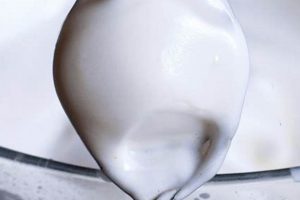
A plant-based alternative to traditional confectionary cream, typically comprises chocolate and a non-dairy liquid, such as coconut cream or oat milk. This mixture, when properly emulsified, yields a smooth, rich substance suitable for frosting, filling, or glazing desserts. For instance, melted dark chocolate combined with heated coconut cream can create a velvety topping for cakes or a decadent filling for pastries.
This dessert component addresses the growing demand for plant-based options without sacrificing texture or flavor. The advantages extend to individuals with dairy allergies or lactose intolerance. Historically, it represents an adaptation of classic culinary techniques to accommodate evolving dietary preferences and ethical considerations surrounding animal products. Its creation allows a broader audience to enjoy rich, chocolate-based treats.
The subsequent sections will delve into the specifics of its preparation, including ingredient selection and techniques for achieving optimal consistency. Furthermore, variations and applications of this dessert element will be explored, alongside common challenges and solutions encountered during its creation.
Preparation Insights
Achieving optimal results requires careful attention to detail. The following guidance provides essential techniques for crafting superior results.
Tip 1: Select Quality Ingredients: The quality of the chocolate directly impacts the final taste and texture. Opt for a high percentage cacao chocolate that is specifically labeled as dairy-free to ensure a rich and smooth result.
Tip 2: Carefully Choose the Liquid: Different non-dairy liquids offer varying results. Full-fat coconut cream provides a rich, creamy texture, while oat milk creates a lighter consistency. Experimentation is encouraged to determine the ideal liquid for the desired outcome.
Tip 3: Employ Proper Emulsification: Heat the liquid before adding it to the chocolate. This aids in a smoother emulsification process. Use a whisk or immersion blender to thoroughly combine the ingredients until a glossy, homogeneous mixture is achieved.
Tip 4: Temper the Chocolate (Optional): Tempering involves carefully controlling the temperature of the melted chocolate to ensure a stable crystalline structure. While not always necessary, tempering yields a glossier, snappier final product.
Tip 5: Adjust Sweetness as Needed: Depending on the type of chocolate used and personal preferences, the sweetness level may need adjustment. Add a small amount of agave nectar, maple syrup, or other plant-based sweetener to achieve the desired taste.
Tip 6: Allow Adequate Setting Time: Refrigeration is crucial for proper setting. Allow sufficient time (at least 2 hours, ideally overnight) for the mixture to firm up. The duration depends on the ratio of chocolate to liquid and the desired consistency.
Tip 7: Monitor Temperature During Storage: Store the finished product in an airtight container in the refrigerator. Avoid temperature fluctuations, which can affect the texture and stability of the mixture.
Adhering to these principles helps guarantee a delectable, dairy-free treat that retains the luxurious characteristics of traditional versions. These guidelines focus on maximizing flavor and texture while respecting plant-based culinary practices.
The subsequent section will explore specific applications and creative uses for this versatile dessert component, offering inspiration for a range of culinary creations.
1. Chocolate quality

The selection of chocolate is paramount in crafting a desirable plant-based confection. The quality directly impacts the final flavor profile, texture, and overall success of the end product. Inferior chocolate, regardless of the non-dairy liquid used, results in a less satisfying experience, characterized by a potentially waxy texture or an undesirable, bitter aftertaste. Conversely, high-quality chocolate, with a higher percentage of cacao and superior processing, contributes to a richer, smoother result.
For example, using a 70% cacao dark chocolate from a reputable brand known for ethical sourcing will yield a significantly more complex and nuanced flavor than a mass-produced, lower-quality alternative. The fat content within the chocolate, primarily cocoa butter, also plays a crucial role. A higher cocoa butter content contributes to a smoother, more luxurious mouthfeel. Moreover, opting for chocolate specifically labeled as dairy-free mitigates the risk of cross-contamination, ensuring suitability for individuals with dairy allergies or intolerances. The selection influences not only taste but also meltability and emulsification properties when combined with the chosen non-dairy liquid.
In conclusion, prioritizing superior chocolate is not merely a preference but a necessity for achieving a premium result. A commitment to quality ensures a balanced, flavorful, and texturally appealing final product that reflects the potential of dairy-free confectionary. Overlooking this fundamental aspect compromises the overall quality and diminishes the potential of the overall recipe.
2. Non-dairy liquid
The choice of non-dairy liquid is a critical determinant in the final character of a plant-based confection. It dictates texture, flavor, and overall stability of the result. Selecting the appropriate liquid is not merely a matter of substitution but rather a nuanced decision that requires consideration of its properties and interactions with the other components.
- Fat Content and Texture
The fat content of the non-dairy liquid profoundly influences the creaminess and mouthfeel. Options such as full-fat coconut cream impart a rich, decadent texture akin to traditional dairy cream, due to their high saturated fat content. Conversely, liquids like almond milk or cashew milk, with comparatively lower fat levels, yield a lighter, less dense product. The choice hinges on the desired end consistency, whether a thick frosting or a thinner glaze.
- Flavor Profile and Complementarity
Each non-dairy liquid carries its own distinct flavor, which inevitably contributes to the overall taste. Coconut cream imparts a subtle coconut flavor, which may complement certain chocolate varieties, particularly dark or intensely flavored ones. Oat milk possesses a milder, slightly sweet flavor that works well with a broader range of chocolates, while soy milk has a more neutral taste but may present stability challenges at higher temperatures. Careful consideration of flavor complementarity is essential to achieving a balanced and harmonious taste profile.
- Emulsification Properties
The ability of the non-dairy liquid to properly emulsify with the melted chocolate is crucial for creating a smooth, stable emulsion. Liquids with higher fat content tend to emulsify more readily, resulting in a less grainy texture. Lecithin, a natural emulsifier present in some soy milk products, can enhance the emulsification process. Inadequate emulsification leads to separation of the fat and liquid components, resulting in an undesirable texture and reduced shelf life.
- Water Content and Chocolate Seizing
The water content of the non-dairy liquid requires careful attention. Excessive water can cause the chocolate to seize, resulting in a grainy, unusable mass. It is advisable to add the liquid gradually and incorporate it thoroughly, monitoring the mixture’s consistency. Using a slightly warmed non-dairy liquid can also mitigate the risk of seizing by promoting better integration with the melted chocolate. Attention to moisture levels is a key factor in achieving a homogenous and stable final product.
In summary, the selection of the non-dairy liquid is not a trivial matter. Its fat content, flavor profile, emulsification properties, and water content all contribute to the overall success or failure of the recipe. Careful consideration of these factors is essential for crafting a truly exceptional plant-based dessert element.
3. Emulsification Process

The emulsification process is a critical step in the creation of satisfactory plant-based confection. It describes the dispersion of two immiscible liquids, typically melted chocolate (containing fat-soluble components) and a non-dairy liquid (primarily water-based), into a stable, homogeneous mixture. Without proper emulsification, the components will separate, resulting in an undesirable texture and appearance. For example, if one attempts to combine melted chocolate directly with cold almond milk without employing appropriate techniques, the fat from the chocolate will congeal, leaving a grainy, unappetizing result, fundamentally affecting the outcome.
Effective emulsification is achieved by introducing energy, typically through whisking, stirring, or blending, to break down the chocolate fat into smaller droplets and suspend them uniformly within the non-dairy liquid. Stabilizing agents, such as the naturally occurring lecithin in some non-dairy milks, further aid in preventing the droplets from coalescing. Temperature plays a critical role; the non-dairy liquid should be warmed to facilitate the dispersion of the fat and prevent the chocolate from seizing. For example, gently heating coconut cream before adding it to melted chocolate promotes a smoother emulsion compared to adding cold coconut cream, leading to a velvety frosting.
In conclusion, the emulsification process is not merely a mixing step but a fundamental chemical interaction that dictates the quality of the final product. Understanding and controlling the factors influencing emulsification, such as temperature, mixing technique, and the presence of stabilizing agents, are paramount for achieving a smooth, stable, and visually appealing plant-based treat. Overlooking this aspect leads to an inferior product. Mastery of the process unlocks the potential for creating exceptional vegan confections, showcasing the capabilities of plant-based ingredients.
4. Flavor enhancement

The strategic augmentation of flavor profiles represents a crucial element in the successful formulation of a plant-based confection, compensating for the absence of dairy-derived components. Achieving the desired taste experience necessitates a nuanced understanding of flavor interactions and the effective utilization of complementary ingredients.
- Vanilla Extract and Aromatic Compounds
The addition of vanilla extract, or other aromatic compounds such as almond extract or citrus zest, can significantly enhance the perceived sweetness and complexity. These compounds contribute volatile organic molecules that stimulate olfactory receptors, creating a more layered and satisfying taste experience. For example, a dash of vanilla extract in a dark chocolate version can round out the bitterness and provide a more balanced flavor profile. The careful selection and measurement of aromatic additions are crucial for achieving the desired result without overpowering the chocolate flavor.
- Salt and Flavor Contrast
A small amount of salt serves to enhance the perception of sweetness and suppress bitterness. Salt ions interact with taste receptors, modulating their response to other flavor compounds. The application of a pinch of sea salt to the finished product creates a subtle contrast that elevates the overall sensory experience. Excessive use of salt, however, can have a detrimental effect, leading to an unbalanced and unpalatable final result. Careful calibration is essential.
- Coffee and Dark Chocolate Synergy
The inclusion of coffee, either in the form of espresso powder or a coffee extract, complements the inherent bitterness of dark chocolate, creating a synergistic flavor pairing. The Maillard reaction products formed during the roasting of coffee beans interact with the chocolate’s flavor compounds, resulting in a more complex and robust taste. The integration of coffee notes adds depth and dimension to the final product, particularly when using dark chocolate varieties.
- Spice Infusion and Flavor Depth
Subtle spice infusions, such as cinnamon, cardamom, or chili powder, introduce warmth and complexity to the flavor profile. The addition of these spices stimulates both taste and olfactory receptors, providing a multi-sensory experience. A small amount of cinnamon, for instance, can enhance the perceived richness and warmth. The choice of spice and its concentration depend on the desired flavor profile and the intended application.
These flavor-enhancing techniques, when applied judiciously, play a crucial role in compensating for the absence of dairy components. By leveraging aromatic compounds, salt, complementary flavors, and spices, it is possible to create a plant-based product that rivals the richness and complexity of its traditional counterpart. Mastery of these methods unlocks the potential for crafting exceptional dessert experiences, demonstrating the versatility and appeal of plant-based ingredients.
5. Setting consistency

Setting consistency is a critical characteristic directly impacting the applicability and overall success of plant-based confection. Achieving the desired texture is essential for various applications, from frosting cakes to creating truffle fillings. The interplay of ingredients and environmental factors determines the final firmness or softness of the resulting confection.
- Ratio of Chocolate to Non-Dairy Liquid
The proportion of chocolate to liquid is the primary determinant of firmness. A higher ratio of chocolate to liquid generally results in a firmer set, suitable for applications requiring structural integrity, such as firm truffle centers. Conversely, a lower ratio yields a softer, more fluid consistency, ideal for glazes or drizzles. For example, a 2:1 ratio of chocolate to coconut cream will produce a notably firmer result than a 1:1 ratio. Fine-tuning this ratio allows for precise control over the final texture.
- Type of Non-Dairy Liquid Used
The inherent properties of the non-dairy liquid significantly influence the setting behavior. Full-fat coconut cream, due to its high saturated fat content, promotes a firmer set compared to options like oat milk or almond milk, which have lower fat levels. Each ingredient will solidify or thicken differently when cooled. Experimentation with various non-dairy liquids is essential to discover those that best align with specific textural goals. The molecular composition dictates how the setting consistency is achieve in the final product.
- Refrigeration Time and Temperature
The duration and temperature of refrigeration play a crucial role in solidification. Allowing sufficient time for the mixture to chill is essential for the fat molecules to crystallize and form a stable structure. Insufficient chilling results in a soft or runny product. Maintaining a consistent refrigerator temperature is also important; fluctuations can disrupt the crystallization process and affect the final consistency. Extended refrigeration beyond the optimal time may lead to excessive firmness or a grainy texture.
- Chocolate Type and Cocoa Butter Content
The type of chocolate used, particularly its cocoa butter content, influences the firmness of the set. Chocolate with a higher percentage of cocoa butter tends to set more firmly and with a smoother texture. Unsweetened chocolate or dark chocolate generally contains a higher proportion of cocoa butter compared to milk chocolate alternatives. Additionally, the quality of the chocolate impacts the crystallization process, with higher-quality chocolate typically resulting in a more stable and desirable texture.
The interaction of these factors collectively dictates the final consistency. By carefully controlling the chocolate-to-liquid ratio, selecting the appropriate non-dairy liquid, optimizing refrigeration conditions, and choosing the right type of chocolate, it is possible to achieve a wide range of textures. A thorough understanding of these principles is essential for achieving predictable and desirable results in a range of applications, from decorative frosting to indulgent dessert fillings.
6. Temperature control
Temperature regulation is paramount throughout the production of plant-based confection. Precise temperature management during each phase melting, emulsification, and setting directly influences the final texture, stability, and overall quality of the resultant product.
- Melting Phase: Preventing Chocolate Seizing
During the melting process, careful monitoring of the chocolate’s temperature is crucial. Overheating can cause the cocoa butter to separate, resulting in a grainy, unusable mass. Conversely, insufficient heating can lead to incomplete melting, affecting the final texture. Ideally, chocolate should be melted gradually using a double boiler or microwave, maintaining a temperature below 45C (113F). This approach ensures the chocolate remains smooth and workable, preventing the phenomenon known as seizing.
- Emulsification: Achieving Stable Integration
The emulsification phase, where the melted chocolate combines with the non-dairy liquid, requires specific temperature considerations. The non-dairy liquid should be warmed before addition to promote a stable emulsion. Adding cold liquid to melted chocolate can cause the fat to solidify prematurely, disrupting the emulsification process. Maintaining a temperature differential of no more than a few degrees between the chocolate and the liquid is essential for achieving a smooth, homogenous mixture. For instance, coconut cream heated to approximately 30C (86F) before combining with melted chocolate encourages proper integration.
- Setting: Crystallization and Stability
Temperature control during the setting process dictates the crystallization of cocoa butter, influencing the texture and stability of the finished product. Rapid cooling can result in unstable crystal formation, leading to a grainy or brittle texture. Gradual cooling in a refrigerator, ideally around 4C (39F), promotes the formation of stable crystals, resulting in a smooth, firm consistency. Furthermore, repeated temperature fluctuations during storage can disrupt the crystalline structure, impacting the product’s long-term stability and visual appeal. Maintaining a consistent refrigerated temperature minimizes these effects.
- Storage: Preventing Bloom and Degradation
Long-term storage requires careful temperature management to prevent fat bloom, a white, powdery coating that develops on the surface of chocolate due to cocoa butter recrystallization. Storing finished products in a cool, dry environment with consistent temperatures below 18C (64F) minimizes the likelihood of bloom formation. Additionally, exposure to extreme temperatures can cause the chocolate to melt and re-solidify, resulting in a grainy texture and altered flavor profile. Proper temperature control during storage preserves the quality and extends the shelf life.
These temperature control techniques represent essential elements in the successful creation. Adherence to these temperature guidelines guarantees a consistent and high-quality final product, ensuring the desired texture, stability, and aesthetic appeal are realized. Deviation from recommended temperatures inevitably compromises the final result, underscoring the significance of precision in temperature management.
Frequently Asked Questions Regarding Plant-Based Confection
The subsequent questions address common inquiries and misconceptions surrounding the creation and application of plant-based confection, providing clarity and addressing potential concerns.
Question 1: Is plant-based confection comparable in taste and texture to traditional, dairy-based versions?
While subtle differences may exist depending on the specific ingredients used, a well-formulated plant-based alternative achieves a remarkably similar taste and texture to its dairy-based counterpart. The key lies in using high-quality chocolate and selecting a non-dairy liquid with appropriate fat content, such as coconut cream, to replicate the richness of dairy cream.
Question 2: What are the primary non-dairy liquid options for crafting this type of confectionery component?
Several non-dairy liquids serve as viable alternatives. Coconut cream, oat milk, soy milk, and cashew cream are among the most commonly utilized options. Each liquid imparts a unique flavor and texture, influencing the final product’s characteristics. The selection depends on the desired outcome and individual preferences.
Question 3: Does plant-based confection require specialized equipment or techniques?
No specialized equipment is required. Standard kitchen tools, such as a saucepan, whisk, and mixing bowl, suffice. The primary technique involves careful emulsification of the melted chocolate and non-dairy liquid, ensuring a smooth and homogeneous mixture. Attention to temperature control is essential to prevent the chocolate from seizing.
Question 4: What is the shelf life of plant-based confection?
When stored properly in an airtight container in the refrigerator, plant-based confection typically maintains its quality for up to one week. Factors such as the specific ingredients used and storage conditions affect the shelf life. Inspecting the product for any signs of spoilage before consumption is always recommended.
Question 5: Can plant-based confection be used in the same applications as traditional versions?
Yes, plant-based confection is a versatile ingredient suitable for a wide range of applications, including frosting cakes, filling pastries, creating truffles, and glazing desserts. Its adaptability allows it to seamlessly replace traditional versions in most recipes.
Question 6: Is it possible to adjust the sweetness level in plant-based confection recipes?
The sweetness level can be readily adjusted to suit individual preferences. Plant-based sweeteners, such as agave nectar, maple syrup, or stevia, can be added to achieve the desired level of sweetness. The amount added should be carefully calibrated to avoid overpowering the chocolate flavor.
In summary, the creation and application of plant-based confection involve straightforward techniques and readily available ingredients. Understanding the nuances of ingredient selection and temperature control is essential for achieving optimal results.
The subsequent section will present a practical recipe for creating exemplary plant-based confection, providing step-by-step instructions and helpful tips.
Conclusion
This exploration has detailed the composition, preparation, and application of vegan ganache. The discussion has encompassed critical aspects such as ingredient selection, emulsification techniques, flavor enhancement, setting consistency, and temperature control. The intent was to provide a comprehensive understanding of this plant-based alternative to a classic confectionary component.
Further experimentation and refinement of existing techniques remain crucial for advancing the quality and versatility of vegan ganache. Continued innovation will likely lead to wider acceptance and application in both professional and home kitchens, expanding the possibilities of plant-based desserts. Its potential for offering a dairy-free option without compromising flavor or texture warrants ongoing exploration and development.